
Why Do We See Only One Side of the Moon? Tidal Locking
Key takeaways
- The Moon spins once every 27.3 days, exactly matching its orbit around Earth, so one face stays toward us.
- Earth's gravity slowed the young Moon's spin over billions of years in a process called tidal locking.
- A slight wobble called libration lets patient observers peek at about 59% of the lunar surface.
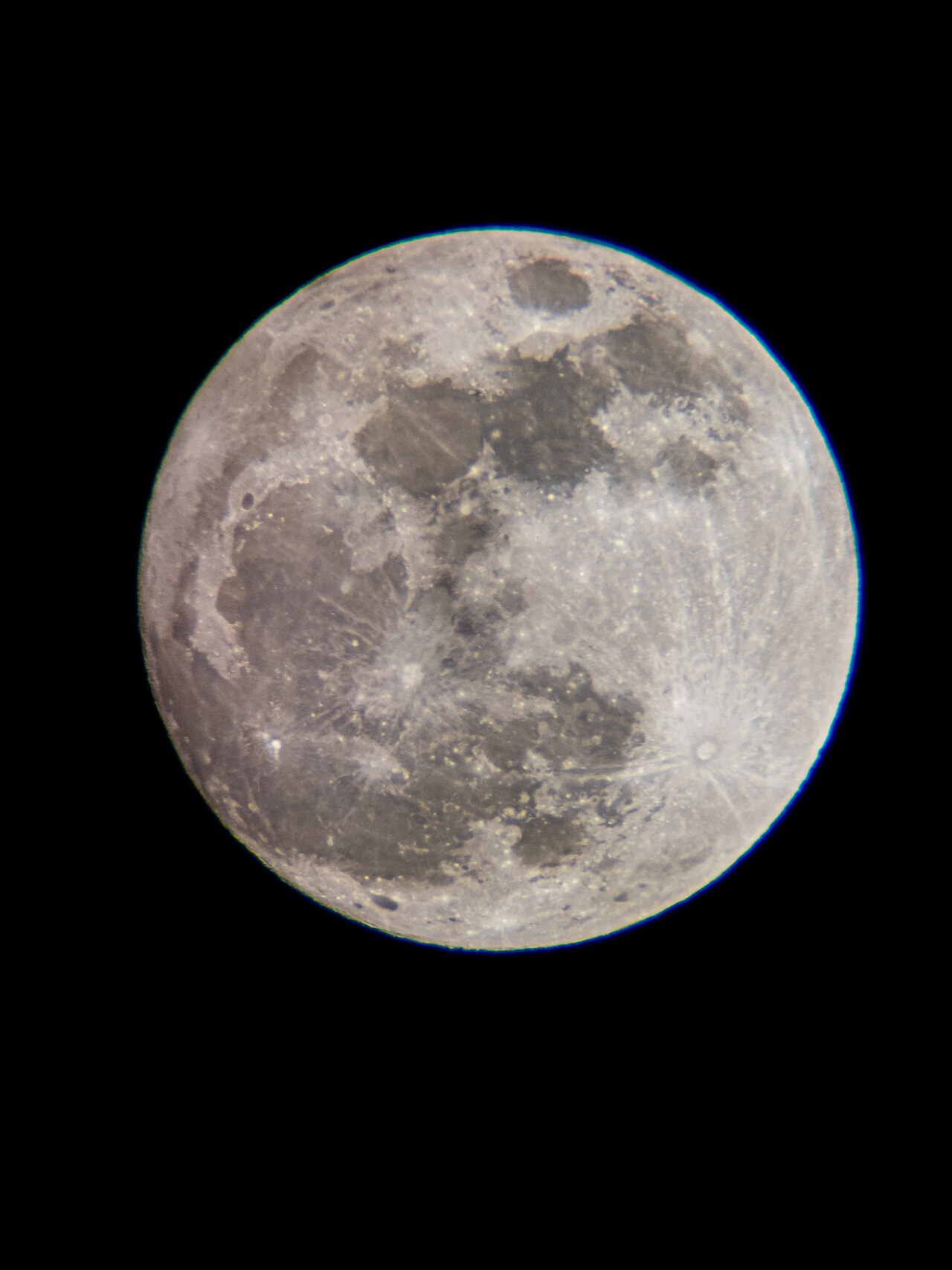
Image Credits: Wikimedia Commons / BloomyJaz (CC BY-SA 4.0), NASA (public domain)
Look at the Moon on any clear night and you see the same face: the same blotchy "man in the moon" pattern, the same dark plains, the same craters in the same places. Night after night, month after month, the pattern never turns away. That sameness is strange, because the Moon does spin.
It rotates once on its axis in about 27.3 days, and it also circles Earth once in about 27.3 days. The two motions match so precisely that the same hemisphere always faces us, a state astronomers call tidal locking.
This article explains what tidal locking is in plain language, how Earth's gravity braked the young Moon into this arrangement, why we can actually glimpse a little more than half the surface, and what the far side really looks like.
The Moon does spin: the chair analogy
The first thing to clear up is a common misunderstanding. The Moon is not stuck in place like a marble on a turntable.
It rotates, steadily, once per orbit. The confusion comes from the fact that the rotation and the orbit take the same amount of time, which is exactly 27.3 days for both.
Curiosmos offers a useful thought experiment: imagine walking around a chair while keeping your face toward it the whole time. By the end of one lap you must have turned your body once, even though your face never left the chair. The Moon does the same thing around Earth.
If the Moon did not rotate at all, we would see its entire surface over the course of a month, one strip at a time. The fact that one hemisphere stays hidden is proof that the Moon is spinning in sync with its orbit. For readers curious about why nothing can go faster than light, orbital mechanics offers the same kind of counterintuitive delight: the rules are simple, but the results look strange.
How Earth's gravity braked the Moon
The young Moon, formed about 4.5 billion years ago, spun much faster than it does today. To understand how it slowed down, picture gravity acting unevenly across a body that is not a perfect sphere.
Earth's gravity pulls slightly harder on the Moon's near side than on its far side. That uneven pull stretched the Moon a little, raising a slight bulge along the line pointing toward Earth. When the Moon was spinning quickly, the bulge kept trying to follow Earth, but rock takes time to rise and fall, so the bulge always lagged slightly out of line.
Earth's gravity kept tugging that lopsided lump back toward alignment. All that flexing turned rotational energy into heat, and the Moon's spin slowed.
Astronomy magazine describes the process through the work of physicist Paul Sutter: Earth's gravity pulling on the Moon's tidal bulges created a force called torque, which slowed the Moon's rotation over millions of years. The tug was not enough at first, because the young Moon had plenty of rotational energy to spare.
But gravity is patient. Over immense stretches of time, the braking continued until the bulge sat permanently on the line facing Earth, and at that point one rotation took exactly as long as one orbit.
Once locked, the arrangement became stable. The flexing stopped, so the spin stopped changing. Traces of that ancient stretching remain: NASA's Moon fact sheet lists an equatorial radius of 1,738.1 kilometers and a polar radius of 1,736.0, and NASA notes that Earth's gravity still distorts the Moon into a slight football shape today, as reported by Medium.
Tidal locking is not rare. All of the solar system's large moons are tidally locked to their planets, and the same physics governs countless moons and close-in exoplanets elsewhere.
Why we can see 59%, not 50%
Saying we see exactly half the Moon is almost right, but not quite. Thanks to a slight apparent rocking motion called libration, patient observers can peek a little past the Moon's edges at different times, and over time this reveals about 59% of the lunar surface, according to NASA's Scientific Visualization Studio.
Libration happens because the lock is not perfectly rigid from our viewpoint. The Moon's orbit is slightly oval, so its orbital speed changes through the month while its spin rate stays steady.
The two motions drift a little out of step and then back, making the Moon appear to rock gently back and forth. Combined with other small effects, that wobble exposes the fringes of the far side.
The remaining 41% stayed unseen until the space age. NASA notes that the far side was first seen in a handful of grainy images from the Soviet Luna 3 probe, which swung around the Moon in October 1959. Today, orbiters such as NASA's Lunar Reconnaissance Orbiter map the entire surface in detail.
Near side versus far side, and the "dark side" myth
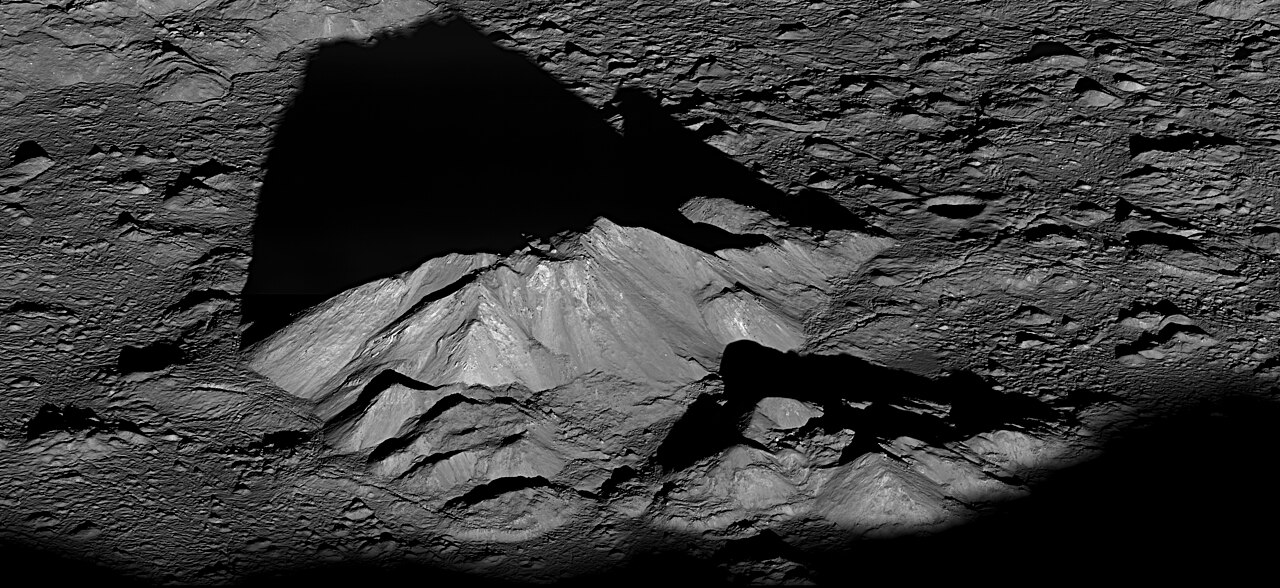
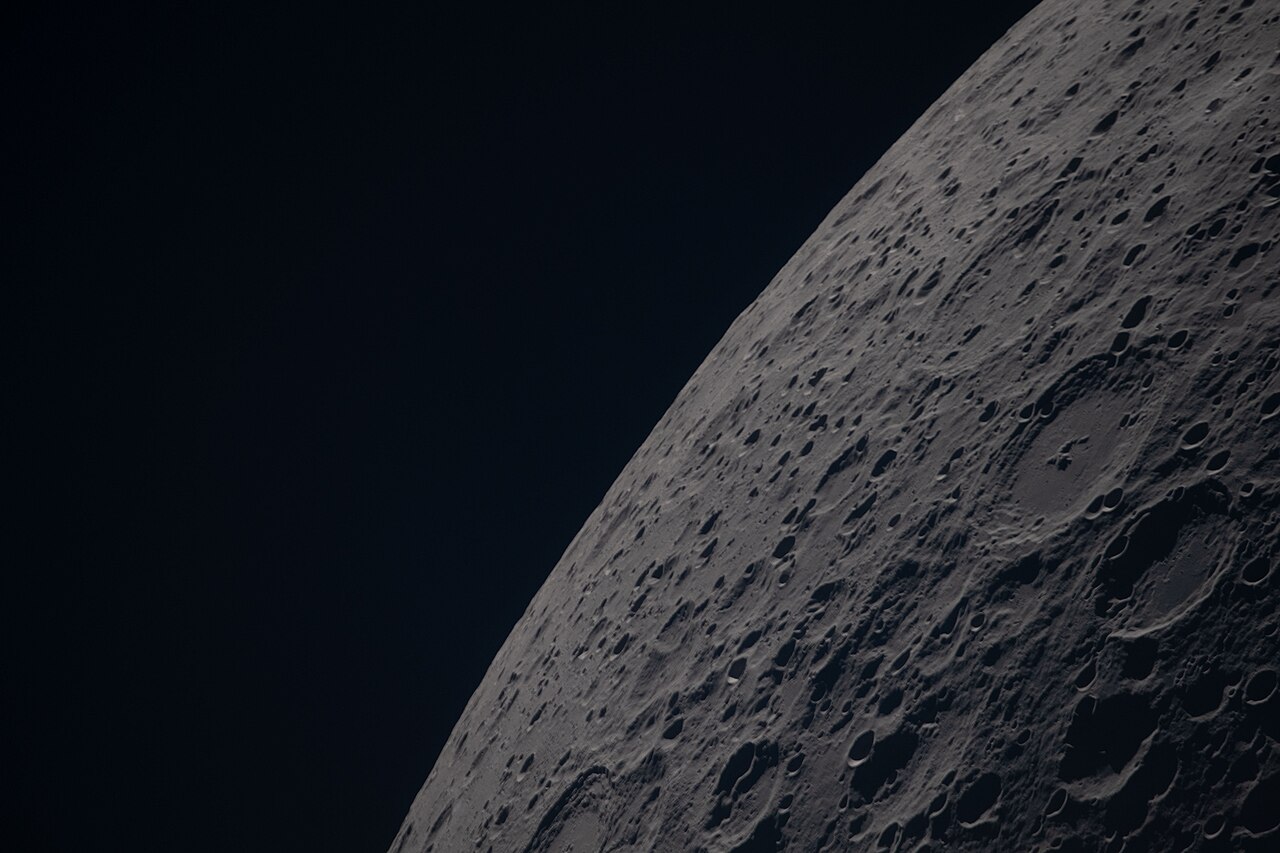
The hemisphere facing Earth is the near side; the opposite one is the far side. One phrase causes endless confusion, so it is worth stating plainly: the far side is not permanently dark. It gets sunlight during the lunar day just as the near side does.
The term "dark side" historically meant "unknown side," not an unlit one. Any given spot on the Moon gets roughly two weeks of sunlight followed by roughly two weeks of night.
The two hemispheres look genuinely different, and the difference is a real scientific puzzle. The near side has broad dark maria, ancient lava plains that make the familiar face pattern.
The far side is more heavily cratered, has a thicker crust, and almost no maria. Scientists still debate exactly why the Moon's two faces diverged so sharply, with giant ancient impacts among the leading suspects.
Does the Moon rotate?
Yes, once on its axis every 27.3 days. That synchronized spin is exactly why the same face points at Earth.
What is tidal locking in simple terms?
Gravity slowly brakes a moon's spin over millions of years until one rotation takes exactly one orbit, so the same face always points at the planet.
Is the far side of the Moon really dark?
No. It receives just as much sunlight as the near side. "Dark side" originally meant the unknown side, not an unlit one.
How much of the Moon can we see from Earth?
About 59% over time, thanks to libration, the Moon's gentle apparent rocking. The other 41% was first photographed by the Soviet Luna 3 probe in October 1959.
Are other moons tidally locked too?
Yes. All of the solar system's large moons are tidally locked to their planets, and Mercury sits in a related 3:2 spin-orbit resonance with the Sun.
The bottom line
We see only one side of the Moon because gravity played the long game. Earth's uneven pull stretched the young Moon, flexed it, and slowly braked its spin until rotation matched orbit at 27.3 days, locking one face toward us forever.
A gentle wobble lets us peek at 59% of the surface instead of 50, and spacecraft have now mapped the rest, including a far side that is sunlit, heavily cratered, and anything but dark. The next time you look up at the familiar face, remember that the hidden one was a mystery until a Soviet probe snapped it in 1959, and that the same patient gravity is still at work on moons all over the universe.
Latest in Science
- Why can nothing go faster than light?
- How does DNA store instructions for the body?
- Why cluttered slides hurt learning
Subscribe to the Rive News newsletter for one curious explainer every morning.
Related stories
Why diamond is hard and graphite is soft when both are carbon
Diamond and graphite are both pure carbon, yet diamond is 10 on the Mohs scale and graphite is 1 to 2. The difference is not the atoms;

Why Hot Water Can Freeze Faster Than Cold: The Mpemba Effect Explained
Hot water can freeze faster than cold under specific conditions. The Mpemba effect, named for a 1963 schoolboy experiment, still divides
How Magnets Work at the Atomic Level: Spins, Domains, and Iron
Magnetism comes from electrons: their spin and orbits make each atom a tiny magnet. In iron, quantum forces align these atomic magnets into