
What Is the Speed of Light and Why Can Nothing Go Faster?
Key takeaways
- Light in a vacuum travels at exactly 299,792,458 metres per second, and every observer measures the same value.
- The limit comes from relativity: as an object with mass approaches that speed, the energy needed to accelerate it further grows without bound.
- Faster-than-light travel would break cause and effect, since a signal could arrive before it was sent.
Light feels instant. Flip a switch and the room brightens at once. Yet light does travel, and it travels at a fixed speed that no object with mass can match, let alone beat.
The number is famous. The reason behind it is stranger, and it has little to do with light itself.
This article explains what is the speed of light and why can nothing go faster, including what the number means, why the speed is the same for everyone, and why the limit protects cause and effect.
The number, and what it means
The speed of light in a vacuum is exactly 299,792,458 metres per second. Britannica gives that value as the defined speed of light in a vacuum, and notes that it is a fundamental constant of nature. In rounder terms, that is about 300,000 kilometres per second, or about 186,000 miles per second.
The word "exactly" carries real weight here. Since 1983, the metre itself has been defined by the speed of light: one metre is the distance light travels in a vacuum in 1/299,792,458 of a second. The speed is not measured against the metre.
The metre is defined by the speed.
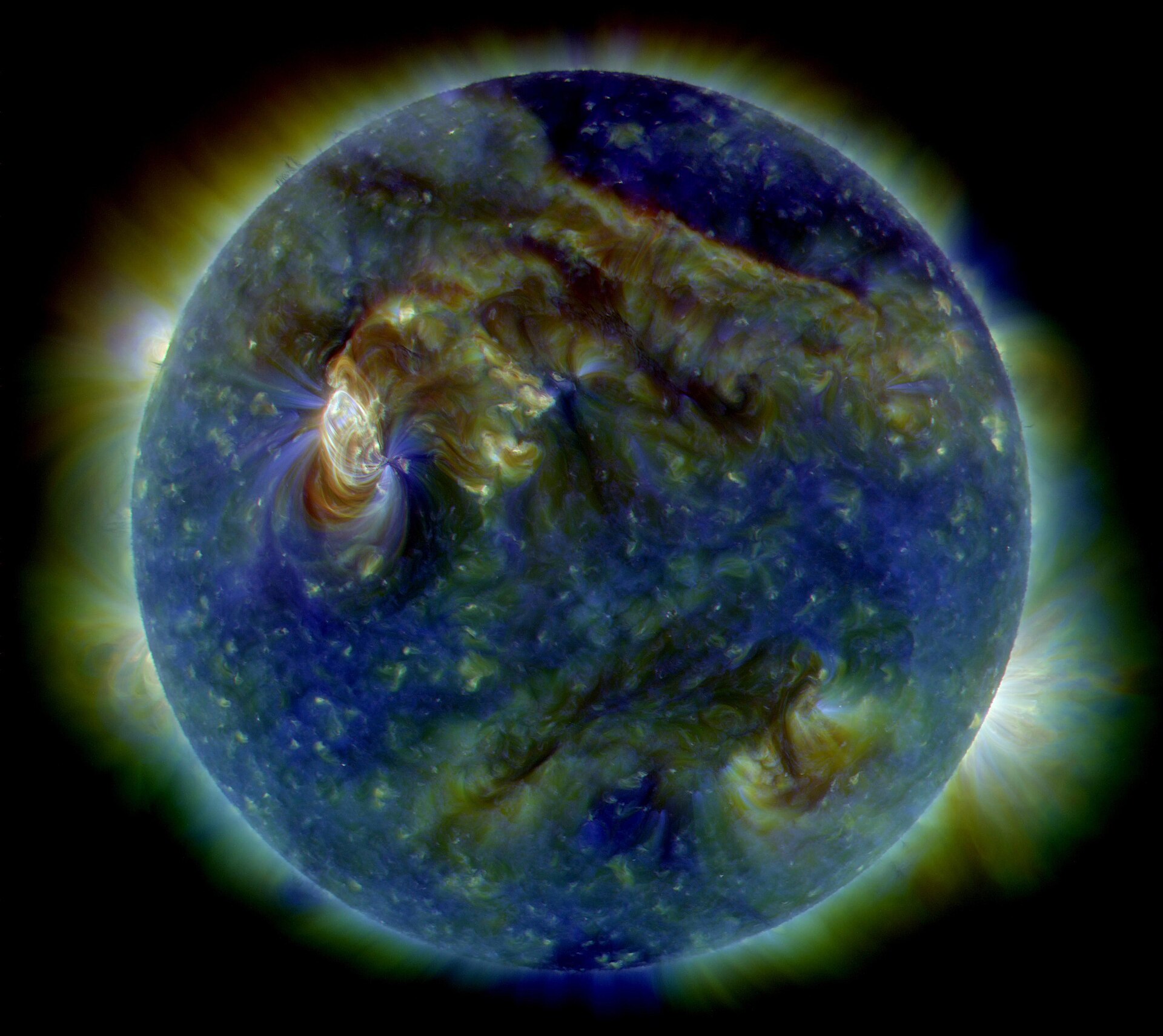
That speed is fast enough to circle Earth about seven and a half times in one second. It is also slow enough to matter across space. Sunlight takes about 8 minutes and 10 to 27 seconds to reach Earth, depending on the time of year, and light from the Moon takes about 1.3 seconds.
Light from the nearest star beyond the Sun takes about 4.2 years to arrive. When astronomers look at distant galaxies, they are seeing light that left its source millions of years ago.
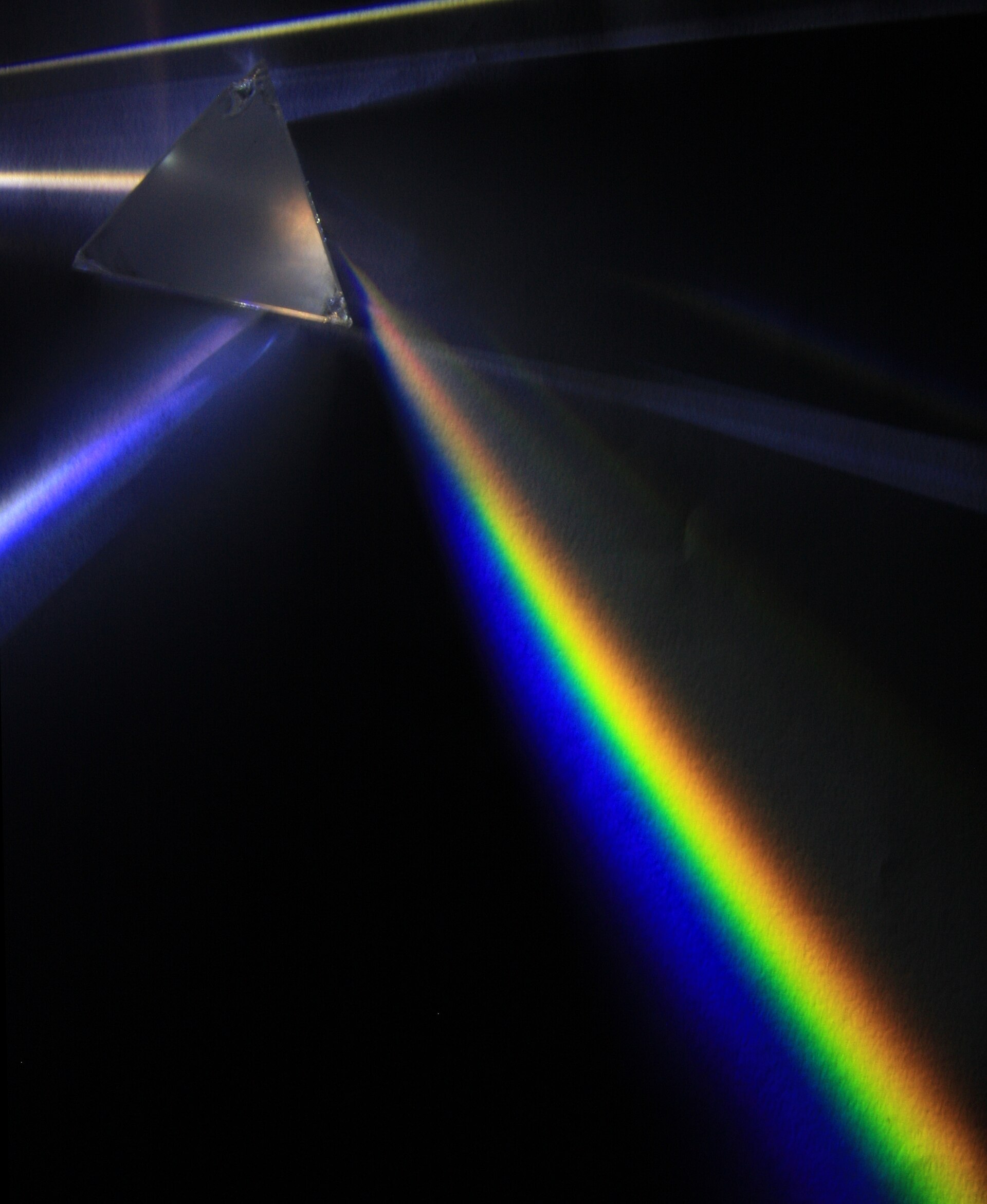
Light slows down when it passes through matter. In water or glass, it travels more slowly than in a vacuum, which is why a straw in a glass looks bent at the surface. The cosmic speed limit refers to the vacuum value, the fastest light ever travels, and it is the same in every direction and for every observer.
Why the speed is the same for everyone
Everyday speeds add up the way you would expect. If you walk toward an oncoming train, the train approaches you faster than it approaches someone standing still. Light refuses to behave that way.
If you race toward a beam of light, the light still approaches you at exactly c. If you run away from it, it still approaches you at c.
This was the key insight behind Albert Einstein's special theory of relativity, published in 1905. Einstein built the theory on two postulates. The first says the laws of physics are the same for all observers moving at a steady velocity. The second says the speed of light in a vacuum is the same for all observers, whatever the motion of the source or the observer.
That second postulate sounds impossible, and it took a famous failed experiment to make physicists take it seriously. In 1887, Albert Michelson and Edward Morley tried to detect Earth's motion through a supposed medium called the ether, which light was thought to need. They found no difference in the speed of light in any direction.
The null result stood: light's speed does not depend on how the observer moves.
Einstein took that result at face value. If the speed of light is fixed for everyone, then something else has to give. What gives is space and time themselves.
Clocks moving at high speed tick more slowly than clocks at rest, an effect called time dilation. Lengths shrink in the direction of motion, an effect called length contraction. Space and time bend so that the speed of light stays constant, which is the same kind of trade-off behind why a compass finds north wherever you stand: the underlying field, not the instrument, sets the rule.
Why mass can never reach the speed of light
Pushing an object faster takes energy. At everyday speeds, the cost is manageable. As an object approaches the speed of light, the cost climbs steeply.
Relativity says that the energy needed to accelerate a massive object to exactly c is infinite, and no finite source can supply infinite energy.
There is a helpful way to picture it. The energy you pour into acceleration stops showing up as extra speed and starts showing up as extra mass, in the sense that the object resists further acceleration more and more. At 90% of light speed, a push that once added a lot of speed adds little.
At 99.9%, the same push adds almost nothing. The last fraction of a percent would demand more energy than the universe contains.
Particle accelerators test this every day. Physicists accelerate electrons and protons to within a whisker of light speed, using enormous machines and enormous power, and the particles still never cross the line. They gain energy, but their speed creeps ever closer to c without reaching it.
The limit is not an engineering problem waiting for a better engine. It is built into how space and time work.
Only massless particles travel at c. Photons, the particles of light, have no rest mass, so they move at the speed limit by nature. They never speed up or slow down in a vacuum.
They simply travel at c from the moment they are created until they are absorbed.
Why faster than light would break cause and effect
The energy argument explains why massive objects cannot reach c. A deeper argument explains why nothing, not even a signal, can exceed it. In relativity, the speed of light is not just a speed limit.
It is the speed of causality, the fastest rate at which one event can influence another.
Imagine you could send a message faster than light. In some frames of reference, that message would arrive before it was sent. An effect would precede its cause.
You could, in principle, receive a reply to a message you had not yet written, or warn yourself about an event before it happened. Physics has no room for that kind of loop, because the whole structure of cause and effect depends on events happening in a consistent order.
This is why physicists treat faster-than-light travel as forbidden rather than merely difficult. It is not that nobody has built a fast enough rocket. It is that a universe where signals outrun light is a universe where cause and effect stop making sense.
The speed limit keeps the timeline consistent for every observer, even if observers disagree about which of two distant events happened first.
The same limit shapes astronomy. Because no signal travels faster than light, there is a hard edge to what any observer can ever see or know about. Distant galaxies may exist beyond our observable horizon, but their light has not had time to reach us, and it never will if space keeps expanding.
We see the universe as it was, not as it is, and the delay grows with distance.
Common confusions, cleared up
Space itself can expand faster than light, and that does not break the rule. The speed limit applies to objects and signals moving through space, not to the stretching of space itself. Distant galaxies can recede from us faster than c because the space between us is growing, not because the galaxies are moving through space at that speed.
Shadows and light spots can also appear to move faster than light. Sweep a laser pointer across the Moon, and the spot can cross the lunar surface faster than c. But the spot is not a physical object, and no signal travels from one edge of the Moon to the other.
Each photon still travels at c from the pointer to the Moon. The pattern moves, the light does not.
Quantum entanglement confuses people for a similar reason. Two entangled particles show linked results when measured, even across great distances. But entanglement carries no usable signal faster than light, and no message can be sent through it.
The speed limit survives.
Finally, the speed of light is not a property of light bulbs or lasers. It is a property of spacetime, the same structure that sets how clocks tick and how gravity works. Light simply happens to travel at the limit because photons have no mass.
If light did not exist, the limit would still be there, governing every signal and every particle. For the related story of how gravity pulls things down, the same spacetime framework is at work.
Does light ever slow down?
Yes. Light travels more slowly through water, glass, and other materials than through a vacuum. The cosmic speed limit refers to the vacuum value of exactly 299,792,458 metres per second.
What happens to time at the speed of light?
Time dilation means a moving clock ticks more slowly than a clock at rest. At the speed of light, the effect reaches its extreme, which is one more reason massive objects cannot get there.
Could a wormhole or warp drive beat the limit?
Such ideas appear in speculative physics, but they rely on exotic matter nobody has found, and they raise the same causality problems. No experiment has shown any of them to work.
Why is the speed of light used to define the metre?
Because it is a fixed constant of nature, identical for every observer. Defining the metre from it gives every measurement a stable anchor that does not depend on a physical object. The same measurement logic applies to calendars, as our guide to why leap years happen explains.
The bottom line
Light in a vacuum travels at exactly 299,792,458 metres per second, the same for every observer, and nothing with mass can reach that speed because the energy required grows without bound. The limit is not about light at all. It is the speed of causality itself, the rule that keeps cause before effect across the whole universe.
Tags: speed of light, relativity, Einstein, physics
Latest in Science
- Why Does Gravity Pull Things Down?
- Why Do Leap Years Happen, and What Without Them?
- How Does a Compass Find North?
- Why Do Some Places Get More Earthquakes?
Subscribe for one plain-language science explainer each week.
Related stories

Why diamond is hard and graphite is soft when both are carbon
Diamond and graphite are both pure carbon, yet diamond is 10 on the Mohs scale and graphite is 1 to 2. The difference is not the atoms;

Why Hot Water Can Freeze Faster Than Cold: The Mpemba Effect Explained
Hot water can freeze faster than cold under specific conditions. The Mpemba effect, named for a 1963 schoolboy experiment, still divides

How Magnets Work at the Atomic Level: Spins, Domains, and Iron
Magnetism comes from electrons: their spin and orbits make each atom a tiny magnet. In iron, quantum forces align these atomic magnets into