
What Is Gravity and Why Does It Pull Things Down
Key takeaways
- Gravity is the effect of mass curving spacetime, not an invisible rope pulling objects down.
- Near Earth, falling objects speed up by about 9.8 meters per second every second.
- Newton describes everyday gravity well, while Einstein explains the deeper geometry behind it.
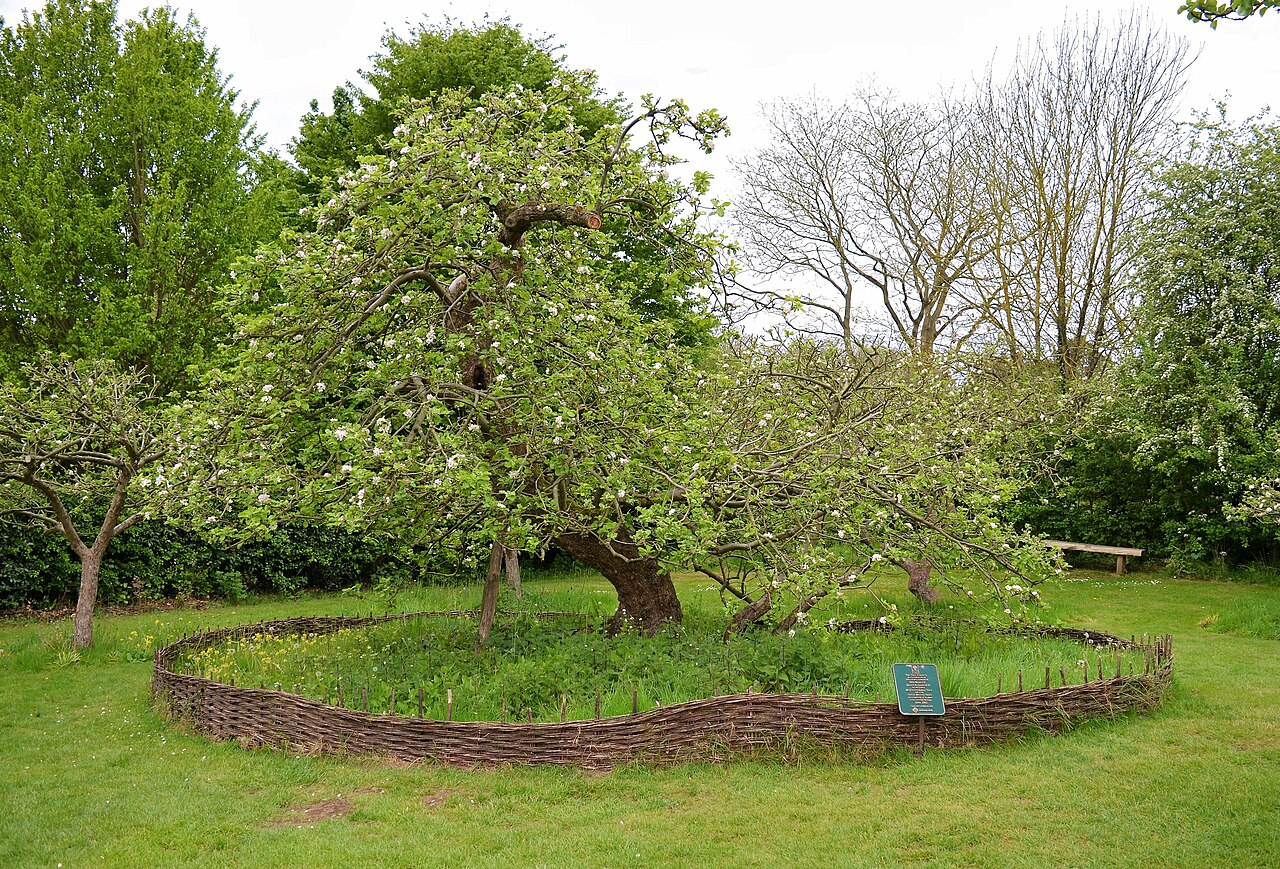
Drop a pencil and it falls. Jump and you come back down.
The Moon stays in orbit instead of drifting away. All three events trace back to gravity, the most familiar force in daily life and one of the strangest in physics.
The short answer is that mass shapes the space and time around it. Objects then follow the straightest possible paths through that shaped spacetime, and near Earth those paths lead downward. What feels like a pull is really geometry guiding motion.
This article explains what gravity is, including how Newton described it, how Einstein reframed it, why falling feels like a pull, and where each view still applies.
The everyday picture: everything falls together
Near Earth's surface, gravity gives falling objects an acceleration of about 9.8 meters per second squared. Ignore air resistance, and a dropped object gains about 9.8 meters per second of downward speed every second it falls. That number is called g, and it is the same for a feather and a hammer in a vacuum.
Mass and weight are not the same thing. Mass is how much matter an object holds, and it stays constant wherever the object goes. Weight is the force gravity exerts on that mass, so it changes with location.
NASA puts it plainly: weight equals mass times gravitational acceleration. A 70-kilogram person weighs about 686 newtons on Earth. The same person on the Moon, where gravity runs near 1.6 meters per second squared, weighs about one-sixth as much.
This split explains why astronauts float without escaping gravity. At the International Space Station, gravity still runs at about 90 percent of its surface strength, according to Universal Sci. The station and its crew are in continuous free fall around Earth, so everything inside falls together and feels weightless.
Air resistance complicates the picture on the ground. A feather falls slowly because air pushes back against its light frame. A hammer punches through air with little resistance.
In a vacuum chamber, both land together, which shows that gravity alone treats all masses alike.
What Newton figured out
Isaac Newton published his theory of gravitation with his laws of motion in 1686, according to NASA. His law says the gravitational force between two particles equals a constant times the product of their masses, divided by the square of the distance between them. In symbols, F equals G times m1 times m2, divided by d squared.
The law carries two plain lessons. More mass means more pull, so Earth pulls far harder than a person does. More distance means less pull, and the drop is steep, since doubling the distance cuts the force to a quarter.
Newton's law also explains orbits. The Moon keeps falling toward Earth, but its sideways speed keeps it missing the ground. An orbit is a fall that never lands, repeated forever.
For most everyday engineering, Newton still rules. Bridge loads, rocket launches, and satellite paths all come out of his equations. NASA notes that for objects the size of a rocket flying near Earth, descriptions from three hundred years ago still work well.
Newton's view had one gap. It described gravity as a force acting across distance, but it never explained how that force reached across empty space. That question waited more than two centuries for Einstein.
What Einstein changed
Albert Einstein reframed gravity in 1915 with general relativity. Instead of a force reaching across space, he described gravity as the curvature of spacetime itself. Space and time are woven into one four-dimensional fabric, and mass dents that fabric.
The physicist John Archibald Wheeler summed up the idea in one line: "Matter tells spacetime how to curve, and curved spacetime tells matter how to move." A planet curves the spacetime around it, and other objects move along the straightest paths through that curve.
Those straightest paths are called geodesics. Near Earth, the straightest path through curved spacetime points down. An apple falls because the geometry of spacetime near Earth makes "down" the straight way to go.
Time curves too, not just space. Clocks run slightly slower deeper in a gravitational field than higher up.
Your head ages a touch faster than your feet, though the gap is far too small to notice. GPS satellites must correct for this effect, or their timing would drift off within a day.
Light follows the same geometry. Starlight bends as it passes near the Sun, because light follows the curve of spacetime. That bending was confirmed during a 1919 eclipse, and it helped turn general relativity from a theory into accepted physics.
Why falling feels like a pull
If gravity is geometry, why does it feel like a force yanking you down? The answer is that you are not in free fall.
The ground pushes up on your feet and stops you from following your natural path through spacetime. The squeeze you feel is the floor resisting your fall, not gravity grabbing you.
A falling person feels the difference. In free fall, before air resistance builds, a skydiver feels weightless.
Nothing pushes back, so the body follows its spacetime path without resistance. The sensation of weight returns only when something stops the fall.
This also explains why orbit feels like floating. Astronauts in orbit are falling continuously, but they never hit the ground because their sideways speed carries them around the planet. Everything inside the station falls at the same rate, so nothing pushes against anything else.
Think of a marble rolling on a stretched rubber sheet with a heavy ball in the middle. The sheet dips near the ball, and the marble curves toward it.
Nothing pulls the marble by a rope. The shape of the sheet steers it. Spacetime works in a similar way, though the real math runs in four dimensions, not two.
The sheet picture has limits. A rubber sheet needs an outside pull to sag, while spacetime curves on its own. Treat the image as a sketch, not a literal model, and the core idea still holds.
Gravity across the solar system
Gravity changes with mass and radius, so every world pulls differently. The National Space Society lists Earth's surface gravity at 9.8 meters per second squared. The Moon sits near 1.6, Mars near 3.7, and Jupiter near 24.5.
Those numbers set how high you could jump on each world. On the Moon, a jump that clears half a meter on Earth would clear about three meters. On Jupiter, the same effort would barely leave the ground.
Distance matters as much as mass. Gravity weakens with height, though the drop is slow at first.
Climbing a mountain changes your weight by a fraction of a percent. Reaching orbit changes it more, but the station still feels 90 percent of surface gravity.
Tides show gravity's reach across distance. The Moon's gravity pulls harder on the near side of Earth than on the far side. That uneven pull stretches the oceans and drives the daily tides.
Black holes mark the extreme end. Pack enough mass into a small enough space, and spacetime curves so steeply that no path leads out. Light itself follows a path that stays inside, which is why black holes look black.
Why does the Moon not fall into Earth?
It does fall, constantly. Its sideways speed keeps it missing Earth, so the fall becomes an orbit. The same balance holds every satellite and planet in place.
If gravity is not a force, why do we call it one?
Because the word works in daily life. Engineers still compute gravitational force with Newton's law, and the answers are right. Physicists keep "force" as shorthand, even when the deeper picture is geometry.
Do heavy objects fall faster than light ones?
No, not in a vacuum. Gravity accelerates all masses equally, so a hammer and a feather land together without air. On the ground, air resistance makes light, flat objects fall more slowly.
Why do we weigh less on a mountain?
Two effects add up. The extra height puts you farther from Earth's center, which weakens gravity slightly. The mountain's own mass adds a tiny pull of its own, but the distance effect wins by a small margin.
The bottom line
Gravity pulls things down because mass curves spacetime, and falling objects follow the straightest path through that curve.
Newton captured the force well enough for rockets and bridges, while Einstein revealed the geometry underneath. The next time you drop a pencil, remember that it is not being dragged down. It is following the shape of the universe around Earth.
Tags: gravity, physics, Einstein, spacetime
Latest in Science
- Why leap years happen, and what breaks without them
- How a compass finds north
- How vaccines train the immune system, in simple terms
- Why nothing can go faster than the speed of light
Subscribe for one useful explainer each week, written in plain English.
Related stories

Why diamond is hard and graphite is soft when both are carbon
Diamond and graphite are both pure carbon, yet diamond is 10 on the Mohs scale and graphite is 1 to 2. The difference is not the atoms;

Why Hot Water Can Freeze Faster Than Cold: The Mpemba Effect Explained
Hot water can freeze faster than cold under specific conditions. The Mpemba effect, named for a 1963 schoolboy experiment, still divides

How Magnets Work at the Atomic Level: Spins, Domains, and Iron
Magnetism comes from electrons: their spin and orbits make each atom a tiny magnet. In iron, quantum forces align these atomic magnets into