
James Webb and Hubble photograph the ghostly Cat's Head Nebula, 7,500 light-years away
Web StoryWatch this story in 15 seconds →Key takeaways
- NASA released new Hubble and Webb images of the Cat's Head Nebula on October 29, 2026. It sits about 7,500 light-years away inside the Carina Nebula.
- The dust cloud looks like a cat sitting with its back to us. Its glowing "eye" is most likely a young star still wrapped in dust.
- Hubble's visible-light view and Webb's infrared views show different layers of the same cloud.
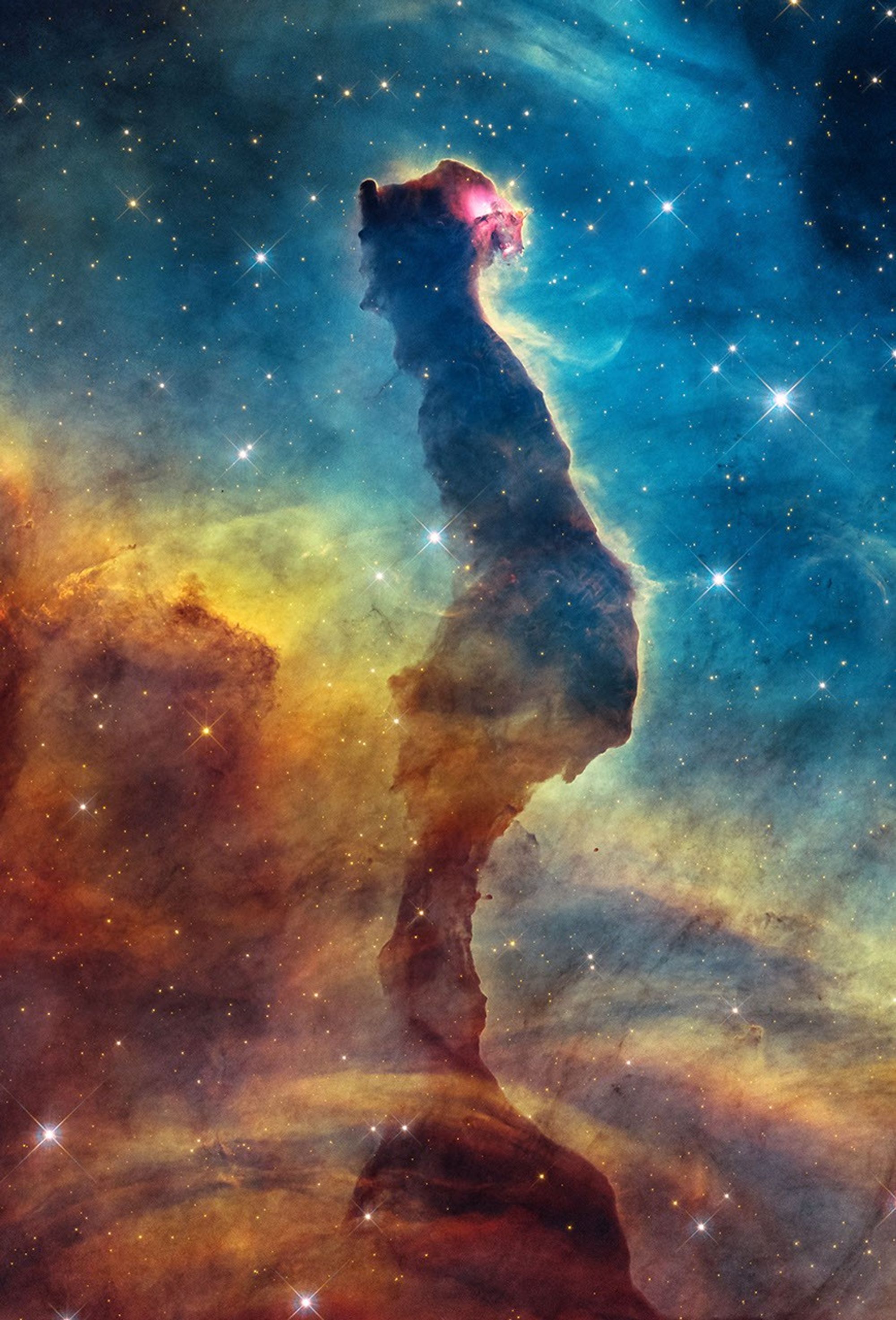
NASA's two great space telescopes just photographed a ghostly cat in space: the Cat's Head Nebula, a cat-shaped cloud of gas and dust. It lies about 7,500 light-years from Earth inside the much larger Carina Nebula. New stars are forming inside it right now.
What happened
NASA released three new images on October 29, 2026, two days before Halloween. The Hubble Space Telescope and the James Webb Space Telescope both pointed at one small patch of sky. They captured the same object in very different kinds of light.
The small region got its nickname from its shape. It looks like a cat sitting with its back toward us. The cat's head is turned to the right, and one glowing eye shines out.
Hubble took the visible-light image, the kind of light our eyes can see. It shows an opaque pillar of dark brown dust. A bright rim of glowing gas runs along the cat's edge.
Blue areas around it come from hot glowing gas and starlight bouncing off dust.
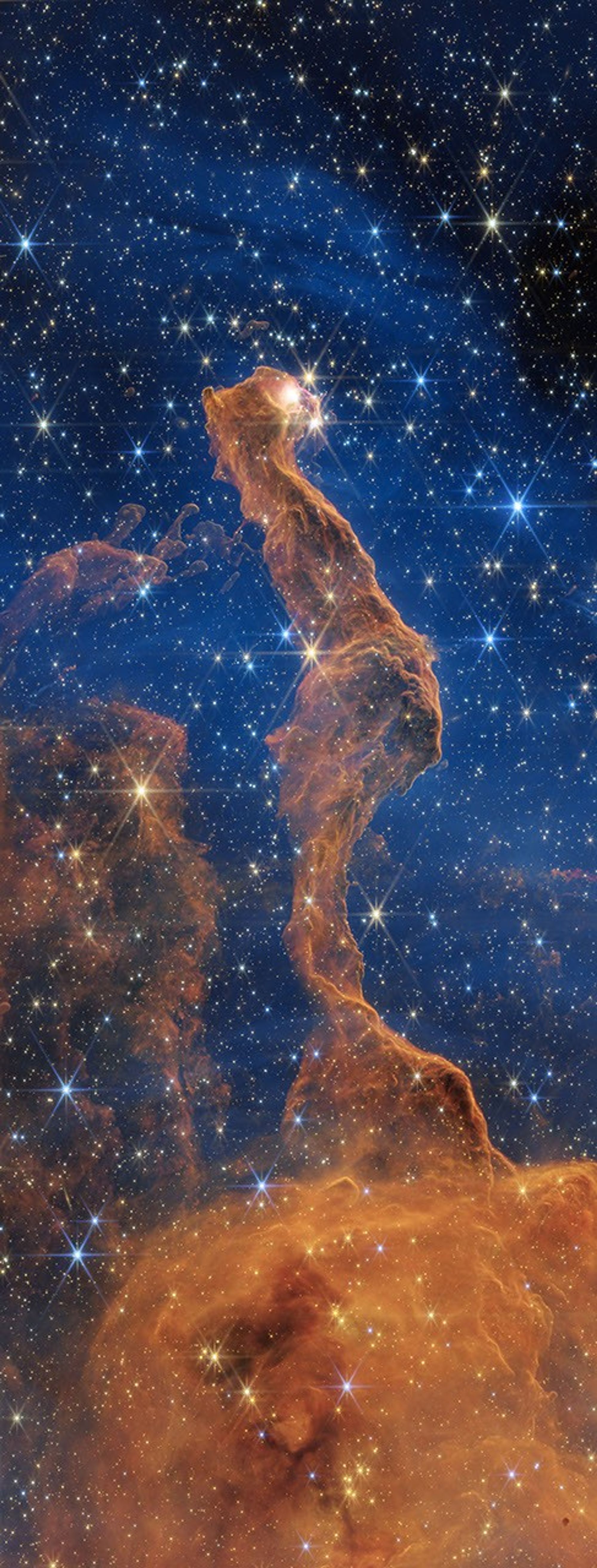
Webb took two infrared images. Infrared light is invisible to our eyes, but it can pass through dust. That lets Webb show parts of the cloud that Hubble cannot see.
The near-infrared image shows the pillar turning more transparent. Webb reveals a dense crowd of blue and yellow stars behind the dust. It even catches faint faraway galaxies shining through our own galaxy.
The mid-infrared image shows a different picture again. It traces warm dust and carbon-based molecules lit up by starlight. Colors shift where local conditions change.
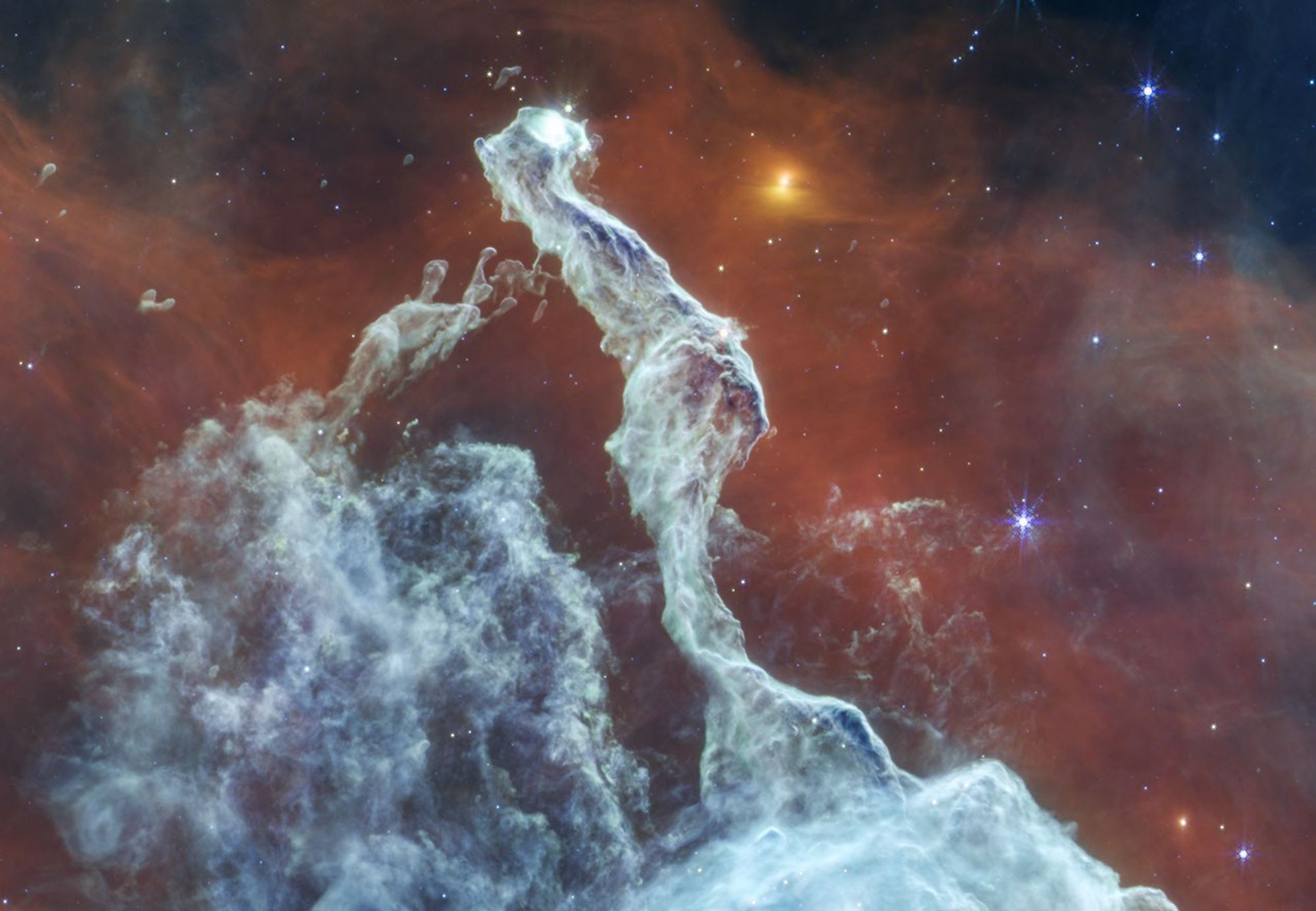
Delicate strands and small blobs stand out to the left of the pillar.
The cat's glowing eye changes color in each image. Hubble shows it red. Webb shows it yellow in near-infrared and white in mid-infrared.
NASA says the eye is most likely a young star still buried in dust.
To the right of the pillar, Webb spotted another bright source. It is most likely an infant star wrapped in dust.
A thin filament crosses over it. NASA says the image alone cannot prove the two are linked.
Why it matters
This release shows why astronomers use more than one telescope. Hubble sees the shape of the dust. Webb sees through the dust to the stars inside.
Together, they tell a fuller story than either could alone.
The images also help scientists study how stars are born. Star formation is chaotic and hard to watch up close. The Cat's Head Nebula is a small, clear example of the process at work.
The cat's head shape has a violent cause. Intense ultraviolet radiation and strong winds blow out from massive stars nearby.
These stars sit in the Carina Nebula. This "stellar feedback" slowly eats away the loose gas and dust.
The densest material holds out the longest, at least for now. That is how the narrow pillar survived.
The bright rim on the cat's right side marks gas being boiled away. Ultraviolet light heats it first. NASA calls this process photoevaporation.
The colors in Hubble's image are not random. Its filters capture light from oxygen, hydrogen, and sulfur, plus starlight scattered by dust. Blue, cyan, yellow, orange, and red reveal a mix of hot gas, dust, and starlight.
Webb brings its own strength. It is the largest and most powerful telescope ever launched. NASA built it with the European Space Agency and the Canadian Space Agency.
Europe provided its Ariane 5 launch vehicle for the launch.
Hubble has been flying for more than three decades. It is a joint project of NASA and the European Space Agency.
Together, the two telescopes keep watching the same sky in different kinds of light. For another NASA telescope story, read about NASA's Swift telescope falling back to Earth.
The glowing colors in these nebula images come from gases lit up by starlight. The same physics makes the sky turn orange at sunrise and sunset.
What happens next
The Cat's Head Nebula will not look like a cat forever. NASA says it is a temporary scene. It will slowly disperse as new stars form and evolve.
But while it lasts, it is rich with information for astronomers. They will keep studying these images. They want to learn how gas clouds collapse into stars.
The scene also teaches the public. Space agencies timed the release for Halloween, and the spooky timing helped the story spread. PetaPixel called Webb's mid-infrared view the spookiest of the three.
NASA also released a short visualization video called "Exploring the Cat's Head Nebula." It walks viewers through the Hubble and Webb images side by side. Joseph DePasquale of the Space Telescope Science Institute processed all three pictures.
The Carina Nebula remains one of Webb's favorite targets. More images will follow.
The northern lights show how invisible energy from space can paint the sky.
Related stories
Why diamond is hard and graphite is soft when both are carbon
Diamond and graphite are both pure carbon, yet diamond is 10 on the Mohs scale and graphite is 1 to 2. The difference is not the atoms;

Why Hot Water Can Freeze Faster Than Cold: The Mpemba Effect Explained
Hot water can freeze faster than cold under specific conditions. The Mpemba effect, named for a 1963 schoolboy experiment, still divides
How Magnets Work at the Atomic Level: Spins, Domains, and Iron
Magnetism comes from electrons: their spin and orbits make each atom a tiny magnet. In iron, quantum forces align these atomic magnets into