
Why hiking boots have hooks at the top
By Rive News / Research desk | Rive News / Published October 28, 2026 at 9:00 AM PKT
Key takeaways
- The hooks are speed hooks: open metal fittings that let laces wrap on instead of threading through.
- They sit at the top because the ankle cuff is where fast tightening and loosening matter most.
- Hooks trade a little security for speed, so the lower eyelets still do the fine fitting work.
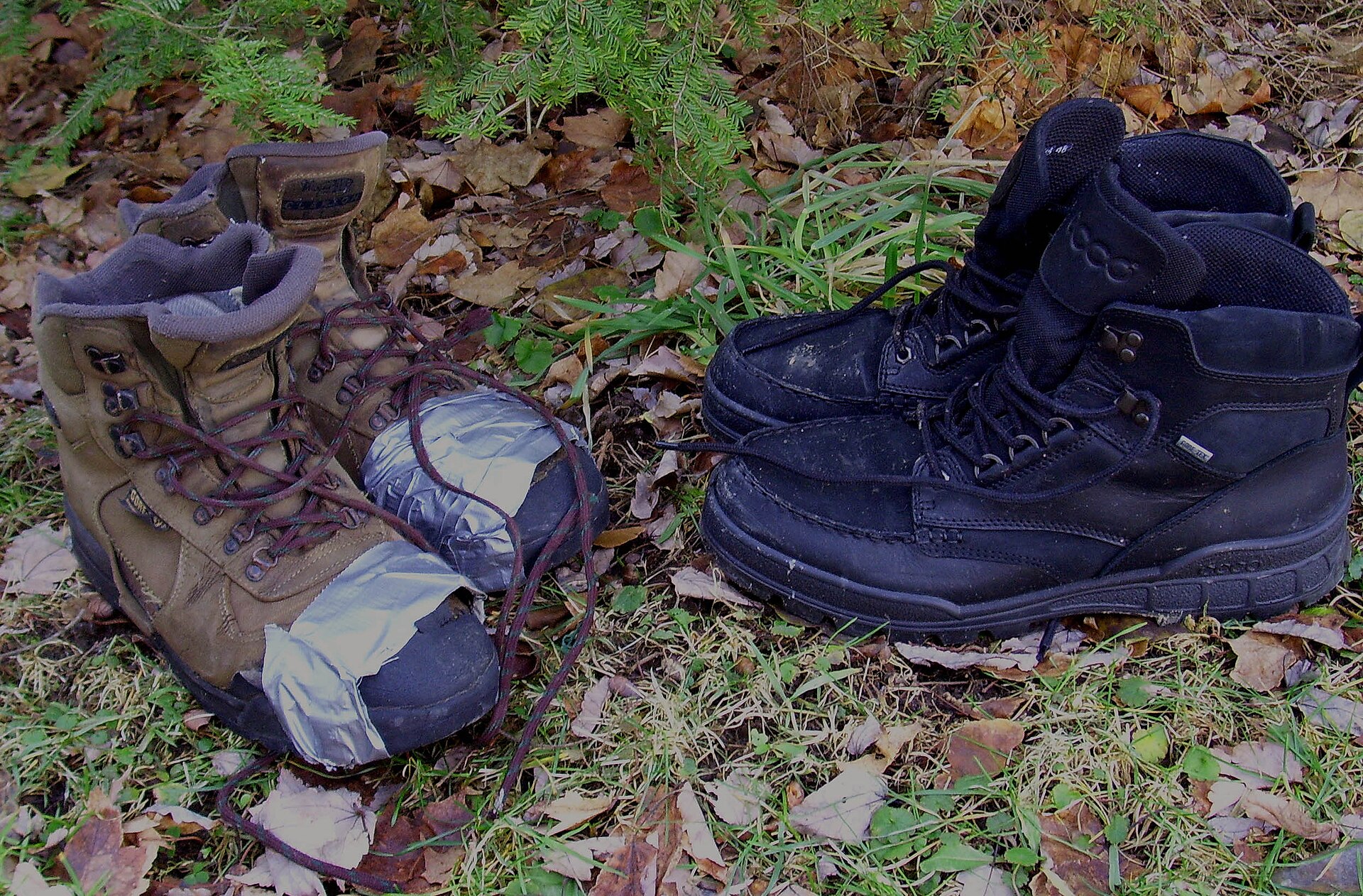
[A pair of hiking boots with lacing hardware at the ankle cuff.] Photograph: Wikimedia Commons contributor
Image Credits: Wikimedia Commons
Hiking boots have hooks at the top because lacing a tall boot through eyelets all the way up is slow and fiddly. The hooks, usually called speed hooks, replace the top few eyelets with open metal fittings. Instead of threading a lace through a hole, the wearer loops it around the hook and pulls.
The arrangement is a deliberate split of labour. Eyelets lower down the boot give a secure, precise fit around the foot. Hooks at the top give fast adjustment around the ankle, where the boot needs to open wide for putting on and taking off.
This article explains how speed hooks work, why they sit where they do, what they do for heel fit, and where they fall short of eyelets.
What a speed hook actually is
A speed hook is a small open hook, usually metal, riveted or screwed to the boot's upper near the collar. The lace wraps around its open notch rather than passing through a closed ring.
Boot hardware guides describe the usual layout: eyelets run up the lower part of the boot, and hooks begin above the last eyelet, at the throat of the boot near the opening. Most boots carry 3 to 4 pairs of hooks at the top, according to a hardware guide from China Hardware, leaving the lower eyelets for fine fit around the foot.
The open shape is the whole point. Threading a lace through an eyelet needs two actions: pushing the tip through, then pulling it out the other side. Wrapping a lace around a hook needs one motion, and it works even when the lace tip is frayed or the wearer's fingers are cold.
Why the top of the boot is where speed matters
The ankle cuff is the widest, stiffest part of a tall boot. To get a foot in, the cuff must open wide, and to lock the foot down, it must close firmly again. Doing that through closed eyelets takes time on every single wear.
Cold makes the difference obvious. A hiker finishing a long day with numb fingers, or lacing up in a chilly camp while wearing gloves, will struggle to thread small eyelets. Hooks forgive clumsy handling because the open shape guides the lace into place instead of demanding precision.
Boot maker Grant Stone puts the convenience point plainly in its hardware notes: with eyelets, wearers usually must unlace one or two of the top eyelets to remove the footwear, while hooks let the boot open and close without unthreading. The firm adds that its hooks spin slightly, following the laces as they are torqued in different directions, which stops the hooks wearing the laces down.
How hooks help lock the heel
Fit around the ankle is not just comfort. A heel that lifts on climbs causes blisters, and a foot that slides forward on descents bruises toes against the front of the boot.
Pulling laces tight around the hooks creates downward and backward pressure that seats the heel into the boot's heel cup. Because the lace only touches the edge of the hook, tension transfers directly to the upper with less friction than threading through eyelets.
Hiking boot guides describe this as the most important job of the ankle area: a snug cuff supports the ankle on uneven ground and stops the twisting and sliding that lead to blisters. Hooks make that snug fit reachable in seconds, and adjustable in seconds when the trail changes.
For hikers choosing their first boots, the hook-and-eyelet mix is worth checking on the shop floor: lace the boot fully, walk a slope if one is available, and feel whether the heel stays put.
The trade-off: hooks are less secure
Hooks have one real drawback. Because they are open, a lace can pop off a hook under a sharp pull or an awkward angle, while a closed eyelet cannot release a lace at all.
Workwear guides on boot hardware call lace hooks the least secure option for holding laces in place, even though they are sturdier than fabric webbing eyelets. The Hiking Tribe's lacing guide notes the same risk in practice: a steep heel-lock angle can make a lace slip from a speed hook mid-descent, with an audible pop.
The usual answer is technique, not replacement. A firm final knot, a heel-lock loop tied below the hooks, and laces that are not worn smooth all reduce the chance of a pop. Hikers who scramble steep ground sometimes skip the top hook for extra ankle flex, a choice Grant Stone notes some wearers make deliberately.
Materials and wear
Good hooks are brass or stainless steel, which resist corrosion and hold their shape under hard cinching. Cheap plated zinc hooks tarnish faster and can snap when pulled hard, according to hardware guides.
Smooth, rolled hook edges matter too. Rough edges chew through laces, and flat cotton laces catch more than round or oval ones. Replacing worn laces is cheaper than replacing hooks, so checking both during a boot's life extends the pair.
Hooks can also bend if the boot is yanked on carelessly. Most quality hooks can be bent back into position by hand, and cobblers stock replacements for hooks that crack or pull out of the leather.
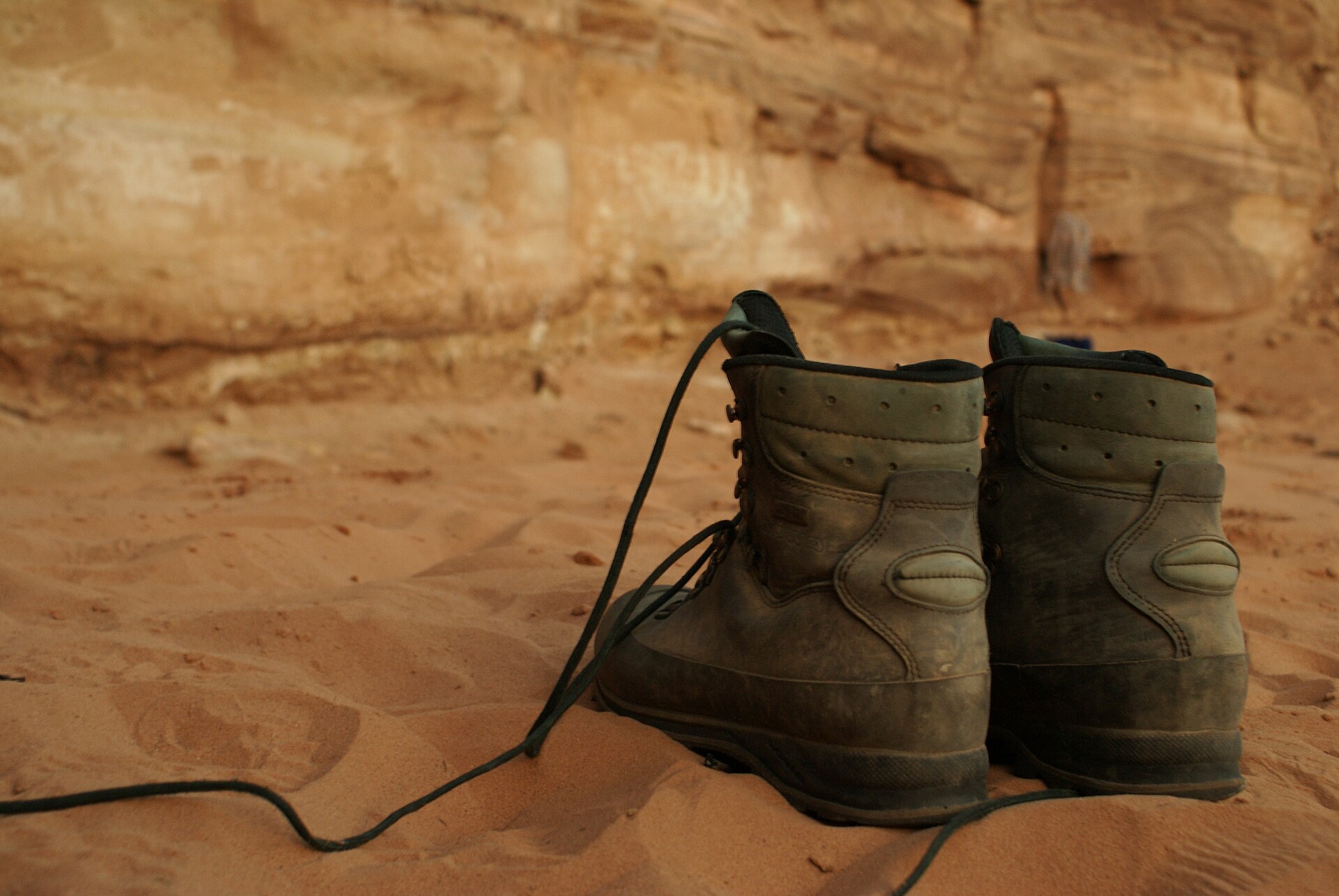
[Hiking boots on sand, with their laced ankle cuffs visible.] Photograph: Wikimedia Commons contributor
Image Credits: Wikimedia Commons
FAQ
Can I replace eyelets with speed hooks on any boot?
A cobbler can fit hooks to most lace-up boots, but the upper must be thick enough to hold the rivets. Thin fashion boots may not take the hardware well, and the change is hard to reverse cleanly.
Why do some boots have D-rings instead of hooks?
D-rings are closed metal loops that hold laces more securely than open hooks while still allowing easier adjustment than punched eyelets. They suit work boots where a popped lace is a safety issue rather than an annoyance.
Do hooks make boots less waterproof?
No. Hooks sit on the outside of the upper and do not pierce the waterproof membrane inside the boot. Leaks usually come from seams, worn membranes or water entering over the collar, not from hardware.
Should I use every hook on the boot?
Most wearers do, but skipping the top pair gives more ankle flex on easy ground. The choice depends on terrain: rough, steep trails reward a fully locked cuff, while flat paths do not need it.
The bottom line
Hiking boots have hooks at the top because the ankle cuff is where speed and adjustment matter most. Eyelets handle precise fit lower down, while open hooks let the wearer open, tighten and remove a tall boot in seconds, even with cold hands.
The price is a small loss of security: an open hook can release a lace where a closed eyelet cannot. For most hikers, that trade is worth it, and good lacing technique covers the gap.
Tags: hiking, boots, footwear design
Rive News's research desk covers outdoor skills and everyday science explainers.
Related
Subscribe to Rive News for one practical explainer each week.
Rive News publishes researched explainers with named sources. Corrections are welcome at any time.
Related stories

Why Is Altitude Sickness Worse for Some People?
Altitude sickness hits some people harder because of genetics, ascent speed, and prior history, not fitness level. Here is what raises risk
Why Do You Get Blisters When Hiking and How to Prevent Them
Friction plus moisture plus heat equals a blister. Learn why hiking breeds all three, and the boots, socks, and tape system that keeps
How to choose hiking boots for beginners: fit, features, and break-in
Beginners should buy for fit first: snug everywhere, tight nowhere, with a thumb's width at the toes. Here is how to size, test,