
Why You Need to Break in Hiking Boots Before the Trail
Key takeaways
- Break-in molds stiff boot materials to your foot shape and toughens your feet against friction at the same time.
- Leather boots typically need 2 to 4 weeks (20 to 50 miles). Modern synthetic boots are often ready within a week.
- The real test is finding hot spots on short practice walks, because blisters are among the most common hiking injuries.
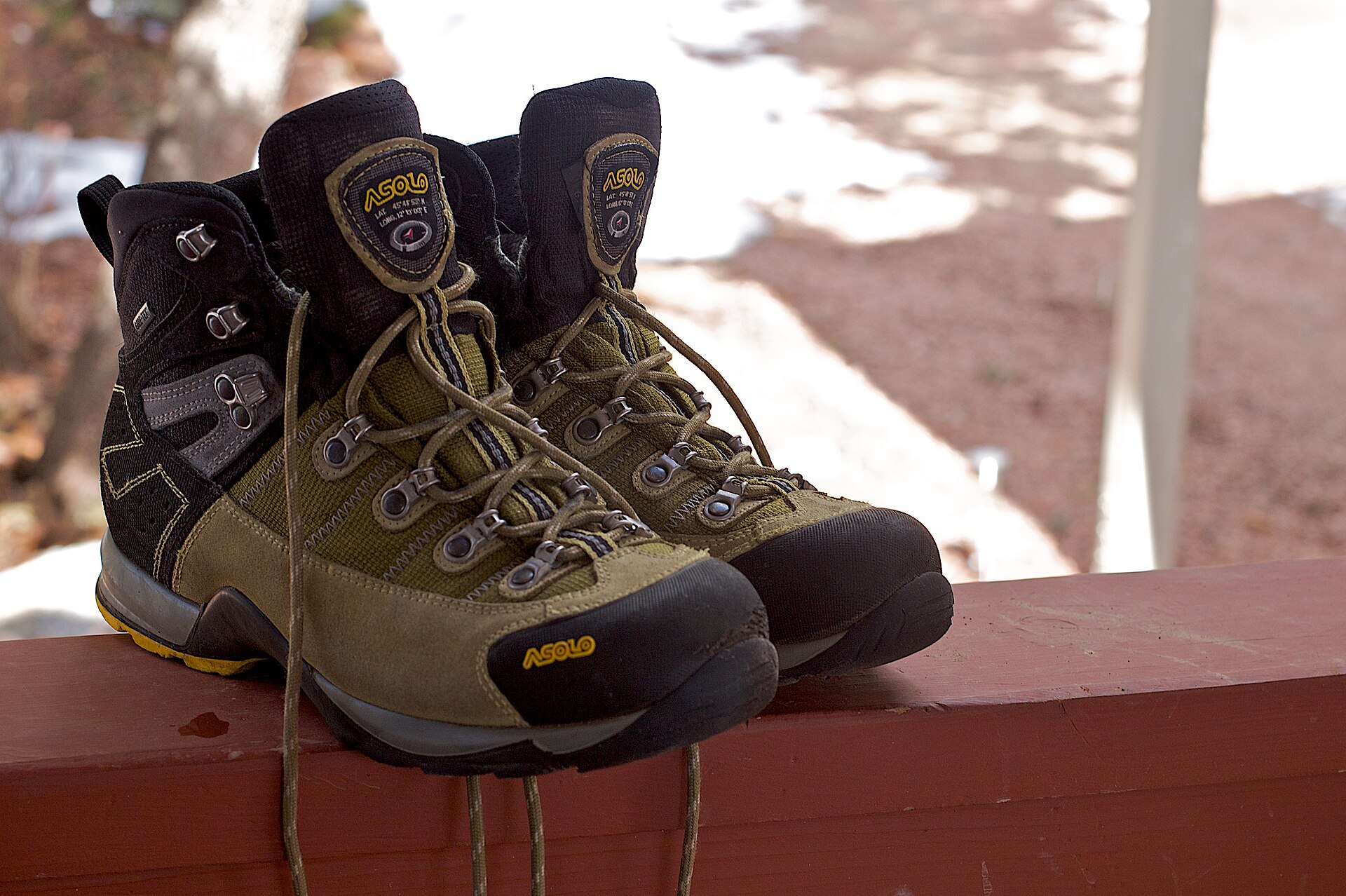
A well-worn pair of hiking boots: the result of weeks of gradual break-in wear. Photograph: cogdogblog
Image Credits: Wikimedia Commons (CC BY 2.0, cogdogblog)
What breaking in actually means
Breaking in hiking boots is the slow process of adapting and molding new boots to the shape of your feet. The materials soften, the boots learn to flex at your foot's natural bending points, and your feet build resistance to that pair's specific pressure points.
It is a two-sided process. The boot changes, and your foot changes. Gradual short wear sessions build protective calluses in exactly the spots where that boot rubs. Skipping the process does not save time: it squeezes all that adaptation into one painful day on the trail.
This matters because nearly all boots are mass-produced on a standardized "last," the solid form a shoe is molded around. As Walks4All explains, the word "last" comes from the Old English "laest," meaning footprint. The last is a good approximation of a foot, but no two feet are exactly alike, so the boot needs wear time to mold more precisely to yours.
This article looks closer at why you need to break in hiking boots: how long it takes by material, the blister science, and the right way to do it.
Why new boots cause blisters
Blisters form from friction, and friction comes from movement. A new, stiff boot does not move with your foot. Instead, your foot moves inside the boot, and the rubbing shears the skin.
Blisters are not a minor annoyance. Hiking guides cite a 2023 systematic review in which blisters made up 8 to 33 percent of reported hiking injuries. Along with ankle sprains, they rank among the most common injuries on the trail. Military research reaches the same conclusion for long load-carrying marches: foot blisters are one of the top complaints.
New leather is the worst offender because it starts rigid. The stiff upper resists bending at the ankle and forefoot, so every step shears the heel or toes. Foam cushioning can add hot spots too: when it compresses unevenly under a load, it creates local pressure points.
The American Academy of Dermatology advises stopping activity when skin becomes painful or red, which stops a hot spot from becoming a full blister. That advice is the whole point of break-in walks: each hot spot you find at home is a blister you avoid on the trail.
How long break-in takes by boot type
The timeline depends mostly on the material. The stiffer the boot, the longer it takes.
Lightweight trail runners and soft synthetic boots: little to none. Modern synthetic meshes and EVA foam midsoles flex easily from day one. Most hikers can wear them on a short day hike within a day or two of purchase.
Mid-weight boots (nubuck or synthetic uppers, stiffer soles): about one week. Boots like the Merrell Moab 3 Mid or Salomon X Ultra 4 Mid are not punishing out of the box, but the stiffer sole plate and higher ankle cuff need time to flex at your natural bending points.
Full-grain leather and mountaineering boots: 2 to 4 weeks, or roughly 40 to 50 miles. The thick leather upper, rigid shank, and heavy-duty build are made for durability on rough terrain, but they start stiff. Walks4All puts it at up to 3 or 4 weeks of phased wear, while Peak Gear Guide notes that 2 to 3 weeks of gradual wear is the standard before leather boots are truly trail-ready.
Ardur Shoes estimates that most quality hiking boots need about 20 to 40 hours of total wear time. Hours matter more than miles, because low-speed wear still softens materials and conditions feet.
Why the loaded walk matters
A boot that feels fine on an errand can behave very differently with a pack on. In one study of long-distance hikers, forefoot pressure rose 5.41 percent with a pack weighing 10 percent of body weight, and 8.73 percent with a pack at 20 percent of body weight. Packs heavier than about 10 percent of body weight produced a clear, load-dependent rise.
That extra pressure pushes the foot forward and down inside the boot, which is why loaded descents reveal toe-room problems that flat neighborhood walks hide. Test with the gear you will actually use. If your trip involves a heavy pack, do at least one practice walk with it.
How to break boots in the right way
Start small. Wear the boots around the house for 30 minutes to an hour for a couple of days. Feel for hot spots. Adjust the lacing. Lacing geometry changes pressure distribution more than most hikers expect.
Move to short walks on pavement, then to easy trails. Gradually increase distance. The rule is simple: stop when a hot spot appears. Push through a hot spot and it becomes a blister, which sets you back further than resting would.
The American Academy of Orthopaedic Surgeons advises wearing the same socks you will use on the trail, and trying footwear at the end of the day because feet swell. If you change sock thickness or add an insole after break-in, you are effectively wearing a different boot, so do a few more test walks.
Treat every hot spot as information. It tells you exactly where to adjust lacing, add padding, or reconsider the fit. Adhesive moleskin or soft bandages can protect problem areas during the process.
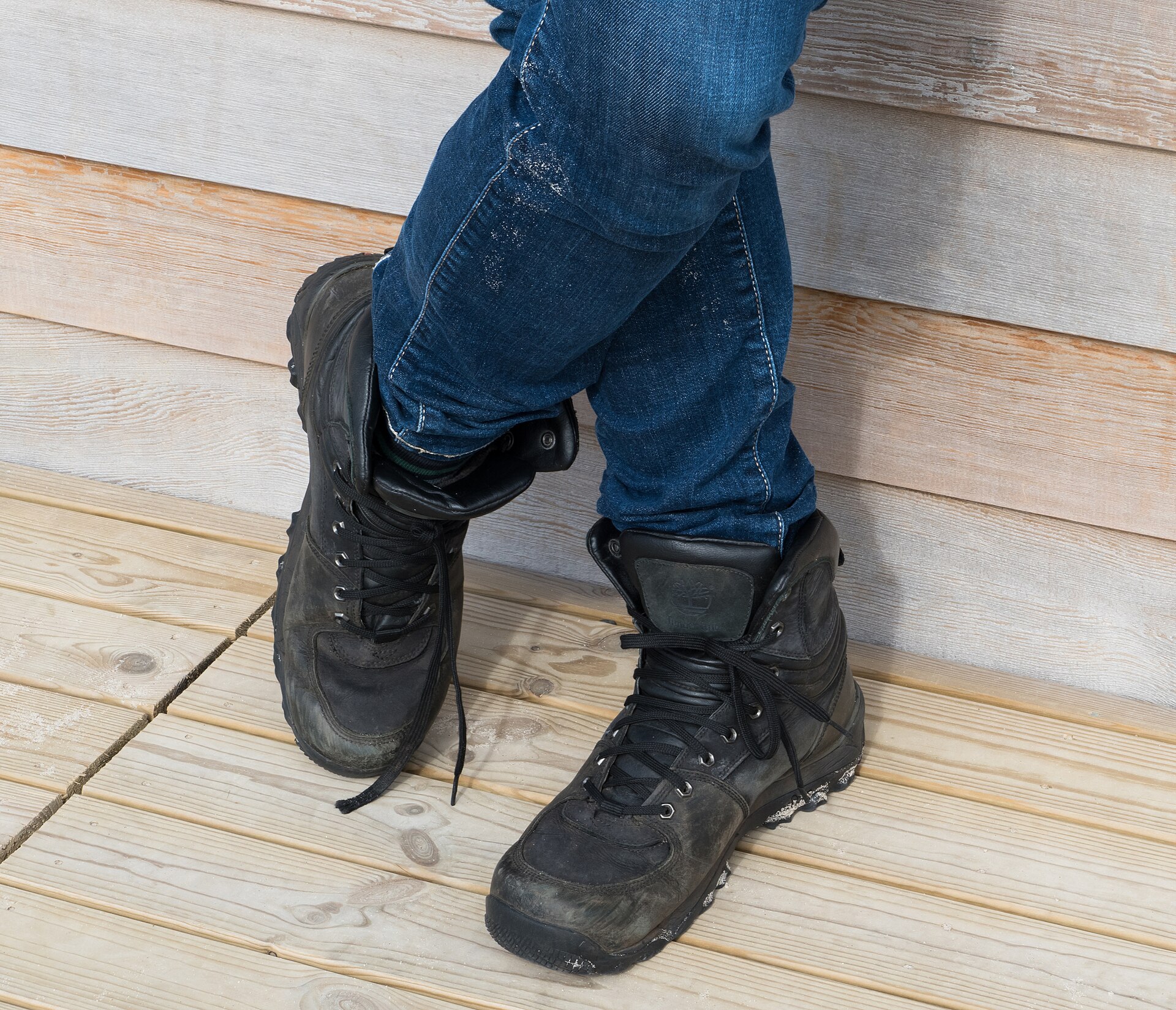
Leather hiking boots need the longest break-in: the thick material must soften and mold to the foot. Photograph: W.carter
Image Credits: Wikimedia Commons (CC0, W.carter)
What not to do
Do not soak new boots in water to speed things up. Water softens leather temporarily but can damage modern adhesives and waterproof membranes, and it teaches you nothing about the boot's real fit.
Do not cram break-in into one day. Even synthetic boots need 10 to 20 hours across multiple sessions for the midsole to compress and the foot to adapt. One long day creates the rubbing forces that cause blisters: the exact problem you are trying to avoid.
Never debut new boots on the big trip. New boots plus consecutive high-mileage days plus a full pack is how a trip turns into a limp. If a pair is still unproven a week out, wear the older pair you trust.
When a boot never breaks in
Break-in fixes stiffness, not bad fit. If a boot pinches your toes on day one, crushes your heel, or creates a hot spot in the same place after two weeks of phased wear, the last does not match your foot. No amount of walking changes that.
A good fit feels snug but not tight, with about a thumb's width of room ahead of the longest toe. If you are choosing boots for the first time, read our guide on how to choose hiking boots for beginners before you buy.
Frequently asked questions
Can I break in hiking boots in a day?
No. Even synthetic boots need 10 to 20 hours across multiple sessions. Full-grain leather needs far more. One day of forced wear creates blisters rather than preventing them.
Do modern hiking boots still need breaking in?
It depends on the boot. Lightweight synthetic trail shoes often feel good from day one. Mid-weight and leather boots still need structured break-in of about one to four weeks.
How many miles does it take to break in hiking boots?
Roughly 20 to 30 miles for mid-weight boots and 40 to 50 miles for full-grain leather. Hours of wear matter more than miles, since slow house and neighborhood wear still contributes.
Should I wear hiking socks during break-in?
Yes. Wear the same socks you plan to hike in, because sock thickness changes the fit. Try boots at the end of the day when your feet are slightly swollen, which is how they will be on the trail.
The bottom line
Breaking in hiking boots does two jobs at once: it molds stiff materials to your feet, and it toughens your feet against that boot's specific pressure points. Leather boots need 2 to 4 weeks of gradual wear. Synthetics need far less. The real goal of the process is finding hot spots on short practice walks, because the trail is the wrong place to discover them.
Lace up the new pair tonight for a 30-minute walk around the house. Your feet will thank you on day one of the trip. For more trail prep, see what to pack for a day hike and our friction and moisture blister guide.
---
Rive News is a research desk publishing explainers from public sources. Corrections: contact the editorial desk.
Latest in Sports
- How to Choose Hiking Boots for Beginners
- Hiking vs Trekking: What Each Term Really Means
- What to Pack for a Day Hike: Checklist
Subscribe for weekly hiking and outdoor explainers.
Related stories

Why Is Altitude Sickness Worse for Some People?
Altitude sickness hits some people harder because of genetics, ascent speed, and prior history, not fitness level. Here is what raises risk

Why Do You Get Blisters When Hiking and How to Prevent Them
Friction plus moisture plus heat equals a blister. Learn why hiking breeds all three, and the boots, socks, and tape system that keeps

How to choose hiking boots for beginners: fit, features, and break-in
Beginners should buy for fit first: snug everywhere, tight nowhere, with a thumb's width at the toes. Here is how to size, test,