
Hiking vs Trekking: What Each Term Really Means
Key takeaways
- Hiking means walks of roughly 4 to 50 km on established trails, usually finished in a single day.
- Trekking means multi-day journeys of 50+ km through rugged or remote terrain, with overnight stays.
- The word "trek" comes from an Afrikaans word meaning "pull, travel," reflecting the journey nature of treks.
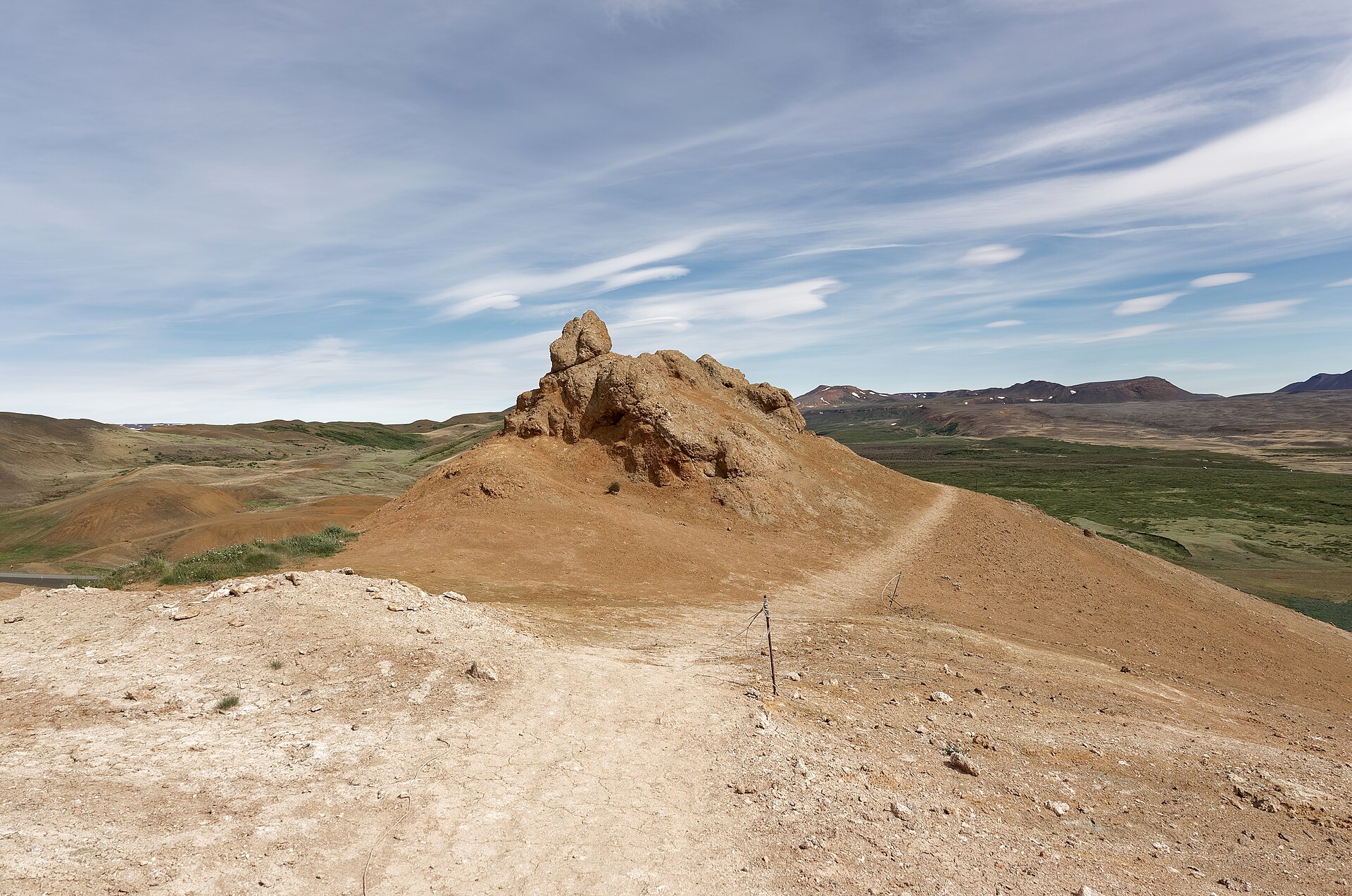
A hiker walks a well-marked trail in the Námafjall mountains of Iceland, the classic setting for a day hike. Photograph: Jakub Hałun
Image Credits: Wikimedia Commons (CC BY 4.0, Jakub Hałun)
Hiking vs trekking, explained in plain language
Hiking and trekking are both walks through nature, but the words describe very different trips. Hiking is the shorter, simpler version: a walk on an established trail that starts and ends within a day. Trekking is the longer, harder version: a multi-day journey through remote or rugged terrain that often requires camping or lodge stays along the way.
The confusion is understandable. Every trek contains walking that looks like hiking, but not every hike qualifies as a trek. Shachi Tripathi, a program designer and former trek leader at Indiahikes School of Outdoor Learning, describes hiking as essentially "an introduction to the world of trekking."
This article takes a closer look at the difference between hiking and trekking, including their definitions, distance and duration, terrain, gear, and how to choose the right one.
The dictionary definitions
The Oxford Dictionary defines "trek" as "to spend time walking, especially in mountains and for pleasure and interest," and "hiking" as "the activity of going for long walks in the country for pleasure." That wording, quoted by Discovery World Trekking, hints at the key distinction: trekking is journey-oriented, while hiking is walk-oriented.
In everyday use, hikers talk about trails and trekkers talk about routes. A trail is maintained and marked. A route may be neither.
Distance and duration: the clearest dividing line
The most consistent separator between hiking and trekking is how far you walk and how long it takes.
Discovery World Trekking puts hiking distances at roughly 4 to 50 kilometers, with trekking typically beginning around the 50-kilometer mark and stretching into the hundreds of kilometers. BikeHike Adventures draws a similar line: once a journey pushes well beyond a single day's walking capacity, generally past 40 to 50 miles, it has crossed from hiking into trekking territory.
Duration follows the same pattern. According to the adventure outfitter Much Better Adventures, hiking generally refers to trips lasting anywhere from a few hours to a few days, while trekking is almost universally understood as a multi-day undertaking. The classic example is the trek to Everest Base Camp, a journey of roughly two weeks that no one would call a hike.
Terrain: maintained trails versus the wild
Terrain is the most practical difference for anyone planning a trip. Hiking almost always follows established, marked, and maintained trails. Think of a national park path with signposts, steps, and bridges.
Trekking, by contrast, frequently pushes into unmarked or minimally maintained terrain: rocky passes, river crossings, and routes that shift with the weather and the season. Treks may also involve altitude, which adds a layer of difficulty that hiking rarely presents.
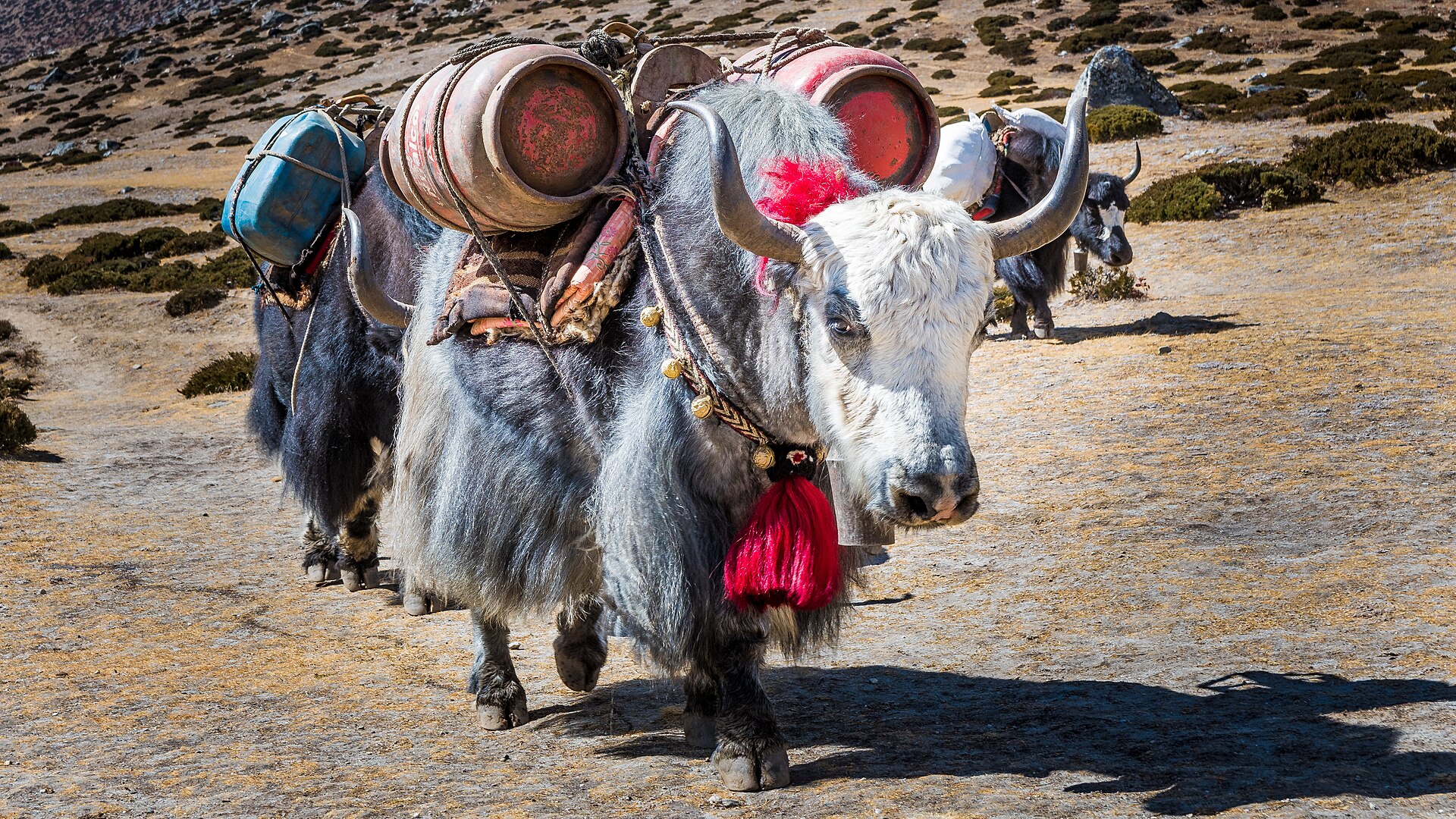
Trekkers in the Himalaya travel with yaks carrying gear on multi-day routes far beyond marked trails. Photograph: Tom Ek
Image Credits: Wikimedia Commons (CC BY-SA 2.0, Tom Ek)
This difference is why hiking needs little more than a decent map, while trekking demands real navigation skills and careful planning.
Gear and preparation
A day hike needs modest gear: comfortable shoes, a day pack with water and food, and weather-appropriate clothing. Most people can decide to hike on a Saturday morning and be back for dinner.
Trekking needs everything hiking needs plus camping equipment or lodge bookings, extra food, repair kits, and often permits. According to Discovery World Trekking, trekkers frequently hire porters to carry gear and supplies on longer routes. Planning starts weeks or months ahead, not hours.
Fitness matters for both, but trekking asks more. It demands endurance across consecutive days, when the third morning hurts in ways the first one did not.
The cost and culture question
Trekking usually costs more than hiking. Gear, permits, guides, porters, and travel to remote trailheads add up. Hiking is mostly free beyond the drive to the trailhead.
Trekking also tends to bring deeper cultural contact. Multi-day routes often pass through villages where trekkers stay in local homes or lodges, while day hiking rarely goes beyond a wave at another walker.
Quick comparison: hiking vs trekking
A side-by-side view makes the distinction concrete. Sources across outdoor guides use consistent dividing lines:
| Aspect | Hiking | Trekking |
|---|---|---|
| Duration | A few hours to a day | Multiple days to weeks |
| Distance | 4 to 50 km | 50 km and beyond |
| Terrain | Marked, maintained trails | Rugged, remote, sometimes unmarked |
| Gear | Day pack, sturdy shoes | Full pack, camping or lodge gear |
| Planning | Minimal | Extensive, often with permits |
| Fitness demand | Moderate | High |
Common mistakes beginners make
The biggest mistake is treating a trek like a long hike. Beginners sometimes plan a three-day mountain route with the same preparation they would bring to a Saturday trail walk: no spare socks, no rain gear, no idea where the next water source is. Treks punish that looseness quickly.
The second mistake is underestimating the mental load. Walking is simple. Navigating for six days through changing weather, managing food and sleep, and staying positive when your feet ache on day four is a different sport entirely.
Training for each
You can start hiking with the fitness you already have. Pick a short trail, walk it, and increase distance gradually.
Trekking deserves a training plan. Build up to long walks on consecutive days, practice with a loaded pack, and test your gear on short overnight trips first. A weekend trip with a full pack will teach you more about your readiness than any fitness chart.
How to choose: hike or trek?
Pick hiking if you have a day, you are new to the outdoors, or you want scenery without logistics. A local trail with a good pack and a sandwich is all you need.
Pick trekking if you have several days or weeks, you want a real challenge, and you are willing to plan. Start with a short, well-supported trek before attempting anything remote.
The two are not rivals. Hiking is how most trekkers begin, and many experienced trekkers still hike on the days between big trips.
The bottom line
Hiking means shorter walks on marked trails, usually done in a day and covering up to about 50 km. Trekking means multi-day journeys of 50 km or more through rugged terrain, with overnight stays and serious preparation. If you need the term in one line: hiking is a walk, trekking is an expedition.
Thinking about your first trip? Read our guide on how to choose hiking boots as a beginner before you buy, then check what to pack for a day hike so you carry exactly what you need.
---
Rive News is a research desk publishing explainers from public sources. Corrections: contact the editorial desk.
Latest in Sports
- How to Choose Hiking Boots for Beginners
- What to Pack for a Day Hike: Checklist
- Why You Need to Break in Hiking Boots
Subscribe for weekly outdoor explainers.
Related stories

Why Is Altitude Sickness Worse for Some People?
Altitude sickness hits some people harder because of genetics, ascent speed, and prior history, not fitness level. Here is what raises risk

Why Do You Get Blisters When Hiking and How to Prevent Them
Friction plus moisture plus heat equals a blister. Learn why hiking breeds all three, and the boots, socks, and tape system that keeps

How to choose hiking boots for beginners: fit, features, and break-in
Beginners should buy for fit first: snug everywhere, tight nowhere, with a thumb's width at the toes. Here is how to size, test,