
How airport slots limit which flights can exist
By Rive News / Research desk | Rive News / Published October 26, 2026 at 9:00 AM PKT
Key takeaways
- An airport slot is permission to land or take off at a specific time at a busy airport.
- Historic rights and an 80 percent use rule leave few attractive times for new airlines.
- At the busiest airports, a new route often waits for new capacity, not just demand.
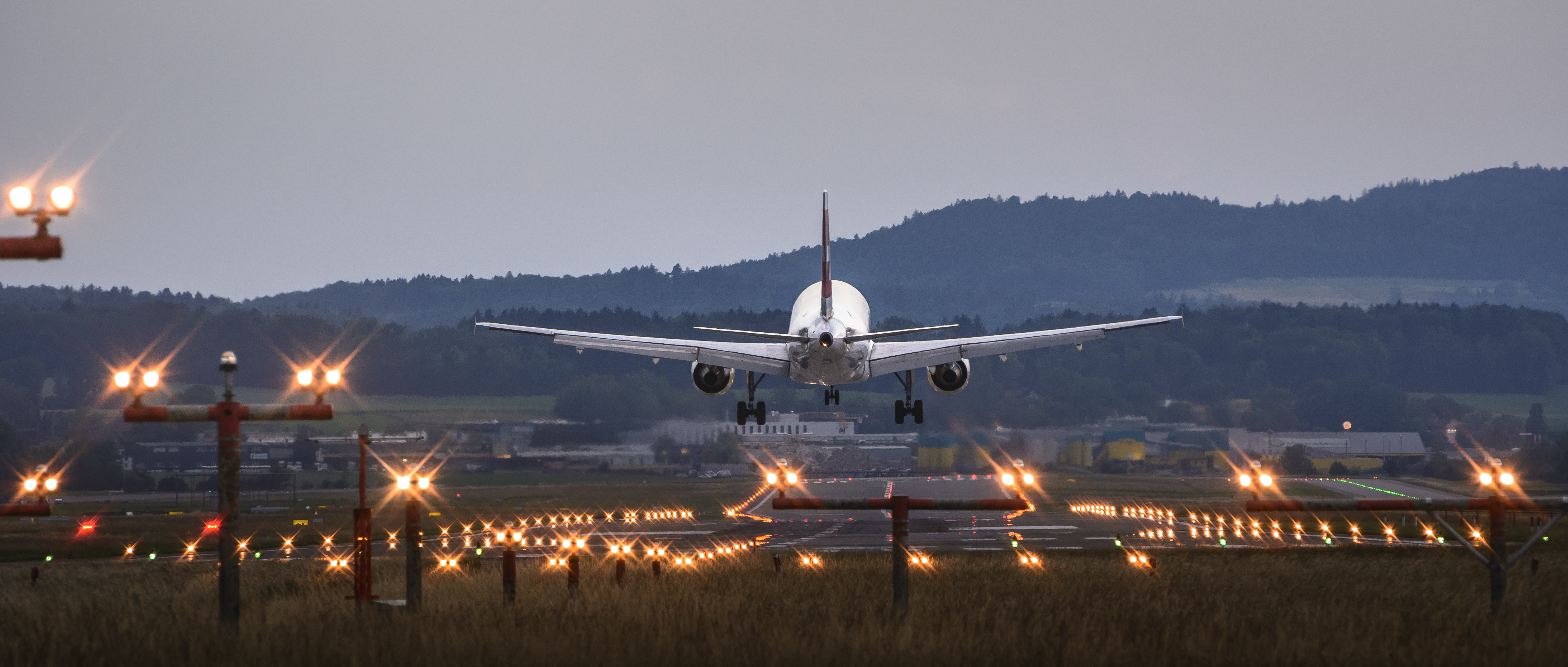
[An airplane comes in to land at a busy airport.] Photograph: Wikimedia Commons contributor
Image Credits: Wikimedia Commons
An airport slot is the reason a flight you want may not exist, even when passengers would fill it. At the busiest airports, an airline cannot simply decide to fly a new route at a convenient time. This article explains how airport slots limit which flights can exist, including coordination levels, historic rights, and the pool that new airlines draw from.
What an airport slot is
An airport slot is permission to use an airport's infrastructure, including its runways, gates, and terminal capacity, at a specific date and time, for one arrival or one departure. It is not a ticket, a gate assignment, or a guarantee about air traffic on the day. It is the advance reservation that makes the flight possible in the first place.
Slots are governed by the Worldwide Airport Slot Guidelines, published by the International Air Transport Association, and in the European Union by Regulation 95/93. At a coordinated airport, an independent coordinator allocates the slots for each scheduling season, summer and winter, in a process that is meant to be neutral and transparent. The coordinator does not work for any single airline, and its job is to fit every request it can into the airport's declared capacity.
Do not confuse an airport slot with an air traffic control slot. An airport slot is reserved weeks or months ahead and gives the right to use the airport. An air traffic control slot is assigned on the day of the flight and tells the aircraft when it can actually take off given airspace congestion.
A flight can hold a valid airport slot and still be delayed by an air traffic slot, because the two systems answer different questions.
The three levels of coordination
Not every airport needs slots. The guidelines sort airports into three levels based on how demand compares with capacity. Level 1 airports have adequate capacity, so airlines can schedule flights freely and no slot is required.
Level 2 airports are close to capacity at peak times, so schedules are facilitated and adjusted by agreement, but slots are not mandatory. Level 3 airports are the ones where demand exceeds capacity, and there a slot is mandatory for every arrival and departure.
Level 3 is where the limits bite. IATA notes that more than 200 airports worldwide are Level 3, and around half of all airline passengers depart from one. London Heathrow, Paris Charles de Gaulle, Frankfurt, and Amsterdam Schiphol are familiar examples, and at these airports the slot system shapes the entire timetable.
If you have ever wondered why a popular route has no flight at the time you want, a Level 3 airport is often the reason.
Capacity itself is not just runway space. The coordinator works from declared capacity limits that cover runway movements per hour, gate and parking availability, terminal throughput, and sometimes noise or environmental limits. A runway that could physically handle more movements may still be capped by terminal space or by night-flight noise rules.
That is why adding a runway does not automatically create as many new flights as the concrete alone would suggest.
Historic precedence: why incumbents keep their times
The most powerful rule in slot allocation is historic precedence, often called grandfather rights. An airline that operated a series of slots in the previous equivalent season, and used them well enough, has a claim to the same series in the next season. The coordinator considers historic claims before it looks at new requests, which means the best times at the busiest airports are usually spoken for before a newcomer even enters the room.
The companion rule is the 80/20 use-it-or-lose-it rule. IATA states that an airline must operate a series of slots at least 80 percent of the time during a scheduling season to keep its historic precedence for the next equivalent season. Fall below 80 percent, and the series can return to the slot pool for reallocation.
The rule is designed to stop airlines from hoarding slots they do not use, while still allowing some room for cancellations and disruption.
Together, these two rules create a stable but sticky system. Incumbents keep flying the routes they already fly, at the times they already fly them, because keeping the slots is worth more than the risk of losing them. A newcomer cannot simply outbid an incumbent for a prime morning departure, because slots at coordinated airports are allocated, not sold, under the guidelines.
One-for-one exchanges between airlines are allowed, but a straight cash sale of a slot is not part of the system.
The pool: what is actually left for newcomers
After historic claims are satisfied, whatever remains goes into the slot pool. That pool holds slots that were unused, returned by airlines, or created by new capacity. New entrants get priority for at least half of the pool slots, provided their requests can be accommodated, according to IATA.
That priority sounds generous until you look at what is usually in the pool at a truly congested airport.
At the most congested airports, the pool is often thin and badly timed. The slots available may be at awkward hours, such as late at night or early in the morning, when fewer passengers want to travel. A new airline offered a midnight arrival cannot build the same business as an incumbent holding a morning departure, even if both hold a valid slot.
IATA itself notes that at the most congested airports, a new airline may be offered different times or may remain on a waiting list.
The Heathrow numbers show how concentrated the picture can be. Reporting on Airport Coordination Limited data for the winter 2023-2024 season put British Airways at 4,779 slots, far ahead of Virgin Atlantic in second place with 392. That gap is not a judgment on either airline's quality. It is the arithmetic of historic precedence at an airport where demand has exceeded capacity for decades, and it shows why a new entrant faces a steep climb.
Why new routes are rare at busy airports
A new route needs more than one slot. It needs a matching pair, an arrival and a departure, at times that make sense for passengers and for the aircraft's next flight. It also needs those times to line up at both ends of the route, because a flight between two Level 3 airports needs a slot at each one.
IATA notes that about 35 percent of all flights operate between two Level 3 airports, so the double-slot problem is common, not rare.
The aircraft's day matters too. A slot that lands an aircraft at noon but offers no sensible departure until midnight leaves the aircraft parked for hours, earning nothing. Airlines plan rotations, where one aircraft flies several routes in a day, and a single awkward slot can break the whole rotation.
That is why airlines sometimes decline pool slots that look acceptable on paper: the slot does not fit the network, and a slot that does not fit is a cost, not an asset.
New capacity is the only reliable way to grow the total number of flights at a full airport. A new runway, a terminal expansion, or a change in operating rules can create genuinely new slots for the pool. Without new capacity, growth at a Level 3 airport mostly means shuffling existing slots between airlines and routes, not adding flights to the timetable.
That is the structural reason new routes are rare there, and it has nothing to do with a lack of passenger demand.
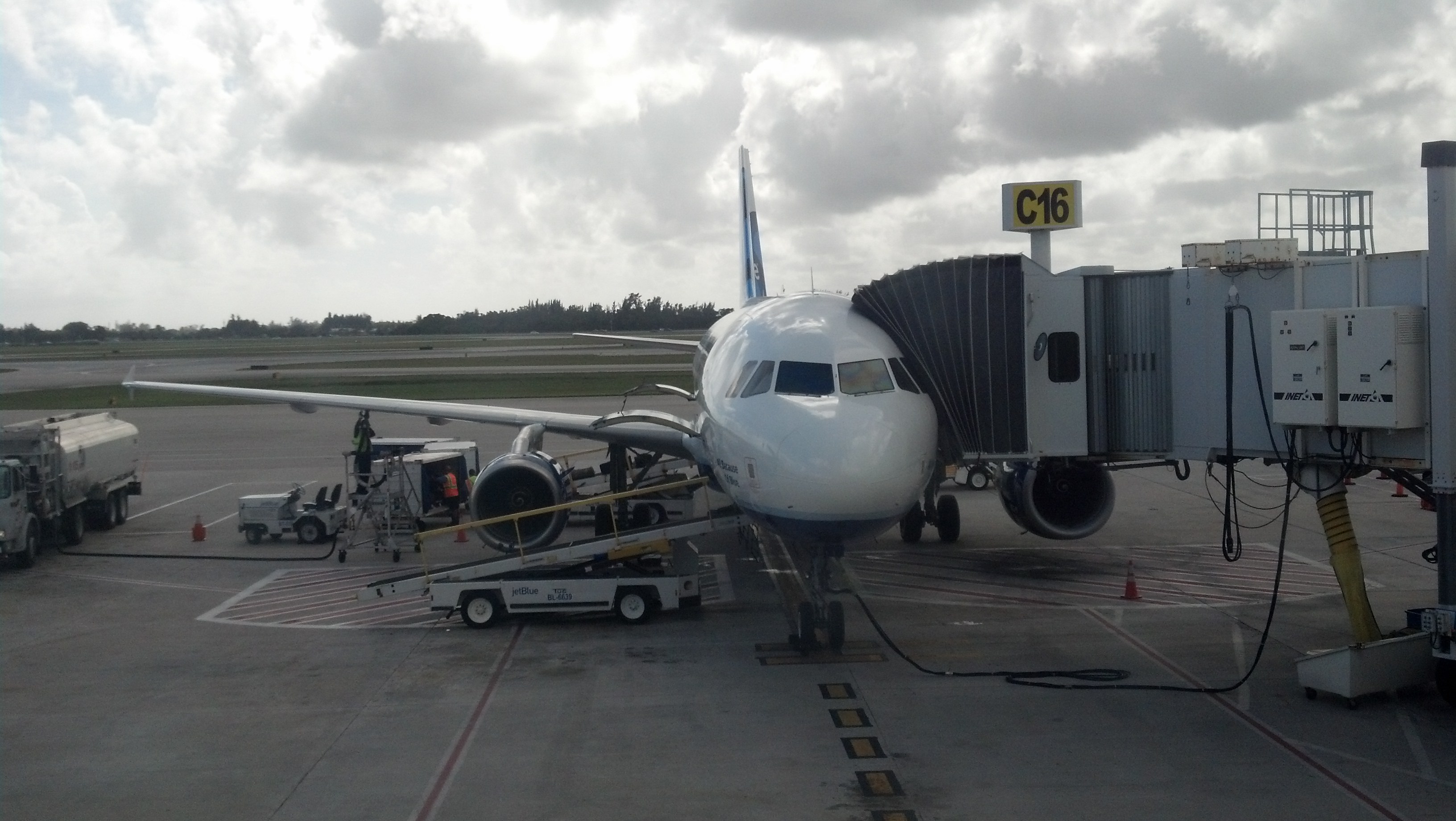
[An airplane stands on the apron being prepared for takeoff.] Photograph: Wikimedia Commons contributor
Image Credits: Wikimedia Commons
What this means for passengers
For passengers, the slot system explains several familiar frustrations. A route with strong demand may have only one or two daily flights, because those are the slots the operating airline holds. A convenient departure time may never appear, because the incumbent holding that time has no reason to give it up.
A new low-cost airline may announce big plans for a busy airport and then launch with odd timings, because odd timings were what the pool offered.
The system also explains why fares stay high on some routes. Limited slots limit competition, and limited competition gives incumbents pricing power. That is not a conspiracy, and it is not a market failure in the usual sense.
It is the predictable result of a fixed resource, allocated by history first, at airports where everyone wants to fly at the same hours.
Change is possible but slow. Slot rules are reviewed regularly, and regulators sometimes push for reforms that would free more pool slots for newcomers. Any reform has to balance two goals that pull in opposite directions: protecting the stability that lets airlines plan networks years ahead, and opening room for new airlines and routes.
Passengers benefit most when that balance shifts even slightly toward newcomers, because even a few well-timed new slots can create a new route.
Frequently asked questions
What is an airport slot?
An airport slot is permission to use an airport's runways, gates, and terminal capacity for one arrival or departure at a specific time. At Level 3 airports, a slot is mandatory for every flight.
What is the 80/20 use-it-or-lose-it rule?
An airline must operate a series of slots at least 80 percent of the time during a season to keep historic precedence for the next equivalent season. Falling below that line can send the slots back to the pool.
Can airlines buy airport slots?
Under the Worldwide Airport Slot Guidelines, slots are allocated by an independent coordinator, not sold. Airlines may exchange slots one-for-one, but a straight cash purchase is not part of the system.
Why do new airlines get bad times at busy airports?
Historic claims are considered first, so the best times are usually already held. New entrants draw from the pool of leftover, returned, or newly created slots, which are often at less popular hours.
Does a slot guarantee an on-time departure?
No. An airport slot reserves the airport capacity in advance, but air traffic control may still assign a departure time on the day based on airspace congestion. The two systems are separate.
The bottom line
Airport slots limit which flights can exist because they ration the scarcest resource at busy airports: time. Historic precedence protects incumbents, the 80 percent rule keeps the system honest, and the pool offers newcomers what is left, which is often little and badly timed. Until an airport gains new capacity, its timetable will change slowly, and the flight you want will exist only if a slot exists first.
Tags: aviation, airports, airlines
Rive News's research desk covers everyday science and pet behavior in plain language, citing public sources for every key claim.
Related
- Why airlines overbook flights and how bumping works
- How airports decide which runway to use
- Why boarding groups exist and how they work
- Why airlines dim cabin lights at takeoff and landing
Subscribe for one plain-language explainer a day, no jargon and no filler.
Rive News publishes research-desk explainers with named sources and a standing corrections policy: errors are corrected openly when readers point them out.
Related stories

The 3-1-1 liquids rule for planes: what each number means
TSA's 3-1-1 rule limits carry-on liquids to 3.4-ounce containers in one quart bag. Where the 2006 rule came from, what counts, and how
Why Is Airplane Food So Bland at Altitude?
A 2010 Fraunhofer study found altitude cuts sweet and salty perception by up to 30 percent. Low humidity, cabin pressure, and noise all
Carry-on size limits: why airlines each set their own
Airlines set their own carry-on limits because the FAA only requires each carrier to have a policy, not one global size. Why 22 x 14 x