
Why Do Boarding Groups Exist and Do They Actually Work?
Key takeaways
- Boarding groups serve two masters: operational order at the gate and a revenue stream, with early boarding sold as a perk and loyalty reward.
- The common back-to-front method is one of the slowest options tested; random boarding beats it, and United's window-middle-aisle method saves up to 2 minutes.
- The fastest known method, astrophysicist Jason Steffen's 2005 sequence, is twice as fast as front-to-back but no airline uses it.
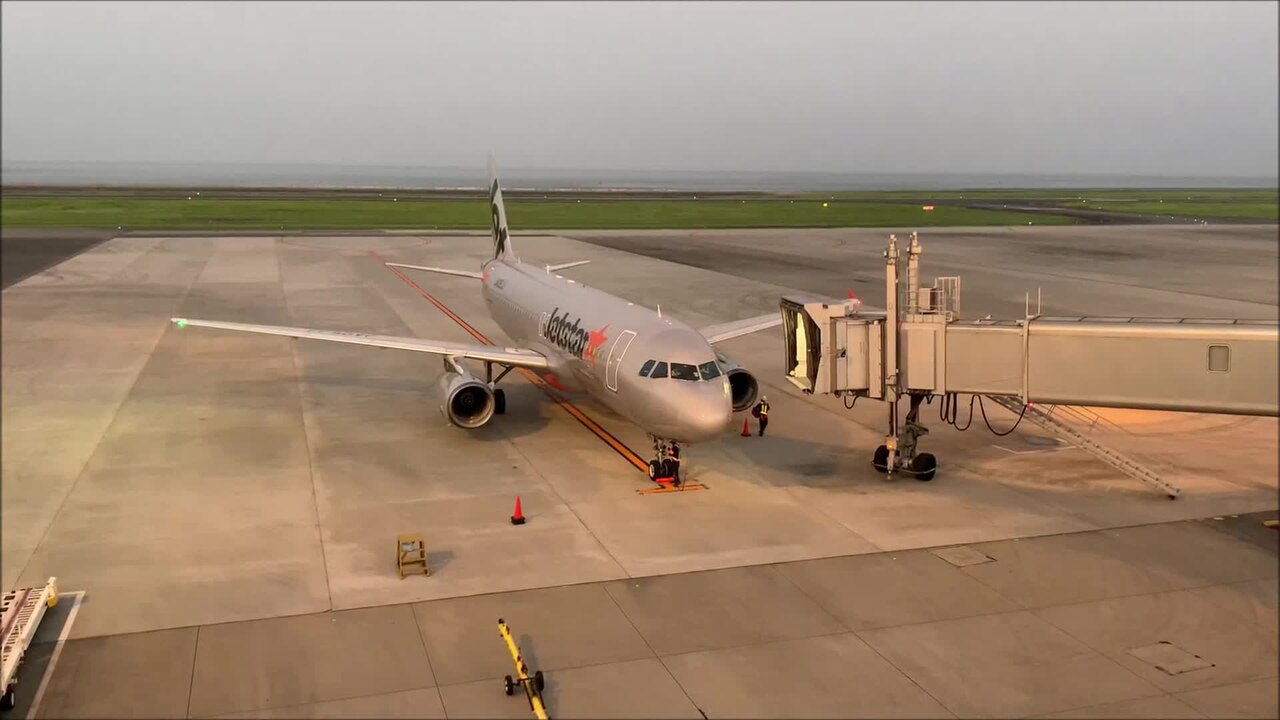
Every airline divides its passengers into boarding groups, and the counts keep growing. Delta uses eight zones, American nine groups, and United six.
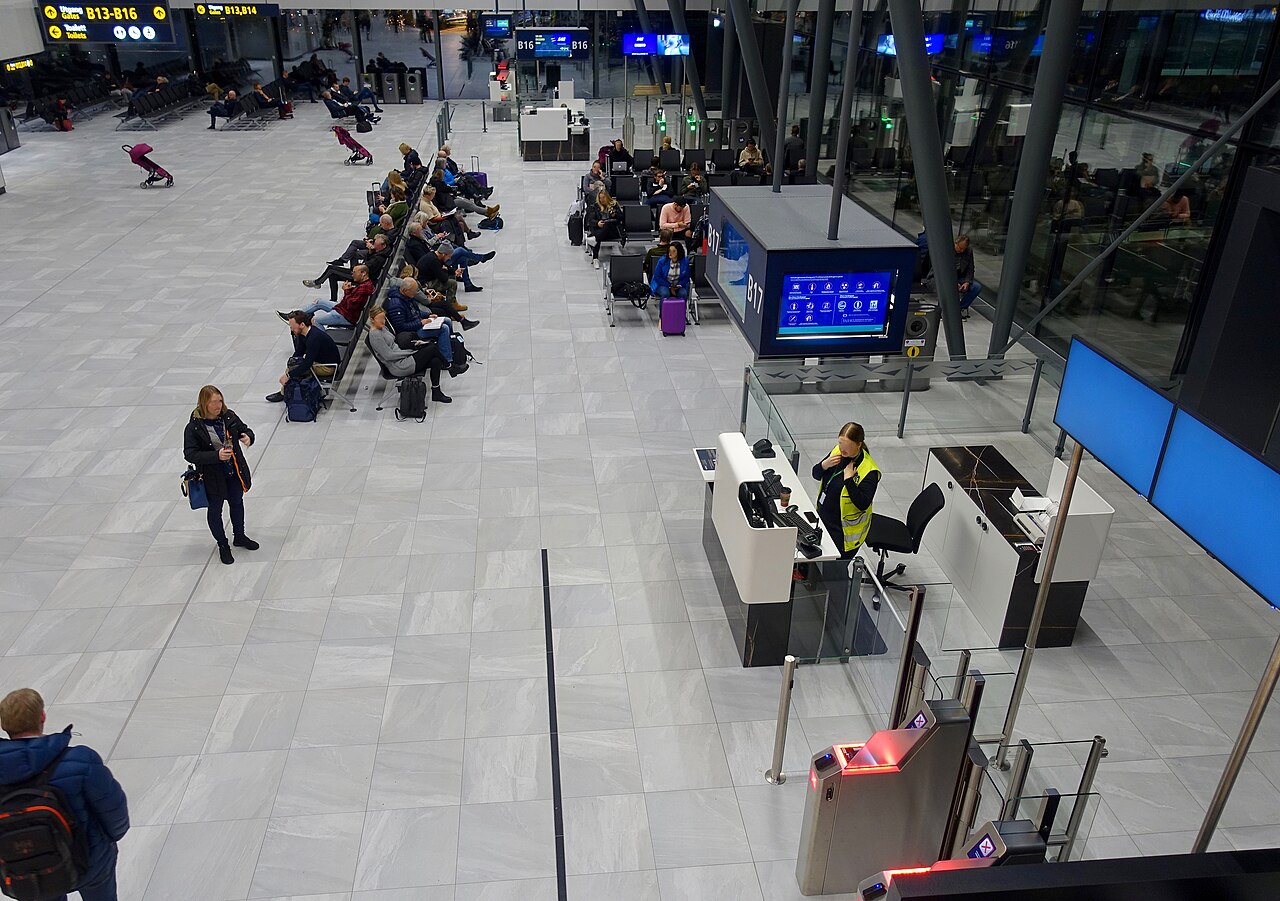
The gate area fills with clusters of travelers hovering near the podium, each waiting for their number to be called. It looks like a system designed for speed. It is not, or at least not only.
This article explains why the groups exist, who gets to board first and why, whether group boarding actually moves people faster, what the research says the fastest method is, and why airlines keep using a system they know is not optimal.
Why the groups exist at all
The surface reason is order. A few hundred people cannot walk down a single jet bridge at once, and only one passenger at a time can stop in the aisle to stow a bag. Boarding groups meter the flow so the narrowest part of the system, the aircraft aisle, does not jam solid.
The deeper reasons are commercial. Groups let airlines segment their customers. First class, business class, elite frequent flyers, and passengers who paid for priority boarding go early; basic economy boards last.
The sequence is a visible hierarchy of who the airline values and a product it can sell.
Alex Miller, a travel expert and founder of the site Upgraded Points, put it bluntly: "The reason airlines have a lot of different boarding groups is because they want to segment out customers.....Every so often airlines will simplify their boarding processes, but in the end, having a lot of different options to board recognizes loyalty and provides an opportunity for increased revenue."
There is also the bin problem. Airlines began charging for checked bags more than a decade ago, pushing passengers to carry their luggage on board instead.
Overhead space became scarce, and early boarding became the guarantee of a bin spot. Southwest began charging for checked bags on May 28, 2025, and industry watchers immediately predicted the same carry-on surge, and slower boarding, across its operation. The groups turn that anxiety into upgrades sold.
The law sets only the very first call. The Air Carrier Access Act requires that passengers who need special assistance board before all other passengers, including first-class travelers, elite members, military personnel, and families with small children. Everything after that is the airline's own design.
Who boards first, and why
The typical order is remarkably consistent across carriers. After preboarding for passengers with disabilities, unaccompanied minors, and active-duty military, the first numbered groups go to premium cabins and top-tier elites. On United, group 1 covers premium cabin passengers and the highest elite tiers; on Delta, zone 1 is Delta One and first class; on American, group 1 is business and first class plus top elites.
The middle groups are a ladder of descending loyalty status and fare class. The last groups are basic economy and anyone without a group number on their boarding pass: United puts basic economy in group 6, Delta in zone 8, American in group 9. Those passengers get the leftover bin space and the middle seats nobody chose.
Families get a small mercy: when several travelers share one reservation, airlines generally let the whole party board with the highest group among them rather than splitting parents from children.
Travel analyst Henry Harteveldt, speaking to CNN, was scathing about the whole production: "Boarding a plane is the 21st century version of Lord of the Flies...The airlines created this complexity and this insanity." His point was that the chaos is manufactured: the airlines built the scarcity, then sold the escape from it.
Do the groups actually speed things up
Here the honest answer is uncomfortable for the industry. The standard back-to-front block method that many airlines use is one of the slowest approaches ever tested.
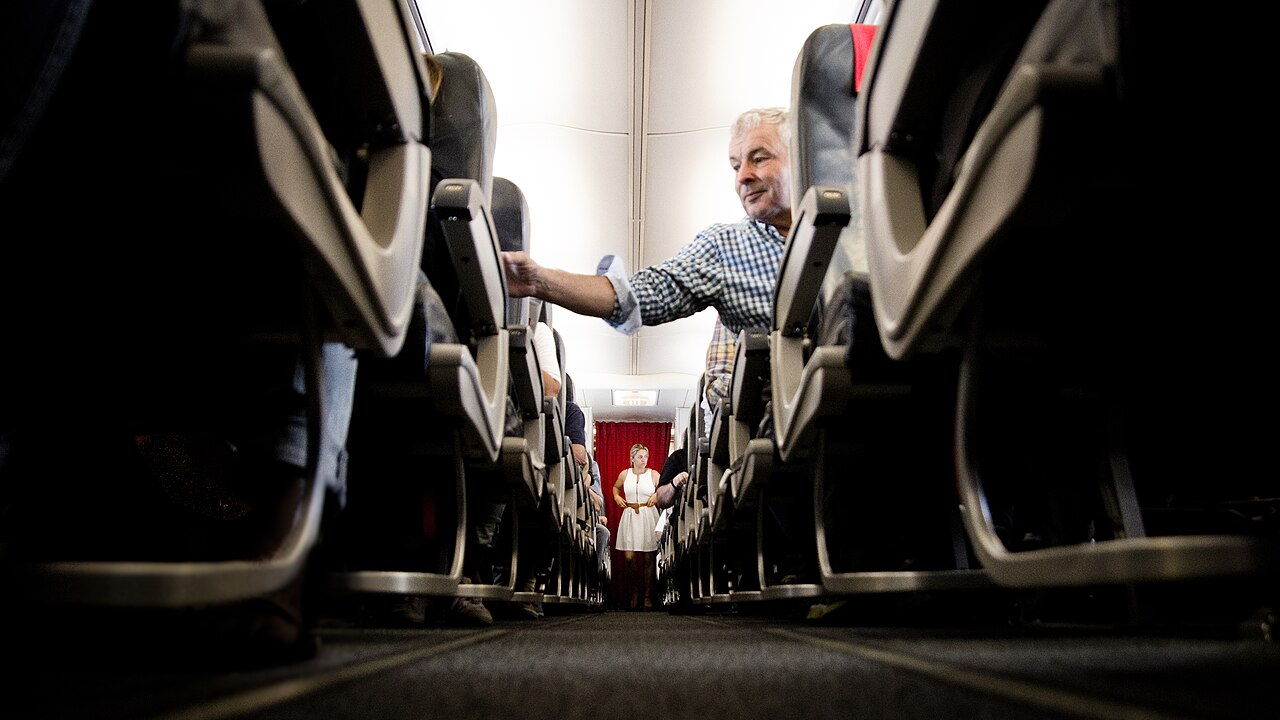
Boarding researchers have found that random boarding, where people simply walk on without a prescribed order, beats back-to-front. Spreading passengers along the aisle means more of them can stow bags simultaneously instead of queuing behind one stopped traveler.
United's experiment is the most visible attempt to do better within the group system. On October 26, 2023, the airline began boarding economy passengers window seats first, then middle, then aisle, a method called WILMA.
Internal testing suggested it shaves up to two minutes off boarding time. The airline needed the help: its average boarding time had grown by two minutes since 2019.
Jason Steffen, an associate professor of physics at the University of Nevada, Las Vegas, who designed his own boarding model, explained why outside-in works: "It spreads people out along the aisle of the airplane so that more people can put their luggage away at the same time. That's the main thing that speeds up the boarding process." The seat-shuffle problem, the aisle passenger standing to let the window passenger in, turns out to matter less than parallel bag-stowing.
An older experiment points the same way. In 2003, America West tried a "reverse pyramid" method combining back-to-front with outside-in boarding, and reported full flights boarding about 20 percent faster. The industry noticed, applauded politely, and mostly kept doing what it was doing.
The fastest method nobody uses
The speed champion has a name and a year. In 2005, astrophysicist Jason Steffen devised a precise alternating sequence, back-to-front in staggered pairs across alternating sides of the aircraft, and simulations showed it boarding about twice as fast as front-to-back and roughly 30 percent faster than random boarding.
No airline uses it. The practical objections are real: it demands every passenger follow an exact personal order, which falls apart the moment families want to board together or someone is running late from a connection.
But there is also a commercial objection that researchers keep naming. A strictly optimal sequence has no room for selling early boarding. The boarding order is partly a product, and the product is worth more than the two minutes the optimal sequence would save.
That tension explains Southwest's 2026 transformation. The carrier famous for open seating and its A/B/C boarding scramble moved to assigned seats with eight boarding groups on January 27, 2026.
CNN had long called Southwest's old process the fastest boarding of any major airline, precisely because passengers sorted themselves quickly toward open seats. The new system trades some of that speed for something passengers said they wanted more: knowing where they will sit, and the airline's ability to sell better positions in the order.
So do boarding groups work
They work at what they are really for. As crowd control, they beat a free-for-all at the podium. As loyalty theater, they make high-value customers feel recognized every single flight.
As a revenue stream, priority boarding and the fare classes attached to group numbers sell steadily.
As pure speed optimization, they mostly do not work, and the industry knows it. The methods that test fastest either cannot be sold (the Steffen sequence leaves no early-boarding product) or feel unfair (nobody wants to watch strangers board while their row waits). So airlines run a compromise: groups ordered by commercial value, with modest efficiency tweaks like WILMA layered on top.
The practical takeaway for travelers is simple. Your group number is not a measure of your boarding skill; it is a receipt.
If you want an early group, the levers are the ones the airlines designed: a higher fare class, elite status, a co-branded credit card, or a paid priority upgrade. Everything else is physics and luck at the gate.
Frequently asked questions
Why do airlines have so many boarding groups?
To segment customers by fare, loyalty status, and cabin, which both rewards high-value travelers and creates priority boarding as a sellable product. Operationally, the groups meter passenger flow through the jet bridge and the single-file aircraft aisle.
What is the WILMA boarding method?
Window, middle, aisle: United's 2023 change that boards economy passengers by seat position, window seats first. It spreads travelers along the aisle so more can stow bags at once, and United's testing found it saves up to two minutes per flight.
What is the fastest way to board a plane?
In simulations, astrophysicist Jason Steffen's 2005 alternating sequence is about twice as fast as front-to-back boarding and 30 percent faster than random boarding. No airline uses it, partly because it leaves no room to sell early boarding.
Does boarding back-to-front actually work?
Poorly, relative to the alternatives. Research consistently finds random boarding faster than back-to-front, because spreading passengers along the cabin lets several people stow luggage in parallel instead of queuing behind one stopped passenger.
The bottom line
Boarding groups exist because they solve three problems at once: they keep the gate orderly, they make loyal and premium customers feel recognized, and they turn the anxiety over bin space into revenue.
They are not the fastest way to fill a plane, and airlines have the research proving it. The groups persist because the industry values the product more than the two minutes. Board early if you can buy or earn it; otherwise, bring a book for the gate.
Tags: boarding groups, air travel, airlines, United WILMA, passenger experience
Rive News's research desk covers air travel, consumer tech, and the regulations that shape them.
Latest in Travel
- Why Do You Have to Put Your Phone in Airplane Mode?
- Why Do Runways Have Numbers and What Do They Mean?
- Why Do Planes Dump Fuel Before Emergency Landings?
- How Do Airports Decide Which Runway to Use?
Get one practical travel explainer in your inbox every morning. Subscribe to the Rive News newsletter.
Related stories

The 3-1-1 liquids rule for planes: what each number means
TSA's 3-1-1 rule limits carry-on liquids to 3.4-ounce containers in one quart bag. Where the 2006 rule came from, what counts, and how

Why Is Airplane Food So Bland at Altitude?
A 2010 Fraunhofer study found altitude cuts sweet and salty perception by up to 30 percent. Low humidity, cabin pressure, and noise all

Carry-on size limits: why airlines each set their own
Airlines set their own carry-on limits because the FAA only requires each carrier to have a policy, not one global size. Why 22 x 14 x