
Why Do Planes Dump Fuel Before Emergency Landings?
Key takeaways
- Aircraft are certified with two weights: maximum takeoff weight is higher than maximum landing weight, by up to 200,000 lb on a Boeing 747.
- When a jet must return right after takeoff, dumping fuel through wingtip nozzles brings it below the safe landing weight in about 10 to 15 minutes.
- Dumped kerosene atomizes and evaporates at altitude, but low-altitude dumps can reach the ground, as the 2020 Los Angeles incident showed.
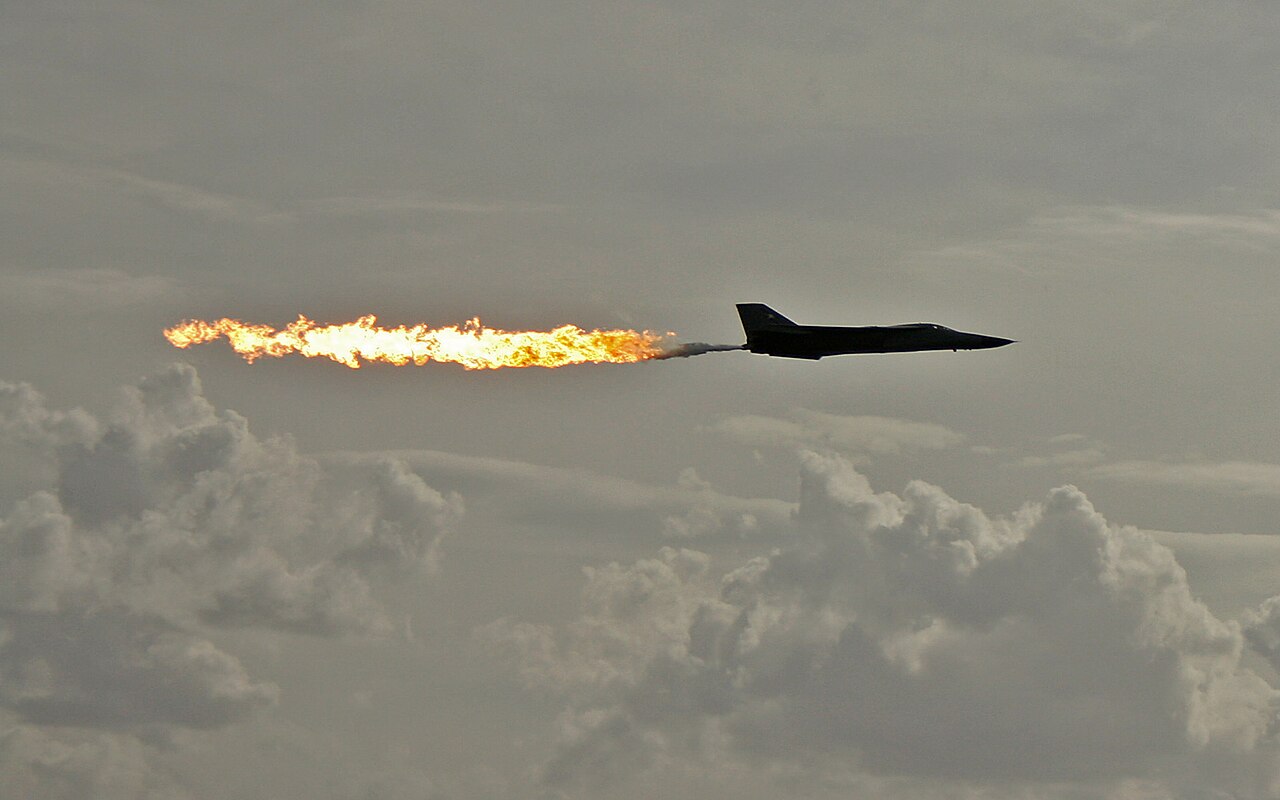
Fuel dumping, officially called fuel jettison, is a controlled emergency procedure in which an aircraft pumps fuel out of its tanks mid-flight. It looks wasteful and dramatic, but it exists to solve a hard physics problem: a plane that can safely take off heavy cannot always land safely heavy.
This article explains why maximum landing weight sits below maximum takeoff weight, what triggers a fuel dump, how the system works, which aircraft have it, where the fuel goes, and what happens when the procedure goes wrong.
The weight problem
Every commercial aircraft is certified with two critical numbers: maximum takeoff weight (MTOW) and maximum landing weight (MLW). The first is always higher than the second. The landing gear, wing structure, and airframe are designed to absorb the impact forces of touchdown, and those forces climb with weight.
The gap can be enormous on long-haul jets. On a Boeing 747, the difference between MTOW and MLW can be as much as 200,000 lb.
That is the weight of the fuel the aircraft is expected to burn off gradually during an intercontinental flight. Jet fuel weighs about 6 pounds per gallon, and a fully fueled Boeing 777 can carry more than 170,000 liters.
Problems arise when a flight must land before that fuel is gone. If an aircraft develops a technical fault shortly after departure from New York bound for London, it may need to return to the airport while still carrying nearly its full fuel load.
Landing far above MLW risks collapsed landing gear, blown tires, structural damage, or a runway overshoot. Dumping fuel brings the aircraft down to a weight the landing gear was built to handle.
What triggers a fuel dump
Fuel dumping is never routine. It happens only when a genuine emergency requires an early return before the fuel has burned off naturally.
The most common triggers are medical emergencies, where getting a passenger or crew member to help quickly outweighs everything else, and technical problems such as engine failures, pressurization faults, landing gear malfunctions, or smoke and fire warnings. In each case the crew needs the aircraft on the ground soon, and the fuel it is carrying has become a liability.
If time is short, there may not be enough of it to dump. In that case the only alternative is an overweight landing.
Aviation authorities note this has not led to serious incidents in the past, but the risk of damage and the costly inspections that follow make it far from ideal. When the crew has the minutes to spare, dumping is the safer choice.
How the dumping system works
The procedure starts in the cockpit. Pilots activate the fuel jettison system through dedicated controls, and fuel is pumped from the tanks to specialized nozzles, usually near the wingtips. The nozzles spray the fuel in a fine mist, which promotes rapid evaporation.
The fuel leaves the aircraft at a rate of at least 1 percent of maximum takeoff weight per minute. Reducing from maximum takeoff weight to maximum landing weight therefore takes about 10 to 15 minutes, depending on how much must go. Modern wide-bodies let crews selectively dump from specific tanks and set target weights, keeping the aircraft balanced throughout.
Altitude and location are tightly controlled. The FAA recommends dumping at 5,000 to 6,000 feet above ground level, with a hard minimum of 2,000 feet.
Before dumping, pilots coordinate with air traffic control to get clearance for a dumping zone, an altitude, and a duration, and they are steered toward remote or oceanic areas. FAA Order 7110.65, which governs the operation, also requires separation of at least five miles from other air traffic.
The FAA's 2022 Fuel Dumping Report describes the logic plainly: "On rare occasions, due to emergencies, aircraft in the National Airspace System must land before they have consumed most of their fuel, and therefore, weigh too much to land safely. In these cases, pilots must dump enough fuel to bring the aircraft to a safe weight, as determined by the manufacturer's limitations and airport conditions before landing."
Which aircraft can dump fuel
Not every airliner has the equipment. Fuel jettison systems are generally found only on large, long-range aircraft that take off far above their maximum landing weight: the Airbus A330, A340, A350, and A380, and the Boeing 747, 767, 777, and 787. The systems are costly and complex, so they are installed only where operationally necessary.
Narrow-body aircraft such as the Boeing 737 and Airbus A320 families usually cannot dump fuel at all. They are designed with landing gear and structures strong enough to handle landings at or near maximum takeoff weight, though the aircraft must be inspected afterward. In an emergency, their crews hold to burn fuel or simply land overweight.
Military aircraft have their own arrangements. Large cargo planes and tankers like the C-17 Globemaster and the KC-135 carry dump capability for operational flexibility.
Cold War-era fighters including the F-4 Phantom, F-111, and F-14 Tomcat had dedicated systems; the F-111 famously performed "dump and burn" displays, igniting the fuel behind the aircraft at airshows. Modern fighters like the F-16 and F-35 generally do not have dedicated dump systems and are designed to land heavy if needed, trading simplicity for the extra stress and a post-flight inspection.
Where the dumped fuel goes
The obvious worry is that thousands of gallons of kerosene rain down on whoever is below. The physics are more forgiving than that sounds.
At the recommended altitudes, jet fuel disperses into microscopic droplets that evaporate rapidly in the dry, cold air. Virtually none of it reaches the ground in liquid form; it atomizes, mixes with the atmosphere, and dissipates.
The system breaks down when dumping happens too low. In January 2020, a Delta Boeing 777 bound from Los Angeles to Shanghai developed an engine problem shortly after takeoff and dumped more than 15,000 lb of fuel over urban Los Angeles at roughly 2,000 feet.
The fuel reached the ground before fully evaporating, dozens of people reported skin and respiratory irritation, and the FAA investigated. Delta later agreed to a $79 million settlement.
That case is the exception that proves the rule. Most dumps happen over water or unpopulated areas and pass without notice.
A British Airways 747 with a landing gear problem dumped fuel over the Pacific in 2002 before returning safely to Los Angeles, and a Singapore Airlines A380 with an engine failure dumped fuel after departing Singapore in 2010 and landed safely back at Changi. The environmental agencies that monitor these events, including the EPA and Europe's EASA, treat dumping as a genuine emergency procedure rather than something done for convenience.
Frequently asked questions
Is fuel dumping dangerous for people on the ground?
Generally no, when done by the book. At 5,000 to 6,000 feet the kerosene disperses and evaporates before reaching the surface. The 2020 Los Angeles incident shows the risk when fuel is released at low altitude over populated areas, which is why altitude minimums and remote dumping zones are part of the procedure.
Can all planes dump fuel?
No. Only large long-haul aircraft such as the 747, 777, A380, and A350 are typically equipped with jettison systems. Narrow-bodies like the 737 and A320 cannot dump; in an emergency their crews burn fuel by holding or land overweight and inspect the aircraft afterward.
How long does it take to dump fuel?
About 10 to 15 minutes to go from maximum takeoff weight down to maximum landing weight, since systems jettison at least 1 percent of maximum takeoff weight per minute. That is why a crew may hold for a while before turning back to the runway.
Does dumping fuel pollute the environment?
Dumped kerosene atomizes at altitude and dissipates rather than falling as liquid, so the ground impact is minimal when procedures are followed. The EPA and EASA monitor dumping events, and the industry treats jettisoning as an emergency-only measure.
The bottom line
Planes dump fuel because landing is harder on an airframe than taking off: the gear and structure are certified for a lighter arrival than departure. When an emergency forces an early return, jettisoning fuel through the wingtip nozzles is the controlled way to get below that limit. It looks dramatic, but the alternative, an overweight landing that could collapse the gear, is the genuinely dangerous option.
Tags: fuel dumping, aviation safety, emergency landing, aircraft weight, FAA
Rive News's research desk covers air travel, consumer tech, and the regulations that shape them.
Latest in Travel
- Why Do You Have to Put Your Phone in Airplane Mode?
- Why Do Runways Have Numbers and What Do They Mean?
- How Do Airports Decide Which Runway to Use?
- Why Do Boarding Groups Exist and Do They Actually Work?
Get one practical travel explainer in your inbox every morning. Subscribe to the Rive News newsletter.
Related stories

The 3-1-1 liquids rule for planes: what each number means
TSA's 3-1-1 rule limits carry-on liquids to 3.4-ounce containers in one quart bag. Where the 2006 rule came from, what counts, and how

Why Is Airplane Food So Bland at Altitude?
A 2010 Fraunhofer study found altitude cuts sweet and salty perception by up to 30 percent. Low humidity, cabin pressure, and noise all

Carry-on size limits: why airlines each set their own
Airlines set their own carry-on limits because the FAA only requires each carrier to have a policy, not one global size. Why 22 x 14 x