
Why Do Runways Have Numbers and What Do They Mean?
Key takeaways
- A runway number is the runway's magnetic heading rounded to the nearest 10 degrees, with the final zero dropped: a runway pointing at 092 degrees becomes Runway 09.
- Each end of the runway gets its own number, always 18 apart, and parallel runways add L, C, or R.
- Because magnetic north drifts, airports occasionally repaint their numbers, as Oakland did in 2013.
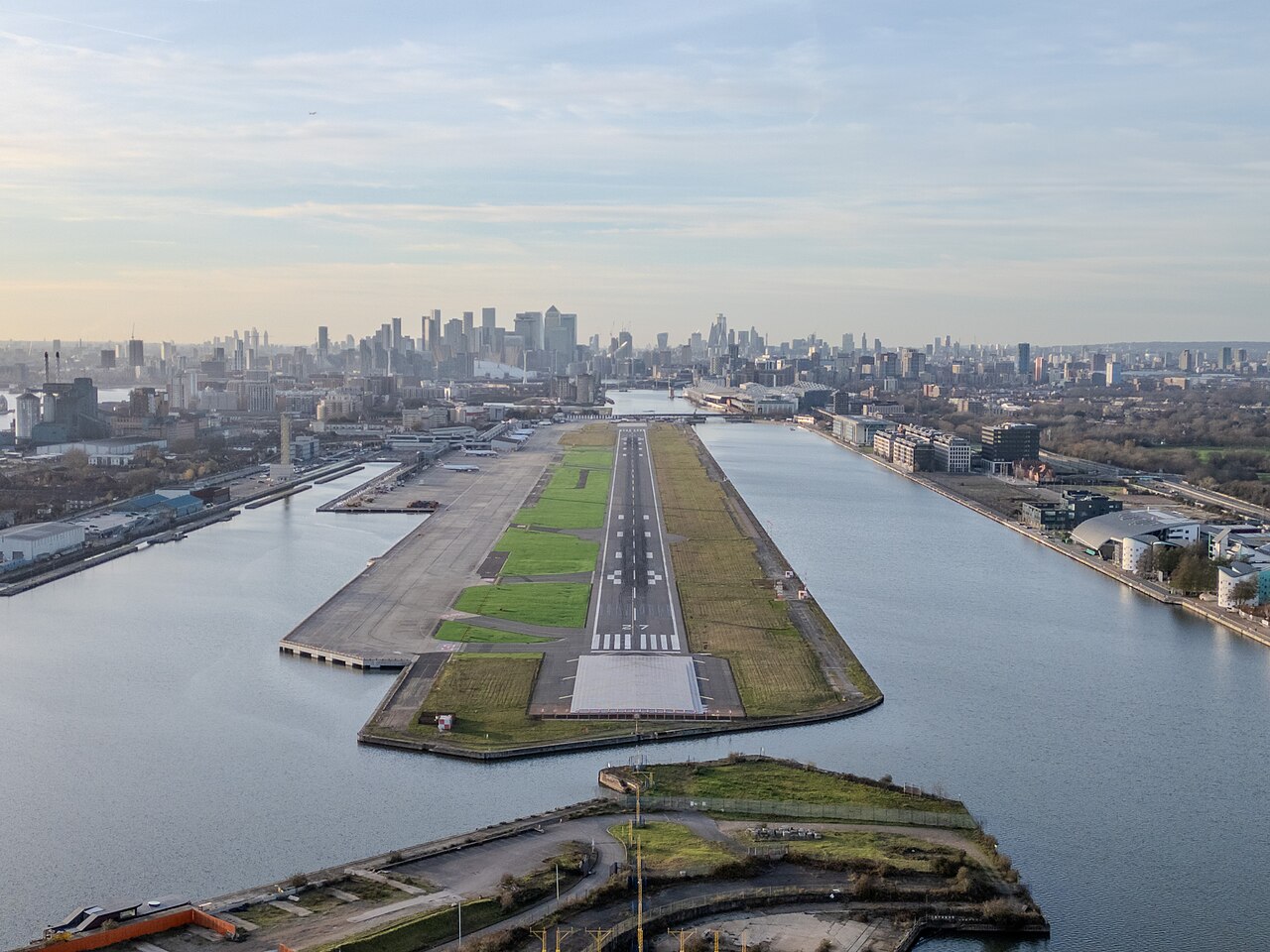
Those giant white digits painted at the end of every runway are not decoration and not assigned at random. Each one is a short compass reading that tells a pilot which direction the runway points. Once you know the trick, you can read a runway the way pilots do.
This article explains how the numbers are calculated, why each strip of pavement has two names, what the letters mean, why numbers sometimes change, and the rare cases where the compass is set aside entirely.
How a runway earns its number
Start with a magnetic compass, the circle divided into 360 degrees. North is 360 (never zero in aviation), east is 90, south is 180, and west is 270.
Take the runway's magnetic heading, round it to the nearest 10 degrees, and drop the final zero. A runway pointing at 092 degrees becomes Runway 09.
One pointing at 342 degrees becomes Runway 34. A runway pointing due south at 180 degrees becomes Runway 18, and one pointing due north becomes Runway 36.
The reference is magnetic north, not the geographic north pole used on road maps. Aviation has long relied on compasses, which need no power and only the Earth's magnetic field, so runway numbers follow magnetic headings to this day.
Pilots treat the painted number as a quick sanity check. When lined up on an assigned runway, the aircraft's heading indicator should closely match the number on the pavement.
If the two disagree by more than a few degrees, there is a good chance the pilot is lined up on the wrong runway. At a busy airport with several runways, that gross-error check matters.
Why one strip of pavement has two names
Runways are used in both directions, and each direction gets its own number. The two numbers always differ by 18, because 180 degrees of opposite heading divided by 10 is 18.
If one end is Runway 09 (facing 90 degrees east), the other end is Runway 27 (facing 270 degrees west). Runway 18 in one direction is Runway 36 in the other. Air traffic control assigns a direction based on the wind, and the number tells the pilot exactly which end of the pavement they are cleared for.
There is one small quirk. If a runway's heading ends in 5, say 185 degrees, it could be designated either 18 or 19. And since aviation never says "zero zero zero" for north, a runway pointing to magnetic north is always 36, never 00.
On the radio, pilots and controllers pronounce each digit separately for clarity. Runway 22 is "two-two," never "twenty-two," and the digit nine is spoken as "niner" to avoid confusion with the German "nein."
What the letters L, C, and R mean
When an airport has parallel runways pointing the same direction, the numbers alone are not enough. Each runway gets a letter: L for left, C for center, R for right, judged from the pilot's view when facing that direction.
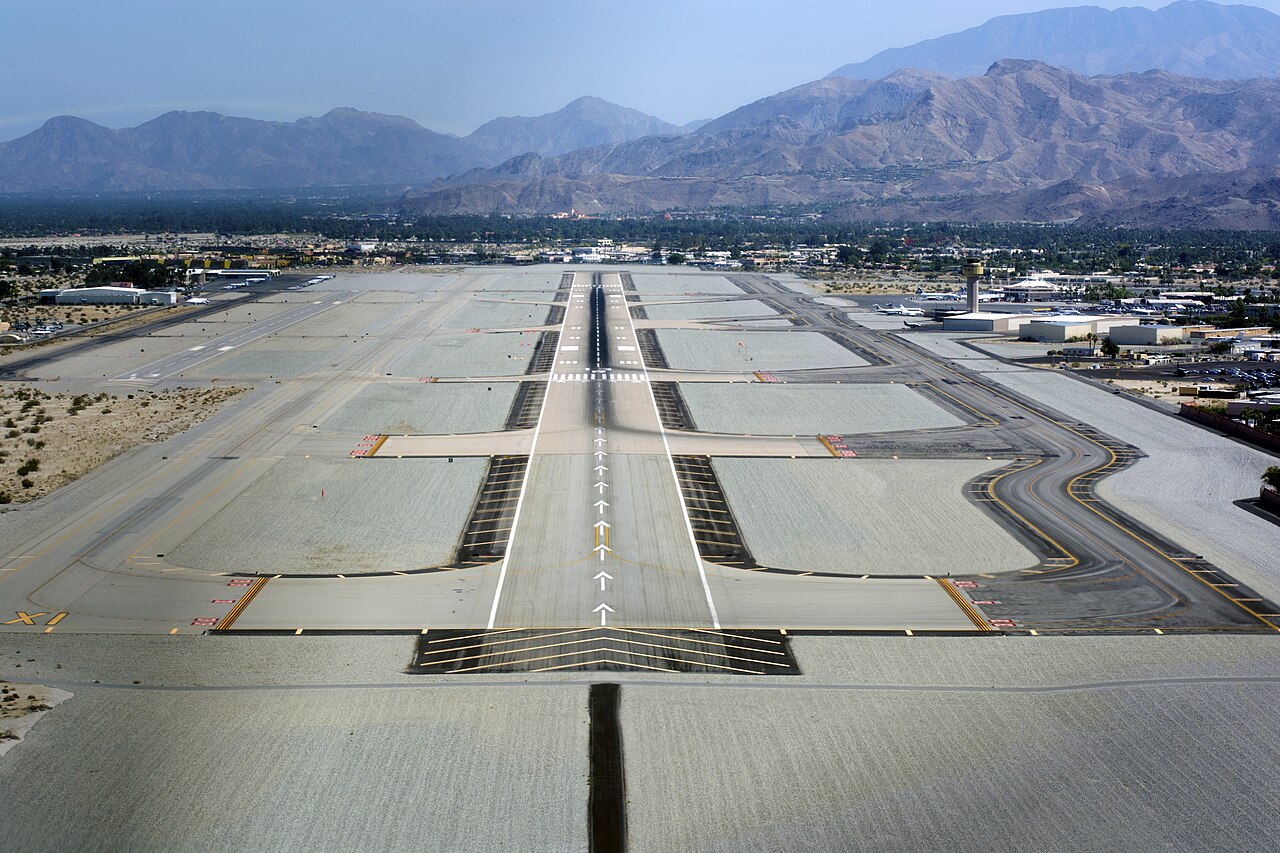
At airports with more than three parallel runways, the system gets a creative workaround. Atlanta, the world's busiest airport, has five parallel runways: 26L, 26R, 27L, 27R, and 28.
All of them are actually oriented to 274.4 degrees magnetic, but the extra designations are shifted by 10 degrees to avoid any confusion on the radio. Dallas-Fort Worth does the same with 17L, 17C, 17R, 18L, and 18R, all pointing at 175.4 degrees.
The painted digits are enormous so pilots can read them from the air and from the cockpit on the ground. In the US, a single number is 63 feet tall and 20 feet wide, roughly the floor area of a city apartment. Taxiing aircraft also pass illuminated signs with white text on a red background marking each runway, another layer of confirmation before takeoff.
Why airports sometimes repaint the numbers
Magnetic north does not sit still. It drifts across the Arctic, currently marching toward Russia at roughly 30 miles per year as the Earth's molten iron core shifts. Since runway numbers are tied to magnetic headings, the drift eventually pushes a runway's true orientation past the rounding threshold, and the number becomes wrong.
When that happens, the airport repaints. Oakland International changed its designations in 2013, and a Welsh airport repainted its runway from 08 to 07 overnight. It is an infrequent job (the 63-foot digits are not cheap to redo), but every airport with magnetic-based numbering faces it eventually.
There are also deliberate exceptions. In parts of northern Canada and Greenland, magnetic variation is so extreme and unstable that runways are numbered by true north instead, to avoid constant renumbering.
Some military and research airfields do the same for operational reasons. These cases are rare; the vast majority of the world's runways still use magnetic headings.
How the numbers get chosen in the first place
The direction a runway points is decided during airport design, and the dominant factor is the prevailing wind. Aircraft take off and land into the wind to gain lift on departure and shorten the landing roll, so designers study years of local wind data before fixing a runway's orientation.
That is why many airports have runways crossing at wide angles: with two strips arranged near 90 degrees to each other, arriving aircraft can almost always find one reasonably aligned with the wind. Single-runway airports study the same wind data to pick the one orientation that works most often.
For passengers, the numbers are a free window into the flight. Glance at the runway sign while taxiing, add a zero to the number, and you know your compass heading. If the tower clears your flight for Runway 31, you are departing to the northwest at about 310 degrees magnetic, into whatever wind the controllers chose for you.
Frequently asked questions
Why does a runway have two different numbers?
Because each end is used for takeoffs and landings in opposite directions. The two numbers describe the magnetic heading faced from each threshold, so they always differ by 18. Runway 09 from one end is Runway 27 from the other.
What does the L or R after a runway number mean?
Left or Right (with C for Center), identifying which of several parallel runways you are on. The letters are assigned from the pilot's perspective facing that direction of travel.
Why do runway numbers change over time?
The Earth's magnetic north pole drifts, currently about 30 miles per year. When the drift changes a runway's magnetic heading enough to cross a rounding boundary, the airport repaints the numbers to match the new heading.
Is there ever a Runway 00?
No. In aviation, north is always 360 degrees, never zero, so a north-pointing runway is designated 36.
Pilots say "three-six-zero" rather than "zero zero zero."
The bottom line
Runway numbers are compass headings in disguise: round the magnetic direction to the nearest 10 degrees, drop the zero, and you have the designation. The two numbers per runway, the L/C/R letters, and the occasional repainting all follow from that one rule. Next time you taxi past a red-and-white runway sign, read the number, add a zero, and you are thinking like the pilot up front.
Tags: runway numbers, aviation, airports, pilots, navigation
Rive News's research desk covers air travel, consumer tech, and the regulations that shape them.
Latest in Travel
- Why Do You Have to Put Your Phone in Airplane Mode?
- Why Do Planes Dump Fuel Before Emergency Landings?
- How Do Airports Decide Which Runway to Use?
- Why Do Flight Paths Look Curved on Maps?
Get one practical travel explainer in your inbox every morning. Subscribe to the Rive News newsletter.
Related stories

The 3-1-1 liquids rule for planes: what each number means
TSA's 3-1-1 rule limits carry-on liquids to 3.4-ounce containers in one quart bag. Where the 2006 rule came from, what counts, and how

Why Is Airplane Food So Bland at Altitude?
A 2010 Fraunhofer study found altitude cuts sweet and salty perception by up to 30 percent. Low humidity, cabin pressure, and noise all

Carry-on size limits: why airlines each set their own
Airlines set their own carry-on limits because the FAA only requires each carrier to have a policy, not one global size. Why 22 x 14 x