
Why Some Airports Make You Take Off Your Shoes and Others Do Not
Key takeaways
- The shoe rule was a US response to Richard Reid's failed 2001 shoe bombing; it became mandatory for ages 12 to 75 in August 2006.
- Most of the world never copied it, which is why travelers noticed the rule at US airports but not elsewhere.
- The US ended the rule in July 2025 because modern CT and millimeter-wave scanners can now screen shoes without removing them.
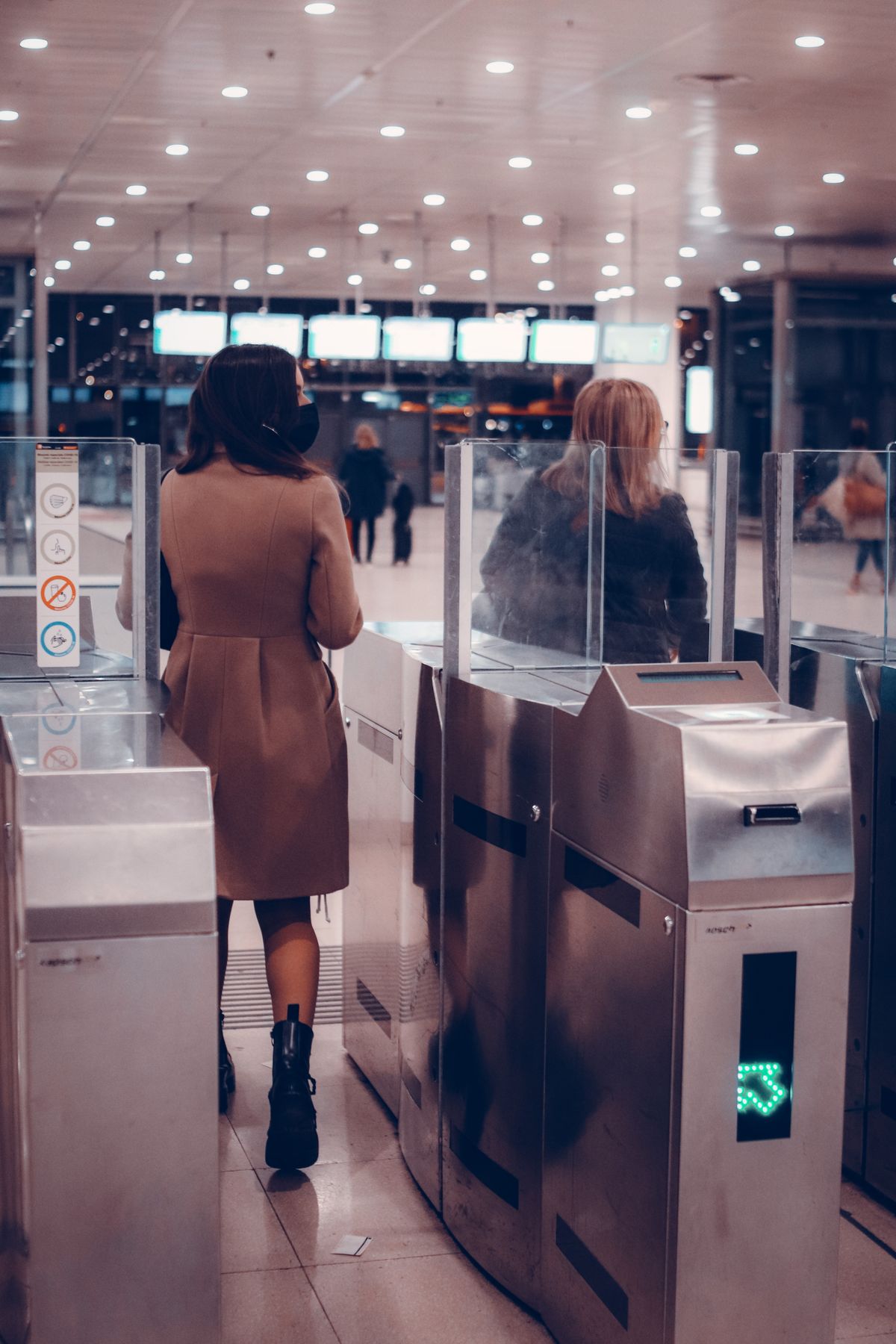
For nearly two decades, the most memorable part of flying through the United States was shuffling barefoot across a cold security floor. Travelers who flew internationally noticed something strange: the shoe ritual existed at American airports and almost nowhere else. There was a reason for that, and the reason has now expired.
The rule began with a failed terrorist attack, survived for 19 years on aging technology, and ended in 2025 when better machines finally made it unnecessary. This article explains where the rule came from, why other countries skipped it, and what replaced it.
Where the rule came from: the shoe bomber
On December 22, 2001, British national Richard Reid boarded American Airlines Flight 63 from Paris to Miami with plastic explosives hidden in his sneakers. Mid-flight he tried to ignite them with matches and was subdued by passengers and crew. The bomb never detonated, but the attempt exposed a gap: the security equipment of the era could not detect non-metallic explosives like the PETN in Reid's shoes.
Aviation security expert Jeff Price, a professor at Metropolitan State University of Denver, explains that the technology of the time drove the policy. Early metal detectors had trouble detecting anything at floor level and could never detect explosives at all. Shoe removal became the human workaround for what machines could not yet do.
Even so, the rule did not arrive immediately. It was not until August 2006, nearly five years after Reid's attempt, that the Transportation Security Administration made shoe removal mandatory.
The rule applied to passengers aged 12 to 75, whose shoes were X-rayed with carry-on bags. Members of TSA PreCheck, the paid trusted-traveler program costing about $80 for five years, were exempt from the start, as were young children and older adults.
Why other countries never copied it
Here is the part that puzzled travelers: the United States was nearly alone in enforcing the rule. Airports in other countries, including those run by highly security-conscious governments such as Israel's, generally did not require passengers to remove their shoes.
Critics argued this showed the policy never made much sense. Writing after the rule's repeal, commentator Jacob Sullum noted that in the nearly two decades the rule stood, there was never another shoe-bomb attempt after Reid's failure. Other countries assessed the same threat and concluded their existing screening was sufficient, relying on explosive-trace detection, behavioral screening, and targeted secondary checks instead of a blanket shoe rule.
The American version persisted partly because of how security policy ratchets: once a measure is in place, removing it can look like lowering your guard, even when the evidence for the measure is thin. Janet Napolitano, a former Homeland Security secretary, predicted as far back as 2011 that the shoe rule would be phased out as screening technology improved. It took another 14 years.
Why the US finally ended it in 2025
The one-word answer is technology. On July 8, 2025, Homeland Security Secretary Kristi Noem announced that travelers would no longer be required to remove shoes during TSA screening at US airports, effective immediately and nationwide.
By mid-2025, more than 1,000 advanced computed tomography (CT) scanners had been installed across major US airports. These machines produce clear 3D images of bag contents, and the same generation of equipment can resolve threats hidden in footwear. The TSA is also developing a dedicated shoe scanner with the Pacific Northwest National Laboratory: a passenger steps onto a pad, millimeter waves penetrate the sole, and the machine builds a 3D image in about two seconds, flagging anomalies without the shoe leaving the foot.
Noem framed it as a win for both security and convenience, saying the change would drastically decrease wait times at checkpoints while maintaining standards through layered security. One caveat remains: TSA officers can still ask individual passengers to remove shoes if a scanner flags something, so the barefoot shuffle is not entirely extinct. It is just no longer the default.
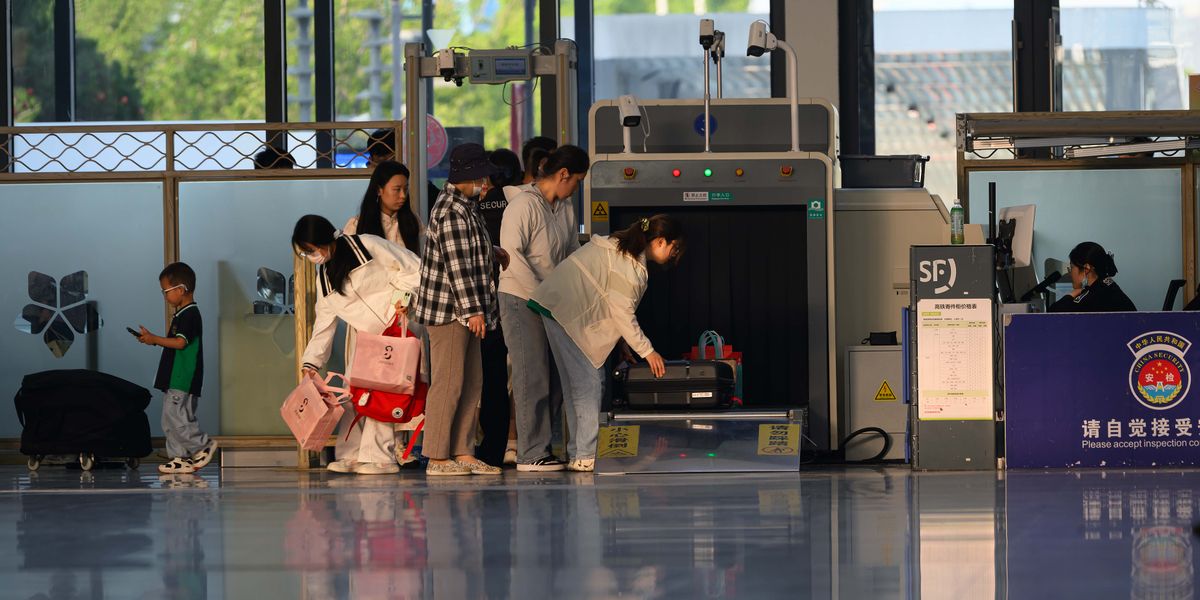
What this means for your next trip
If you fly through the United States now, keep your shoes on unless an officer asks otherwise. PreCheck's old advantage on this front has effectively been extended to everyone, though PreCheck still speeds up the rest of the process, laptops stay in bags and belts stay on.
Outside the US, little changes, because most airports never had the rule. Where secondary screening happens, it is usually targeted: an alarm on the body scanner or a random check, not a blanket policy. As with odd-looking airport codes, security rituals vary more by country than travelers expect.
One practical tip survives the rule change. Slip-on shoes are still the fastest choice at any checkpoint, because random secondary screening exists everywhere.
Nobody wants to relace boots under pressure. And if you are ever unsure what a checkpoint wants, watch the travelers ahead of you for 30 seconds.
Airport norms, like boarding order, are local.
Frequently asked questions
Do I still have to take my shoes off at US airports?
No, not as a routine step. Since July 2025 the TSA no longer requires it. Officers can still ask you to remove shoes for additional screening if a scanner flags an anomaly.
Why did PreCheck members never have to remove shoes?
PreCheck is a vetted trusted-traveler program, and its members were judged low-risk enough to skip several standard steps, including shoe removal, belt removal, and laptop screening. The 2025 change extended the shoe part of that convenience to all passengers.
Which countries still require shoe removal?
There is no published global list, and practices shift. Some airports apply it selectively during heightened threat periods or as part of random secondary screening. The blanket, everyone-takes-shoes-off rule was essentially an American phenomenon.
Was the shoe rule security theater?
That is the long-running debate. Defenders say it closed a demonstrated vulnerability at a time when scanners could not see through shoes. Critics note that no second shoe-bomb attempt ever happened, most of the world skipped the rule without incident, and the machines that replaced it arrived decades later than predicted.
The bottom line
You took your shoes off because a failed 2001 bombing met 2001 scanner technology, and you kept doing it for 19 years because security rules are easier to add than to remove. Most of the world never joined in, and better machines finally let the US catch up. Keep the slip-ons for speed, but the barefoot era of American airport security is over.
Image Credits: Pexels / El gringo photo; 海风 张; Shojol Islam
Latest in Travel
- Why airport codes look nothing like their city names
- Why you have to put your seat upright for landing
- Why planes board from the back sometimes and the front other times
- Why planes fly at 35,000 feet
Subscribe for one plain-English travel explainer like this every morning.
Related stories
The 3-1-1 liquids rule for planes: what each number means
TSA's 3-1-1 rule limits carry-on liquids to 3.4-ounce containers in one quart bag. Where the 2006 rule came from, what counts, and how

Why Is Airplane Food So Bland at Altitude?
A 2010 Fraunhofer study found altitude cuts sweet and salty perception by up to 30 percent. Low humidity, cabin pressure, and noise all
Carry-on size limits: why airlines each set their own
Airlines set their own carry-on limits because the FAA only requires each carrier to have a policy, not one global size. Why 22 x 14 x