
Why Do Budget Airlines Charge for Printing a Boarding Pass
Key takeaways
- The fee is really for airport check-in, not the paper: Ryanair charges €55 per passenger per sector, and similar fees exist at Spirit and Wizz Air.
- Budget airlines use the charge to force passengers onto self-service check-in, so the airline can run airports with minimal desk staff.
- Check in online before leaving home, save the pass to your phone, and you will never pay it.
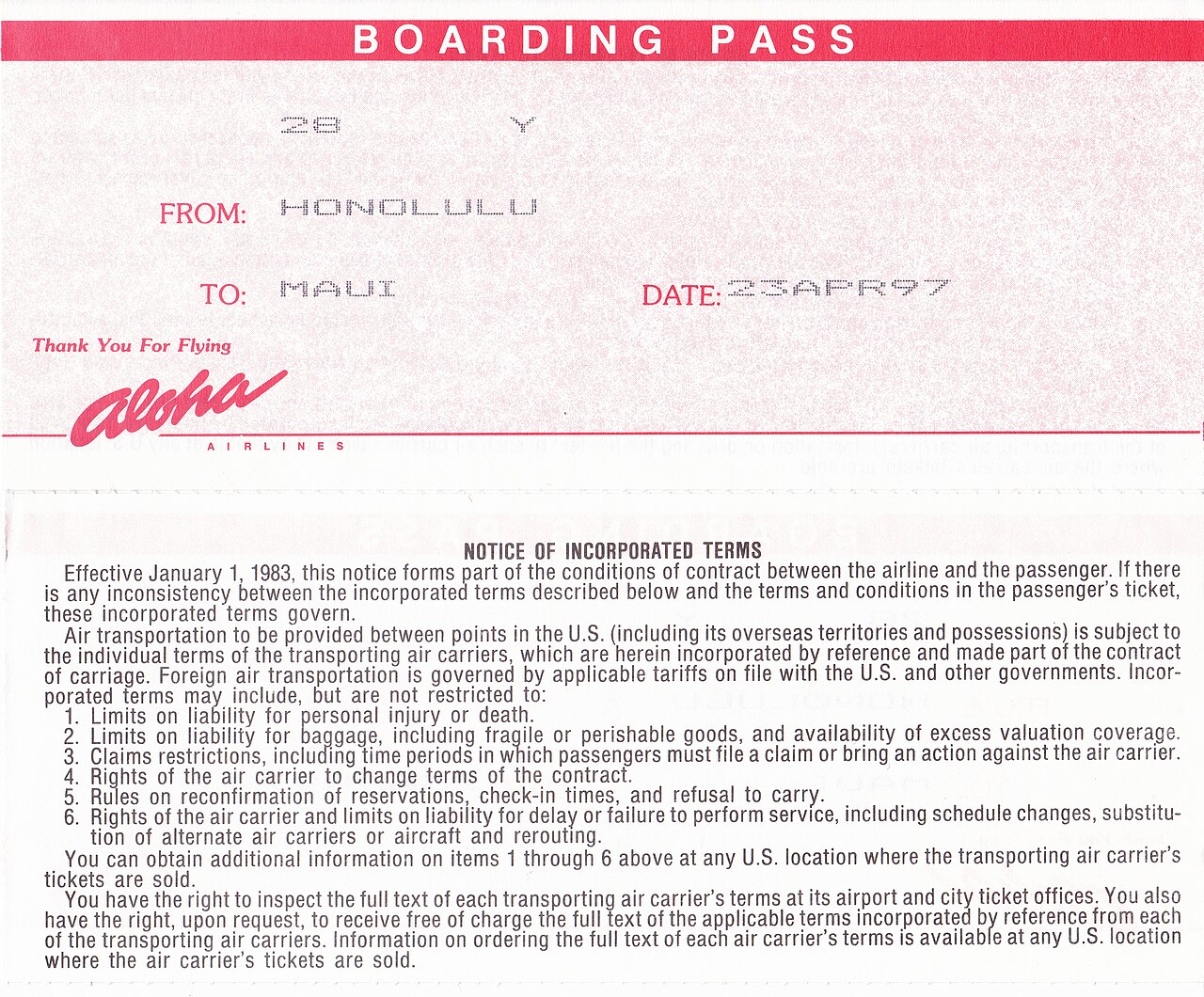
A printed Aloha Airlines boarding pass from 1997, from the era when a paper pass was the only kind there was.
Few airport moments sting like this one: you walk up to the check-in desk, ask for your boarding pass, and the agent tells you it will cost extra. Not for a bag, not for a seat upgrade, just for being checked in the old-fashioned way. The amount is rarely small: on Ryanair it can reach €55 per person, per flight sector, which is more than many of the tickets themselves cost.
This is not a mistake and not a glitch in the system; it is one of the most deliberate fees in budget flying, and it reveals how low-cost airlines think about every interaction with you. A printed boarding pass is really a paper trail of a staffing decision. This article explains what the fee actually charges you for, why budget airlines built their business around it, and how to make sure you never pay it.
What the fee really is
Here is the part most travelers misunderstand: the charge is not for the sheet of paper or the ink. It is an airport check-in fee, a penalty for making a human being check you in at a staffed desk instead of doing it yourself on your phone. Ryanair states it plainly: if you do not check in online up to 2 hours before your scheduled departure, you may still check in at the airport up to 40 minutes before departure, but you will pay the airport check-in fee, so the airline urges all passengers to check in online.
That framing matters, because it answers the fairness question: you are not buying paper. You are buying the airline's staff time at the most expensive place in its network. Full-service airlines absorb that cost as part of the ticket, while budget airlines itemize it, the same way they itemize everything else at the airport.
The business model behind it
Budget airlines run on the unbundled fare model: your ticket buys exactly one thing, a seat on the plane from A to B. Everything else, bags, seat selection, food, and check-in service, is priced separately. This lets them advertise fares as low as €9.99 while shifting costs onto the passengers who create them.
Staffed desks are the enemy of that model: every passenger who needs a human at the counter requires trained staff, queue space, and computer terminals at the airport, while every passenger who checks in on a phone needs none of that. The €55 fee is set deliberately high enough that almost nobody chooses to pay it, which is exactly the point. It is less a price than a shove toward the app, and Ryanair says more than 99 percent of its passengers already check in online because it wants the figure as close to 100 percent as possible.
Ryanair: the strictest example
No airline has pushed this logic harder than Ryanair. On its current fee table, the airport check-in fee is €55 per passenger per sector, except for departures from Spain (€30) and Austria (€40), according to travel reporters tracking the policy. Turn up without having checked in online and a family of four can lose €220 before reaching security, for skipping a five-minute task on their phones.
Ryanair's rules have one important mercy built in: if you did check in online but your phone dies, gets lost, or the app misbehaves at the airport, that is a different story. The airline's digital boarding pass guidance says passengers who checked in online can receive a free boarding pass at the airport, and CEO Michael O'Leary has said the same publicly. The fee punishes skipping online check-in, not bad luck with technology.
What changed in late 2025
In November 2025, Ryanair went further than any major airline before it. It moved to 100 percent digital boarding passes through its app, scrapping printable passes for most routes. O'Leary said the change would eliminate almost all airport check-in fees and let the airline's operations center push updates directly to passengers during disruption.
The practical meaning is simple: the question "why do they charge for printing a boarding pass" is becoming outdated at Ryanair, because there is nothing left to print. What remains is the check-in deadline. Miss it and the fee still applies; meet it and the pass lives on your phone.
Spirit, Wizz Air, and the rest
Ryanair is the extreme, not the exception: Spirit Airlines charges a $25 fee to print a boarding pass at the check-in counter, according to fee roundups of US budget carriers, and Wizz Air charges between €40 and €50 for airport check-in, applied per flight per passenger. Frontier and Allegiant run the same playbook with their own versions of the charge.
The amounts vary, but the direction is identical across the industry. Airport check-in is treated as a failure state, not a service tier, and the fee exists to keep it rare. Some legacy carriers have quietly added their own versions for the cheapest fare classes, which suggests the idea is spreading, not fading.
How to never pay it
The defense is a routine, and it takes about five minutes. Download the airline's app right after booking, not at the airport, and set a phone alarm for 24 hours before departure, when online check-in typically opens. Check in, save the boarding pass to your phone's wallet app, and take a screenshot of the barcode as a backup in case the terminal has no signal.
If your phone is your weak point, charge it before you travel and carry a power bank. A dead phone at the airport is survivable if you checked in online, because the airline can reissue the pass free, but a dead phone plus a missed online check-in is the expensive combination. Print the pass at home or at your hotel if the airline still allows it, and never walk up to the desk expecting free check-in unless you have confirmed the airline still offers it.
Frequently asked questions
Is it legal for airlines to charge for a boarding pass?
Yes, in most jurisdictions. The fare contract typically covers transportation only, and ancillary services must simply be disclosed before purchase. EU rules permit the fees when they are shown upfront, and US rules require clear disclosure without banning the practice.
What if I do not own a smartphone?
Ryanair says passengers without a smartphone can receive a free boarding pass at the airport as long as they already checked in online before arriving. The key step is the online check-in itself, which can be done on any computer or borrowed device.
Why is the fee charged per sector?
Because each flight sector needs its own check-in record. A connection with two flight legs counts as two sectors, so the fee doubles. This is why the charge hurts most on multi-leg itineraries booked cheaply.
Has anyone challenged the fee in court?
Yes. Austria's Supreme Court ruled that Ryanair's airport check-in fee, along with several other charges, was unfair and not transparent to passengers, according to reporting on the case. The ruling did not end the fee everywhere, and Ryanair continues to charge it in most countries.
The bottom line
Budget airlines charge for printing a boarding pass because the paper was never the point: the fee pays for staffed airport check-in, which the low-cost model is designed to eliminate, and its size is calibrated to make you check in on your phone instead. Ryanair's €55 charge is the loudest version of an industry-wide habit. Check in online before you leave home, keep the pass on your phone with a screenshot backup, and this particular fee will never touch you.
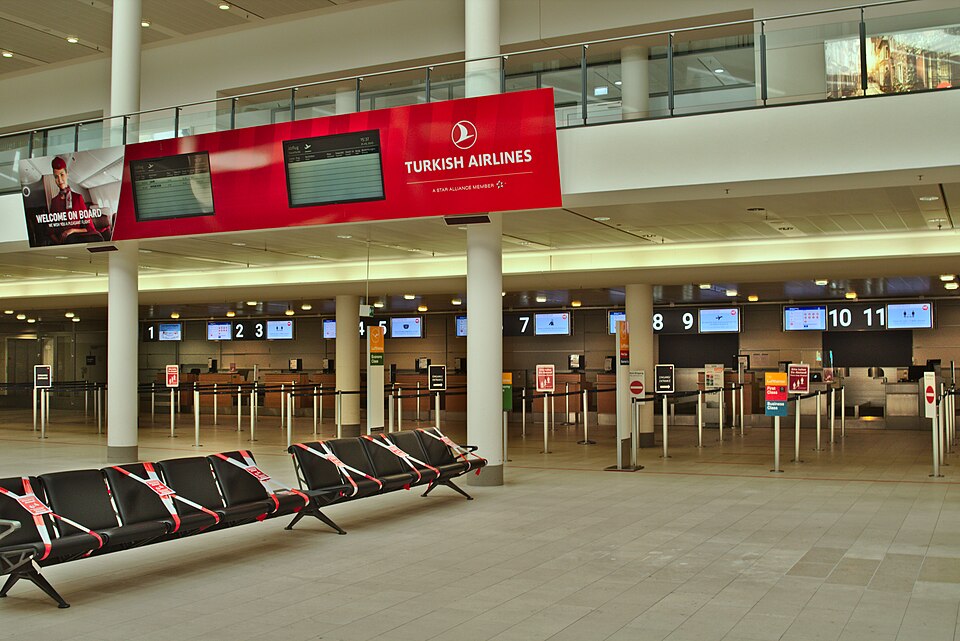
Check-in counters at Bremen Airport; budget airlines want you to skip these desks entirely and check in on your phone.
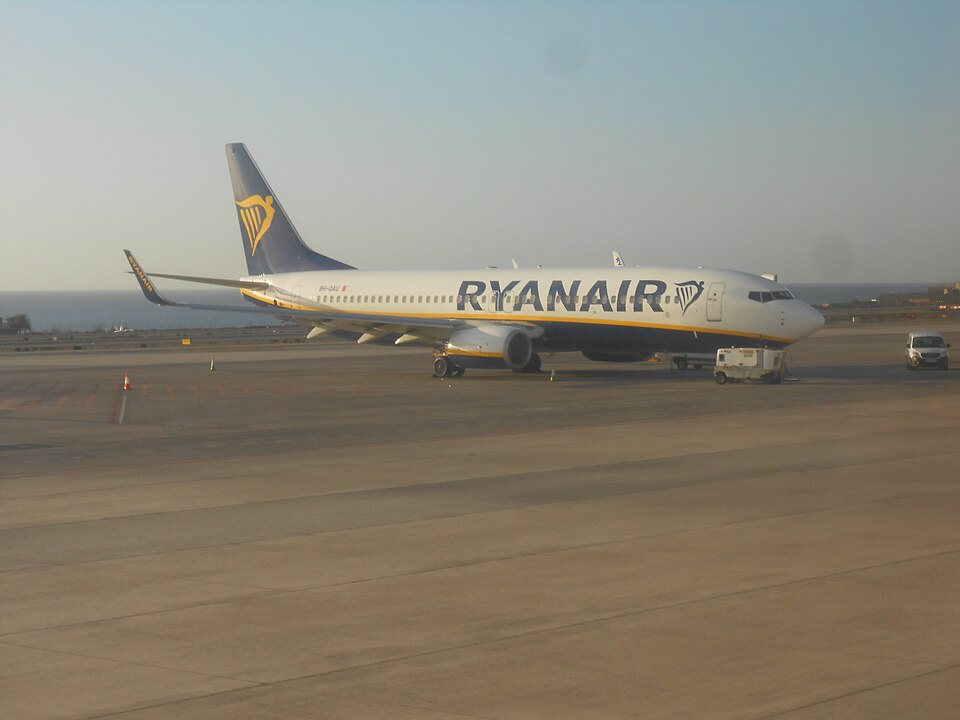
Budget carriers keep fares low by moving passengers through airports with as little staff contact as possible.
Image Credits: Wikimedia Commons
Rive News is the in-house research desk. We explain how travel actually works, one question at a time.
Latest in Travel
- Why airports close or switch runways at night
- Why airports use buses instead of jet bridges
- Why airports make you take your shoes off (and others don't)
- Why your phone battery drains faster when traveling abroad
Subscribe for one plain-English travel explainer like this every morning.
Corrections: found an error? We fix factual mistakes promptly and note them here.
Related stories
The 3-1-1 liquids rule for planes: what each number means
TSA's 3-1-1 rule limits carry-on liquids to 3.4-ounce containers in one quart bag. Where the 2006 rule came from, what counts, and how
Why Is Airplane Food So Bland at Altitude?
A 2010 Fraunhofer study found altitude cuts sweet and salty perception by up to 30 percent. Low humidity, cabin pressure, and noise all
Carry-on size limits: why airlines each set their own
Airlines set their own carry-on limits because the FAA only requires each carrier to have a policy, not one global size. Why 22 x 14 x