
Why Do Airports Close or Switch Runways at Night
Key takeaways
- Airports close or rotate runways overnight mostly to cut aircraft noise over nearby homes and to open a safe window for maintenance work.
- London Heathrow swaps its runways at 3:00 PM daily and bans scheduled take-offs between 11:30 PM and 6:00 AM.
- If your flight is booked in the middle of the night, it is more likely to be delayed or moved, so plan around it.
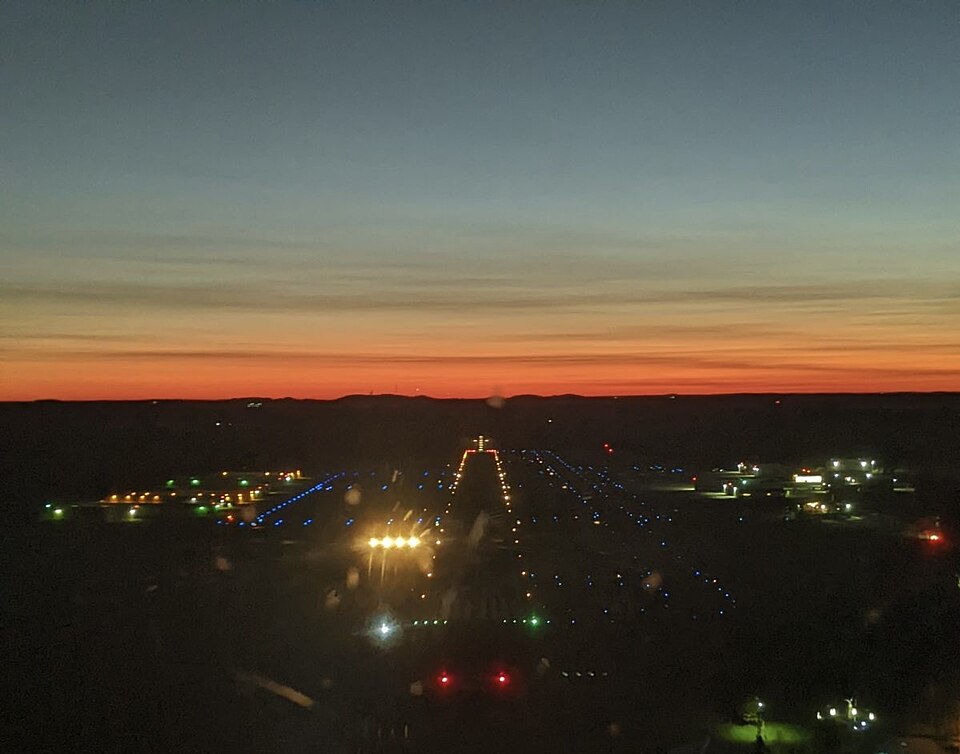
Runway lights glowing at dusk, when traffic thins and maintenance crews take over the airfield.
The runways at an airport never sleep quite the way the terminal does. Even when the gates go quiet, the concrete keeps working, and planes still land and take off, just far fewer of them. They often use different runways than they did at noon, and sometimes a runway goes completely dark for hours.
This happens for a handful of practical reasons, and noise is the biggest one. Aircraft are loudest when they are heavy and low, right over the neighborhoods that grew up around the airport, so closing a runway or switching traffic to one that flies over fewer homes gives people below a real break. This article explains what closing a runway actually means, why noise rules drive the schedule, how the night shift keeps the airfield safe, and what all of it means for your flight.
What closing a runway actually means
Closing a runway at night rarely means shutting the whole airport. It usually means one strip of concrete is taken out of service while others stay open. The airport keeps operating at reduced capacity, handling the small number of flights that arrive or depart overnight.
A runway is a long, expensive piece of infrastructure. It needs resurfacing, its lights need replacing, and its paint markings fade under constant use. All of that work is far easier when no aircraft are moving on it, which is why the quiet hours between midnight and dawn are the natural maintenance window, according to aviation explainers on how airports schedule their work.
Why noise is the biggest reason
Aircraft noise hits hardest at night because everything else goes quiet. Background noise drops, so a takeoff at 2 AM feels far louder than the same takeoff at 2 PM. People cannot sleep through it, and the complaints follow.
That is why many airports are bound by night curfews. London Heathrow, for example, operates a night restriction between 11:30 PM and 6:00 AM, with no scheduled take-offs during that window at all, according to the airport's own published alternation rules. Frankfurt's curfew runs from 11:00 PM to 5:00 AM and is one of the strictest in Europe; it followed a court ruling that sided with residents over cargo operations, the Indian Express reported.
Sydney enforces a hard curfew with almost no exceptions, imposed by the government to balance the economy against residents' wellbeing. Los Angeles International takes a softer approach, with partial night restrictions on certain runways driven by neighborhood pressure and voluntary airline agreements. The pattern is the same everywhere: the denser the homes around the airport, the stricter the night rules.
Maintenance: the night shift nobody sees
Runways age fast. Every landing grinds rubber into the concrete, reducing the grip aircraft need in rain, while lights burn out and navigation equipment drifts out of calibration. Most of this work can only happen when the surface is empty, and the only time the surface is reliably empty is at night.
Airports also use the night hours for work passengers never notice: cleaning, restocking ground equipment, inspecting taxiways, and repositioning vehicles for the morning rush. As aviation writers at Curious Expeditions note, shutting down part of the airfield overnight lets crews work without the pressure of arriving traffic, which keeps the daytime schedule moving on time.
There is a staffing angle too. A full complement of air traffic controllers, ground crew, and security costs money around the clock. Smaller airports, in particular, scale down overnight because the few flights on the board do not justify the full daytime roster.
Why airports switch runways instead of closing them
When demand does not justify a full shutdown, airports switch, and Heathrow is the clearest example of this system. During the day, when the wind blows from the west, the airport uses one runway for landings and the other for take-offs, then swaps them over at 3:00 PM so each neighborhood gets a half-day break from the noise. Heathrow says communities place great importance on this alternation system and publishes an annual schedule of which runway is in use on any day or night of the year.
At the end of each week the airport switches the pattern completely, so the neighborhoods that had evening noise one week get morning noise the next. At night, between 11:30 PM and 6:00 AM, a different weekly alternation system applies: planes alternate which runway they use each week so that, wind permitting, no community is overflown more than every second week, according to reporting on Heathrow's night operations.
Wind is the one thing nobody can negotiate with. Aircraft must land into the wind, so the choice of runway and direction always follows the weather first and noise rules second. When strong winds cross the airfield, Heathrow suspends alternation and uses whichever runway is safe, even if it breaks the schedule.
What it means for your flight
Night flights exist, but they live under tighter rules than daytime ones. At Heathrow today, no scheduled flights operate between 11:30 PM and 4:30 AM, and only an average of 16 to 17 arrivals per night are allowed between 4:30 AM and 6:00 AM, according to campaign group HACAN, quoted by Hammersmith Today. Those numbers can change with policy consultations, but the structure stays the same: the night is heavily restricted.
For you as a passenger, three things follow. First, overnight flights are more vulnerable to delays, because a missed slot cannot easily be replaced when curfew hours are fixed. Second, your flight may land on a different runway than usual, which can add taxi time, and third, early-morning arrivals bunch up right after the curfew lifts, which is why the 6 AM bank at busy airports can feel chaotic.
The same logic explains other airport rhythms you have probably noticed. Security rules change with the era, taxi behavior changes with the queue, and runway use changes with the clock. None of it is random.
Frequently asked questions
Do all airports close runways at night?
No. Major hubs such as Atlanta's Hartsfield-Jackson and Chicago O'Hare operate around the clock, though at much lower volume overnight. Restrictions depend on local laws, community pressure, and whether the airport has enough runways to rotate traffic while keeping one closed.
Can a flight still land during a night curfew?
Usually yes, with limits. Many curfews restrict departures more than arrivals, since arriving aircraft are already committed. Some airports allow delayed flights to land after curfew with special permission, while others fine airlines for breaching the rules.
Why do pilots sometimes announce a change of runway?
Because the active runway changed between your briefing and your takeoff or landing slot. Wind shifts, a runway closure for overnight maintenance, or a noise-rule swap at a scheduled time like Heathrow's 3:00 PM change can all trigger it. It is routine, not a problem with your flight.
Who decides the night rules at an airport?
It varies. Governments impose them at places like Sydney, courts have forced them at Frankfurt, and airport authorities manage them voluntarily at LAX. Local community groups often push for stricter rules through consultations and political campaigns.
The bottom line
Airports close or switch runways at night because aircraft are loudest when neighborhoods are quietest, and because the night is the only safe time to repair the concrete. Curfews protect sleep, alternation systems like Heathrow's 3:00 PM swap spread the noise fairly, and maintenance keeps the daytime schedule safe. If you fly overnight, check your flight status before leaving for the airport: the night schedule has less slack than the daytime one, and a small delay can mean a bigger wait.
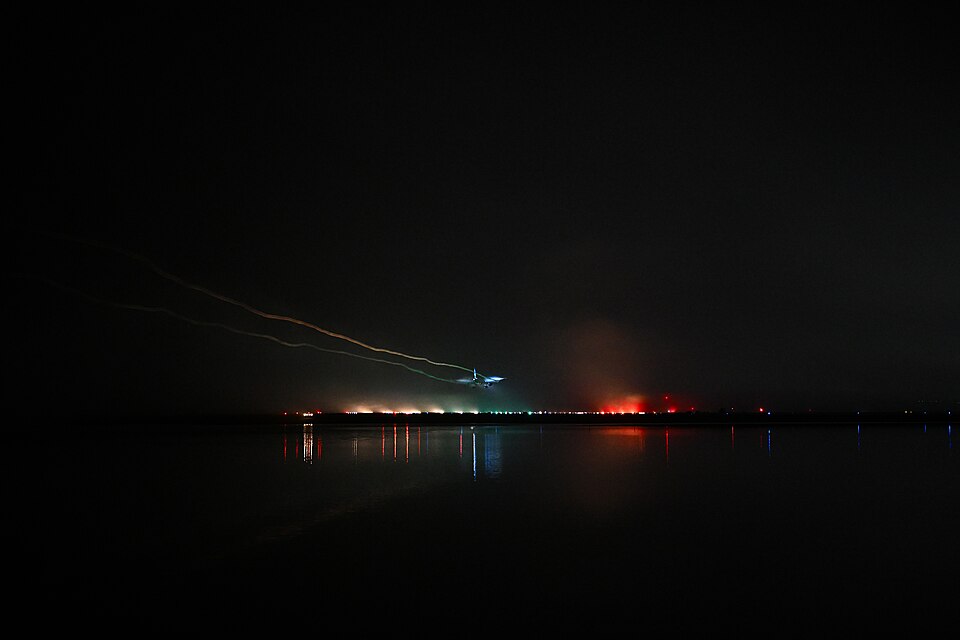
A JetBlue aircraft lands at night over a lit runway; overnight, these lights guide the few flights still operating.
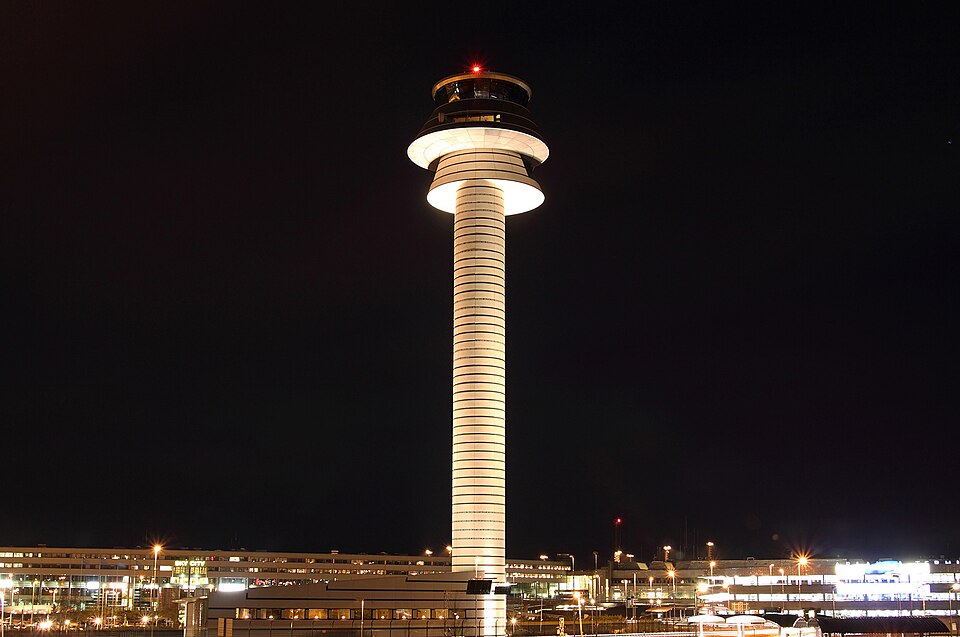
The control tower decides which runways stay open overnight, balancing wind direction, traffic, and noise rules.
Image Credits: Wikimedia Commons
Rive News is the in-house research desk. We explain how travel actually works, one question at a time.
Latest in Travel
- Why planes leave white trails sometimes and not others
- Why airports make you take your shoes off (and others don't)
- Why taxi drivers refuse short rides
- Why your phone battery drains faster when traveling abroad
Subscribe for one plain-English travel explainer like this every morning.
Corrections: found an error? We fix factual mistakes promptly and note them here.
Related stories

The 3-1-1 liquids rule for planes: what each number means
TSA's 3-1-1 rule limits carry-on liquids to 3.4-ounce containers in one quart bag. Where the 2006 rule came from, what counts, and how
Why Is Airplane Food So Bland at Altitude?
A 2010 Fraunhofer study found altitude cuts sweet and salty perception by up to 30 percent. Low humidity, cabin pressure, and noise all
Carry-on size limits: why airlines each set their own
Airlines set their own carry-on limits because the FAA only requires each carrier to have a policy, not one global size. Why 22 x 14 x