
How does duty free pricing actually compare to street prices
By Rive News / Research desk | Rive News / Published October 25, 2026 at 9:00 AM PKT
Key takeaways
- Duty free means exempt from certain taxes, not automatically cheaper.
- Airport rents, concession fees, and brand price controls push shelf prices up.
- Compare the airport price with the street price before tax, not after it.
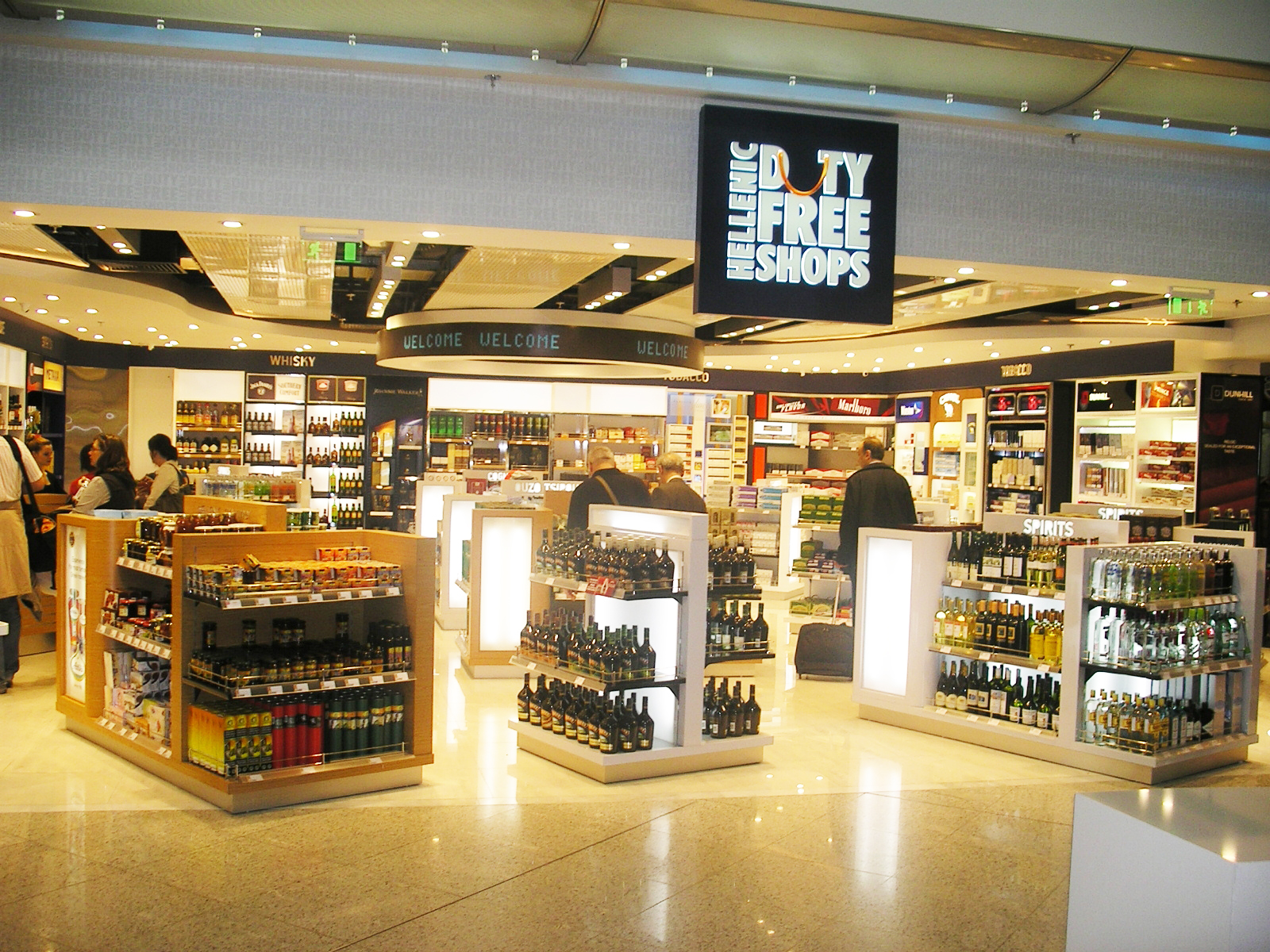
[A duty free shop in an airport terminal, where tax-free does not always mean cheaper.] Photograph: Airport duty free shop
Image Credits: Wikimedia Commons
Duty free shopping is the sale of goods to international travellers without certain local taxes. The assumption most travellers make is that removing tax must make the price lower. This article explains how duty free pricing actually compares to street prices, including which taxes disappear, why airport prices stay high, and how to check a deal before buying.
What duty free actually removes
Duty free removes specific levies at the point of sale. For goods sold to a traveller leaving the country, the shop does not charge import duty, value-added tax (VAT), and in some cases excise duty on alcohol and tobacco. The exemption applies because the goods are being exported, not consumed locally.
That is the whole of the tax story. Duty free does not remove the wholesale cost of the product, the cost of shipping it to the airport, the rent on the shop, staff wages, or the retailer's profit margin. Those costs remain, and they are often higher at an airport than on a high street.
It also does not remove every tax in every place. In the European Union, VAT exemption on departure applies to travellers leaving the bloc, not to those flying between member states. In the United States there is no federal VAT at all, so the duty free advantage on many goods is smaller than travellers expect.
Why the saving is smaller than the tax rate
A common mistake is to subtract the full tax rate from the street price. If VAT is 20 percent, a 100-euro street price does not imply an 80-euro duty free price. The arithmetic works differently, because VAT is charged on top of a pre-tax price, and the retailer is free to set its own pre-tax price.
Work through an example. A perfume priced at 120 euros on a high street in a country with 20 percent VAT has a pre-tax price of 100 euros. If the airport shop sells the same perfume for 110 euros without tax, the traveller saves 10 euros, not 20.
The retailer has kept part of the tax saving as margin.
That is legal and normal. No rule requires a duty free retailer to pass the full tax saving to the shopper. The shop sets its price, and the traveller decides whether it beats the alternatives.
Airport costs push prices up
Airport retail space is among the most expensive commercial space in the world. Shops pay high rents and concession fees, often a percentage of their sales, plus the cost of security-compliant logistics and staffing for long operating hours. Those costs land in the shelf price.
Airports are also captive markets. A traveller past security cannot easily walk to a competing shop, and comparison is hard when boarding calls are minutes away. Limited competition and time pressure let retailers hold higher margins than a high street shop facing a rival across the road.
Brands add another layer of control. Luxury groups commonly set minimum advertised prices across channels, including airports, so the same handbag or lipstick carries a similar shelf price in Paris, Tokyo, and Dubai regardless of local tax rates. Where brand control is tight, the only saving is the tax itself, and sometimes not even that.
Where duty free usually wins
The saving is biggest where embedded taxes form a large share of the street price. Tobacco and spirits are the classic examples, since excise duties can make up a large part of what a smoker or drinker pays on the high street. Perfume and cosmetics can also show real savings, particularly when bought in a high-VAT country.
The saving is smallest on globally priced goods. Electronics, watches, and mainstream skincare often carry near-identical prices worldwide, and online retailers may undercut both the airport and the high street. For those categories, duty free is rarely the cheapest route.
Destination matters too. A traveller leaving a country with 27 percent VAT, as in Hungary, has more tax to save than one leaving a country with 17 percent VAT, as in Luxembourg. Germany sits in between at 19 percent.
The same airport price can be a deal from one country and a poor buy from another.
The allowance trap
Even a genuine saving can vanish at customs on arrival. Personal allowances limit what a traveller can bring home without paying tax and duty, and going over an allowance usually means paying tax on the whole category, not just the excess.
For Great Britain, GOV.UK sets the personal allowance for other goods at 390 pounds for most travellers, with alcohol allowances of 42 litres of beer, 18 litres of still wine, and 4 litres of spirits over 22 percent alcohol by volume, plus 9 litres of drinks up to 22 percent. Tobacco is limited to 200 cigarettes, 100 cigarillos, 50 cigars, or 250 grams of tobacco, with combinations allowed within the overall limit.
Travellers who exceed an allowance must declare the goods and pay tax and duty on the full amount in that category. A bottle bought cheaply airside can become expensive once duty is charged on arrival, so the allowance is part of the price comparison, not an afterthought.
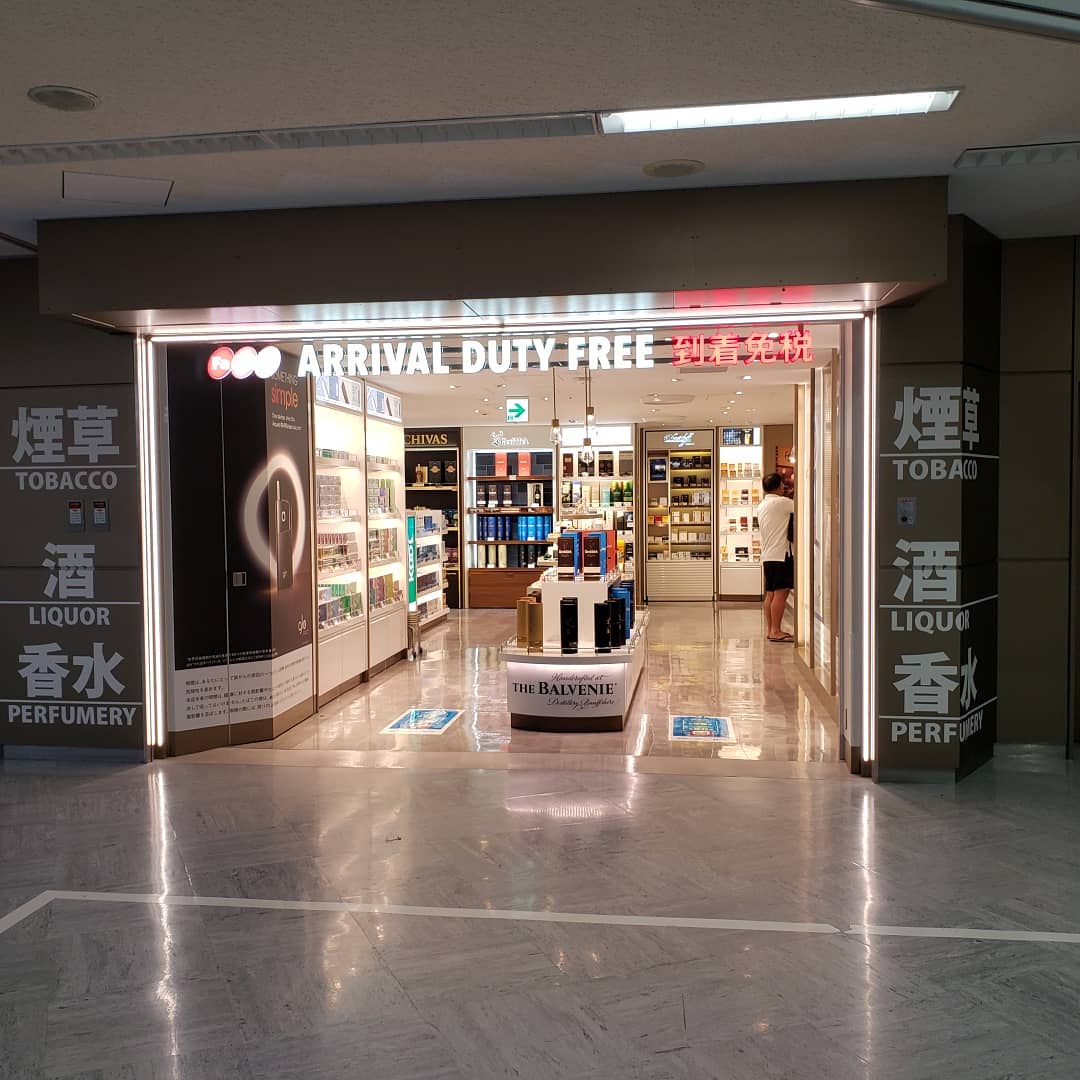
[An arrival duty free shop at Narita airport, where the tax saving still competes with high airport costs.] Photograph: Narita airport duty free shop
Image Credits: Wikimedia Commons
The comparison that reveals a real deal
The honest check is simple. Take the street price of the exact product and strip out the local tax to get the pre-tax price. Compare that figure with the airport shelf price.
If the airport price is lower than the pre-tax street price, the deal is real. If it is higher, the retailer has kept the tax saving and added margin, and the traveller is paying a premium for the convenience of the airport.
Run the check before travelling, not at the gate. Look up the product on the brand's own website or a trusted retailer in the departure country, note the tax-inclusive price and the local VAT rate, and do the division. A phone calculator and two minutes are enough.
Watch for inflated baselines. A sign claiming 30 percent off means little if the reference price was set above the normal street price. Compare against a real street price, not the shop's own struck-through figure.
Online prices changed the game
Duty free once competed mainly with the high street, and the comparison was simple. Online retail changed that, since a traveller can now order the same product for home delivery, often with free shipping and no airport premium.
For cosmetics and skincare, online prices frequently beat airport prices, even after tax. For spirits and tobacco, the airport often still wins, because online sellers must charge the same excise duties as high street shops.
That split explains why blanket advice about duty free fails. The answer depends on the category, the departure country's tax rate, the brand's price controls, and the online alternative. A rule that fits perfume will mislead on headphones.
When to buy and when to walk past
Buy when the airport price beats the pre-tax street price and the online price, and when the purchase sits inside your arrival allowance. Spirits in a high-tax departure country and a favourite perfume with a clear saving are the usual candidates.
Walk past when the product is globally priced, when the airport price matches the street price before tax, or when an online price beats both. Electronics, watches, and standard skincare are the usual walk-past categories.
Also walk past when the purchase would breach your allowance. A second bottle that triggers duty on arrival can erase the saving on the first, and undeclared goods risk seizure.
Frequently asked questions
Is duty free always cheaper than the high street?
No. Duty free removes certain taxes, but retailers set their own prices and airport costs are high. Some items cost more airside than on the high street.
Why is duty free cheaper in some airports than others?
Tax rates, rents, concession fees, and brand price controls all differ by country and airport. A high-VAT departure country leaves more tax to save, while a tightly controlled luxury brand leaves little room anywhere.
Do I pay tax again when I land?
If your purchases stay within your personal allowance, no. If they exceed it, you must declare them and pay tax and duty, usually on the full amount in that category.
Is duty free the same as tax free shopping for tourists?
Not quite. Duty free applies to goods sold for export at airports and borders, while tourist tax refund schemes let visitors reclaim VAT on high street purchases when leaving. Both remove tax, but they work through different rules.
The bottom line
Duty free is a tax exemption, not a discount promise. Airport rents, concession fees, and brand price controls absorb much of the saving, and the honest test is the pre-tax comparison: airport price against street price before tax.
Run that check before you fly, keep purchases inside your allowance, and buy only where the numbers genuinely favour the airport. The deal is real sometimes, and that is exactly why it pays to check.
Tags: duty free, airport shopping, travel money
Rive News is a research desk covering everyday questions with sourced, practical explainers.
Related
- How duty free pricing works: taxes, margins, and when the deal is real
- How to exchange money abroad without losing money on fees
- The 3-1-1 liquids rule for planes: what each number means
- How to avoid roaming charges when travelling internationally
Subscribe for one practical explainer a day in your inbox.
Rive News publishes sourced explainers and corrects errors promptly when readers flag them.
Related stories

The 3-1-1 liquids rule for planes: what each number means
TSA's 3-1-1 rule limits carry-on liquids to 3.4-ounce containers in one quart bag. Where the 2006 rule came from, what counts, and how
Why Is Airplane Food So Bland at Altitude?
A 2010 Fraunhofer study found altitude cuts sweet and salty perception by up to 30 percent. Low humidity, cabin pressure, and noise all
Carry-on size limits: why airlines each set their own
Airlines set their own carry-on limits because the FAA only requires each carrier to have a policy, not one global size. Why 22 x 14 x