
Jet Lag: The Best Way to Recover Flying East vs. West
Key takeaways
- Flying east is harder than flying west because the human body clock runs slightly longer than 24 hours, making it easier to stretch a day than to shorten one.
- A six-time-zone trip takes about six days to recover from westbound but eight days eastbound, per a University of Maryland model.
- Light exposure at the right times is the strongest tool for resetting the clock, and the timing runs in opposite directions for east and west travel.

A sunset seen from an airplane window. Crossing time zones disrupts the brain's circadian pacemaker, and the direction of travel decides how long recovery takes. Photograph: Fæ/Wikimedia Commons
Image Credits: Wikimedia Commons
Jet lag is what happens when you move across time zones faster than your brain can follow. Deep in the brain, a cluster of neuronal oscillator cells keeps your circadian rhythm, the roughly 24-hour cycle governing sleep, metabolism, and alertness. Fly across several time zones and those cells cannot resynchronize quickly enough, leaving your body on home time while the local clocks disagree.
Every frequent traveler knows the asymmetry from experience: flying east feels worse. The surprise is that physicists can now explain why, and the explanation changes how you should recover.
This article explains why direction matters more than distance: what the research says about recovery times, how light resets your body clock, and direction-specific recovery strategies.
Why direction matters more than distance
The core finding is beautifully simple. Human circadian pacemaker cells do not run on a perfect 24-hour cycle. Left without external cues, their activity follows a slightly longer rhythm of about 24.5 hours.
That extra half hour is the whole story. When you fly west, your day gets longer, which works with your biology. Stretching an already-long cycle is comparatively easy.
When you fly east, your day gets shorter, forcing those cells to compress a cycle that naturally wants to expand. Shortening the day fights your biology, and your biology usually wins for a while.
A team of physicists at the University of Maryland modeled this mathematically in a 2016 study published in the journal Chaos, titled "Resynchronization of circadian oscillators and the east-west asymmetry of jet lag." Their model confirmed what travelers had always suspected: recovery time depends not just on how many time zones you cross, but on which direction you cross them.
There is even a counterintuitive twist in the model. A nine-hour eastward shift can be harder on the body than a twelve-hour shift in either direction, because of how the oscillator cells settle. A shorter eastern hop can hit harder than a longer one.
Wearable data backs up the lived experience at scale. The largest study of its kind, drawing on 1.5 million nights of de-identified data from Oura ring wearables across 60,000 trips, found that while sleep duration bounces back quickly after travel, sleep timing takes significantly longer to realign, particularly when headed east.
What the research says about recovery time
The old rule of thumb says to allow one day of recovery per time zone crossed. The Maryland model says that rule only holds westbound.
For a three-time-zone trip, the model predicts a little less than four days to adjust fully heading west, versus a little more than four days heading east. At six time zones, it is about six days westbound versus eight days eastbound.
At nine time zones, the gap widens to eight days versus twelve. Eastbound recovery runs roughly 50 percent longer at the far end.
A separate line of research measured the daily adjustment rate directly. The circadian clock resets by about 57 minutes per day when traveling eastward and about 92 minutes per day when traveling westward, per a review of the physiology literature published via UC Irvine's Morning Sign Out. That is the biological speed limit: roughly an hour a day east, an hour and a half west.
Age matters too. Each person's tolerance for circadian disruption varies, and it generally decreases with age, so the same trip hits harder at 60 than at 25. But direction remains the dominant variable for everyone.
It is also worth distinguishing jet lag from plain travel fatigue. Fatigue from the journey itself, the stress, the dehydration, the cramped seat, lasts about a day and happens on any long trip, including north-south routes with no time change. True jet lag only follows transmeridian travel, crossing time zones, and it is more prolonged and more complex.
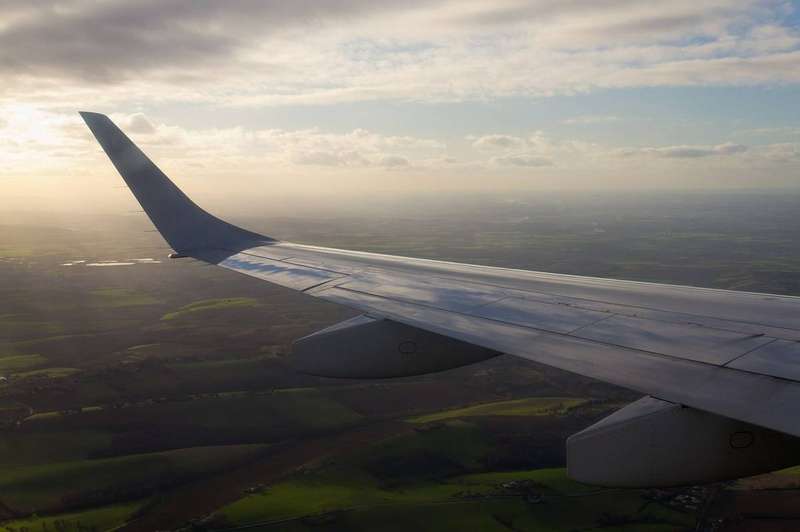
An airplane wing at sunset on a long-haul flight. Westbound travel lengthens the day, working with a body clock that already runs longer than 24 hours. Photograph: PierreSelim/Wikimedia Commons
Image Credits: Wikimedia Commons
How light resets your body clock
Light is the brain's primary cue for knowing when to be awake and when to wind down. The oscillator cells take their timing from light exposure, which makes intentional light management the strongest lever a traveler has.
The logic runs in opposite directions depending on where you are headed. Flying east, you need to fall asleep earlier and wake earlier than your body wants. Morning light at your destination helps pull the clock earlier, while evening light pushes it later, which is the wrong way. So eastbound travelers benefit from seeking morning light and avoiding bright light in the evening for the first few days.
Flying west, the task is reversed: you need to stay up later and sleep later. Evening light helps delay the clock, while early morning light would anchor it to home time. Per the Centers for Disease Control and Prevention, intentional light exposure, and deliberate avoidance of it, at the right times of day is an established clinical tool for circadian realignment.
Arrival time shapes how this plays out. Land east of home in the early morning and you get flooded with daylight at what your body still reads as the middle of the night, which can push the clock further out of sync before it starts catching up. Sunglasses on arrival are not vanity. They are a timing instrument.
Direction-specific recovery strategies
The generic advice, stay hydrated, move around, avoid heavy meals, helps with travel fatigue in both directions. The circadian tactics diverge.
Before an eastbound trip, start shifting earlier a few days ahead if you can: bed and wake times 30 to 60 minutes earlier each day. On arrival, get morning light, avoid evening light, and consider that your worst days will be days two through four, not day one. Plan demanding commitments accordingly, and budget more recovery days than the one-per-time-zone rule suggests.
Before a westbound trip, the shift is gentler. Delaying bedtime by 30 to 60 minutes in the days before departure pre-adjusts the clock in the easy direction. On arrival, seek evening light and get to bed at the local time even if you are not tired yet. The one-day-per-time-zone guideline is a reasonable budget here.
In both directions, anchor to local time immediately: eat meals, take light, and go to bed on destination time from day one. Short naps are fine, but keep them under 30 minutes and never in the late afternoon, or they will steal from the night's sleep. Caffeine helps alertness in the local morning and hurts it after mid-afternoon, regardless of direction.
One more practical note: the strategies above manage the circadian component. Nothing fully overrides the 57-minutes-a-day eastbound speed limit. The most reliable tactic for eastward travel is simply allowing enough days.
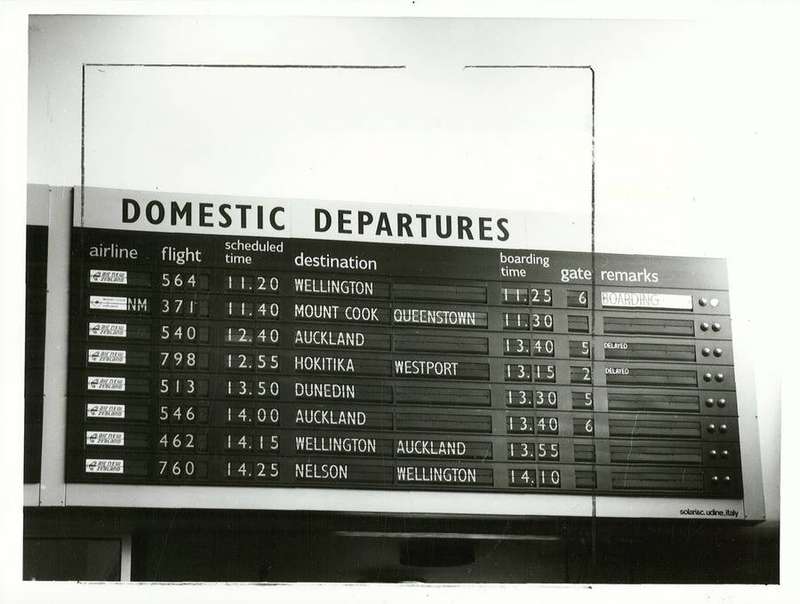
An airport departure board. The number of time zones crossed matters, but research shows the direction of travel matters just as much for recovery. Photograph: Schwede66/Wikimedia Commons
Image Credits: Wikimedia Commons
The bottom line
East is harder than west, and it is not in your head. A body clock running at 24.5 hours stretches willingly and compresses reluctantly, which is why a six-time-zone trip east costs about eight recovery days against six heading west.
The practical consequence is simple: treat direction as a planning input, not an afterthought. Budget extra days eastbound, use morning light as your eastbound tool and evening light westbound, and anchor everything to local time from the moment you land.
Frequently asked questions
Why is jet lag worse when flying east?
The brain's circadian pacemaker cells run on a cycle slightly longer than 24 hours (about 24.5 hours). Flying west lengthens the day, which cooperates with that rhythm. Flying east shortens the day, forcing the clock to compress against its natural tendency.
How long does it take to recover from jet lag?
Roughly one day per time zone westbound, and longer eastbound. A University of Maryland model estimates about six days for six time zones west versus eight days east, and eight versus twelve days at nine time zones.
Does the direction matter more than the number of time zones?
Both matter, but direction is the underrated variable. A nine-hour eastward shift can be harder than a twelve-hour shift in either direction, per the Maryland oscillator model.
What is the fastest way to reset your body clock?
Timed light exposure is the strongest tool: morning light to shift earlier (eastbound), evening light to shift later (westbound), while avoiding light at the opposing time. The CDC recognizes timed light exposure and avoidance as a clinical method for circadian realignment.
---
Rive News is the research desk behind these explainers. We verify every claim against public sources before publishing.
Related stories
- Why Is Your eSIM Not Working Abroad? How to Fix It
- Why Pregnant Women Get Leg Cramps in the Third Trimester
- How Vaccines Train the Immune System: Antibodies and Memory Cells
Get one practical explainer in your inbox every morning. Subscribe to the Rive News newsletter.
Rive News follows a public corrections policy. If you spot an error, tell us and we will fix it visibly.
Related stories

The 3-1-1 liquids rule for planes: what each number means
TSA's 3-1-1 rule limits carry-on liquids to 3.4-ounce containers in one quart bag. Where the 2006 rule came from, what counts, and how

Why Is Airplane Food So Bland at Altitude?
A 2010 Fraunhofer study found altitude cuts sweet and salty perception by up to 30 percent. Low humidity, cabin pressure, and noise all

Carry-on size limits: why airlines each set their own
Airlines set their own carry-on limits because the FAA only requires each carrier to have a policy, not one global size. Why 22 x 14 x