
Why do planes leave white trails across the sky?
Key takeaways
- The white trails are contrails: frozen water vapor crystallized on soot particles from jet exhaust, essentially artificial cirrus clouds.
- They only form in air cold and humid enough, conditions met just 5 to 10 percent of the time at cruising altitude.
- Some contrails fade in seconds; others spread into cloud cover that can linger up to six hours and trap heat.
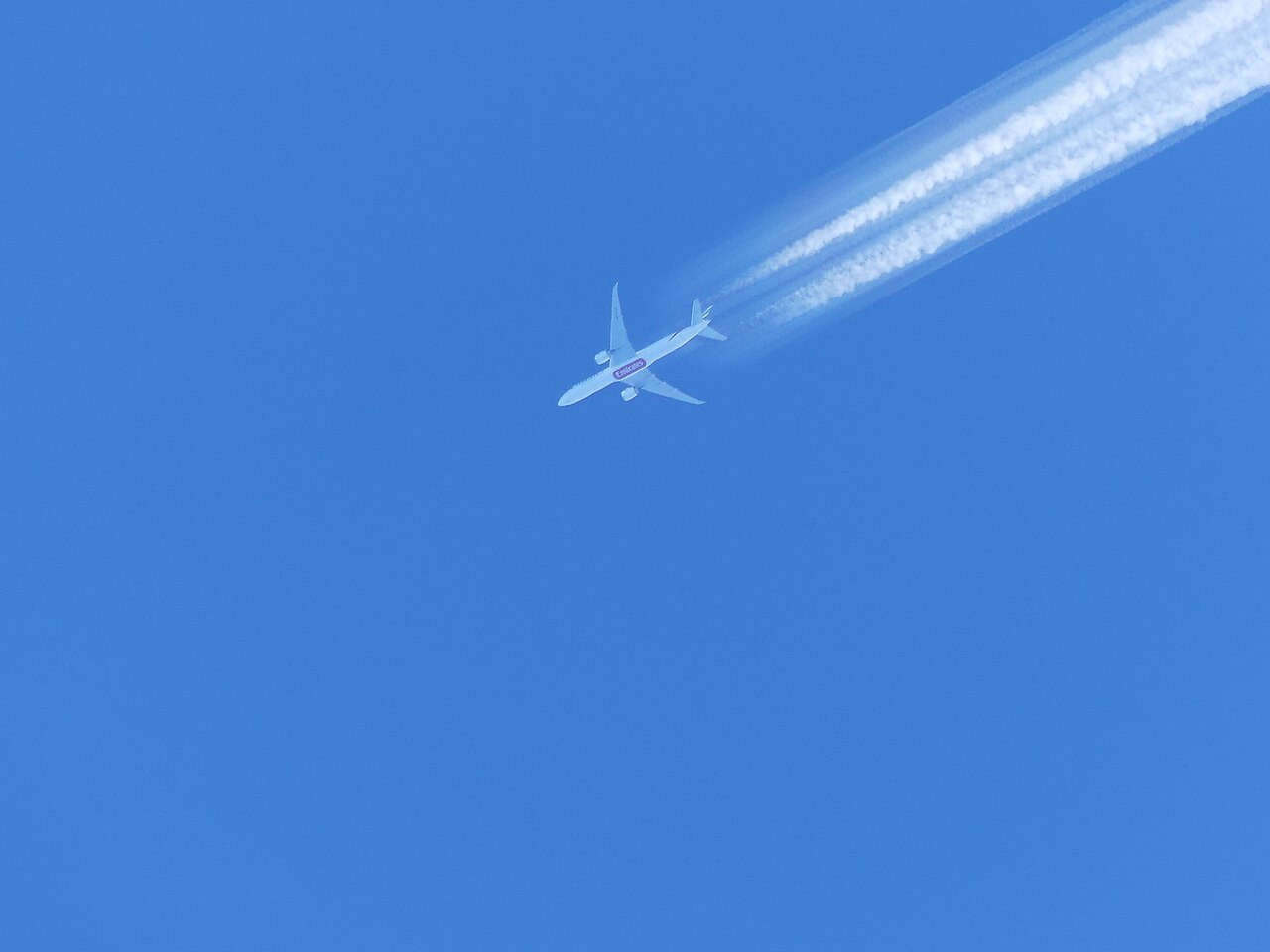
Look up on a clear day and you will often see white lines drawn across the blue. They are not smoke, and they are not exhaust in the car-tailpipe sense. They are clouds, made by the plane.
This article explains what contrails are, the cold and humid recipe that creates them, why some planes leave trails and others do not, and what the lingering ones do to the climate. It also addresses the chemtrail myth with the science as published by researchers and aviation authorities.
What contrails actually are
Contrails, short for condensation trails, are frozen water vapor crystallized on soot particles, both standard byproducts of a jet engine burning fuel. In brief, "a contrail is an artificial cloud," Steven Barrett, an engineering professor at Cambridge University who studies aviation's environmental impact, told Popular Science. They are very much the same as natural cirrus clouds, except they start out long and straight.
The formation recipe has two ingredients from the engine and one from the atmosphere. Jet fuel combustion releases water vapor, carbon dioxide and trace gases including soot and metal particles. At cruising altitude, roughly 35,000 feet, that hot vapor slams into frigid air and condenses rapidly into tiny droplets, which freeze almost instantly into ice crystals.
Those crystals need something to grow on. The soot particles in the exhaust act as seeds, and the vapor freezes around them. Contrails are always made of ice particles because of the extreme cold at those altitudes, the GLOBE Program's contrail science page explains.
Why the trails only form sometimes
Contrails do not always form or linger in a plane's wake The atmosphere has to be just right: moist enough that the water does not evaporate, and cool enough that it freezes Barrett calls air that is cold or humid enough "ice supersaturated
"
That condition is relatively common at commercial jet altitudes, yet still occurs only about 5 to 10 percent of the time, Barrett told Popular Science. That is why two planes can cross the same sky minutes apart and only one leaves a trail: the first flew through a pocket of ice-supersaturated air and the second did not.
Altitude matters too. Contrails usually form above about 8 kilometers, where the air is extremely cold.
Smaller propeller planes fly much lower in warmer air and are far less likely to produce trails. The FAA adds that contrails will not form if the air at aircraft altitude is too warm or too dry, and that natural daily and seasonal shifts in wind and pressure move the humid regions around.
The three lives of a contrail
Not all trails behave the same. The GLOBE Program divides them by lifespan into three groups.
Short-lived contrails look like short white lines that vanish almost as fast as the plane crosses the sky, lasting minutes or less. The air is only somewhat moist, so the ice particles that form quickly return to vapor.
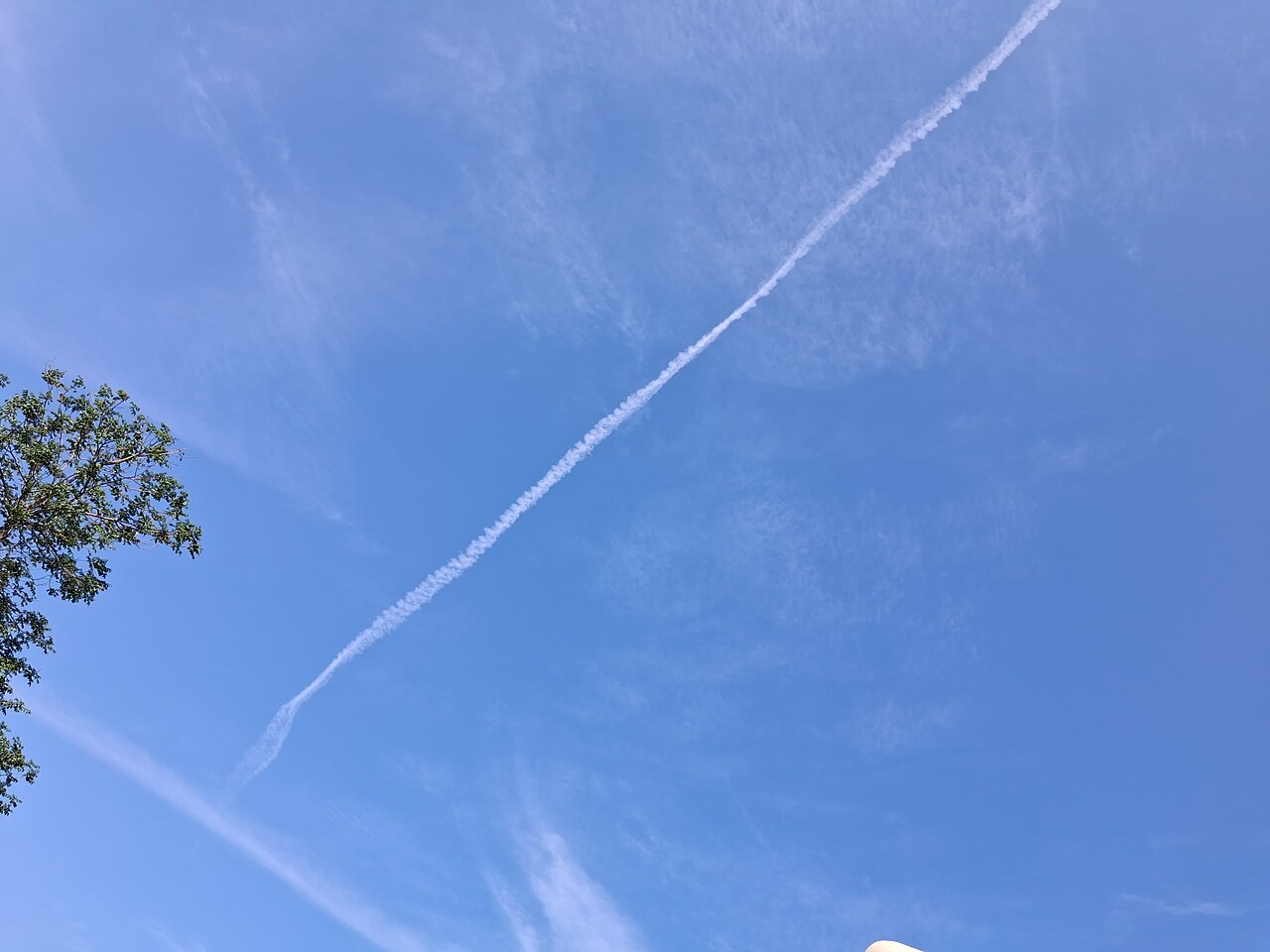
Persistent contrails look like long, narrow white pencil lines that remain after the plane has gone. The air is quite humid with plenty of water vapor available.
Persistent spreading contrails are the broad, fuzzy white lines that grow and merge. This type covers the largest area, lasts the longest, and is the most likely to affect the climate.
How long can they last? In warm, dry air a contrail dissipates in seconds.
In the right cold and wet conditions it can stick around for up to six hours, spreading wide across the sky, Barrett explains. Strong high-altitude winds then carry the trail away from where it formed.
What lingering contrails do to the climate
Air travel warms the planet by burning fossil fuels, but contrails add a separate warming effect of their own. A growing body of research, including studies by Barrett and by Marc Stettler, a professor of transport and environment at Imperial College London, indicates that contrails cumulatively have a warming effect that contributes to human-caused climate change, Popular Science reports.
The mechanism is cloud physics.
Persistent contrails spread into contrail cirrus, which traps outgoing heat. During the day the white clouds also reflect some sunlight back to space, but at night there is no sunlight to reflect, only heat to keep trapped. That is why researchers pay special attention to evening flights.
The FAA says it is working with other government agencies, industry and academia to advance research on understanding, quantifying and mitigating persistent contrails. Small changes in flight altitude or routing could steer planes around ice-supersaturated regions, cutting the warming without changing the flight much.
Contrails are not chemtrails
The white trails are a documented physical phenomenon, and every serious scientific study has found zero evidence for the chemtrail conspiracy theory. Contrails are just frozen water vapor on exhaust particles.
The FAA and the Environmental Protection Agency state plainly that they are not aware of any deliberate actions to release harmful chemicals or biological agents from airplanes. There is a real cousin phenomenon worth knowing: wingtip vapor trails on takeoff or landing, caused by pressure drops in the wingtip vortex, which evaporate within seconds. They look similar but arise from different physics.
Why do some planes leave trails and others do not?
Only planes flying through cold, humid, ice-supersaturated air leave trails. A plane at a slightly different altitude, or passing through the same spot an hour later after conditions changed, may leave nothing.
How long do contrails last?
Seconds to minutes in dry air, up to six hours in cold, moist air. The longest-lived ones spread into broad cirrus-like cloud cover.
Can you see contrails from space?
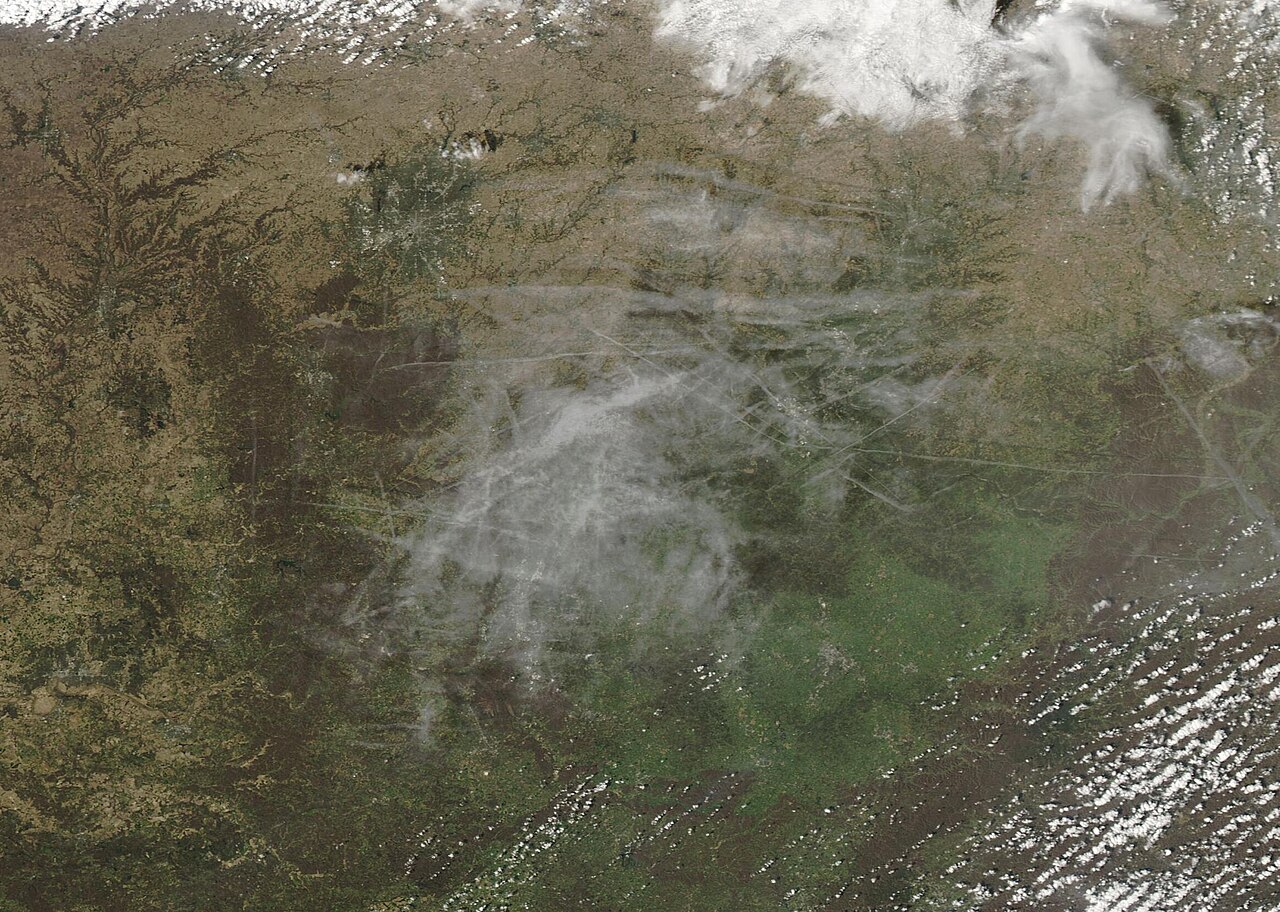
Yes. NASA's MODIS satellites routinely photograph crisscrossing contrails over continents, where they show up as bright white lines against the darker land and ocean.
Do contrails mean the plane is low?
No. Visible contrails almost always mean the plane is high, above 8 kilometers, where the air is cold enough for exhaust vapor to freeze.
The bottom line
Those white trails are contrails, ice crystals grown from jet exhaust in cold, humid air. Most fade in minutes, but the ones that persist can spread into cloud cover that warms the planet, which is why scientists and the FAA are studying how to route flights around the conditions that make them. Next time you spot one, you are looking at an artificial cloud drawn at 35,000 feet.
Latest in Travel
- Why your ears pop on planes, and how to stop it
- Why airport codes look nothing like the city names
- How to exchange money abroad without losing to fees
- Why passports come in different colours
Want more travel explainers? Subscribe to the Rive News newsletter for one useful breakdown every week.
Image Credits: Wikimedia Commons / contributors
Related stories

The 3-1-1 liquids rule for planes: what each number means
TSA's 3-1-1 rule limits carry-on liquids to 3.4-ounce containers in one quart bag. Where the 2006 rule came from, what counts, and how
Why Is Airplane Food So Bland at Altitude?
A 2010 Fraunhofer study found altitude cuts sweet and salty perception by up to 30 percent. Low humidity, cabin pressure, and noise all
Carry-on size limits: why airlines each set their own
Airlines set their own carry-on limits because the FAA only requires each carrier to have a policy, not one global size. Why 22 x 14 x