
Why some hotel rooms have two beds pushed together
By Rive News / Research desk | Rive News / Published October 29, 2026 at 9:00 AM PKT
Key takeaways
- Hotels push two single beds together so one room can serve couples or two separate sleepers.
- The gap in the middle comes from two separate mattresses, and often two separate duvets as well.
- A purpose-built zip-and-link bed joins far more neatly than two loose beds shoved together.

[A hotel room with twin beds and modern decor.] Photograph: Hotel room with twin beds
Image Credits: Pexels
Some hotel rooms have two beds pushed together because the room is designed to change shape. Pushed together, the two singles form one large sleeping surface for a couple. Pulled apart, the same room sleeps two people separately, which suits colleagues, friends, and families travelling together.
This article explains the three setups behind that pushed-together look, including the single frame holding two mattresses, the zip-and-link bed, and the improvised twin-room conversion, plus why the bedding often comes in two halves and what to ask for at check-in.
What you are actually looking at
The phrase "two beds pushed together" covers more than one arrangement, and the difference matters for comfort. In the most deliberate version, one large bed frame holds two single mattresses side by side. The frame is a single piece of furniture, so the mattresses sit snugly and drift less during the night.
In a second version, the bed is a zip-and-link design. The two bases link together, and the two mattresses zip into one wider mattress. When linked, the result is usually a king or super-king size bed, according to bed makers who sell this design for hotels and guest rooms.
The third version is improvised. A hotel short of double rooms may take a twin room and push its two independent beds together, sometimes clipping the frames so they cannot drift apart. This is the version most likely to show a clear gap, because the beds were never built as a pair.
Why flexibility wins for hotels
Hotels sell rooms to people with different needs on different nights. A room that can work as a twin room or a double room reaches a wider set of guests than a room locked into one layout. Business travellers sharing a room usually want separate beds, while couples usually want one shared bed.
That flexibility also helps a hotel use its rooms more fully. Demand shifts through the week, the season, and around events, and a convertible room can be sold to whichever type of guest books next. A hotel that only offered fixed doubles would turn away pairs who want separate beds, and a hotel that only offered twins would turn away couples who want a shared bed.
The trade-off is comfort at the join. Two mattresses can never be quite as seamless as one wide mattress, even when they are zipped or clipped together. Hotels accept that trade-off because the alternative, keeping many rooms empty or rebuilding rooms for each booking, costs far more.
Why European rooms show this most often
Travellers from North America often notice this setup first in Europe, and there are practical reasons for that. Many European hotels sit in older buildings with smaller rooms and awkward layouts, where a single king-size bed and its mattress are hard to fit or hard to move. Two smaller mattresses pass through narrow doors, tight staircases, and sharp turns far more easily.
Local sleeping habits play a part too. In parts of Central Europe and Scandinavia, couples commonly sleep on two single mattresses within one bed frame at home, each with a separate duvet. The hotel room simply mirrors what many guests already use at home, rather than inventing a strange arrangement for visitors.
That also explains the bedding. Instead of one large duvet stretched across the whole bed, each sleeper often gets a single-sized duvet. The setup, sometimes called the Scandinavian sleep method, lets each person choose their own warmth and keeps one partner's movements from dragging the covers off the other.
The gap in the middle, explained
The gap that swallows elbows and phone chargers has a simple cause. Two mattresses are two separate objects, each with its own edge, and the join between them can sink slightly under weight. A top sheet pulled tightly across both can hide the join, but a loose cover makes it obvious.
Zip-and-link mattresses reduce the problem by joining the two halves with a zip, so the surface behaves more like one mattress. A single frame holding two mattresses helps too, because the frame keeps the halves from wandering apart. Loose twin beds, by contrast, can creep apart during the night unless their frames are clipped together.
Mattress firmness adds another wrinkle. In a zip-and-link setup, each half can have a different firmness, which suits couples with different comfort needs. The benefit is real, but it also means the two halves may feel different when you roll across the middle.
What the two-duvet habit does for sleep
Separate duvets look odd to guests used to one shared cover, yet they solve a familiar nightly dispute. Each sleeper keeps their own cover, so one partner cannot steal the duvet or pull it away with a turn. Temperature is personal as well, since one person may want a light cover while the other wants a heavier one.
Sleep medicine specialists quoted in coverage of the Scandinavian sleep method point to the same logic. Sharing a bed while keeping separate covers lets a couple stay close without surrendering control of their own bedding. The method originated in Denmark, Norway, and Sweden, and it remains common in Germany and Iceland as well.
None of this means two duvets suit everyone. Guests who like to share a cover may find the split bedding chilly at the join, and some hotels will happily swap two singles for one large duvet on request. Asking costs nothing, and housekeeping teams deal with the request often.
What to ask for at check-in
If the pushed-together bed bothers you, the front desk usually has options. Ask whether the hotel has a room with a single king mattress, rather than a joined pair, and whether it can be assigned for your stay. In larger hotels, that option often exists even when it was not shown during booking.
If you keep the joined bed, ask housekeeping to clip or strap the frames together and to add a mattress topper across both halves. A topper smooths the join more effectively than any arrangement of sheets, and it is a common request in hotels that use twin conversions. A single large duvet, where available, also hides the seam.
For light sleepers, the split setup can even be a plus. Two separate mattresses transmit less movement than one shared mattress, so a restless partner disturbs you less. Travellers who value that quiet may prefer the joined pair once the gap is covered.
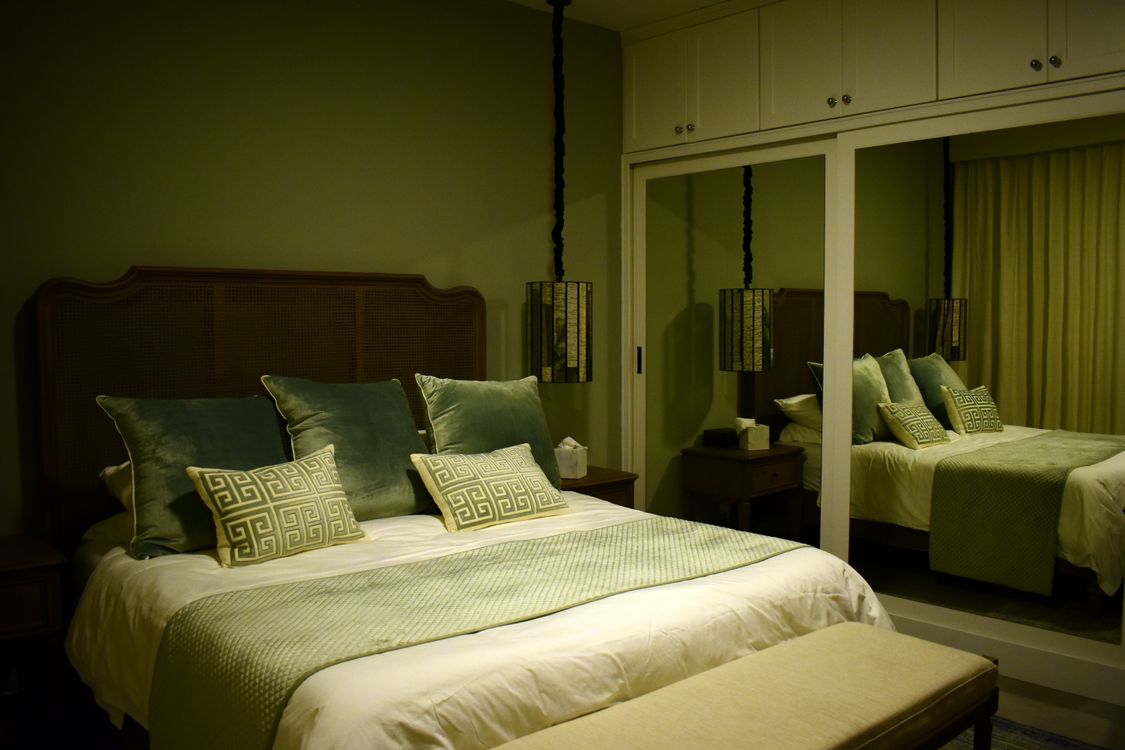
[A bedroom at night with warm lighting and a made bed.] Photograph: Irma Sjachlan
Image Credits: Pexels
Frequently asked questions
Is a pushed-together bed the same size as a king bed?
It can be close, but the exact width depends on the two singles used. Two small singles of 75 centimetres each make about 150 centimetres together, while two 90-centimetre singles make about 180 centimetres, which matches a super-king width in the zip-and-link sizes quoted by bed makers.
Why do some hotels use two duvets instead of one?
Two duvets let each sleeper control their own warmth and stop cover-stealing, which is the core idea of the Scandinavian sleep method. Hotels in Scandinavia and parts of Central Europe follow this habit as standard practice, not as a cost-saving shortcut.
Can I ask the hotel to separate the beds?
Yes, in most cases. If the bed is a zip-and-link or a twin conversion, staff can unlink the bases and dress the beds separately. A single frame built for two mattresses cannot be split into two freestanding beds, but staff can usually explain which setup your room has.
Does the gap mean the hotel cut corners?
Not always. A single frame with two mattresses and two duvets is a deliberate design in many European homes and hotels. A loose pair of twin beds pushed together at short notice is more likely to feel improvised, and that is the version worth asking to change.
The bottom line
Two beds pushed together are usually a flexibility device, not a mistake. One room can serve a couple tonight and two colleagues tomorrow, and the design travels well through old buildings and narrow staircases. The gap and the split bedding are the visible costs of that flexibility.
If you know which of the three setups you have, you can fix the worst of it. Ask for a single-mattress room, a topper across the join, or one large duvet, and the pushed-together pair starts to feel much closer to the single bed it is standing in for.
Tags: hotels, travel tips, beds
The Rive News research desk writes plain-language explainers drawn from public sources, with every key claim tied to a named source.
Related
- Hotel vs motel: what actually sets them apart
- What is the difference between a hostel dorm and a capsule hotel
- Why airplane seats are getting smaller over time
Subscribe for one clear explainer each morning on the everyday things travellers wonder about.
Rive News publishes explainers from public sources and corrects errors when readers point them out.
Related stories

The 3-1-1 liquids rule for planes: what each number means
TSA's 3-1-1 rule limits carry-on liquids to 3.4-ounce containers in one quart bag. Where the 2006 rule came from, what counts, and how
Why Is Airplane Food So Bland at Altitude?
A 2010 Fraunhofer study found altitude cuts sweet and salty perception by up to 30 percent. Low humidity, cabin pressure, and noise all

Carry-on size limits: why airlines each set their own
Airlines set their own carry-on limits because the FAA only requires each carrier to have a policy, not one global size. Why 22 x 14 x