
What Is the Difference Between a Hostel Dorm and a Capsule Hotel
Key takeaways
- A hostel dorm sells a bed in a shared room, while a capsule hotel sells a private sleeping pod.
- Capsules cost more than dorm beds in most cities but give you walls, a door or curtain, and your own light.
- Hostels win on social life and kitchens, while capsules win on sleep and short stays.
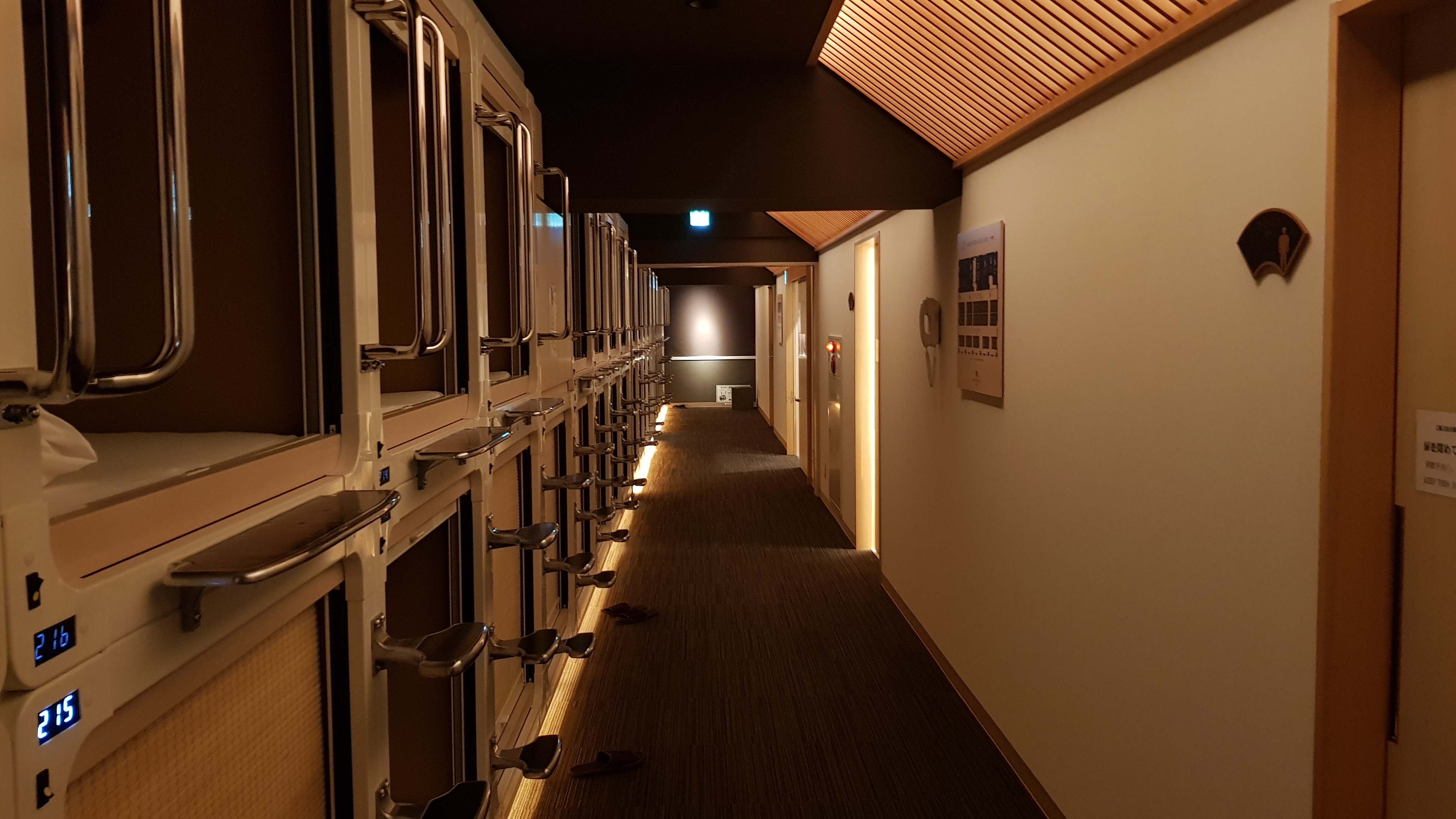
A hostel dorm gives you a bunk bed in a room shared with other travelers. A capsule hotel gives you a small enclosed pod, just big enough to sleep in, inside a larger shared hall. Both are budget stays with shared bathrooms, but the night feels very different.
This article explains what is the difference between a hostel dorm and a capsule hotel, covering price, privacy, sleep, facilities, and who each option suits.
What a hostel dorm is
A hostel dorm is a shared bedroom, usually with four to twelve bunk beds. You pay for one bed, not the room, and strangers may sleep in the bunks beside you. Bathrooms, kitchens, lounges, and laundry areas are shared with the whole hostel.
Hostels are built around meeting people. AxisRooms describes hostels as community-oriented, with communal spaces, organized events, and group activities that make it easy to meet fellow travelers. The kitchen is a big part of the appeal, since cooking a few meals can cut trip costs fast.
Dorm rooms vary a lot. Some have privacy curtains on each bunk, reading lights, and lockers. Others are plain bunks in a bare room.
Mixed dorms, women-only dorms, and small four-bed dorms all exist, and prices rise as the room gets smaller.
What a capsule hotel is
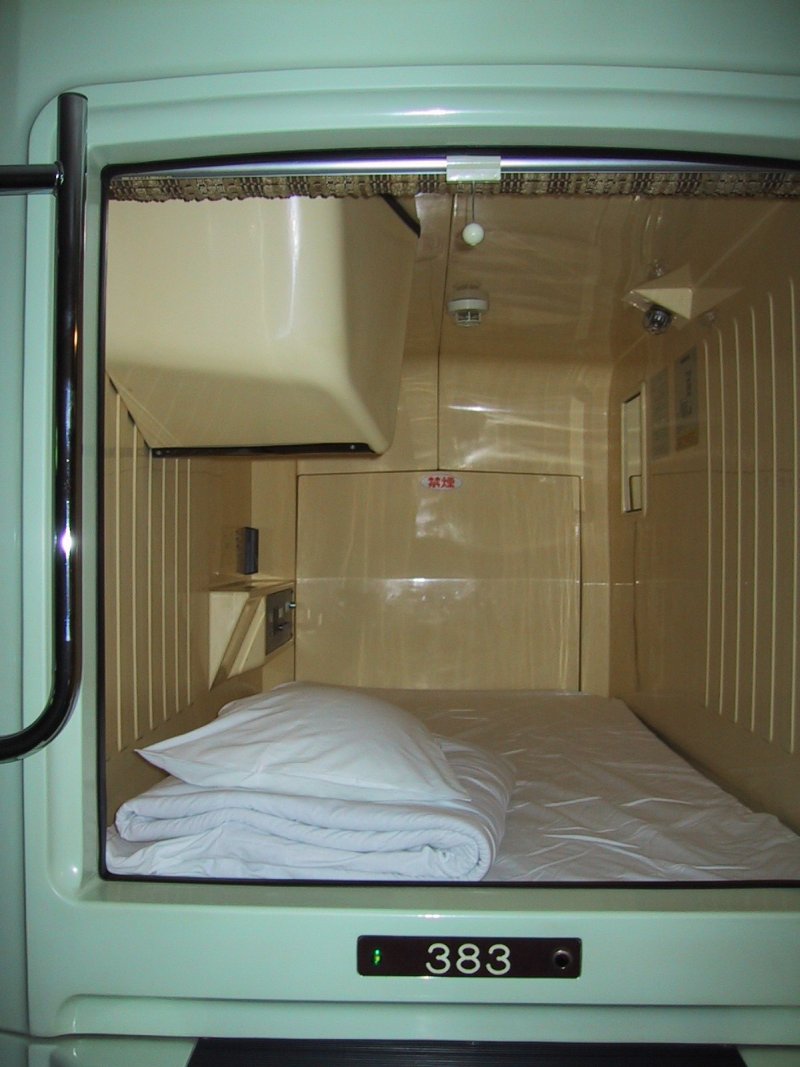
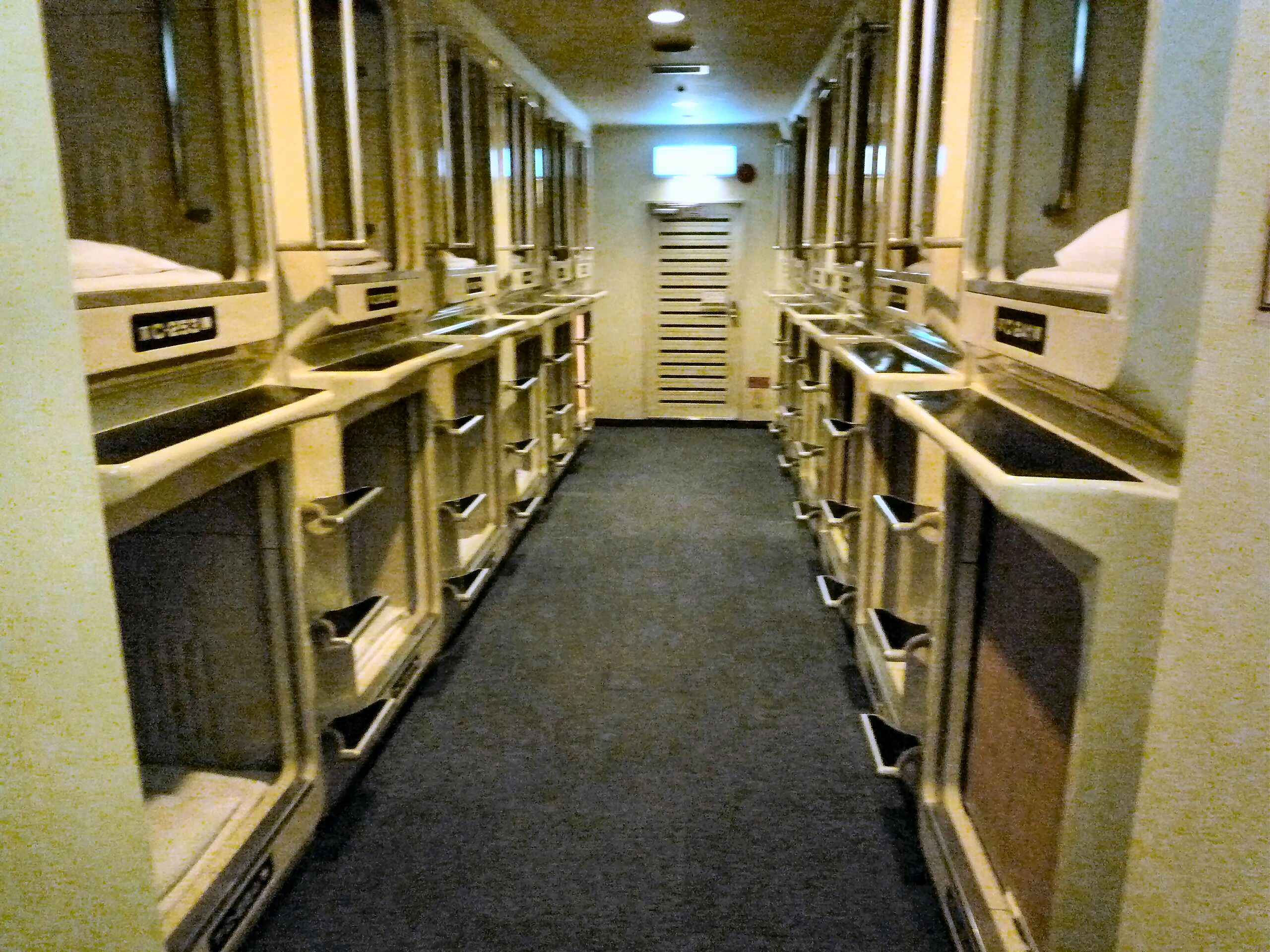
A capsule hotel replaces the shared bedroom with rows of individual pods. Each pod holds one bed, a light, a power outlet, and often a small TV or ventilation control. The pod closes with a curtain or a blind, and the bathrooms, lounges, and lockers sit outside in shared areas.
The format began in Japan. The first capsule hotel in the world was Capsule Inn Osaka, which opened on February 1, 1979, in the Umeda district of Osaka. It was designed by architect Kisho Kurokawa for sauna operator Yukio Nakano, whose customers had been sleeping on the sauna floor after missing the last train home.
The original pods were compact. UNIQ Hotels reports that the standard capsule at Capsule Inn Osaka measures 190 cm deep, 90 cm wide, and 75 cm high, and that the opening-night rate was 1,600 yen. Modern pods are often a little larger, but the idea is unchanged: a private place to sleep, and nothing more.
Capsule hotels are usually quiet by design. Many enforce silent zones in the pod halls, and guests change into provided sleepwear and leave shoes at the door. The mood is closer to a library than a party.
Price: dorm beds usually win
Hostel dorm beds are among the cheapest beds in any city. AxisRooms puts European hostel dorm beds at 18 to 45 euros a night, against 35 to 80 euros for capsule hotels. In Japan, Wikipedia puts typical capsule hotel rates around 2,000 to 4,000 yen a night.
The gap is real but not huge. A capsule often costs about double a dorm bed in the same city, and still far less than a private hotel room.
For a one-night stop, the extra cost buys real sleep. For a month-long trip, dorm beds stretch the budget further.
Prices swing with season and city. A dorm bed in a festival week can cost more than a capsule on a quiet Tuesday. Always compare the exact dates and the exact room type, not the headline rate.
Privacy: pods win, dorms vary
Privacy is the biggest difference between the two. A capsule gives you four walls, a closing curtain or door, and a space nobody else enters. A dorm bed gives you a bunk in a room where other people come and go.
That said, modern dorms have narrowed the gap. Many now fit privacy curtains, personal lights, and USB chargers to each bunk. A curtained bunk feels much closer to a pod than an open bunk does.
Noise is a separate question. Capsule walls block sightlines, not sound, so you will still hear alarms and corridor noise.
Dorms add snoring, late arrivals, and early risers. Earplugs and a sleep mask help in both, and they belong in every budget travel kit.
Luggage storage differs too. Capsule hotels keep lockers outside the pod, since the pod itself has no room for a suitcase.
Hostels usually give you a locker or under-bed storage beside your bunk. If you travel with big bags, check locker sizes before booking.
Sleep: capsules suit light sleepers
Capsules suit travelers who struggle to sleep around strangers. Your own enclosed space, your own light, and a quiet hall make it easier to wind down. Many capsule hotels also run 24-hour check-in, so a late arrival does not wake a room full of people.
Dorms suit travelers who sleep through anything. If you can sleep in a room of strangers, the dorm saves money and adds company. If you cannot, the saving is false economy, because a tired traveler enjoys nothing the next day.
Length of stay matters. Capsules are built for one or two nights: arrive, sleep, shower, leave.
Dorms work better for longer stays, because the kitchen, lounge, and social life make a place feel livable. A week in a pod can feel cramped, while a week in a hostel can feel like a base.
Social life: hostels win by a mile
Hostels are social by design. Shared kitchens, lounges, bars, and tours push guests together, and many travelers pick hostels for that reason alone. Solo travelers often leave with dinner plans and travel partners.
Capsule hotels are quiet by design. Guests keep to their pods, and the shared areas are for bathing and passing through, not hanging out. AxisRooms rates hostel social atmosphere as very high and capsule hotel social atmosphere as low, which matches the experience on the ground.
That difference should drive the choice for solo travelers. If you want company, book the hostel. If you want a good night of sleep before an early train, book the capsule.
Facilities and rules
Both options share bathrooms, but the details differ. Capsule hotels in Japan often include a communal bath and sauna, plus towels and toiletries. Hostels more often include a kitchen, a laundry room, and a coworking corner.
Rules differ too. Capsule hotels commonly ban food, drink, and phone calls in the pod halls.
Many split floors by gender, and some properties remain men-only or women-only. Hostels are more relaxed, with rules set per property rather than per format.
Accessibility favors hostels. Upper pods need a ladder or steep steps, and the pod itself is too small for anyone who needs space to move or stretch. Hostels can usually offer a lower bunk, and some have accessible rooms.
Which should you choose
Choose a hostel dorm when you want the lowest price, a kitchen, and people to meet. It suits backpackers, long trips, and travelers who treat the stay as part of the trip. Pack earplugs, a sleep mask, and a padlock for the locker.
Choose a capsule hotel when you want a private place to sleep on a short stop. It suits solo travelers, overnight layovers, and anyone who needs quiet. Pack light, because pod lockers are small, and check whether the property takes your gender and your luggage size.
If you are torn, split the trip. Spend the social nights in a hostel and the night before an early flight in a capsule. The two formats complement each other, and mixing them shows you what you actually value.
Travel plans around the stay matter too. Plan a road trip on a tight budget before you book, pack a travel first aid kit for the journey, and learn how to keep luggage safe on trains and buses so the cheap bed is not the only saving.
Frequently asked questions
Are capsule hotels cheaper than hostels?
Usually not. Dorm beds are generally the cheapest option, and capsules cost more in most cities. AxisRooms puts European dorm beds at 18 to 45 euros and capsules at 35 to 80 euros a night.
Can couples share a capsule?
No, in most properties. Capsules are built for one person, and most hotels do not allow two guests in a pod. Couples should book a hostel private room or a budget hotel instead.
Are capsule hotels safe for solo women travelers?
Many capsule hotels have women-only floors or women-only properties. Check the listing before booking, and read recent reviews about security and late-night access. Hostels with women-only dorms are the equivalent option.
Is a capsule hotel claustrophobic?
It can feel tight. The standard pod at the original Capsule Inn Osaka measures 190 cm deep, 90 cm wide, and 75 cm high. If enclosed spaces bother you, book a hostel dorm with a lower bunk instead.
The bottom line
A hostel dorm sells a bed in a shared room with a social life attached. A capsule hotel sells a private pod with quiet attached. Pick the dorm for price and company, pick the capsule for sleep and short stays, and pack earplugs either way.
Tags: hostels, capsule hotels, budget travel, Japan
Latest in Travel
- How to Plan a Road Trip on a Tight Budget
- How to Pack a Travel First Aid Kit
- How to Keep Luggage Safe on Trains and Buses
- How to Beat Long Flight Boredom Without Buying Anything
Subscribe for one practical travel tip each week.
Related stories

The 3-1-1 liquids rule for planes: what each number means
TSA's 3-1-1 rule limits carry-on liquids to 3.4-ounce containers in one quart bag. Where the 2006 rule came from, what counts, and how

Why Is Airplane Food So Bland at Altitude?
A 2010 Fraunhofer study found altitude cuts sweet and salty perception by up to 30 percent. Low humidity, cabin pressure, and noise all

Carry-on size limits: why airlines each set their own
Airlines set their own carry-on limits because the FAA only requires each carrier to have a policy, not one global size. Why 22 x 14 x