
Why trains run on different track widths worldwide
By Rive News / Research desk | Rive News / Published October 28, 2026 at 9:00 AM PKT
Key takeaways
- Track gauge is the distance between the inner faces of the two rails, and standard gauge is 1,435 mm.
- About 60 percent of world railways use standard gauge, but broad and narrow gauges survive for cost, terrain, and historical reasons.
- Where gauges meet, passengers change trains or freight is transferred, unless variable-gauge equipment bridges the gap.
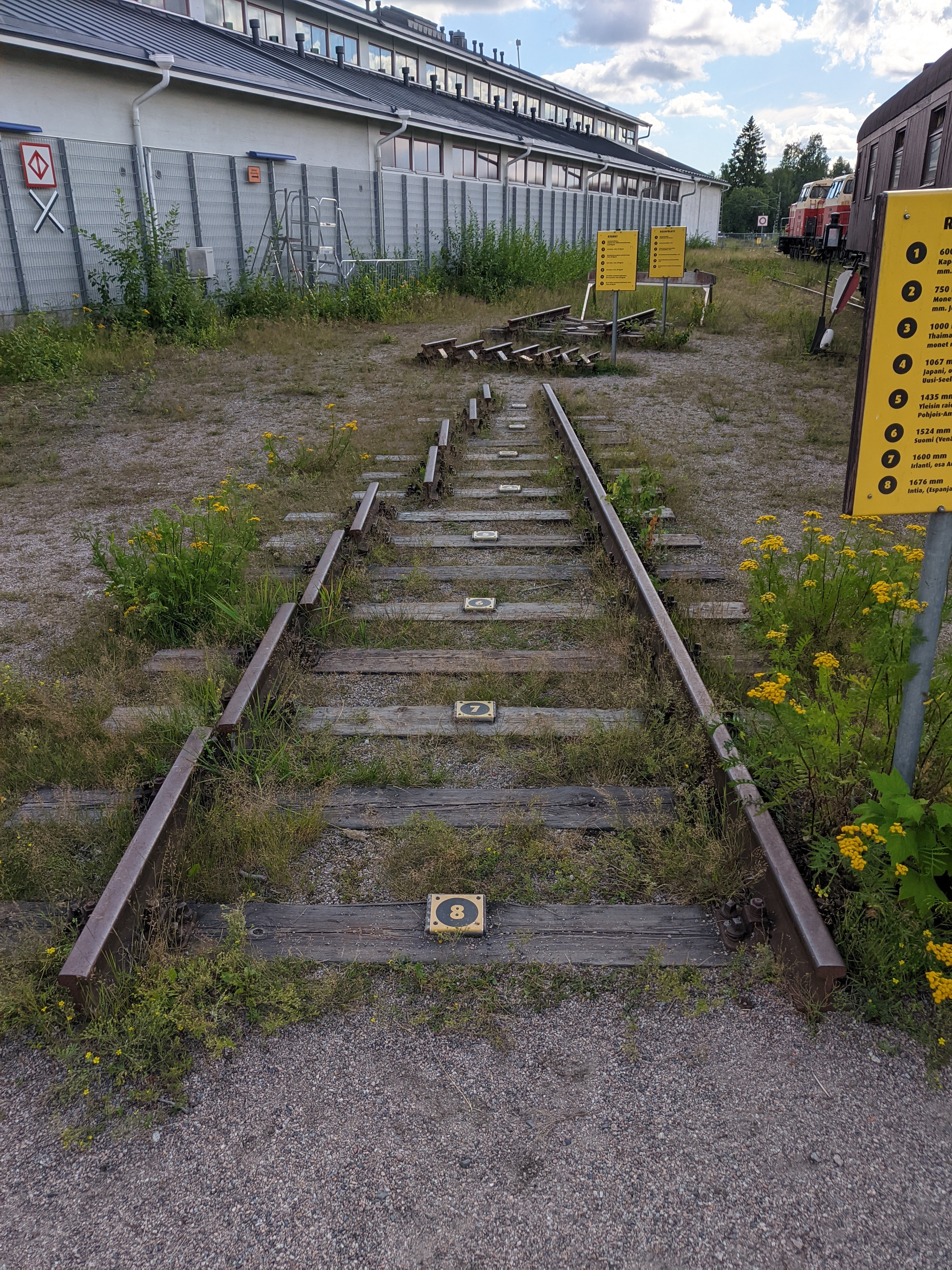
[Parallel railway tracks with sleepers stretching into the distance.] Photograph: railway tracks
Image Credits: Wikimedia Commons
A train from Paris can roll deep into Europe without changing wheels, yet a journey across some borders still forces everyone off one train and onto another. The reason is not the trains themselves but the ground beneath them: the rails are different widths apart.
This article explains why trains run on different track widths, including how standard gauge won, why broad and narrow gauges refused to die, and how modern railways cope where gauges meet.
What track gauge means
Track gauge is the distance between the inner faces of the two rails, measured slightly below the top of the rail head. A train's wheels must match that distance, or the train simply cannot run on the track.
Standard gauge, also called Stephenson gauge after the engineer George Stephenson, is 1,435 mm, or 4 feet 8 and a half inches. It is the most widely used gauge in the world, with about 60 percent of lines using it, according to Wikipedia's standard-gauge survey.
Anything wider is broad gauge; anything narrower is narrow gauge. The labels are relative, and they have shifted over time. In the 1840s, British writers called standard gauge "narrow gauge" simply because it was narrower than the rival broad gauge of the day.
How standard gauge won its lead
The first railways grew out of horse-drawn wagonways, whose gauges typically ran between 1,200 mm and 1,500 mm. George Stephenson's early lines in north-east England used a gauge close to the wagonways he knew, and it was widened to 1,435 mm as the Liverpool and Manchester Railway proved the design.
Success bred imitation. The Liverpool and Manchester line was quickly followed by trunk railways such as the Grand Junction and the London and Birmingham, which adopted the same gauge. British technology was then exported to Europe and parts of North America, carrying standard gauge with it.
By the late 19th century, standard gauge dominated new construction across much of Europe, North America, and China. The IFC's gauge survey puts standard gauge at 57 percent of the world network, with the next largest shares going to 1,520 mm and 1,676 mm gauges.
The gauge wars in Britain
Standard gauge did not win unopposed. When Bristol promoters planned a line from London, they hired the engineer Isambard Kingdom Brunel, who argued that a wider gauge would give greater stability and room for larger locomotives and carriages.
The Great Western Railway adopted Brunel's gauge of 7 feet, later eased to 7 feet 1/4 inch (2,140 mm). The line succeeded and expanded, and Britain split into broad-gauge and standard-gauge territories, a contest historians call the Gauge Wars.
The conflict was commercial as much as technical. A new line's gauge decided which railway group it would be friendly to, and companies fought hard to capture territory through gauge choices. Parliament intervened in 1846, when the Gauge Act legally established 1,435 mm as the standard for Great Britain.
Broad gauge lingered for decades on the Great Western network, but its lines were gradually converted. The episode left a lasting lesson: once a network is built to one gauge, changing it is expensive, slow, and politically painful.
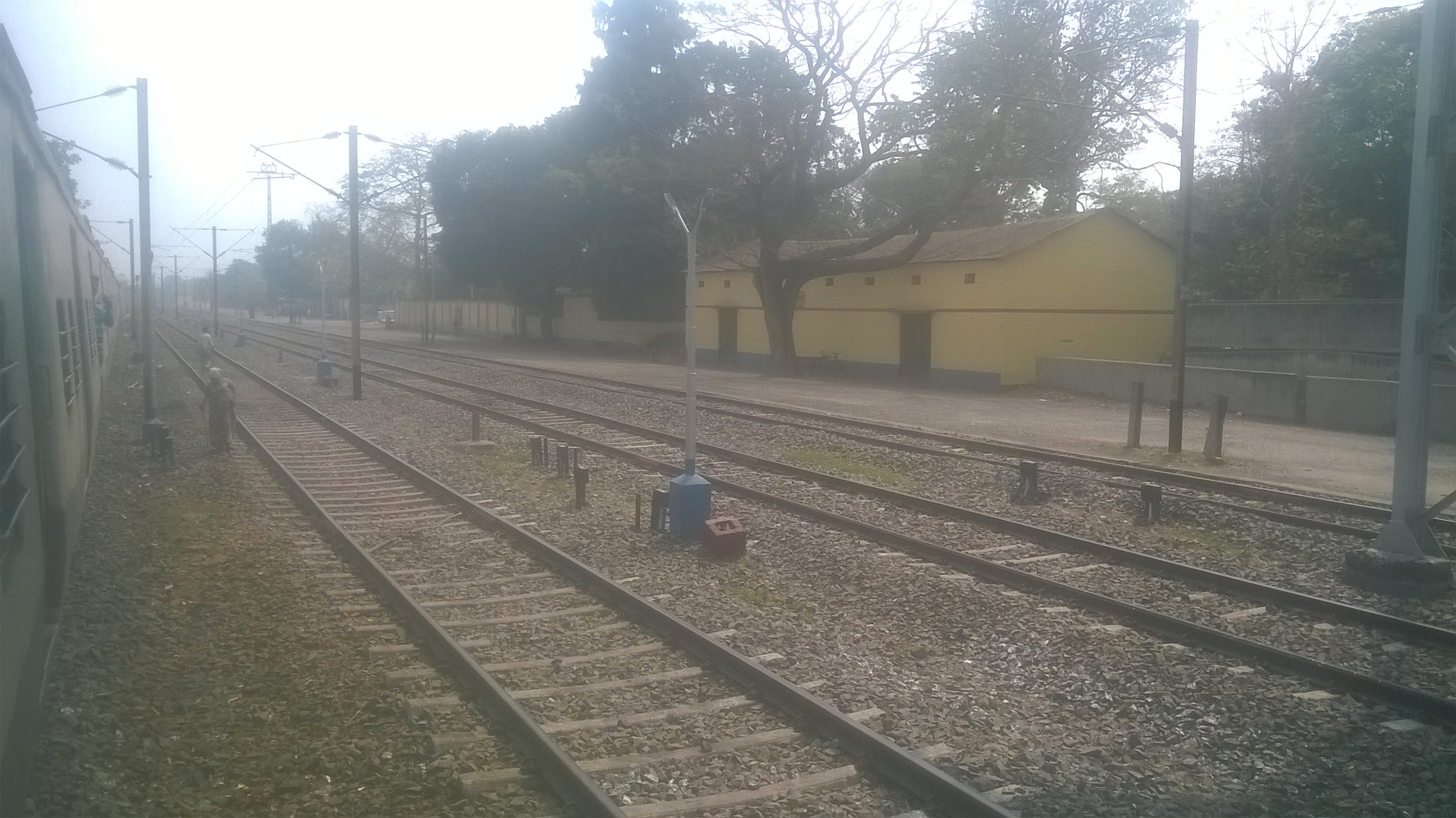
[A broad-gauge track, wider than the standard gauge used across most of Europe.] Photograph: broad-gauge railway track
Image Credits: Wikimedia Commons
Why broad gauge survived elsewhere
Broad gauge survived where it was established before standard gauge arrived, or where its advantages mattered. Russia and the former Soviet states use 1,520 mm gauge, Finland uses 1,524 mm, and India and Pakistan use 1,676 mm.
Wider rails allow wider, more stable trains and heavier loads, which suited countries building long, high-capacity routes across flat terrain. The cost of converting thousands of kilometres of track, plus every locomotive and wagon, has kept these networks on their original gauges.
Spain and Portugal use 1,668 mm Iberian gauge, a legacy of 19th-century choices made when their networks were built. Their high-speed lines, however, are built to standard gauge, creating a deliberate split between old and new networks.
Ireland, parts of Australia, and Brazil use 1,600 mm gauge. Each case traces to a colonial or early-railway decision that was never worth reversing once the network grew around it.
Why narrow gauge made sense
Narrow gauge thrives where construction cost and terrain matter more than speed or capacity. Narrower tracks permit sharper curves, lighter earthworks, and cheaper bridges, which is decisive in mountains and in low-traffic regions.
Japan's conventional network famously uses 1,067 mm Cape gauge, while its high-speed Shinkansen lines run on standard gauge. Much of Africa, Indonesia, and parts of Australia also use Cape gauge, a legacy of colonial construction where cheap, flexible lines mattered most.
Metre gauge, at 1,000 mm, serves similar roles in parts of Africa, South-East Asia, and South America. Mountain railways, mining lines, and heritage lines often use even narrower gauges, down to 600 mm, where tight curves and steep gradients rule out anything wider.
The trade-off is real. Narrow-gauge trains carry less, run slower, and cannot simply join a standard-gauge main line. Builders accepted that price when the alternative was no railway at all.
Defence, politics, and deliberate differences
Some gauge differences were deliberate. Historians note that a different gauge could slow an invading army, since enemy trains could not run on the defender's network. The IFC survey records that some countries still consider a break of gauge a factor in strengthening defences against invasion.
The most cited case is the Soviet network's 1,520 mm gauge, which differs from the 1,435 mm gauge of most of Europe. Whether defence was the original motive is debated, but the practical effect is real: trains crossing between the two systems must change bogies or transfer their loads.
Commercial rivalry played a similar role in Britain's gauge wars, where gauge choice signalled allegiance to one railway group or another. Gauge was never purely an engineering decision; it was also a statement about who a railway served.
What happens where gauges meet
Where two gauges meet, the railway hits a "break of gauge." Passengers change trains, freight is unloaded and reloaded, or the train's wheelsets are changed. All three options cost time and money.
The classic workaround is the bogie exchange, where a carriage is lifted and its wheelsets swapped for ones matching the new gauge. It works, but it takes time and specialised depots, so it suits freight and sleeper services better than frequent passenger trains.
Variable-gauge trains offer a newer answer. Their wheelsets adjust width while moving slowly through a gauge-changing installation, letting the same train continue without a transfer. Spain uses such trains to bridge its Iberian-gauge and standard-gauge networks.
Dual-gauge track, with three rails serving two gauges, appears where two networks overlap in a station or yard. It is a compromise, not a cure, since it complicates maintenance and signalling.
Why the world never unified
Unifying gauges would mean rebuilding track, replacing or converting rolling stock, and rebuilding bridges, tunnels, and platforms across entire continents. The bill would run into trillions, and the disruption would last decades.
Instead, railways have converged where it pays. All high-speed lines use standard gauge except those in Russia, Finland, Uzbekistan, and some sections in Spain, according to Wikipedia. New freight corridors and cross-border projects increasingly choose standard gauge from the start.
The old gauges survive because they still work. A network that moves millions of passengers a day has no reason to rebuild itself for the sake of tidiness, and the cost of conversion would dwarf any saving from standardisation.
Frequently asked questions
What is standard gauge in millimetres?
Standard gauge is 1,435 mm, or 4 feet 8 and a half inches, measured between the inner faces of the rails. It is also called Stephenson gauge, international gauge, or UIC gauge.
Why does Russia use a different gauge from Europe?
Russia and the former Soviet states use 1,520 mm gauge, while most of Europe uses 1,435 mm. The difference dates to early railway construction and has been kept because converting the whole network would be enormously expensive.
Why does Japan use narrow gauge for most trains?
Japan's conventional network uses 1,067 mm Cape gauge, chosen when its railways were built for cost and terrain. Its high-speed Shinkansen lines, built later, use standard gauge instead.
What is a break of gauge?
A break of gauge is a point where two railway networks of different gauges meet. Passengers change trains, freight is transferred, or wheelsets are swapped, unless variable-gauge trains bridge the gap.
Could the world ever switch to one gauge?
In theory, yes, but the cost and disruption make it impractical for existing networks. New lines and high-speed projects increasingly choose standard gauge, which is how convergence actually happens.
The bottom line
Trains run on different track widths because railways were built at different times, in different places, for different reasons. Standard gauge won the largest share through early success and export, but broad gauge kept its capacity advantages and narrow gauge kept its cost and terrain advantages.
The result is a world map drawn in rail widths, with breaks of gauge marking old borders, old empires, and old engineering bets. Modern fixes like variable-gauge trains soften the edges, but the gauges themselves are here to stay.
Tags: trains, railways, track gauge
Rive News's research desk covers everyday systems and the rules behind them, from travel documents to household technology, using public sources and named authorities.
Related
- How to keep your luggage safe on trains and buses
- What happens to your luggage after you check it in
- Why airlines dim cabin lights on takeoff and landing
- How airport slots limit which flights can exist
Subscribe to the Rive News newsletter for one plain-English explainer each morning.
Rive News publishes research-based explainers; facts are attributed to named public sources, and corrections are welcomed.
Related stories

The 3-1-1 liquids rule for planes: what each number means
TSA's 3-1-1 rule limits carry-on liquids to 3.4-ounce containers in one quart bag. Where the 2006 rule came from, what counts, and how
Why Is Airplane Food So Bland at Altitude?
A 2010 Fraunhofer study found altitude cuts sweet and salty perception by up to 30 percent. Low humidity, cabin pressure, and noise all

Carry-on size limits: why airlines each set their own
Airlines set their own carry-on limits because the FAA only requires each carrier to have a policy, not one global size. Why 22 x 14 x