
Why Do Trains Use Overhead Wires or a Third Rail?
Key takeaways
- Overhead wires carry high-voltage AC (typically 25,000V), suiting fast, long-distance, and freight trains.
- Third rails carry low-voltage DC (around 750V), suiting metros with frequent stops and short distances.
- The choice comes down to speed, distance, tunnel clearance, construction cost, and safety around people.
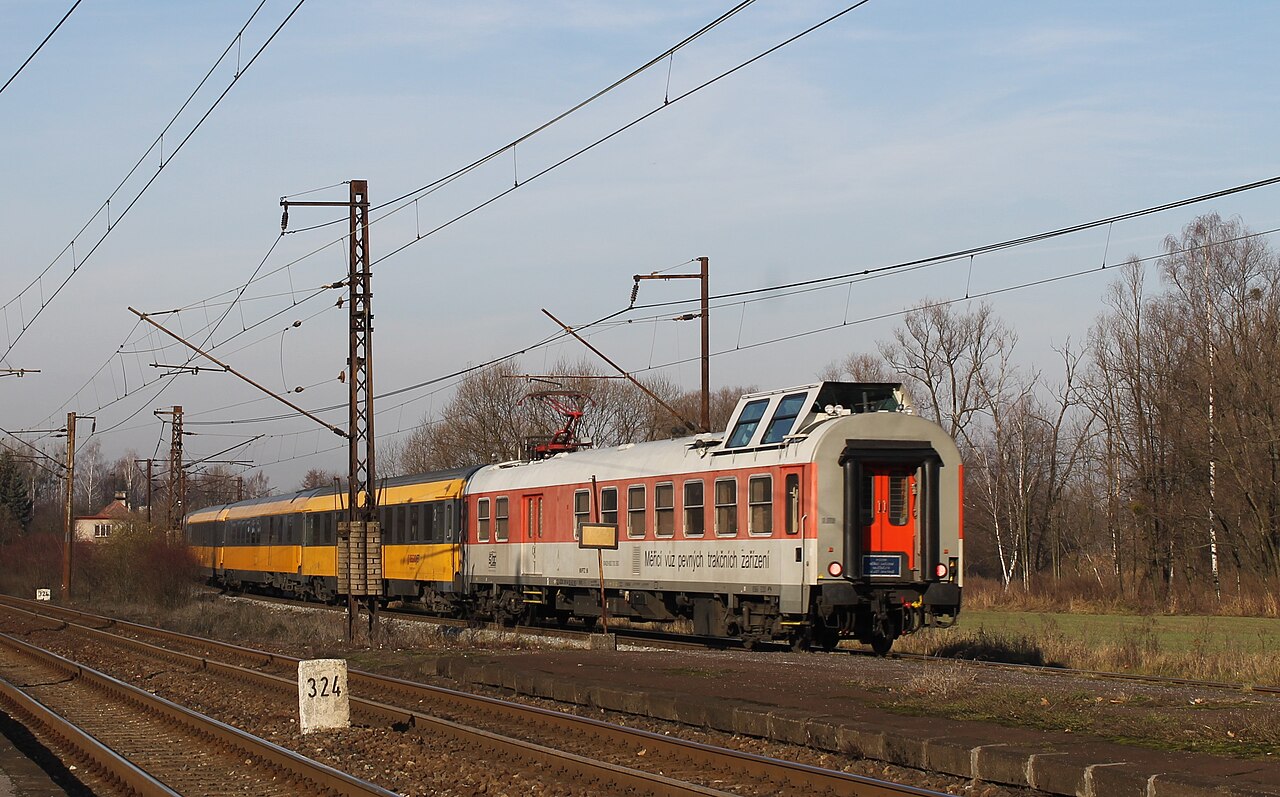
Image Credits: Wikimedia Commons / Karel Furiš, Joshua Brown, Daniel Case, ArnoldReinhold
Watch trains in different cities and the power delivery looks completely different. A high-speed train glides under a web of wires, drawing power through a sprung arm on its roof.
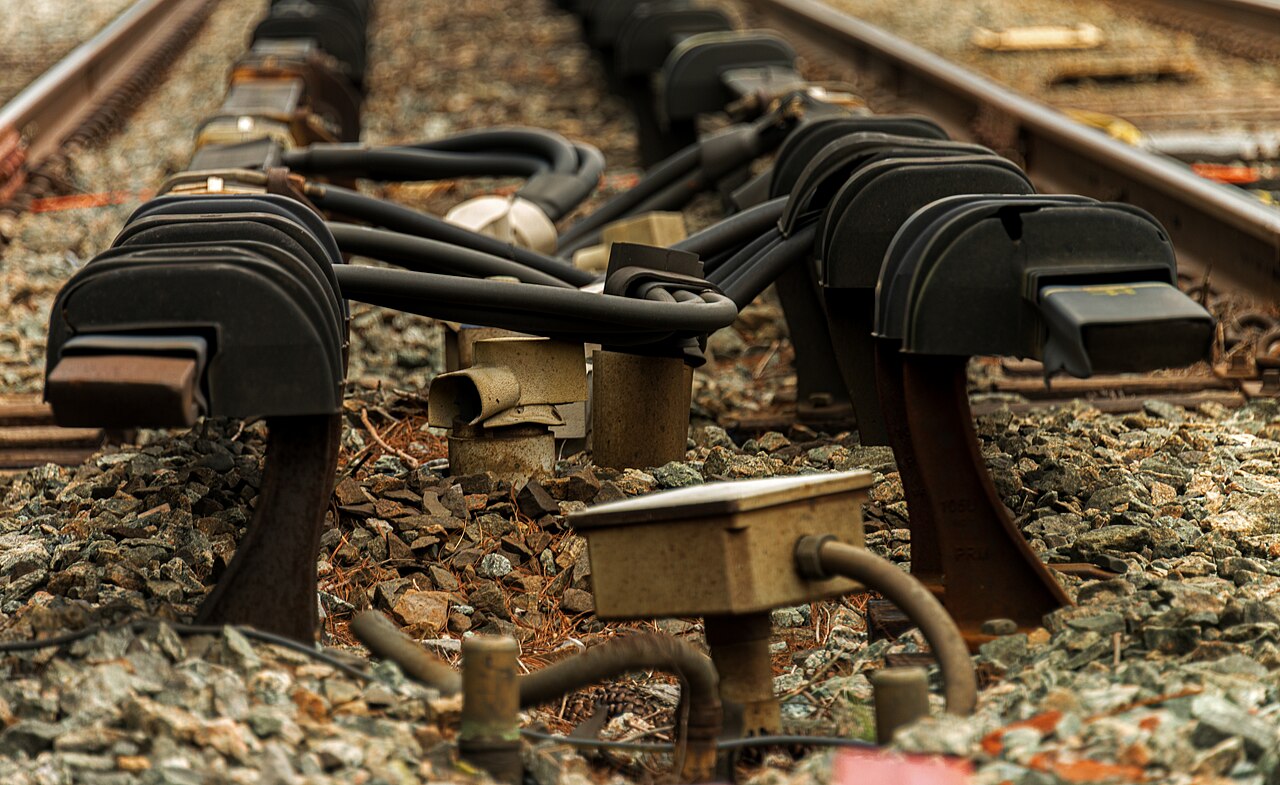
A subway train, meanwhile, seems to run on plain track, its power arriving silently through an electrified rail lying beside the running rails. Both systems do the same job.
They just solve different engineering problems.
This article explains why trains use overhead wires in some places and third rail in others, covering voltage and distance, speed, construction cost, tunnel clearance, and the safety tradeoffs that keep both systems in use.
What the two systems actually are
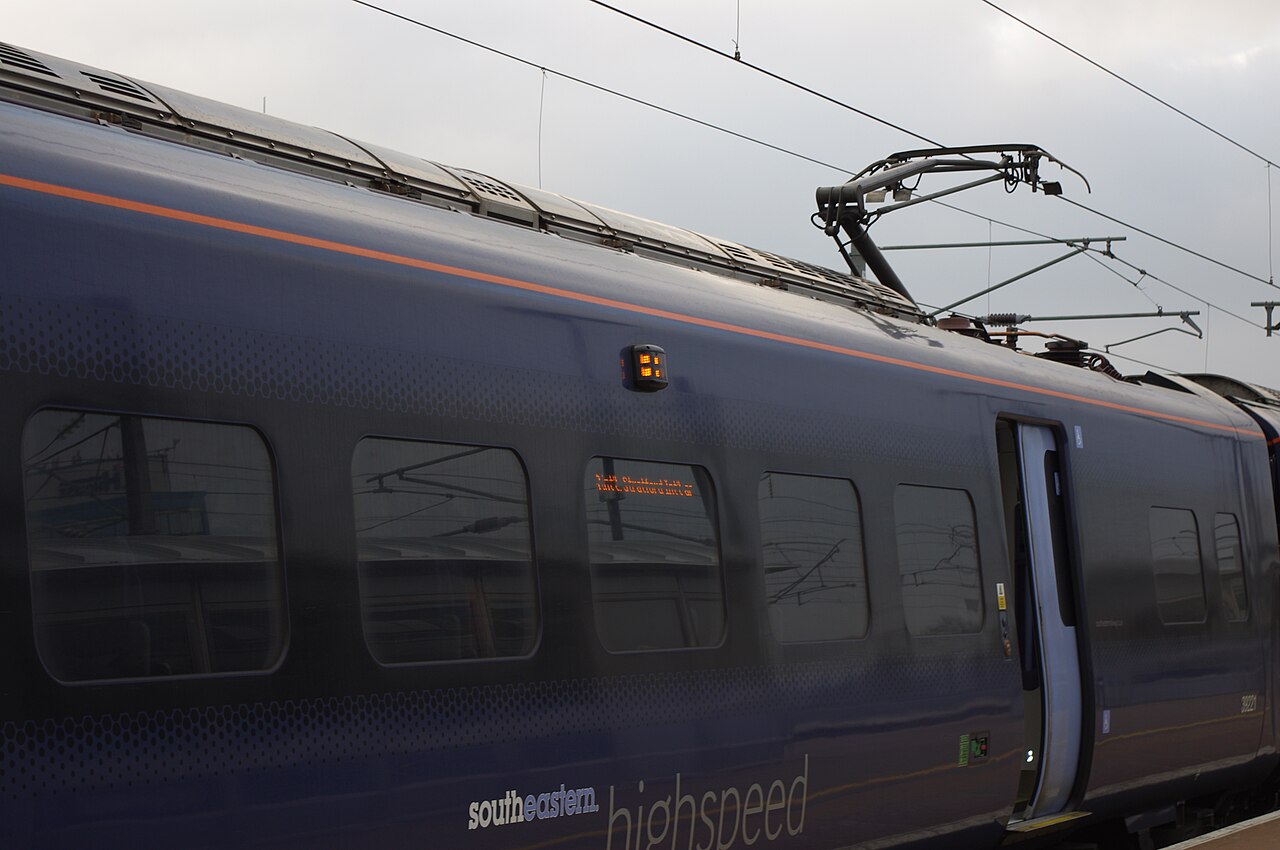
Overhead electrification, often called catenary, hangs a network of wires above the track. A pantograph, the zigzag arm on the train's roof, presses a contact strip against the wire and draws current down into the train. The system usually runs on alternating current at high voltage, most commonly 25,000 volts AC on modern main lines.
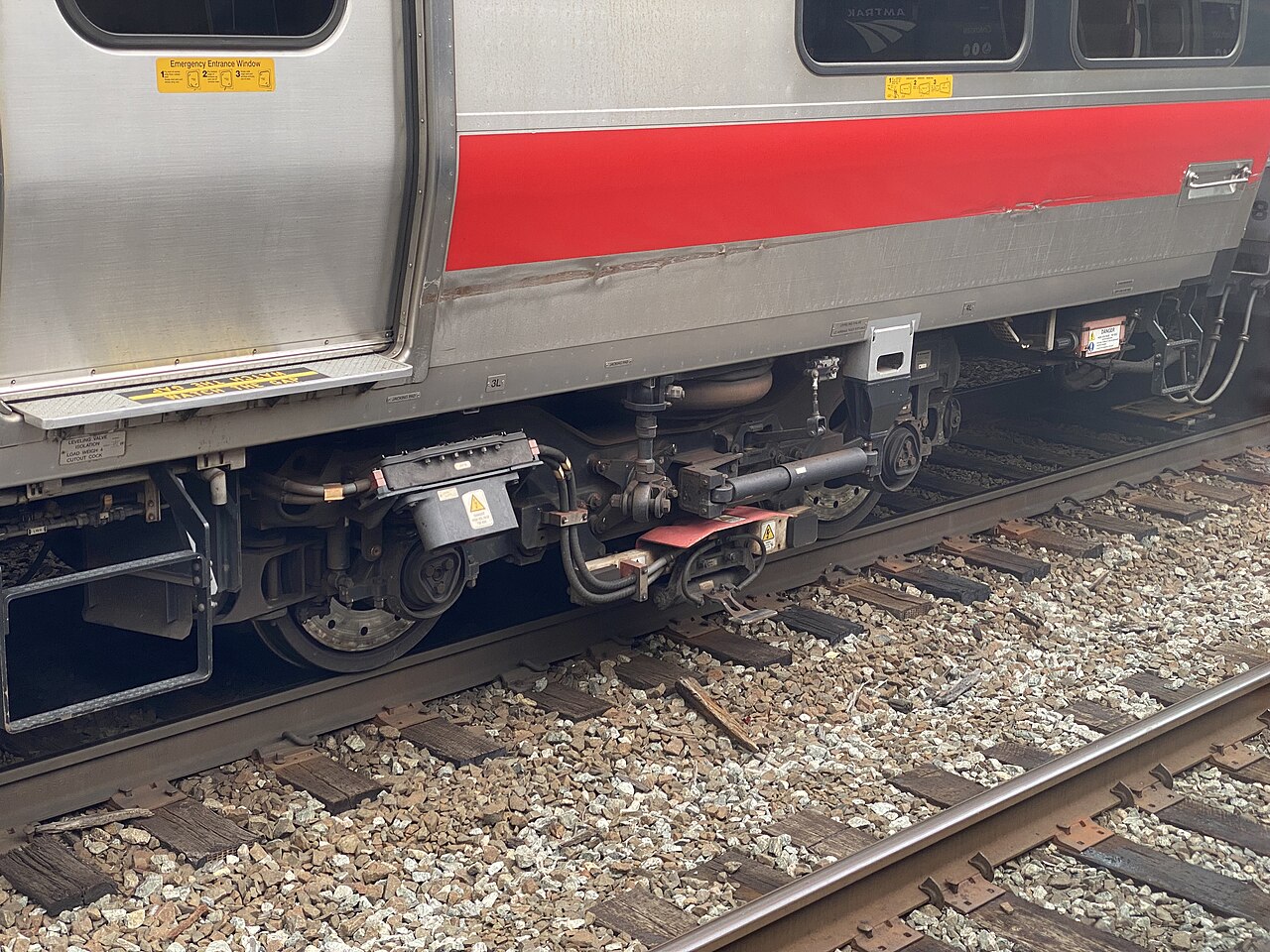
Third rail electrification places an extra rail alongside the running rails, energized at low-voltage direct current, typically around 750 volts. A contact shoe on the train slides along the rail and picks up current. There is nothing above the train at all.
Both need a return path for the current, usually through the running rails themselves. Both need substations that feed power into the system. The differences that matter are voltage, and everything voltage makes possible.
Voltage decides distance and speed
The central tradeoff is simple: higher voltage moves the same power with less current, and less current means less energy lost as heat in the wires. That is why overhead catenary, which can safely carry 25,000 volts, can feed power over long distances. Substations on an overhead AC line can sit tens of miles apart.
A 750-volt third rail loses far more energy to resistance, so it needs substations every two or three miles to keep voltage up along the line. For a metro with stations every half mile in a dense city, that is fine. For a 300-mile intercity route, the substation count becomes absurd.
Higher voltage also means more powerful trains. The same current draw at 25,000 volts delivers far more power than at 750 volts, which is why high-speed trains and heavy freight locomotives almost always run under wires. Rail engineers on the RailUK Forums note that overhead systems support higher operating speeds, longer routes, and heavier freight drags, while third rail suits frequent-stop urban service where trains rarely reach speeds that would need high voltage.
The numbers behind the preference are striking. According to Network Rail figures reported by Railway Technology, electric trains are on average 20 percent cheaper to lease and 33 percent cheaper to maintain than diesels, cost about 45 percent less to power, and emit 20 to 30 percent less carbon per passenger mile. Electrification pays best on busy, fast, long routes, which is exactly where overhead wire wins.
Tunnels, bridges, and clearance decide the rest
If overhead wire is so capable, why does any new line still choose third rail? Clearance is the biggest reason.
Overhead wires need vertical space: the wire itself, the pantograph's travel, and a safety margin for 25,000 volts that can arc across a gap. Old tunnels sometimes have literally inches to spare, and rebuilding every bridge on a route to fit catenary can cost more than the electrification itself.
Metros love third rail partly because it lets tunnels stay small. Without overhead wire, a subway tunnel can be bored at a smaller diameter, which saves enormous money on underground construction. Trains on a third-rail metro also skip the heavy onboard transformer needed to step 25,000 volts down to motor voltage, so the cars are lighter and cheaper.
History locks in many choices too. London's deep-level Underground, New York's subway, and much of southern England's commuter network were electrified with third rail a century ago. Ripping out a working system to fit overhead wire would mean years of disruption for marginal gains on routes where trains stop every minute anyway.
Standards also vary wildly by country for historical reasons. Most of the US Northeast Corridor runs on 12,000 volts at 25 Hz, except near Boston where it is 25,000 volts at 60 Hz. Newly electrified Caltrain in San Francisco runs 25,000 volts at 60 Hz.
India uses 25,000 volts widely, while South Africa runs a uniquely high 50,000 volts at 50 Hz. Dual-voltage trains exist, carrying both a pantograph and a third-rail shoe, but supporting multiple standards is expensive and requires careful planning.
The weather and safety tradeoffs
Each system has a weather weakness. Overhead wires hate wind and heat: wires sag in hot weather, and storms can bring lines down, causing more damage and longer disruption than most third-rail faults. Third rail hates ice and floodwater.
Ice on the rail breaks electrical contact, and flooded track can short the system, since the conductor sits at ground level. Rail engineers note that third rail does not sag in heat and shrugs off falling branches, while overhead wire copes better with snow and floods.
Safety is the third rail's real liability. An exposed 750-volt conductor at ankle height is a lethal hazard to trespassers, track workers, and anything that falls across it. Overhead wire keeps the danger in the air, away from the public, which is one reason regulators now favor it.
In Britain, the Technical Specification for Interoperability effectively bans large-scale new third-rail installation, confining it to minor extensions of existing networks.
That said, metros manage the risk with covered conductor rails, intrusion detection, and platform screen doors. For a self-contained subway with no level crossings and controlled access, the safety gap narrows enough that cost and clearance win the argument.
So which system is better?
Neither, on its own. Railway Technology's summary is blunt: the method depends entirely on context.
Long-distance, high-speed, and freight routes with miles between stops want overhead catenary at 25,000 volts. Frequent-stop metros in tunnels want third rail at 750 volts. The wire is the long-distance runner; the third rail is the city sprinter.
What is changing is the direction of new construction. Almost every railway that has started electrifying since the 25,000-volt AC system matured has chosen it, and even some networks with older low-voltage systems build new sections at 25 kV. Third rail survives where it already exists and where tunnels make wires impractical, not as the technology of the future.
Frequently asked questions
Can a train run on both overhead wires and third rail?
Yes. Dual-mode trains carry both a roof pantograph and a third-rail contact shoe, with onboard converters handling the different voltages. They are common where electrified networks with different standards meet, though the extra equipment adds cost and weight.
Why is third rail voltage so much lower than overhead wire voltage?
Safety and arcing. A conductor at ground level, near people, debris, and water, cannot safely carry tens of thousands of volts. Overhead wires sit far from the public, so they can use high voltage, which then allows efficient long-distance transmission.
Do overhead wires ever fall on trains?
It happens, usually in severe storms or after heat-related sagging. A downed catenary wire is a serious incident that can damage trains and halt service for hours. This vulnerability to wind and extreme weather is one of the main arguments third-rail supporters raise.
Why do some countries use different voltages for the same overhead system?
Railway electrification grew up nationally before standards converged, so legacy voltages persist. The US Northeast Corridor mixes 12 kV at 25 Hz with 25 kV at 60 Hz near Boston, while newer systems like Caltrain and California High-Speed Rail standardize on 25 kV at 60 Hz.
The bottom line
Trains use overhead wires where distance, speed, and power matter, because 25,000 volts transmits efficiently over tens of miles. They use third rail where tunnels are tight, stops are frequent, and construction budgets are fixed, because 750 volts at track level is cheaper to build and fits smaller tunnels. The physics favors the wire; the city favors the rail.
Latest in Travel
- Why airplane wings are swept back
- Why hotels set check-in at 3pm and checkout at 11am
- How your phone GPS works with no cell signal
- Why airplane food tastes bland at altitude
Subscribe to the Rive News newsletter for one practical travel explainer every morning.
Image Credits: Wikimedia Commons / Karel Furiš, Joshua Brown, Daniel Case, ArnoldReinhold
Related stories

The 3-1-1 liquids rule for planes: what each number means
TSA's 3-1-1 rule limits carry-on liquids to 3.4-ounce containers in one quart bag. Where the 2006 rule came from, what counts, and how

Why Is Airplane Food So Bland at Altitude?
A 2010 Fraunhofer study found altitude cuts sweet and salty perception by up to 30 percent. Low humidity, cabin pressure, and noise all

Carry-on size limits: why airlines each set their own
Airlines set their own carry-on limits because the FAA only requires each carrier to have a policy, not one global size. Why 22 x 14 x