
Why does your car judder when you brake at low speed?
By Rive News / Research desk | Rive News / Published October 20, 2026 at 9:00 AM PKT
Key takeaways
- Brake judder is usually caused by disc thickness variation, where the disc's two faces are no longer parallel and the pads bounce between thin and thick spots.
- True heat warping is rare; the usual culprit is pad material deposited unevenly on the disc, often from holding the brakes when they are very hot.
- Fixing it typically means replacing the discs and pads, which costs between £140 and £400 depending on the car and the garage.
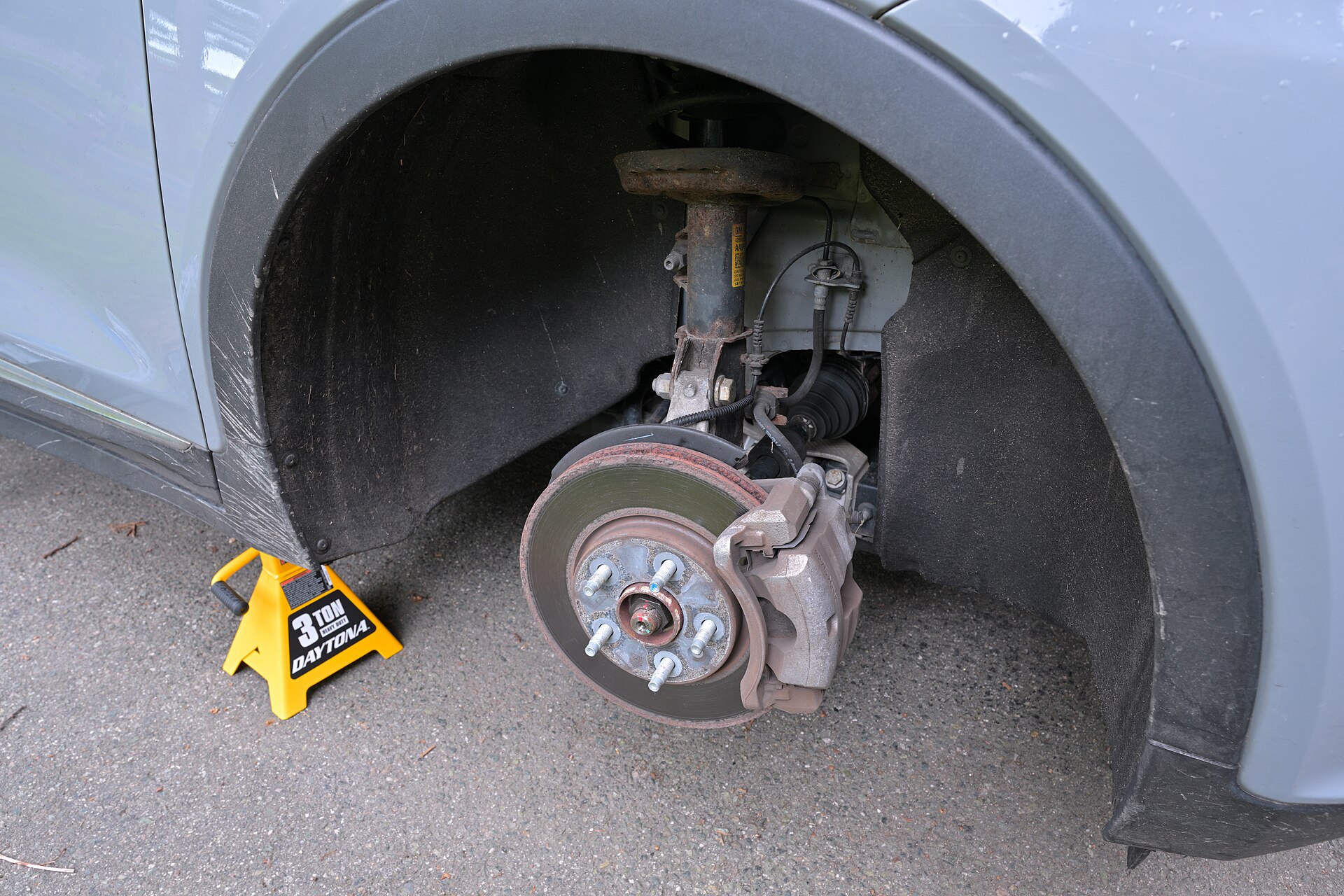
A brake disc showing surface rust and wear on the friction face, where uneven thickness causes the judder felt through the pedal.
Image Credits: Wikimedia Commons
Brake judder is the shaking or pulsing you feel through the steering wheel, the brake pedal, or the whole car when you slow down. At low speed it often shows up as a rhythmic shudder in the final seconds before the car stops. It ranges from a mild tremor to a shake strong enough to rattle the cabin.
Most drivers blame warped discs, but the real story is more specific and more useful. The main cause has a technical name, disc thickness variation, and understanding it changes both the fix and the prevention. This article takes a closer look at brake judder, including what you are feeling, why it happens, how mechanics diagnose it, and what fixes it.
What brake judder feels like
Judder is a vibration that appears only while braking and disappears the moment you lift off the pedal. That on-off pattern is the key clue that separates it from other shakes, like unbalanced wheels, which vibrate at speed whether you brake or not.
Where you feel it hints at the source. A shake in the steering wheel usually points to the front brakes, while a pulsing pedal or a vibration through the seat often points to the rear, according to Fixter. At low speed the sensation is slower and more pronounced, one pulse per wheel revolution, which is why drivers notice it most when crawling to a stop in traffic.
Judder almost always gets worse over time rather than better. Start Rescue notes that while it is not an immediate emergency, the vibration signals a braking irregularity that can reduce control in hard stops and accelerate pad wear, so prompt attention matters.
Why brake discs cause judder
The leading cause is disc thickness variation, usually shortened to DTV. A brake disc has two friction faces, inner and outer, and they must stay parallel. When they do not, the pads get pushed into the thinner areas and kicked back out by the thicker areas with every revolution, and that bouncing is what you feel as judder, according to Delphi, the parts manufacturer, writing in Professional Motor Mechanic.
Here is the part most guides get wrong. True thermal warping, a disc physically bending from heat, is relatively rare in normal driving, according to EngineerFix. Far more often, the thickness variation comes from friction material transferred unevenly from the pad onto the disc face.
The classic way this happens is surprisingly ordinary. After hard braking, the discs are very hot, and if you then sit at a junction with your foot holding the pedal down, pad material can imprint onto the hot disc surface. Those imprinted high spots are slightly thicker than the surrounding metal, so the pads grab harder there on every revolution, which you feel as a pulse, EngineerFix explains.
Start Rescue describes the same mechanism and notes that a mechanic can sometimes sand off a fresh pad imprint before it becomes permanent.
Other routes to DTV include poor fitting, sticking calipers, and skipped bedding-in. Even a speck of rust or dirt between the disc and the hub during fitting, as small as 0.04mm, can create runout exceeding 0.1mm at the disc's edge, and that wobble lays the foundation for uneven wear thousands of miles later, according to Professional Motor Mechanic.
A sticking caliper that never fully releases keeps one pad rubbing, building up material and hot spots on one side.
At low speed specifically, two extra suspects join the list. Rust buildup matters more when a car sits unused, because an uneven rust film on the disc or the hub face stops the disc sitting flat and induces judder from the first stop, according to EngineerFix. And if the judder appears only on cold mornings and fades after a few stops, overnight surface rust is the likely story rather than permanent disc damage.
If the judder arrives together with a harsh scraping sound, you may be dealing with two problems at once: worn pads scoring the discs. Our guide on grinding noises when braking covers that combination and what it costs to fix.
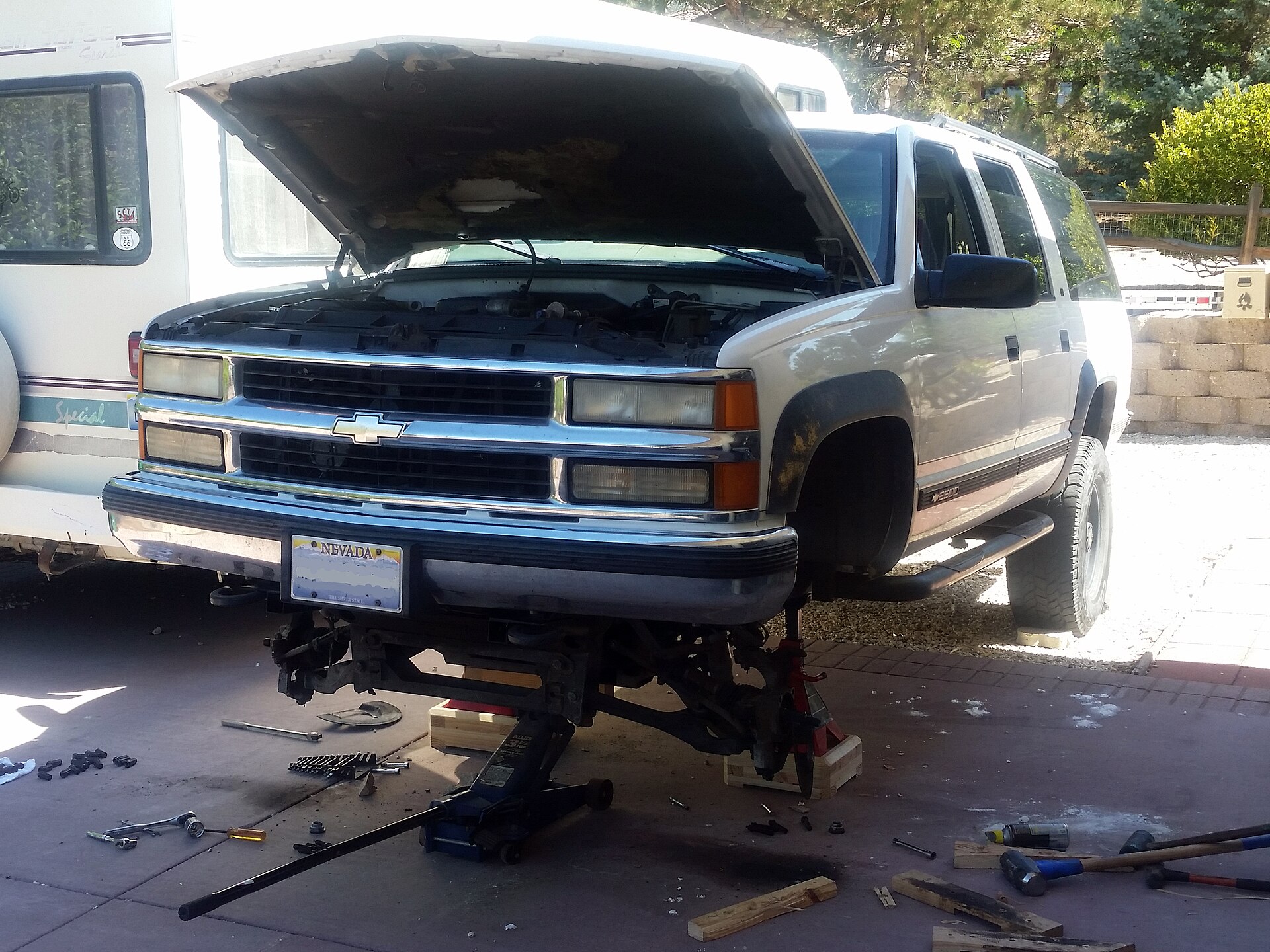
A car raised for brake work. Uneven discs are usually replaced together with the pads.
Image Credits: Wikimedia Commons
How mechanics diagnose the cause
A proper diagnosis starts with a road test to confirm the vibration only happens under braking. Then the car goes on a lift, and the mechanic measures the disc thickness at multiple points around each disc with a micrometer. Variation beyond the manufacturer's tolerance confirms DTV.
The inspection also covers the usual accomplices. Worn or contaminated pads get checked, since they feed the uneven deposits. The caliper slide pins are examined for rust, dirt, or bending that would stop the caliper releasing cleanly.
Wheel bearings are checked for play, because a loose bearing lets the disc wobble. Wheel fastener torque is verified too, since uneven tightening can distort the disc mounting, according to Professional Motor Mechanic.
Heat history matters too. A mechanic will ask about towing, mountain descents, or track days, because overheated brakes are the classic setup for pad imprinting. Knowing how the damage happened guides whether a light skim of the disc surface might work or full replacement is needed.
What fixes brake judder
In most cases the fix is new discs and pads together. Replacing the discs without the pads risks carrying the old pad deposits straight onto the new surfaces, so the pair is usually done as a set. Fixter puts the typical cost of replacing discs and pads between £140 and £400, depending on the make and model and where the work is done.
Skimming or resurfacing the discs is sometimes possible if they are still thick enough. This machines the faces back to parallel and can cure mild DTV at a lower cost than replacement. But if the discs are near their minimum thickness or the variation is severe, replacement is the honest answer, and a good garage will say so.
Prevention is where the DTV story pays off. New brakes need a bedding-in period: moderate stops only, and no hard braking for roughly the first hundred miles, so the pad and disc surfaces mate evenly, according to Fixter. After hard use, avoid sitting with the brakes clamped on while the discs are still glowing hot; where safe, ease off the pedal at a stop or use the parking brake once stationary.
Regular servicing catches the slow developers. A sticking caliper found at a service is a cheap fix, while the DTV it would have caused is not. Clean hub faces at fitting time, correct wheel torque, and quality discs all reduce the odds of a repeat.
Is brake judder dangerous?
It is not usually an immediate emergency, but it signals a braking fault that can reduce control, especially in hard stops, and it accelerates wear on pads and discs, according to Start Rescue. Get it checked promptly rather than driving around it.
Can warped brake discs be fixed without replacing them?
Sometimes. Light thickness variation can be machined out by resurfacing, and a fresh pad imprint can occasionally be sanded off. Severe or long-standing DTV usually needs new discs, according to Fixter and Start Rescue.
Why does the judder only happen at low speed?
Low-speed judder is often rust or a fresh pad imprint, both of which create small high spots that you feel most clearly at slow wheel speeds. If it fades after a few stops, surface rust was the likely cause, according to EngineerFix.
Will new brake pads alone stop the judder?
Usually not, because the thickness variation lives in the disc. Fitting new pads to uneven discs typically brings the judder back, which is why garages replace discs and pads as a set.
The bottom line
Brake judder is rarely a mysteriously warped disc. It is almost always uneven disc thickness, and most often that unevenness is pad material baked on by heat and habit rather than bent metal. New discs and pads fix it, gentle bedding-in and kind treatment of hot brakes prevent it, and catching it early keeps the bill at the lower end.
If your pedal pulses, book the inspection before the shake gets worse.
Rive News is a research desk covering practical car care. We write from documented sources, never from invented test drives.
Latest in Automotive
- Why your car makes a grinding noise when braking
- Why your car struggles on cold mornings
- What to do when your car overheats on the road
- Why your car uses more fuel than before
Subscribe for one practical car-care article every morning.
Copyright 2026 Rive News. Facts checked against public sources listed above.
Related stories

Why Does Tire Pressure Drop in Cold Weather?
Cold weather can cut tire pressure by 1 psi for every 10°F drop, thanks to the ideal gas law. Here is what happens inside the tire and what
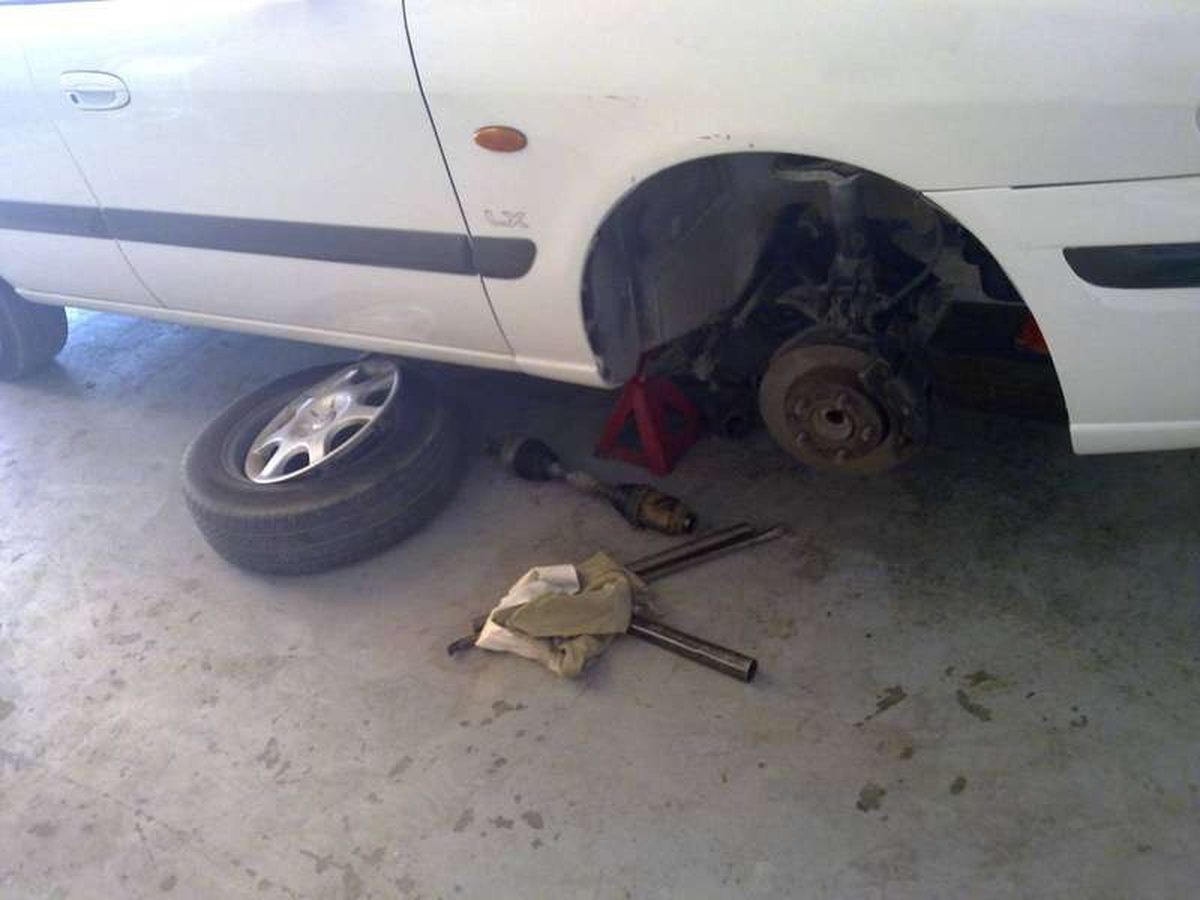
Why Do Brake Rotors Warp, or Do They Actually?
Mechanics rarely see a truly warped rotor. The shudder usually comes from uneven pad deposits a few thousandths of an inch thick. Here

How to Buy a Used Car Without Getting Scammed: The Checklist
Over 450,000 cars a year have rolled-back odometers, NHTSA says. This checklist covers VIN checks, title washing, and the inspection that