
Why does your car make a grinding noise when braking?
By Rive News / Research desk | Rive News / Published October 20, 2026 at 9:00 AM PKT
Key takeaways
- A grinding noise when you brake usually means the pads have worn through to bare metal, and the steel backing plate is now scoring the rotor.
- Most pads carry small metal wear-indicator tabs that squeal before the grinding starts, so an ignored squeal often turns into a far bigger repair bill.
- Pad replacement typically costs $150 to $400 per axle, but adding damaged rotors pushes the total to $300 to $800 per axle.
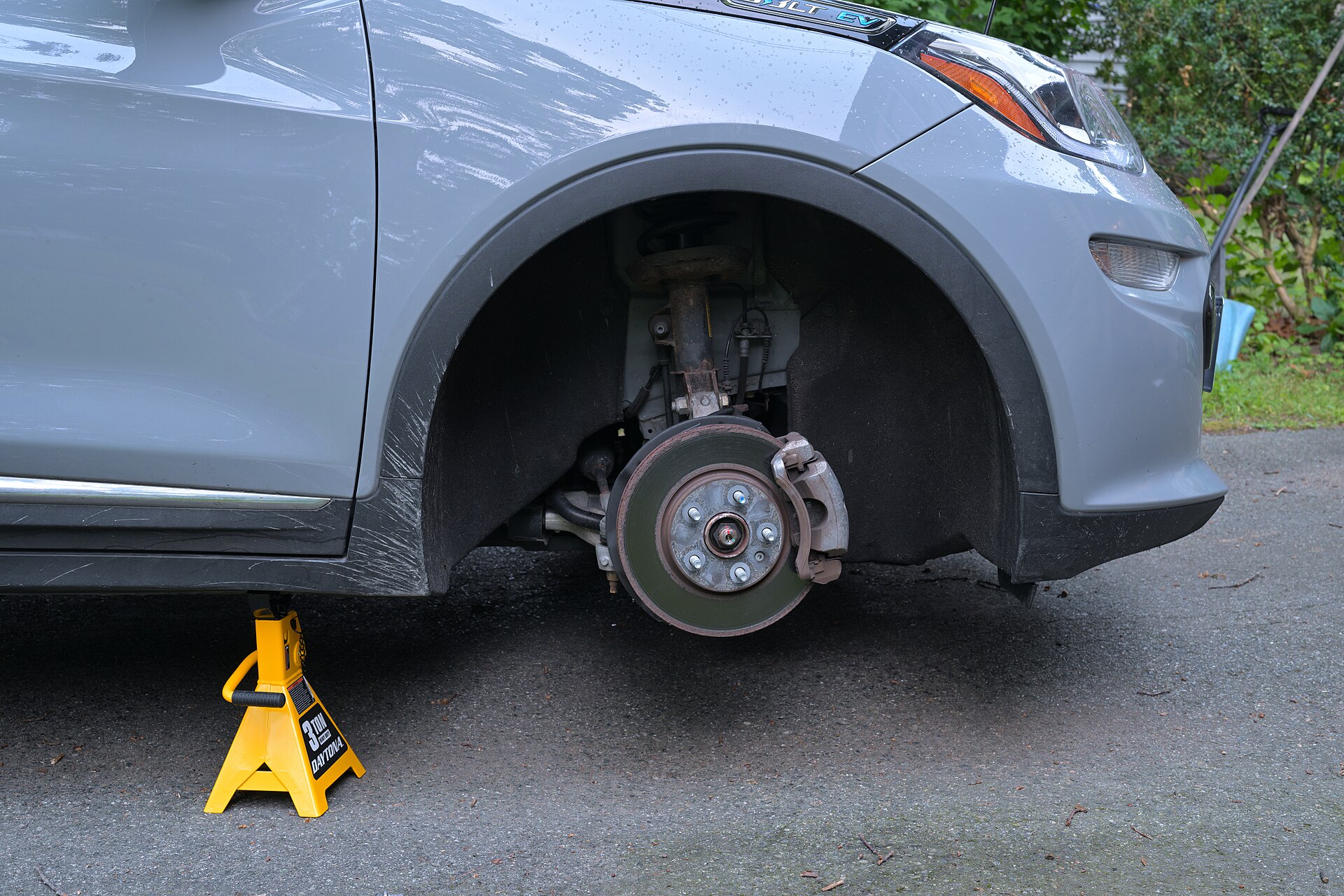
A car's brake disc and caliper exposed with the wheel removed, the assembly behind most grinding noises.
Image Credits: Wikimedia Commons
A grinding noise when you press the brake pedal is the sound of metal parts touching that were never meant to meet. It is loud, harsh, and hard to ignore, and it almost always points to a brake system that needs attention soon.
Brakes work by squeezing a friction pad against a spinning metal disc, called a rotor. When the pad material wears away completely, the steel backing plate behind it rubs directly on the rotor, and that metal-on-metal contact is the grinding you hear, according to the brake specialists at R1 Concepts.
This article takes a closer look at brake grinding, including what the noise actually is, the main causes, what it costs to fix, and how to prevent it.
What brake grinding actually is
A brake pad is a simple sandwich. The working face is a layer of friction material, and behind it sits a steel backing plate that holds everything together. Normal braking wears the friction layer down a little more with every stop, which is expected and harmless for thousands of miles.
Most pads also carry small metal tabs called wear indicators. These tabs are positioned so they start squealing against the rotor just before the friction material runs out, and that high-pitched squeal is your early warning, according to Oards. Grinding is what you hear when that warning has passed and the friction material is gone.
At the grinding stage, the bare backing plate drags across the rotor face. The noise is consistent and tends to get louder the harder you press the pedal, which is how you can tell it apart from other brake sounds. You may also notice the car takes longer to stop, and a burning smell can develop if the metal-on-metal contact has been going on for a while, R1 Concepts reports.
One exception is worth knowing. A light grind on the first stop of a cold morning is often just a thin film of surface rust that formed overnight, and it usually wears off after a few brake applications, according to Oards. This kind of noise fades fast, and our guide to cars that struggle on cold mornings covers other sounds that show up before the engine warms up.
If the grinding stays constant at every stop, rust is not the explanation.
The main causes of grinding brakes
- Worn brake pads. This is by far the most common cause. Once the friction material wears through, the backing plate contacts the rotor and grinding begins. Pads thinner than about 3mm need replacing, according to The Motor Guy.
- Damaged or deeply scored rotors. A rotor with deep grooves cannot be saved by new pads alone. It must be resurfaced or replaced, or the new pads will wear unevenly and the noise will return.
- A sticking brake caliper. The caliper is the clamp that squeezes the pads. If it sticks, it can hold a pad against the rotor even with your foot off the pedal, causing constant friction, heat buildup, and rapid, uneven pad wear, according to EngineerFix.
- Debris caught in the assembly. Small stones, grit, or packed brake dust between the pad and rotor can scrape and grind. A thorough cleaning of the assembly with brake cleaner sometimes resolves this without any parts being replaced.
- Worn mounting hardware. The clips and springs that hold pads in place wear out too. Loose hardware lets pads sit at the wrong angle, and the uneven contact can grind and chew through pads faster.
Heat deserves a special mention because it connects grinding to other brake problems. Holding the brakes hard on long descents or repeated hard stops overheats the whole assembly, and overheated components wear faster and unevenly. If your car has ever overheated on the road, you already know how heat punishes car parts, and brakes are no exception.
What grinding brakes cost to fix
The cost depends almost entirely on how long you drive after the grinding starts. Catch it early, and you are paying for pads. Drive on it, and every stop scores the rotor deeper, turning a pad job into a pads-and-rotors job.
Replacing brake pads typically costs $150 to $400 per axle, depending on the vehicle, pad material, and labor rates, according to Oards. If the rotors are scored and need replacing too, the total rises to $300 to $800 per axle. R1 Concepts gives a similar breakdown: $150 to $250 for pads alone if you caught it before rotor damage, $300 to $600 for pads and rotors on one axle, and $500 to $900 or more if both axles or the caliper hardware need work.
Doing it yourself is cheaper if you have the tools and the know-how. The Motor Guy puts DIY pad replacement at $50 to $150 in parts versus $100 to $300 for professional work, with rotor resurfacing at $80 to $150 and rotor replacement at $150 to $400 in parts.
The expensive mistake is waiting. EngineerFix notes that each stop with a bare backing plate gouges the rotor deeper, quickly reaching the point where resurfacing is no longer possible and replacement is the only option. At the extreme end, sustained metal-on-metal heat can boil the brake fluid, a condition called vapor lock that makes the pedal sink toward the floor.
The Motor Guy points out that a local tow costs $75 to $200, which is far cheaper than the accident that worn-out brakes can cause.
One practical habit helps: fold a quick brake glance into the same routine as your other under-bonnet checks, the ones covered in our guide on checking your car oil level in two minutes. A peek at pad thickness during a tire rotation or oil top-up catches wear long before the grinding stage.
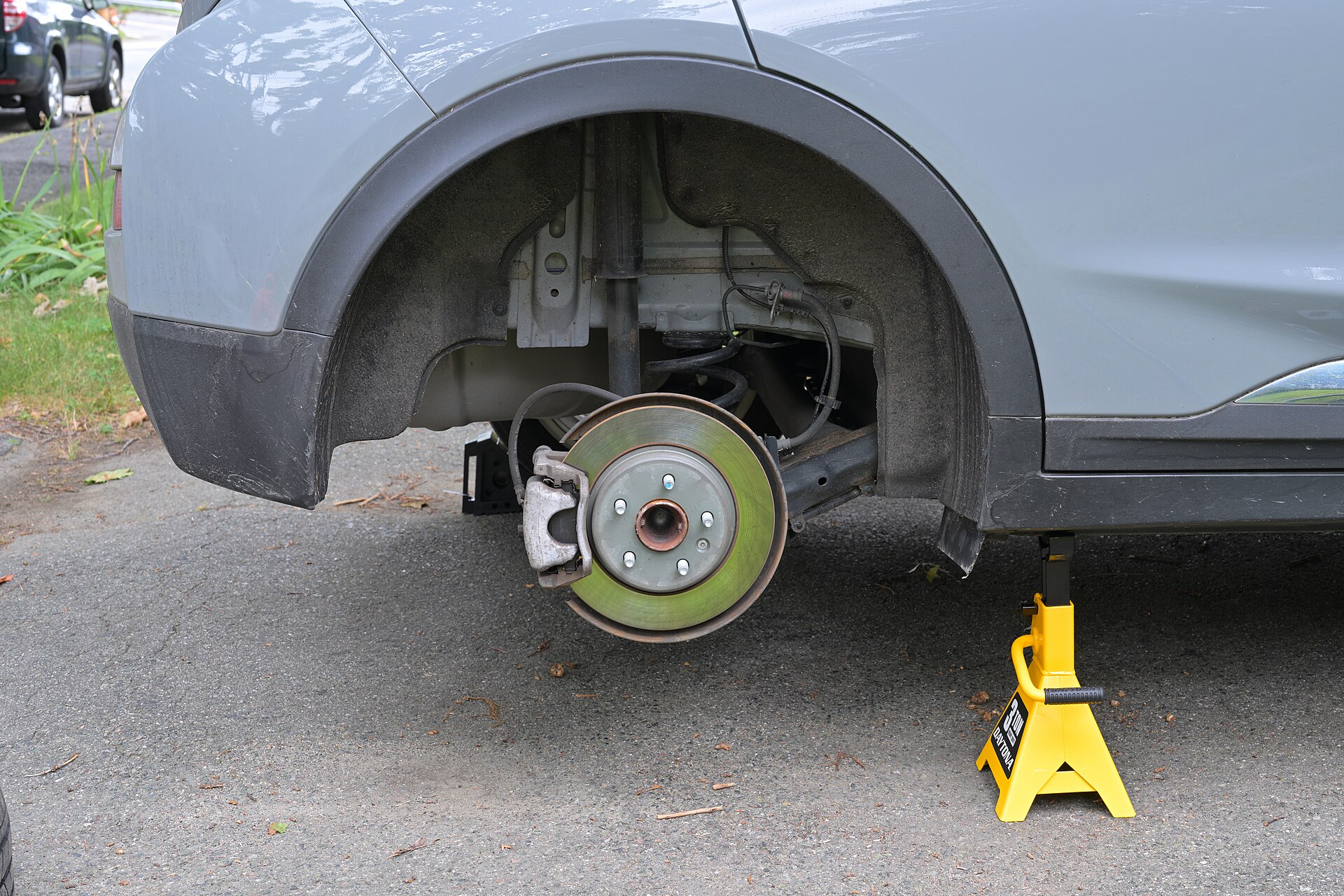
A rear brake disc with surface rust on the friction face, the cause of the light grinding heard on first cold starts.
Image Credits: Wikimedia Commons
How to prevent brake grinding
Prevention is mostly about catching wear in its cheap stage. AutoDana recommends inspecting the brakes roughly every 30,000 miles and replacing pads once they reach about 3mm of friction material. That single habit prevents most grinding cases.
Never ignore the squeal. Those wear-indicator tabs exist for exactly one purpose, and the weeks between the first squeal and the first grind are the cheapest window you will get to fix the problem. A pad swap in the squeal stage often needs no other parts.
Keep the assembly clean. Dirt and brake dust build up over time, and a spray of brake cleaner during inspections clears the grit that can score rotors and mimic pad wear. AutoDana also recommends flushing the brake fluid every two years or 24,000 miles, since old fluid absorbs moisture and degrades braking performance.
Finally, buy decent parts. Budget pads can wear faster and unevenly, and mismatched pad and rotor quality shortens the life of both. Spending a little more on the friction material is one of the cheapest insurance policies a car offers.
Can I drive my car if the brakes are grinding?
It is strongly discouraged. Mild grinding means you should get to a shop within days, but severe grinding or noticeably longer stopping distances mean you should stop driving and call a tow, according to The Motor Guy.
Why do my brakes grind only in the morning?
Overnight moisture leaves a thin film of surface rust on the rotors, and the first few stops scrape it off. If the noise disappears quickly, this is normal, according to Oards. If it continues through the whole drive, have the brakes inspected.
How long can I drive on grinding brakes?
There is no safe number of miles. Every stop deepens the rotor damage and lengthens stopping distances, so the repair gets more expensive and the risk gets higher with each trip, EngineerFix reports.
Will grinding brakes fail completely?
They can. Metal-on-metal braking is far less effective than proper pad friction, and extreme heat can cause brake fade or even boil the brake fluid, which can make the pedal sink to the floor, according to EngineerFix.
The bottom line
Brake grinding is your car's final warning before a cheap maintenance item becomes an expensive repair. The squeal comes first and the grinding follows, and the gap between them is the cheapest time to act. If you hear grinding now, book an inspection this week, drive gently until then, and do not let the noise become background sound.
Rive News is a research desk covering practical car care. We write from documented sources, never from invented test drives.
Latest in Automotive
- Why your car struggles on cold mornings
- What to do when your car overheats on the road
- Why your car judders when you brake at low speed
- Why your car uses more fuel than before
Subscribe for one practical car-care article every morning.
Copyright 2026 Rive News. Facts checked against public sources listed above.
Related stories

Why Does Tire Pressure Drop in Cold Weather?
Cold weather can cut tire pressure by 1 psi for every 10°F drop, thanks to the ideal gas law. Here is what happens inside the tire and what

Why Do Brake Rotors Warp, or Do They Actually?
Mechanics rarely see a truly warped rotor. The shudder usually comes from uneven pad deposits a few thousandths of an inch thick. Here

How to Buy a Used Car Without Getting Scammed: The Checklist
Over 450,000 cars a year have rolled-back odometers, NHTSA says. This checklist covers VIN checks, title washing, and the inspection that