
Why Does Your Car Shake at High Speeds? Causes and Safe Fixes
Key takeaways
- Unbalanced tires are the most common cause of shaking that appears at highway speeds, usually between 50 and 70 mph.
- Where you feel the shake points to the culprit: steering wheel means front wheels, seat or floor means rear wheels, pedal means brakes.
- Have tires balanced every 6,000 to 8,000 miles, and do not ignore the symptom, because worn parts fail harder at speed.
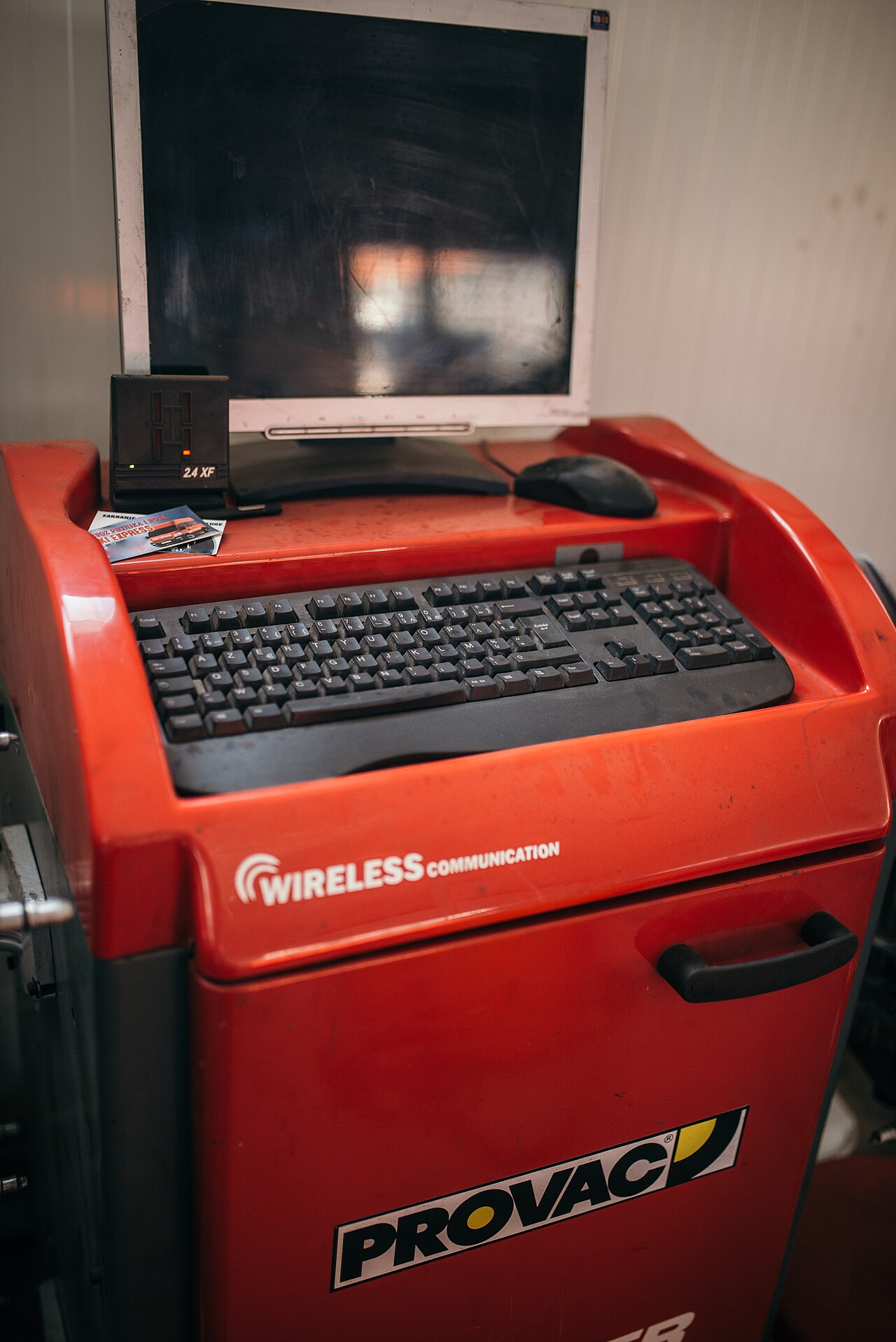
A wheel spins on a balancing machine at a tire service shop. Photograph: Shixart1985 / Wikimedia Commons
A car that runs smoothly around town but starts to shudder on the highway is telling you something specific. Speed-dependent vibration almost always traces back to a rotating part that has lost its even rhythm.
This article explains why a car shakes at high speeds, including unbalanced tires, bent wheels, alignment problems, and worn brake rotors. It also covers how to read the symptom, what fixes usually cost, and when the shake is a warning sign that needs immediate attention.
Why tire balance is the usual suspect
Tires are the number one suspect for a shake that arrives with speed. A tire that has lost even weight distribution wobbles slightly as it spins, and rotation multiplies that wobble into a shake you can feel. The vibration typically starts around 50 to 60 mph and grows stronger as speed climbs.
Normal driving life knocks balance out. Tread wears unevenly, potholes strike, wheel weights fall off, and mounting a new tire can start it slightly off. Jerry.
ai's repair guide notes that a car which shakes at highway speeds but feels smooth below about 45 mph is a classic sign of wheels or tires out of balance, or a bent rim.
The tell is where you feel it. Engineer Fix explains that a bent rim on a front wheel sends vibration into the steering wheel, while a rear-wheel problem transfers the shake to the seat or floorboard. That split is one of the most reliable clues a driver has.
The fix is straightforward. A shop spins each wheel on a balancing machine and clips small counterweights to the rim to offset the heavy spot. Guides from multiple repair outlets recommend rebalancing every 6,000 to 8,000 miles, or any time tires are rotated or repaired.
Jerry. ai lists typical balancing prices between $50 and $120 for all four wheels, while a damaged rim runs $200 to $600 to replace.
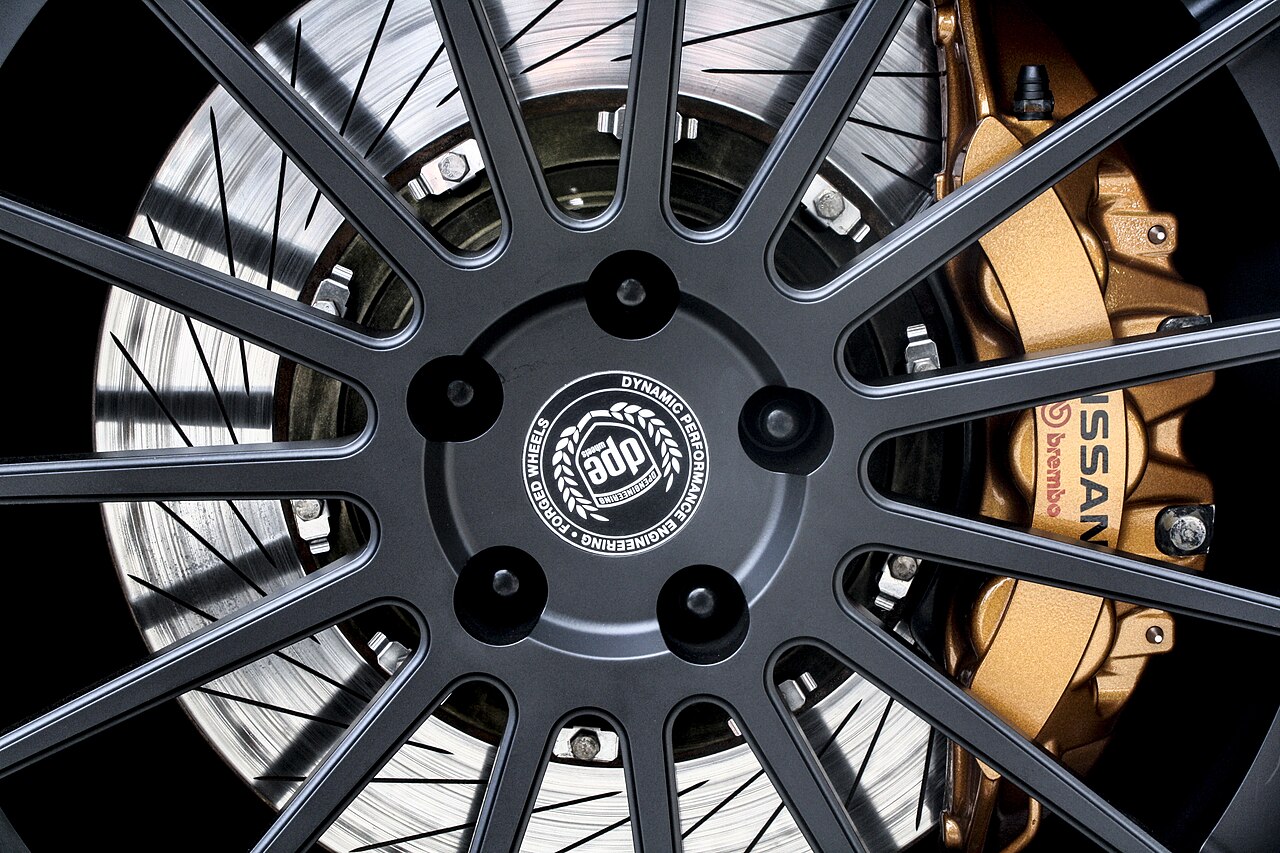
A close-up of a car's disc brake and wheel hub. Photograph: Envy fstop / Wikimedia Commons
Other mechanical causes behind the shake
If balancing does not cure the shake, the cause sits elsewhere in the rotating or steering assembly.
Wheel alignment. Misaligned wheels do not point straight down the road, which scrubs the tread and can produce vibration at speed. The companion symptoms are the car pulling to one side, the steering wheel sitting off-center on a straight road, and uneven wear like feathered edges or cupping. Alignment trouble often follows a hard curb strike or a deep pothole.
Warped brake rotors. Rotors that have warped from heat develop thickness variation, and the pad catches unevenly as the wheel turns. CarXplorer estimates rotor issues affect roughly 15 percent of vehicles with high-speed vibration complaints. The classic sign is a shake or pulsating pedal that appears when you brake from highway speed. Severe warping can also add a constant vibration.
Bent wheels and damaged tires. A rim bent by a pothole no longer turns in a true circle, and a tire with a slipped belt or internal separation develops a bulge or flat spot that thumps with every rotation. These defects mimic simple imbalance, which is why a visual and hands-on wheel inspection matters before money is spent on balancing.
Worn suspension and steering parts. Shocks, struts, tie rods, and wheel bearings keep the tire planted. When they wear, the wheel can wobble. Jerry.ai lists steering-wheel shimmy between 50 and 70 mph as a marker of front imbalance or a worn tie-rod end, and a speed-linked hum through the seat as a failing wheel bearing.
Axle and driveline issues. Less common but more serious, a damaged axle or worn universal joint can shake the whole car. CarXplorer puts axle damage at about 5 percent of high-speed shaking cases. Vibration that worsens under acceleration rather than cruising speed points toward the axle or CV joints.
How the symptom tells you the cause
You can narrow the problem dramatically by noting exactly when and where the shaking happens.
- Shake at highway speeds, smooth below 45 mph: unbalanced tires or a bent rim. Check balance first.
- Steering wheel shimmy around 50 to 70 mph: front tire imbalance or a worn tie-rod end.
- Vibration only while braking: warped rotors or uneven pad deposits.
- Whole car shakes at idle but improves at speed: engine misfire or a broken motor mount, a different problem entirely.
- Buzz through the floor that grows with speed: driveshaft imbalance or a worn U-joint on rear-wheel-drive and all-wheel-drive cars.
- Shake after a pothole hit, car pulls: bent wheel, shifted tire belt, lost wheel weight, or alignment damage.
Write down the answers before you visit a shop. A mechanic who hears "shakes at 65, felt in the seat, started after a pothole" diagnoses faster and bills less guesswork than one who hears only "it vibrates."

The driver's view at highway speed, where a balance problem turns into a shake. Photograph: Arkady Lifshits / Wikimedia Commons
What to do before you drive on
Shaking is not just uncomfortable. Unbalanced wheels accelerate tread wear and stress suspension and steering parts, turning a small fix into a big one if ignored.
Start with the cheap checks. Look at each tire for bulges, flat spots, or missing balance weights, and confirm lug nuts are tight. If the shake only happens while braking, plan on a brake inspection that covers rotors and pads together.
Then book a balance and a look-over. A shop can confirm balance, spot a bent rim on the machine, and check alignment angles in one visit. Catch it early and the fix is usually a sub-$120 balance job.
Drive on it for months and you may be buying tires, rotors, or bearings along with it.
Image Credits: Wikimedia Commons / Shixart1985 (CC BY 2.0); Envy fstop (CC BY-SA 4.0); Arkady Lifshits (CC0)
Is it safe to drive a car that shakes at high speeds?
A mild vibration on a short trip is usually tolerable, but it is not something to ignore for weeks. Shaking stresses tires and suspension, and if the cause is a damaged tire, a loose wheel, or worn steering parts, failure risk rises with speed. Get it checked soon.
How much does it cost to fix a car shaking at high speeds?
Wheel balancing typically runs $50 to $120, according to Jerry. ai's shop data. Alignment checks run about $100 to $250, a rim replacement $200 to $600, and rotor-plus-pad replacement $250 to $600 for the front axle.
Costs vary by vehicle and region.
Can bad tires cause shaking at high speeds?
Yes. Uneven tread wear, cupping, feathering from poor alignment, a slipped internal belt, or a bulge in the sidewall all create vibration that grows with speed. A tire with a visible bulge or bulging sidewall should be replaced, not balanced.
Why does my steering wheel shake only at 60 mph?
Steering-wheel shimmy that appears in a specific speed band, often 50 to 70 mph, is the signature of front-wheel imbalance or a worn tie-rod end. The vibration fades below and above that band because the wheel's natural resonance amplifies the imbalance only there.
The bottom line
A shake that arrives at highway speed is almost always a rotating part complaining: usually unbalanced tires, sometimes a bent wheel, misalignment, or warped rotors. Note when it starts and where you feel it, then have the wheels balanced and inspected. The fix is cheap when caught early and expensive when it is not.
Latest in Automotive
Subscribe to the Rive News newsletter for one practical explainer every morning.
Related stories

Why Does Tire Pressure Drop in Cold Weather?
Cold weather can cut tire pressure by 1 psi for every 10°F drop, thanks to the ideal gas law. Here is what happens inside the tire and what

Why Do Brake Rotors Warp, or Do They Actually?
Mechanics rarely see a truly warped rotor. The shudder usually comes from uneven pad deposits a few thousandths of an inch thick. Here

How to Buy a Used Car Without Getting Scammed: The Checklist
Over 450,000 cars a year have rolled-back odometers, NHTSA says. This checklist covers VIN checks, title washing, and the inspection that