
How to change a flat tyre safely on the roadside
Key takeaways
- Park on flat ground clear of traffic, switch on hazard lights, and apply the handbrake before you touch the wheel.
- Loosen the wheel nuts while the tyre is still on the ground, then lift the car with the jack.
- Fit the spare, tighten the nuts in a criss-cross pattern, and get the flat repaired promptly.
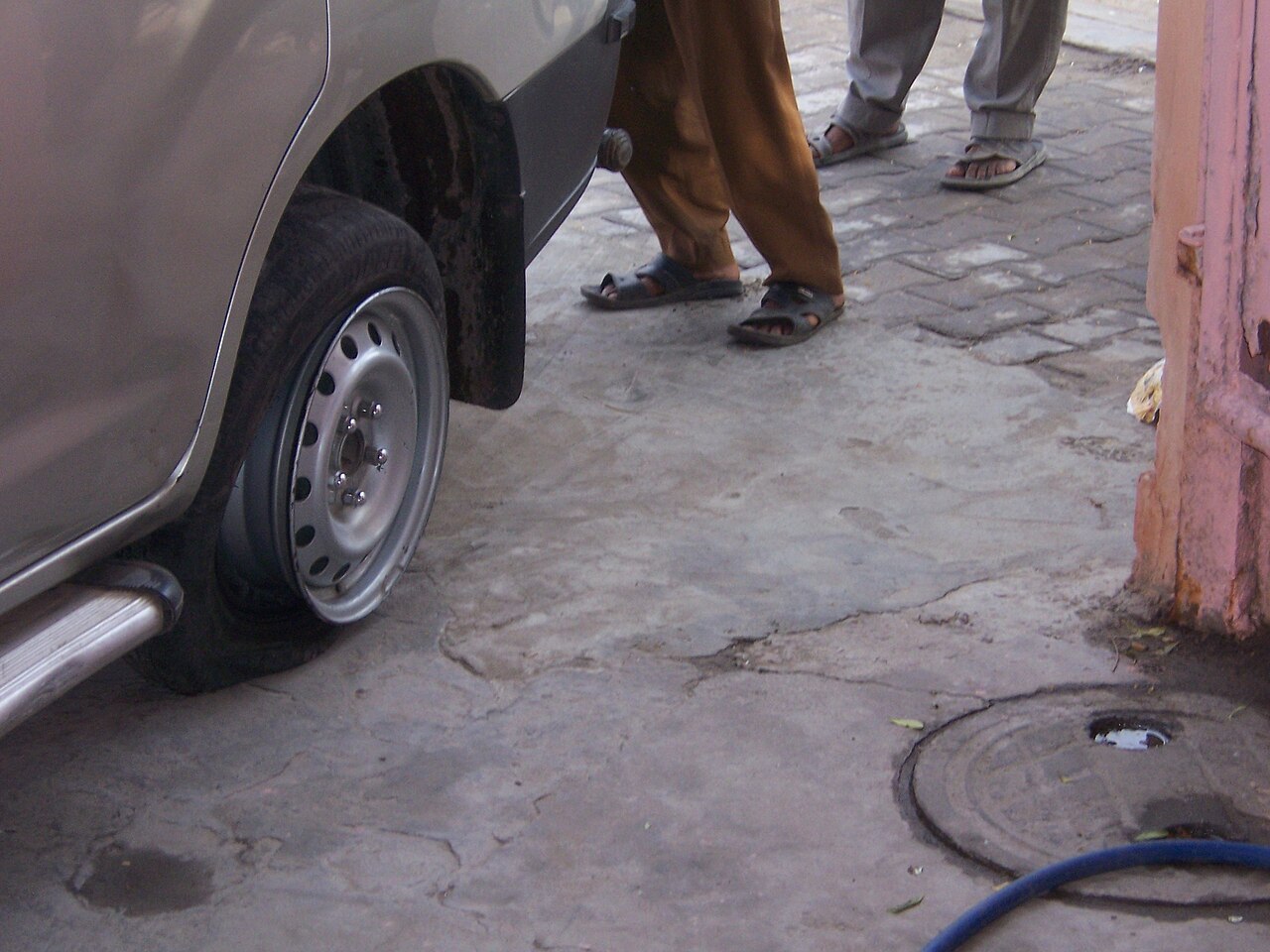
A flat tyre is a tyre that has lost enough air to make driving unsafe. The sidewall flexes, the car pulls to one side, and the rim can suffer damage if you keep rolling on it. Stopping early and swapping to the spare is the safest response when a repair shop is not within reach.
A roadside swap is a simple job with the right kit and a calm order of steps. The danger comes from traffic, a car that is not secured, and a jack used on the wrong spot. Each of those risks is easy to control when you prepare before you lift anything.
This article explains how to change a flat tyre safely on the roadside, including what to check before you start, the step-by-step swap, driving on the spare, and what to do after the fix.
Before you start: check what your car carries
Not every car carries a spare tyre. According to AAA research, 28 percent of 2017 model year vehicles in the United States did not come with a spare tyre as standard equipment. Some cars carry an inflator kit instead, and some carry nothing at all.
That gap matters because an inflator kit only handles small punctures. AAA reports that inflator kits cannot fix sidewall damage or blowouts, and that a kit can cost up to 10 times more than a tyre repair. Kits also expire, with a shelf life of four to eight years.
Check your boot before trouble strikes so you know which kind of help your car actually carries.
Greg Brannon, AAA director of Automotive Engineering and Repair, said: "Having a flat tire can be a nuisance for drivers, but not having a spare could put them in an even more aggravating situation." His point is simple. A flat tyre turns into a tow when the car has no spare and no working kit.
AAA also found that nearly 20 percent of United States drivers, about 39 million people, do not know how to change a flat tyre. If that describes you, reading this guide once and then practising in a driveway will pay off. A first attempt should never happen at night on a busy road.
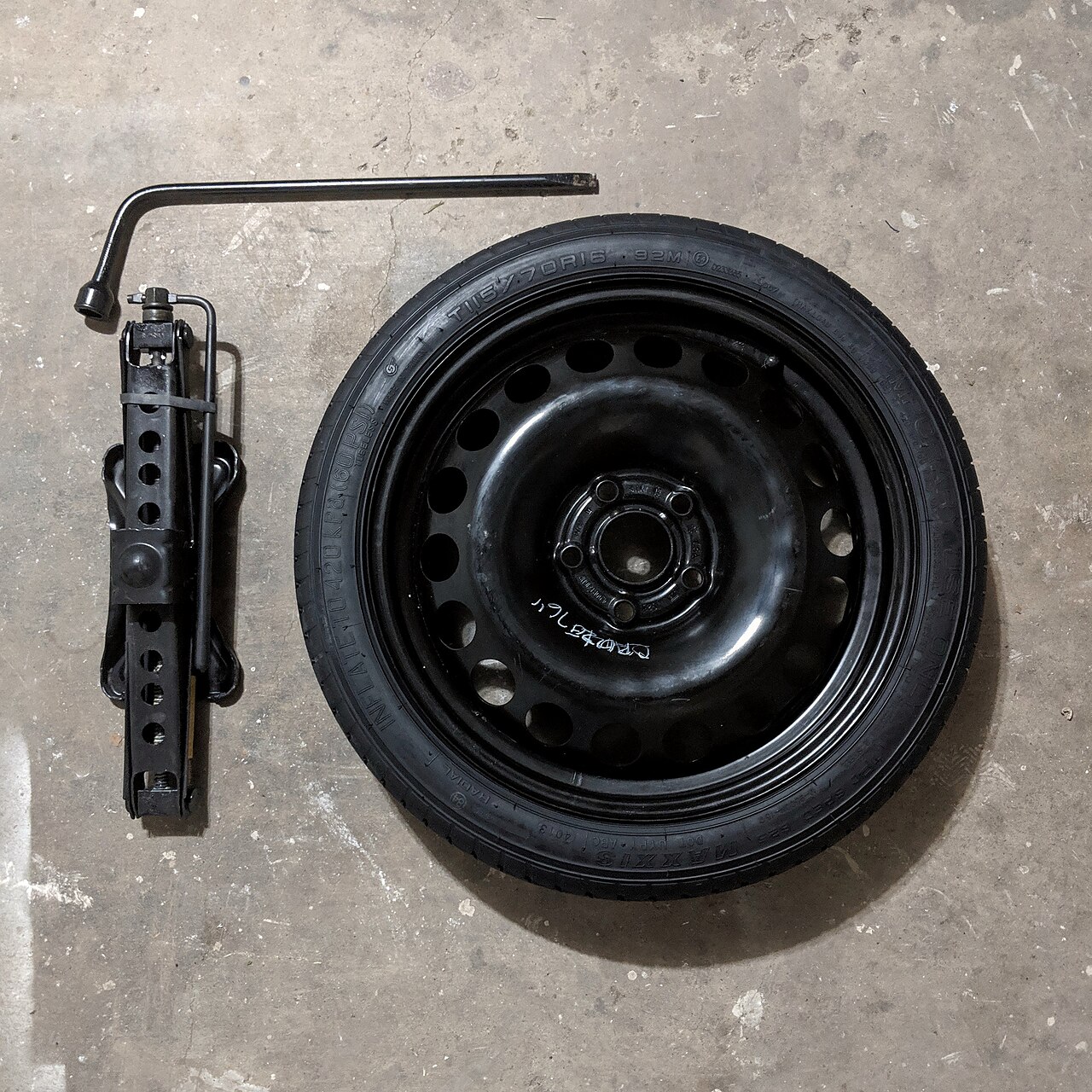
Look in the boot for the spare, the jack, and the wheel brace. Check the spare pressure once a month, along with the other four tyres, as AAA advises. A flat spare helps nobody.
If you bought your car second hand, a check for past accident damage before a long trip is time well spent. Monthly checks of the engine oil and coolant level belong in the same routine.
Park safely and secure the car
Your first job is to get the car somewhere safe. Slow down gently, avoid sudden braking, and pull fully off the road onto flat, firm ground. Soft verges and slopes make jacking dangerous, so keep looking until the surface feels level and solid.
Switch on the hazard lights as soon as you stop. At night, keep the headlights on if the battery allows, and put on a reflective vest if you carry one. Place a warning triangle well behind the car so approaching drivers get early notice.
Apply the handbrake firmly. Put an automatic car in Park, or a manual car in first gear. Ask every passenger to step out and move well away from traffic, ideally behind a barrier.
Nobody should stay in the car while it is on the jack.
Stop the car from rolling with chocks. Wedge a brick, a block of wood, or a purpose-made chock against the wheel that sits diagonally opposite the flat one. Goodyear advises bracing material in front of and behind a tyre that will not be lifted, which keeps the car steady while you work.
Loosen, lift, and swap the wheel
Work through the swap in this order. The key rule is to loosen the wheel nuts before you lift the car, because a wheel in the air spins freely and fights the wrench.
- Remove the hubcap or wheel cover if one is fitted, so you can reach the wheel nuts.
- Use the wheel brace to loosen each wheel nut by about a half turn, working counter-clockwise. Do not remove any nut yet.
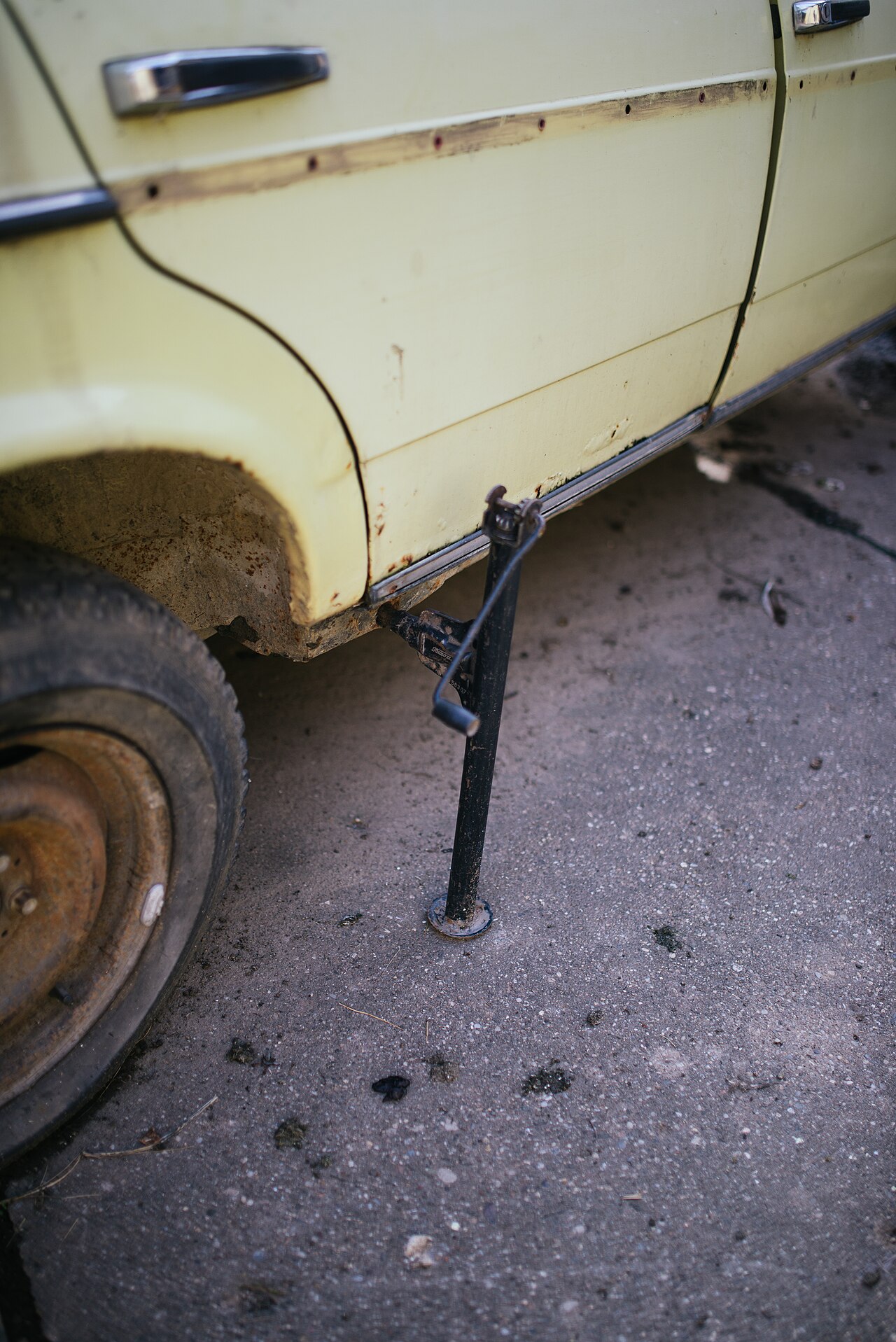
- Find the jacking point near the flat wheel in your owner manual. Every car has reinforced points, and using the wrong spot can damage the bodywork.
- Set the jack under the jacking point on firm ground. If the ground is soft, place a flat board under the jack so it cannot sink.
- Raise the car slowly until the flat tyre just clears the ground. Never put any part of your body under a car that rests only on a jack.
- Slide the removed flat tyre partly under the car, beside the jack, as a safety catch. If the jack slipped, the car would land on the tyre instead of on you.
- Remove the wheel nuts fully and pull the flat tyre straight off the hub. Lift the spare onto the hub, line up the holes with the studs, and tighten the nuts by hand.
- Lower the car until the spare touches the ground but still carries little weight. Tighten the nuts firmly in a criss-cross pattern, then lower the car fully and give each nut a final firm check.
Goodyear adds one more check. After driving for a few kilometres, stop and make sure the lug nuts are still tight. This quick stop catches a nut that settled as the wheel seated itself.
Driving on the spare
A spare tyre is a short-term fix, not a normal tyre. Many spares are smaller and narrower than the regular wheels, so handling, braking, and grip all change. Drive gently, leave extra space, and avoid sudden moves.
Follow the limit printed on the spare itself or in the owner manual. Space-saver spares carry a maximum speed and a short distance limit, and the limit is there because the tyre is built for temporary use. If your car has a full-size spare in good condition, normal driving is fine, but still check its pressure first.
Head straight to a repair shop or a tyre dealer. The flat tyre may be repairable if the puncture is in the tread and the tyre was not driven while flat. A sidewall cut or a blowout usually means a replacement.
While the car is in the shop, ask the technician to look at anything else you noticed, such as air conditioning that blows warm air.
What to do after the fix
Put the flat tyre and every tool back in the boot before you drive away. Check that the jack, brace, chocks, and triangle are all accounted for. A tool left at the roadside is a tool you will miss next time.
Get the spare checked too. If it is a space-saver, it needs its pressure checked and the car needs its original wheel refitted as soon as possible. If the flat tyre was repaired, ask the shop to confirm the repair and to check the wheel nuts with a torque wrench.
Restock anything you used. Replace an expired inflator kit, top up the washer fluid, and charge the torch. If the swap felt stressful, consider roadside assistance cover for the next trip.
Calling for help is always a fair choice on a fast road, in bad weather, or on soft ground.
Frequently asked questions
Can I drive slowly on a flat tyre to reach a safer spot?
Yes, a short crawl at low speed to reach flat, firm ground is safer than working beside fast traffic. Keep the distance as short as possible, because driving on a flat tyre can wreck the tyre and the rim. Stop as soon as you reach a safe place.
Should I loosen the wheel nuts before or after jacking the car?
Loosen them before you lift the car. A wheel on the ground stays still while you work the wrench, while a wheel in the air spins. Loosen each nut about a half turn, lift the car, then remove the nuts fully.
What if my car has no spare tyre?
Use the inflator kit if your car has one and the damage is a small tread puncture. The kit cannot fix sidewall damage or a blowout, so call roadside assistance in those cases. Check now whether your car carries a spare, a kit, or nothing.
How tight should the wheel nuts be?
Tighten them firmly in a criss-cross pattern, then recheck them after a few kilometres of driving. Your owner manual lists the exact torque figure for your car. A garage can check the torque with a wrench if you want a precise reading.
The bottom line
A roadside tyre swap is a calm sequence: park safe, secure the car, loosen before lifting, swap the wheel, and tighten in a criss-cross pattern. Check your kit before you need it, and treat the spare as a short trip to the repair shop. The whole job takes about 20 minutes once you have done it once.
Tags: flat tyre, roadside safety, spare tyre, car maintenance
Latest in Auto
- Check for past accident damage
- Check engine oil on newer cars
- Check coolant level and top up safely
- Why a car pulls to one side while driving
Subscribe to the Rive News newsletter for one practical guide each week.
Related stories

Why Does Tire Pressure Drop in Cold Weather?
Cold weather can cut tire pressure by 1 psi for every 10°F drop, thanks to the ideal gas law. Here is what happens inside the tire and what

Why Do Brake Rotors Warp, or Do They Actually?
Mechanics rarely see a truly warped rotor. The shudder usually comes from uneven pad deposits a few thousandths of an inch thick. Here

How to Buy a Used Car Without Getting Scammed: The Checklist
Over 450,000 cars a year have rolled-back odometers, NHTSA says. This checklist covers VIN checks, title washing, and the inspection that