
How to Check Engine Oil Without a Dipstick on Newer Cars
Key takeaways
- Many newer cars replaced the dipstick with an electronic oil level sensor read through the dashboard or infotainment menu.
- Park on level ground and follow your manual, since some systems need a warm engine and others need it off for hours.
- A level warning means top up soon, while a red pressure warning means stop driving and get help.
What changed under the hood
You open the hood, look for the familiar ring handle, and find nothing. That moment confuses plenty of drivers. A growing number of newer vehicles, especially from European makers, have dropped the physical dipstick entirely in favor of an electronic oil level sensor.
The job itself did not change. Engine oil still lubricates moving parts and carries heat away from bearings. The level still needs checking between services.
What changed is the tool. Instead of pulling a metal rod and reading a film of oil, you ask the car to report its own level. JD Power notes that some models have no physical dipstick at all, only an electronic sensor, and the reading comes through the vehicle settings.
This article explains how to check engine oil without a dipstick on newer cars, including the sensor check, the timing rules that make readings accurate, and the warning lights that need different responses.
First, confirm your car really has no dipstick
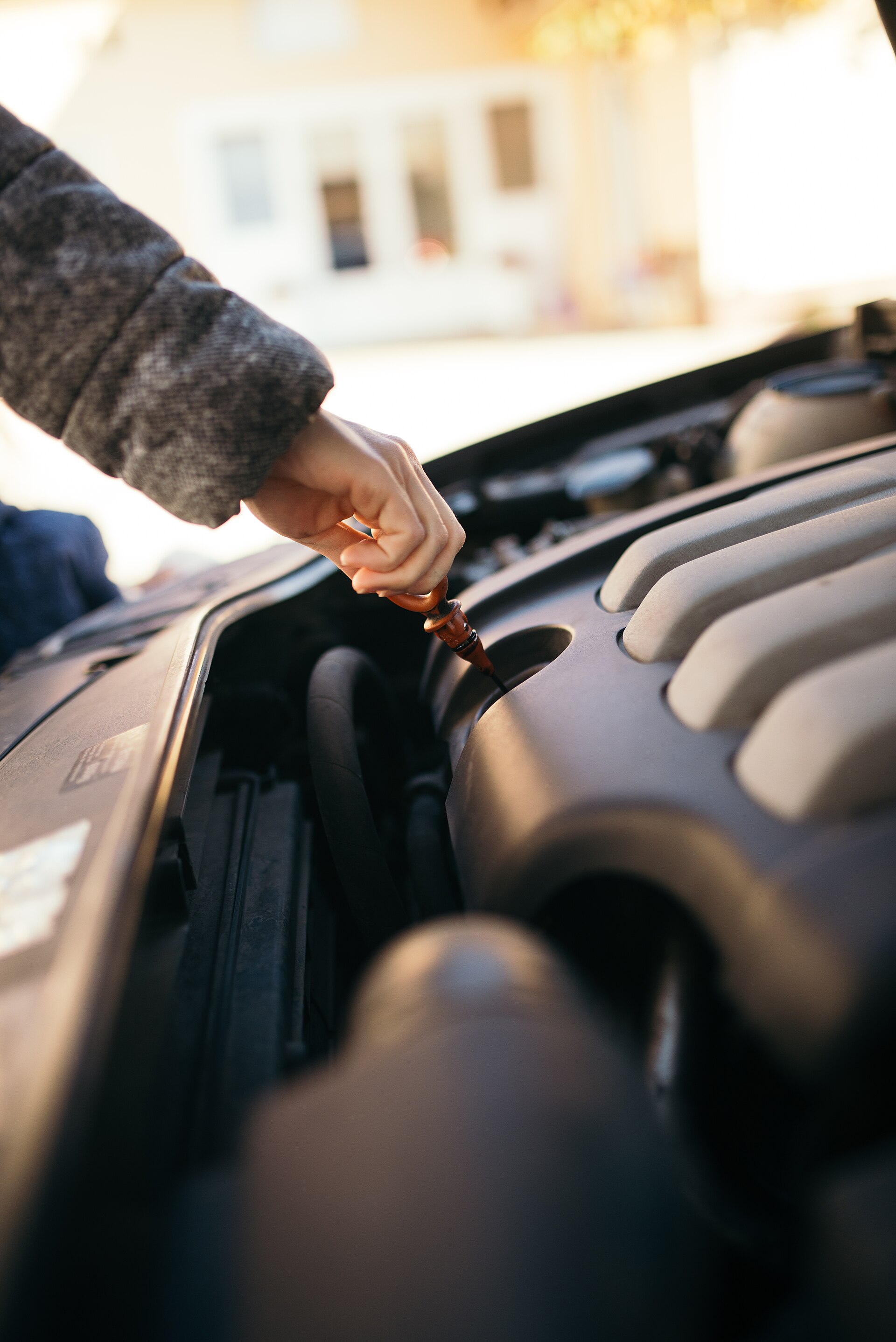
Before you assume the dipstick is missing, look properly. The handle is usually a bright yellow or orange loop near the front of the engine bay. Some cars also have a transmission fluid dipstick, so confirm you found the engine oil one.
Your owner's manual shows the exact location for your model, or confirms that your car never had one.
A quick search for your model plus "oil dipstick location" can settle it too. If the manual describes an electronic check, your car belongs to the dipstick-free group. Do not buy an aftermarket dipstick and push it into a sealed tube.
How the electronic oil level sensor works
The sensor sits inside the engine, in or near the oil pan, and measures how much oil is present. Some designs use ultrasonic waves that bounce off the oil surface. Others use capacitive sensing, where the change in capacitance between electrodes shifts with the oil level.
That reading is not always live. Lube Oil Sales warns that some systems only update the reading periodically rather than in real time. A fresh top-up may not show as full on the display for several drive cycles.
Step by step: the dashboard oil check
Follow these steps in order. The exact menu names vary by maker, so keep your manual nearby the first time.
- Park on level ground. A slope shifts oil to one side of the sump and skews the reading, just as it would with a dipstick.
- Set the parking brake and put the transmission in Park, or Neutral for a manual.
- Check the manual for the required engine state. Some systems want the engine at operating temperature and idling. Others want it off, and a few only give an accurate reading after the engine has been off for several hours.
- Turn the ignition on if the procedure calls for it, then open the vehicle menu. Look under headings such as Vehicle Status, Vehicle Info, Service, Car Settings, or Engine.
- Select Oil Level or Check Oil Level and follow the on-screen prompts. The car may ask you to wait while it measures.
- Read the result. A bar near the top, a high percentage, or an OK message means the level is fine. A low reading means add oil of the correct grade, in small amounts, and recheck.
Why timing and ground matter so much
Two details decide whether the reading means anything: a level surface and settled oil. After driving, oil clings to upper engine parts and cylinder walls. It needs time to drain back into the sump.
Motoring Chronicle advises waiting ten to fifteen minutes after a drive before a dipstick check, and the same logic applies to a sensor reading. A car that has just been driven hard can report a level that looks low simply because oil has not yet drained down.
Cold checks have their own rule. Some makers specify a cold check before the first start of the day. Others want the engine warm at idle.
What the display can and cannot tell you
The electronic readout answers one question: how much oil is in the engine. It does not tell you what the oil looks like. A dipstick lets a driver see color and feel texture.
Fresh oil runs amber to light brown and feels smooth. Oil that has gone black and thick carries more contamination than it should for its age.
A sensor cannot show you any of that. So dipstick-free owners should lean harder on service intervals, the oil life monitor, and any change in engine behavior. If the engine starts sounding different, or the car starts using oil faster than before, book a check instead of waiting for the next scheduled service.
Level warning versus pressure warning
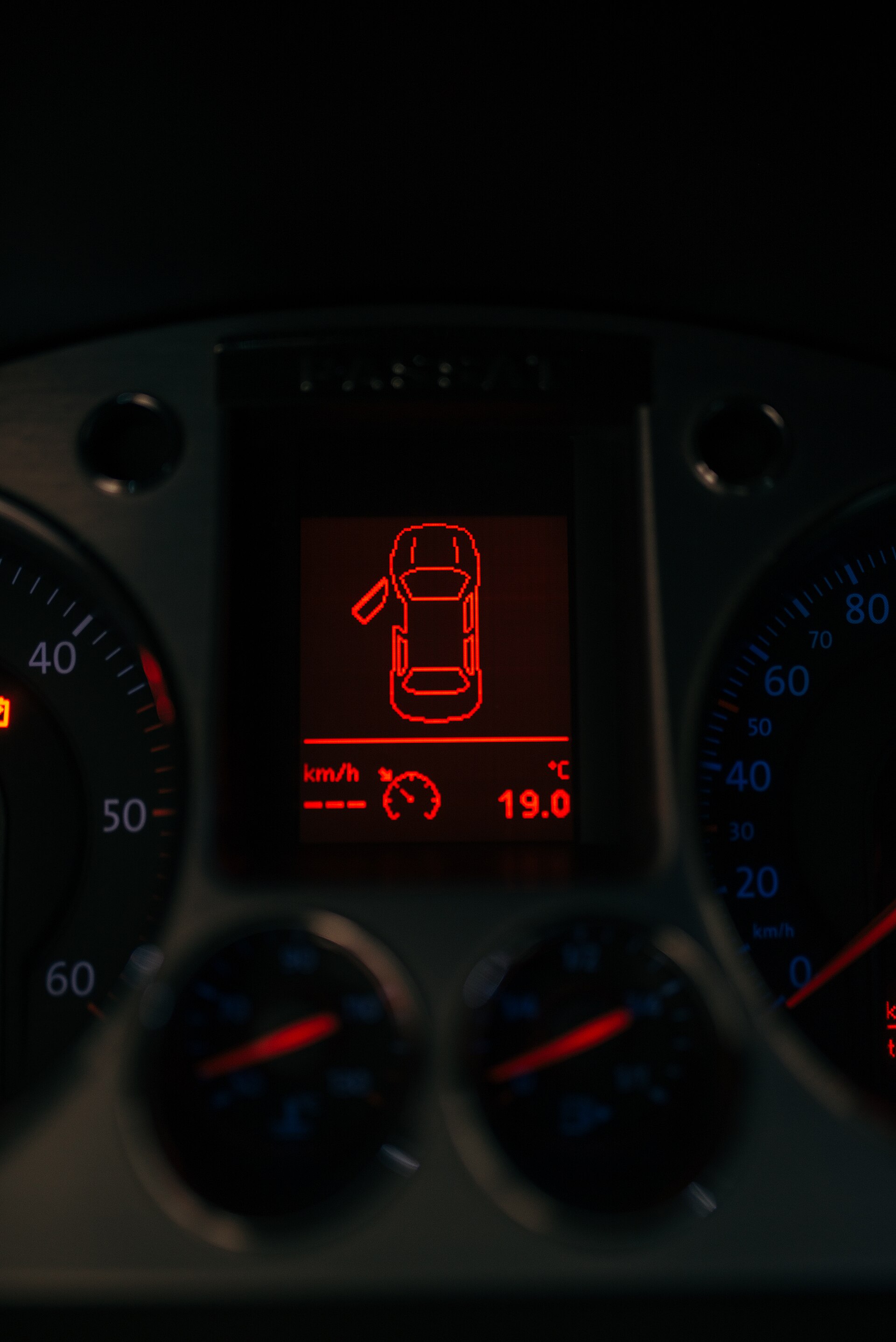
Dashboard oil lights cause real confusion, because they look similar and mean different things. An oil level warning means the reservoir itself is low. A top-up usually resolves it.
An oil pressure warning, often a red oil can icon, means the pressure delivering oil through the engine has dropped. That can happen even with a full reservoir if the pump, a clogged passage, or worn bearings are the cause.
The pressure warning is the urgent one. It means oil may not be reaching critical parts right now. Continuing to drive on it risks real engine damage within minutes, not miles.
If you are unsure which light you are seeing, treat it as the pressure warning and stop driving until the car has been checked. This distinction matters more on dipstick-free cars, because drivers cannot pull a dipstick to cross-check the level.
Topping up without a dipstick
When the display says the level is low, add oil in small amounts. The gap between minimum and maximum on a traditional dipstick is roughly a quart on many cars, which is a narrower margin than people assume. Pouring in a full bottle at once can push the level past maximum fast.
Use the viscosity grade your manual specifies, shown as a code like 5W-30 or 0W-20, and often printed on the oil filler cap. If you are topping up rather than doing a full service, match the grade already in the engine where possible. After each small pour, wait, then recheck through the menu.
On some systems the display will not refresh until the next drive cycle, so do not keep pouring while waiting for the number to move. Add a measured amount, stop, and recheck later.
Overfilling is a real mechanical problem, not a safety margin. Oil above the maximum line can get whipped into foam by the crankshaft. Foamy oil does not lubricate the same way clean oil does, because air is compressible and oil is not.
In severe cases, foam can trigger low oil pressure warnings even though the pan is technically full. The safe habit is small pours with rechecks between them.
How often should you check
The RAC recommends checking oil roughly every couple of weeks, and definitely before a long motorway trip, according to Motoring Chronicle. A healthy car should barely move its reading between services. One that burns oil, often visible as blue smoke on start-up, or leaks it externally, will drop measurably over a few hundred miles and deserves a proper look from a garage rather than repeated top-ups alone.
Set a simple routine. Check the level on the same day each week, or pair it with another habit, such as refueling. A litre of the correct branded oil typically costs about 8 to 15 pounds, roughly 11 to 20 dollars, and a full top-up rarely needs more than a litre between services.
Compare that with bearing damage from prolonged low-oil running, which can mean a replacement engine running into four figures. Five minutes of checking is cheap insurance, much like learning to change a flat tyre safely before you need the skill on a dark road.
Common problems and fixes
The display shows no reading at all. First, confirm the engine state matches the manual: some systems refuse to measure while the engine is cold, or while the car sits on a slope. Move to level ground, meet the stated condition, and try again.
If it still shows nothing, the sensor or its wiring may need a garage check.
The reading jumps between drives. Short trips, steep parking spots, and cold starts can all shift the number. Compare readings taken under the same conditions, such as a cold morning on flat ground, instead of mixing warm and cold checks.
The level drops fast between checks. A sudden drop can mean a leak or rising oil consumption. Look under the car for fresh spots, check the exhaust for blue smoke on start-up, and book a garage visit.
Keep topping up in the meantime so the engine never runs low while you wait.
FAQ
Can I add a dipstick to a car that came without one?
No, not in any reliable way. Cars built without a dipstick may have no tube for one, and aftermarket parts can damage seals or give false readings. Use the electronic check the maker provided.
How accurate is the electronic oil level sensor?
Accurate enough for routine checks when used under the conditions in the manual. It is slower to update than a dipstick, and it cannot show oil color or texture. Compare readings taken under the same conditions for the best picture.
Is the oil pressure light the same as the oil level light?
No. A level warning means the reservoir is low. A pressure warning means oil may not be reaching parts at the right pressure, even with a full reservoir.
Treat a pressure warning as urgent and stop driving.
The bottom line
A missing dipstick is not a missing feature. It is a different tool for the same job. Park level, meet the engine condition your manual states, open the vehicle menu, and read the result.
Add oil in small amounts, use the correct grade, and treat a red pressure warning as a stop-driving signal. Build the check into a weekly habit, and the electronic system will keep your engine protected just as well as the old metal rod did.
Tags: engine oil, car maintenance, dipstick, newer cars
Latest in Auto
- Check if a used car has had an accident
- Change a flat tyre safely at the roadside
- Check coolant level and top up safely
- Why your car air conditioning blows warm air
Subscribe for one practical car maintenance guide in your inbox each week.
Related stories

Why Does Tire Pressure Drop in Cold Weather?
Cold weather can cut tire pressure by 1 psi for every 10°F drop, thanks to the ideal gas law. Here is what happens inside the tire and what

Why Do Brake Rotors Warp, or Do They Actually?
Mechanics rarely see a truly warped rotor. The shudder usually comes from uneven pad deposits a few thousandths of an inch thick. Here

How to Buy a Used Car Without Getting Scammed: The Checklist
Over 450,000 cars a year have rolled-back odometers, NHTSA says. This checklist covers VIN checks, title washing, and the inspection that