
How cruise control keeps your speed steady on hills
By Rive News / Research desk | Rive News / Published October 26, 2026 at 9:00 AM PKT
Key takeaways
- Cruise control compares your actual speed to the speed you set, many times per second.
- On a hill, a speed drop becomes an error signal that opens the throttle wider.
- The system uses small, repeated corrections, not one big push, to avoid surging.
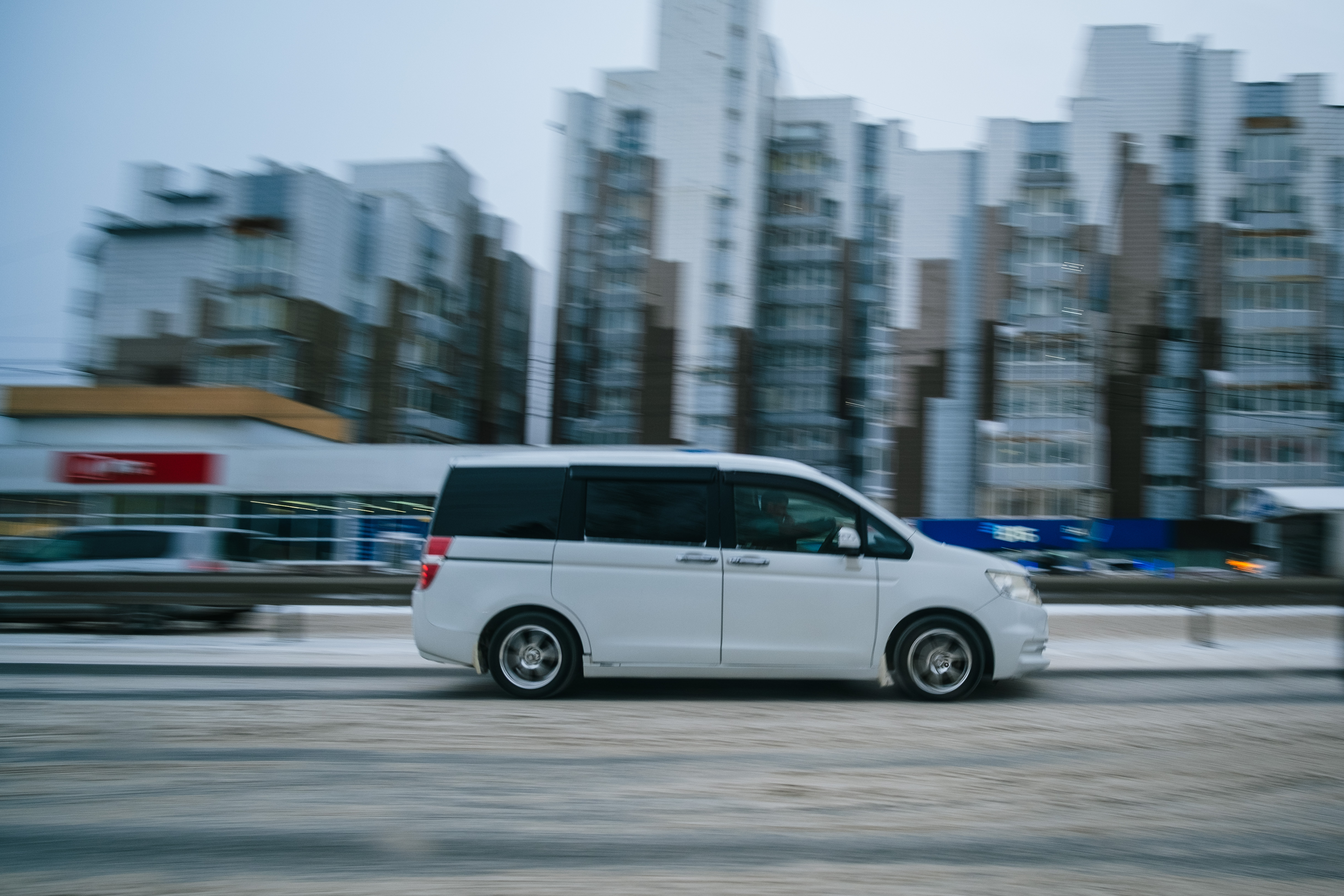
[A car holds a steady pace on a highway through rolling hills.] Photograph: Wikimedia Commons contributor
Image Credits: Wikimedia Commons
Cruise control is a system that holds a car at a speed the driver chooses, without the driver keeping a foot on the accelerator. The driver sets the speed, and the car takes over the small throttle adjustments that would otherwise fall to the driver's foot.
This article explains how that works on hills, including the speed sensor, the feedback loop, the throttle correction, and why the system sometimes gives up on very steep grades. It also covers the history of the idea and the limits every driver should know.
What cruise control actually controls
Cruise control does not steer the car, and it does not watch the road ahead. In a standard, non-adaptive system, it controls one thing only: the engine's throttle opening, which sets how much power the engine makes.
The driver picks a target speed, called the set point. A vehicle speed sensor, usually reading rotation from the transmission output shaft or a wheel hub, reports the car's actual speed to a control unit. That control unit is the part that does the comparing and deciding.
According to Engineer Fix, in its explainer on how cruise control works, the control module continuously compares the actual speed reported by the sensor with the programmed speed. The difference between the two is the error signal, and that signal decides what the system does next.
The feedback loop, step by step
A hill changes the forces on the car before the driver notices anything. Gravity pulls the car back as the road rises, so the car begins to slow. The sensor picks up that drop almost at once.
The control unit sees actual speed fall below the set point and generates a positive error signal. It then commands the throttle to open wider, which raises engine power until the car climbs back to the set speed. On the way down the other side, the process runs in reverse: speed rises above the set point, the error signal turns negative, and the throttle closes to cut power.
This cycle of sensing, comparing, and adjusting repeats constantly, many times per second. That repetition is what makes it a closed feedback loop rather than a one-time setting. The car is never simply locked at a throttle position.
It is always measuring and correcting.
Why the corrections stay small
A good control system does not slam the throttle open the moment speed dips by a fraction. Engineer Fix notes that the system modulates the throttle in small, calculated increments to prevent noticeable surging or hunting for the correct speed.
The calculation behind that behaviour is usually a PID controller, short for proportional, integral, and derivative control. The proportional part scales the correction to the size of the current error, so a bigger speed drop gets a bigger throttle change. The integral part tracks past errors, which stops the car settling permanently a little above or below the set speed.
The derivative part watches how fast the error is changing, which damps overshoot.
The California Institute of Technology's cruise control example shows the same idea in a simulation: when the slope changes, the controller senses the velocity error and acts to restore the speed, with steady speed reached within about 15 seconds regardless of the car's mass varying by a factor of 3. That robustness matters, because a car full of passengers behaves differently from an empty one.
What changes on a steep hill
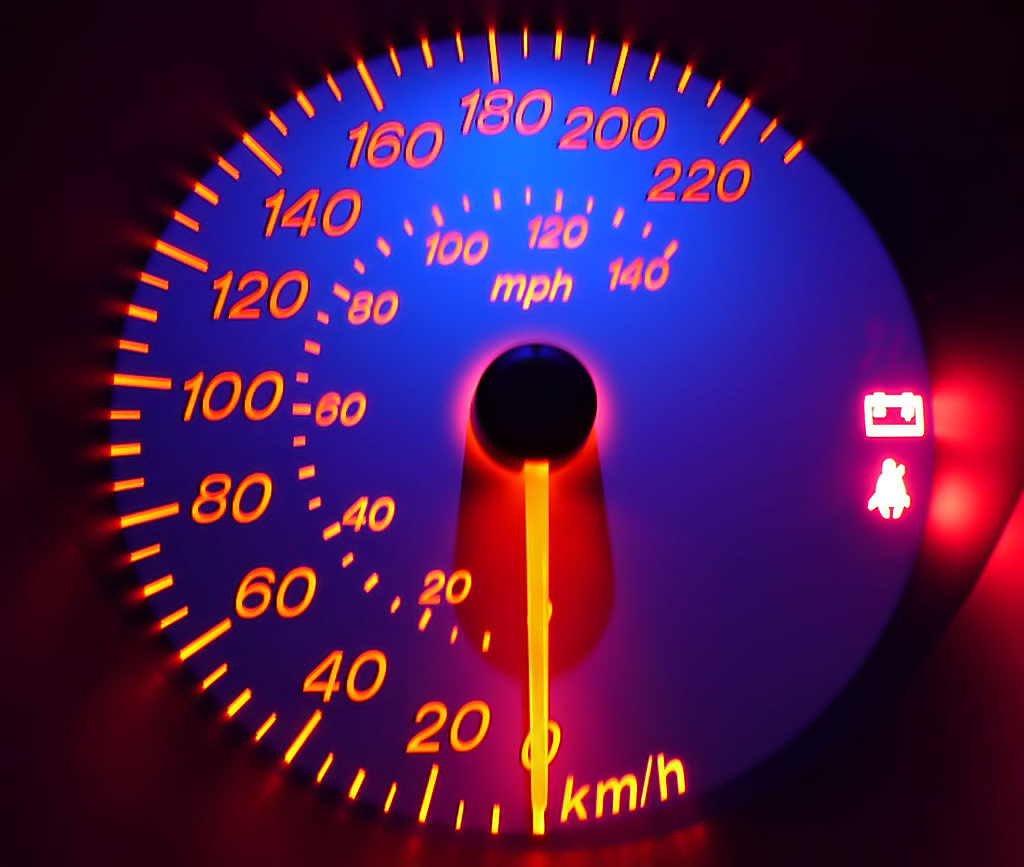
[A car dashboard, where the driver sets the speed the system must hold.] Photograph: Wikimedia Commons contributor
Image Credits: Wikimedia Commons
On a gentle grade, throttle alone is usually enough. The engine has spare power, the throttle opens a little wider, and the car holds speed with barely a wobble on the speedometer.
On a steep or long climb, the system may run out of easy options. If the throttle is already wide open and the car still slows, the control unit may command the transmission to downshift, which raises engine speed and puts more torque at the wheels. Some systems will simply accept a small speed loss rather than thrash the gearbox.
There is also a safety cutoff. If speed falls far below the set point, for example on a grade too steep for the engine in the selected gear, many systems disengage and hand control back to the driver. Pressing the brake or clutch, or hitting cancel, disengages it at once.
That handoff is deliberate: the system is a convenience aid, not a substitute for the driver on a grade the car cannot hold.
Downhill: the other half of the job
Going downhill, gravity works for the car instead of against it, and speed wants to rise past the set point. The control unit responds by closing the throttle, cutting engine power so the car stops accelerating.
Standard cruise control usually cannot apply the service brakes. On a long, steep descent, closing the throttle may not be enough, and the car can still gain speed. Some systems add engine braking by downshifting, which uses the engine's resistance to slow the car.
Adaptive cruise control systems, which use radar to follow traffic, are a separate feature and can brake, but a basic system should never be relied on to hold speed down a steep hill.
A short history of the idea
Modern cruise control traces to inventor Ralph Teetor, a blind mechanical engineer. According to the National Inventors Hall of Fame, Teetor began developing a speed control device after rides in which his driver sped up and slowed down while talking, and he filed his first speed control patent in 1948.
The device, trademarked as the Speedostat, reached production in Chrysler's 1958 luxury models, marketed as Auto-Pilot. Cadillac offered it in 1959 under the name Cruise Control, and that name stuck. Early versions used mechanical linkages and vacuum servos to move the throttle cable.
Modern cars use electronic throttle control, where the control unit sends a signal straight to a throttle motor, which is faster and more precise.
How to use it well on hills
Use cruise control on open highways with steady traffic, where speed changes come from grades rather than other cars. Set a speed you can actually hold, and stay ready to take over on steep descents or in heavy traffic.
Watch for two warning signs. If the car keeps surging, speeding up and slowing down in waves, the grade or load may be beyond what smooth control can handle. If speed drops steadily despite the system working, downshift manually or take over rather than letting the car labour.
And never use cruise control as a way to stop paying attention: it holds speed, not lane position, and it cannot see a stopped queue ahead.
How does cruise control know the car is slowing down?
A vehicle speed sensor measures wheel or transmission rotation and reports actual speed to the control unit. The control unit compares that reading with the set speed, and any gap becomes the error signal that drives a throttle correction.
Why does my car downshift on hills with cruise control on?
Downshifting raises engine speed and torque, giving the car more pulling power when throttle alone cannot hold speed. It is a normal part of the system working on a steep grade, not a fault.
Can cruise control hold speed down a steep hill?
Not always. Standard systems cut throttle and may downshift for engine braking, but they generally cannot apply the brakes. On a long, steep descent the car may still gain speed, and the driver should brake manually.
Does cruise control save fuel on hills?
It can help by avoiding the overcorrections a tired driver makes, but on hilly roads the benefit shrinks. Holding an exact speed uphill costs fuel, and some drivers save more by letting speed drift slightly on climbs. The main benefit on hills is steadiness, not guaranteed savings.
The bottom line
Cruise control keeps speed steady on hills by measuring actual speed, comparing it with the speed you set, and adjusting the throttle in small, repeated steps. Uphill, a speed drop opens the throttle wider. Downhill, a speed rise closes it.
When the grade is too steep, the system may downshift or hand back control, which is the safe outcome.
If you remember one thing, make it this: cruise control is a loop, not a lock. It watches, compares, and corrects, all the way up the hill and down the other side.
Tags: cruise control, driving, car technology
Rive News's research desk covers everyday technology and how it works, drawing on manufacturer documentation and published engineering explainers.
Related
- How cruise control maintains speed uphill
- Why your car shakes when you brake
- How to drive safely in heavy rain
- Why tire pressure drops in cold weather
Subscribe to the Rive News newsletter for one practical explainer each week.
Rive News publishes research-based explainers; facts are checked against public sources before publication.
Related stories
Why Does Tire Pressure Drop in Cold Weather?
Cold weather can cut tire pressure by 1 psi for every 10°F drop, thanks to the ideal gas law. Here is what happens inside the tire and what
Why Do Brake Rotors Warp, or Do They Actually?
Mechanics rarely see a truly warped rotor. The shudder usually comes from uneven pad deposits a few thousandths of an inch thick. Here
How to Buy a Used Car Without Getting Scammed: The Checklist
Over 450,000 cars a year have rolled-back odometers, NHTSA says. This checklist covers VIN checks, title washing, and the inspection that