
How Cruise Control Maintains Speed Uphill
Key takeaways
- Cruise control compares actual speed with the set speed many times per second and opens the throttle when the car slows.
- Most systems use PID control, which blends the current speed error, the accumulated error over time, and the rate of change.
- On steep hills the car may also downshift, and adaptive systems add radar to manage the car ahead.
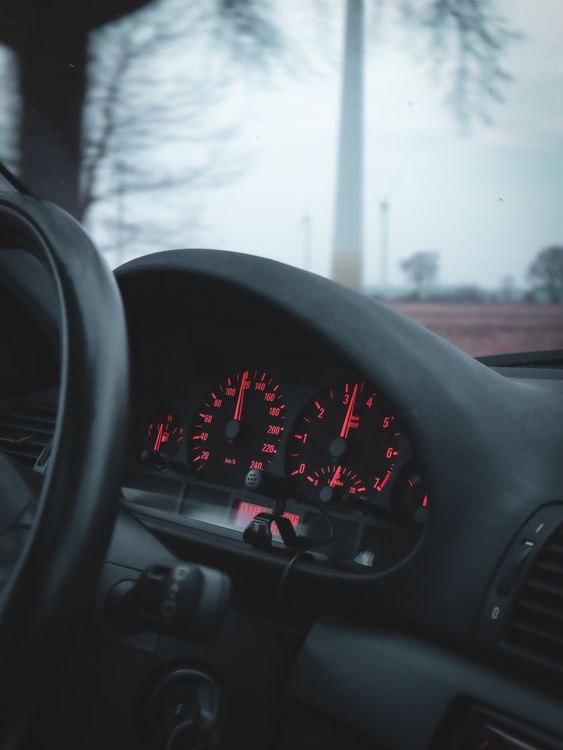
Cruise control maintains speed uphill by watching the car speed, noticing the loss as the hill loads the engine, and opening the throttle to make up the difference. The driver sets a target speed. The system then works as a feedback loop that keeps nudging the throttle so the car stays near that target.
This article explains how cruise control maintains speed uphill, including the sensors involved, the PID control loop, what happens on steep grades, and how adaptive cruise control changes the picture. It also covers the limits of the system and what to do when it cannot hold speed.
What cruise control actually controls
Cruise control does not press a magic button that locks the car to one speed. It controls the throttle, which controls how much air and fuel reach the engine. More throttle means more power.
Less throttle means less power.
On flat ground, the throttle opening needed to hold a steady speed stays fairly stable. On an uphill grade, gravity pulls back on the car, so the same throttle opening no longer holds the same speed. The car starts to slow down.
The system must add throttle to replace the lost speed.
According to HowStuffWorks, the brain of a cruise control system is a small computer that connects to the throttle control and several sensors. It reads the speed signal, the throttle position, and the driver controls. That speed signal is the most important input because every correction starts with it.
The driver stays in charge of steering, braking, and choosing when the system runs. Cruise control only manages the throttle while it is engaged. A tap on the brake pedal switches it off at once, as described in the Team-BHP summary of the HowStuffWorks explanation.
The feedback loop on a hill
A feedback loop keeps comparing two numbers. One is the set speed the driver chose. The other is the actual speed the car is travelling right now.
The gap between them is called the error.
When the car starts up a hill, the error grows in one direction. Actual speed falls below set speed. The controller responds by opening the throttle further.
When the car reaches the crest and starts downhill, the error flips. Actual speed rises above set speed, so the controller eases the throttle back.
This loop runs again and again while cruise control stays on. The driver feels the result as a car that holds speed with little fuss. The system does not wait for a large speed drop before acting.
It corrects small errors early, so the car rarely drifts far from the target.
A useful way to picture it is a driver who glances at the speedometer every second and adjusts the accelerator by a small amount each time. Cruise control does the same job, but it checks far more often and it never gets distracted.
PID control: the three parts of the correction
Most cruise control systems use a scheme called proportional-integral-derivative control, known as PID control. HowStuffWorks explains that the system calculates three factors and adds them to set the throttle position. Each factor handles a different part of the problem.
The proportional factor reacts to the current error. If the car is far below the set speed, the throttle opens wide. If the car is only slightly below the set speed, the throttle opens a little.
In the example HowStuffWorks gives, a car set at 60 mph but travelling at 50 mph gets a wide throttle opening. At 55 mph, the opening is only about half as much.
The integral factor tracks the accumulated error over time. It measures the gap between the distance the car actually travelled and the distance it would have travelled at the set speed. This factor is the one that really helps on hills.
If the car stays slightly slow for a while, the integral term keeps growing and pushes the throttle further open.
The derivative factor watches the rate of change, which is acceleration. It helps the system react fast when conditions change. If the car starts to slow down, the derivative term spots the deceleration before the speed has dropped much.
It then adds throttle early, which keeps the response smooth instead of jerky.
Together, the three terms balance speed, patience, and quick response. Proportional control handles the present gap. Integral control handles the past shortfall.
Derivative control anticipates the near future.

Why hills are the hard case
Flat roads are easy for cruise control because the load on the engine barely changes. Hills change the load all the time. A gentle slope needs a little more throttle.
A steep slope needs a lot more. A rolling road needs constant adjustment in both directions.
The integral term matters most here. Proportional control alone can leave a small steady error on a long hill. The car might sit a little below the set speed because the throttle opening that proportional control asks for is not quite enough.
The integral term keeps adding correction until that lingering gap closes.
Downhill sections create the opposite problem. Gravity speeds the car up, so the system closes the throttle. On a gentle descent, closing the throttle is enough.
On a steep descent, even a closed throttle may not slow the car. Basic cruise control does not apply the brakes in most older cars, so the car can exceed the set speed on a steep downhill run. Newer systems may brake lightly, but drivers should still watch downhill speed.
That is one reason a car may feel different on the same hill at different speeds.
Downshifts and engine power on steep grades
On a steep hill, opening the throttle may not be enough. The engine may already be near the useful end of its power in the current gear. At that point, an automatic gearbox can downshift to give the engine more leverage.
A downshift raises engine speed and moves the engine into a stronger part of its power range. The car can then climb without losing as much speed. Drivers often hear this as the engine note rising while the car holds speed up a grade.
The same idea applies to small engines and heavy loads. A car with four passengers and luggage needs more power to climb than the same car with one person aboard. Cruise control cannot add power the engine does not have.
It can only ask for all of it and pick the best gear available.
If the hill is too steep for the car, the system will fall short. Speed will drop even with the throttle wide open. That is not a fault in most cases.
It is the physical limit of the car on that grade.
Adaptive cruise control adds traffic to the mix
Adaptive cruise control builds on the same speed holding loop. It adds a forward-looking radar or camera that watches the vehicle ahead. When the road is clear, it behaves like normal cruise control.
When traffic slows, it slows the car to keep a safe gap.
On hills, adaptive cruise control must juggle two goals at once. It must hold the set speed and it must keep distance from the car ahead. If the car ahead slows on a climb, the system eases off even though the hill itself would call for more throttle.
When the road clears again, it speeds back up to the set speed.
Team-BHP notes that adaptive systems use forward-looking radar behind the grille to detect the speed and distance of the vehicle ahead. The system can then send a signal to the engine or braking system to slow down. That braking ability also helps on downhill sections, where basic cruise control may let speed creep up.
Limits, safety, and when to switch it off
Cruise control has a minimum engagement speed. The Team-BHP summary notes that the system in the HowStuffWorks example will not engage below 25 mph (40 kph). Many modern cars have their own thresholds, and drivers should check the manual for the exact figure on their model.
Drivers should switch cruise control off in heavy traffic, on wet or icy roads, and on winding roads. The system holds speed, but it does not steer, watch for hazards, or judge grip. On a slippery hill, holding speed matters less than keeping traction.
It is also worth switching off on very steep or long descents. If the car keeps gaining speed downhill, the driver should brake and take over. Cruise control is a comfort aid for steady roads, not a substitute for active driving on hard grades.
Another limit is reaction to sudden changes. The system reacts to speed errors, not to the hill ahead. It cannot see a steep climb coming.
It only responds once the car starts to slow. That is why a brief dip in speed at the foot of a hill is normal, even in a well tuned system.
FAQ
Does cruise control use more fuel uphill?
It can use more fuel on a climb than a gentle-footed driver, because it holds the set speed firmly instead of letting speed drift down. Over a whole trip, the difference is usually small, and steady speed often helps economy on flat and rolling roads.
Why does my car downshift on hills with cruise control on?
The downshift gives the engine more leverage so it can hold speed on the grade. It is a normal response when throttle alone is not enough to keep the car at the set speed.
Can cruise control brake on a downhill?
Basic cruise control in many older cars cannot brake, so speed may rise on a steep descent. Many newer and adaptive systems can apply light braking, but drivers should still monitor downhill speed and take over when needed.
The bottom line
Cruise control holds speed uphill by comparing actual speed with the set speed and opening the throttle to close the gap. PID control blends the present error, the accumulated shortfall, and the rate of change into one smooth correction. Downshifts add power when throttle alone is not enough, and adaptive systems add traffic awareness on top.
The system has real limits on steep grades and slippery roads, so drivers should stay alert and take over when conditions turn hard.
Tags: cruise control, driving, car technology, hills
Latest in Auto
- How Does Regenerative Braking Feel Different From Normal Brakes
- Why Do Tires Wear Unevenly on the Inside Edge
- Why Does My Car Drift Right on Straight Highways
- Why Do Manual Cars Stall and What Is the Biting Point
Subscribe for one clear explainer like this in your inbox each week.
Related stories

Why Does Tire Pressure Drop in Cold Weather?
Cold weather can cut tire pressure by 1 psi for every 10°F drop, thanks to the ideal gas law. Here is what happens inside the tire and what

Why Do Brake Rotors Warp, or Do They Actually?
Mechanics rarely see a truly warped rotor. The shudder usually comes from uneven pad deposits a few thousandths of an inch thick. Here

How to Buy a Used Car Without Getting Scammed: The Checklist
Over 450,000 cars a year have rolled-back odometers, NHTSA says. This checklist covers VIN checks, title washing, and the inspection that