
Why does a loose gas cap trigger the check engine light?
Key takeaways
- A loose gas cap breaks the fuel system's sealed vapor circuit, and the computer reads the pressure loss as an EVAP leak.
- The usual codes are P0455 for a large leak, P0442 for a small one, and P0457 specifically for a loose or missing cap.
- Tightening the cap until it clicks three to four times fixes most cases, and the light clears after a few passing drive cycles.
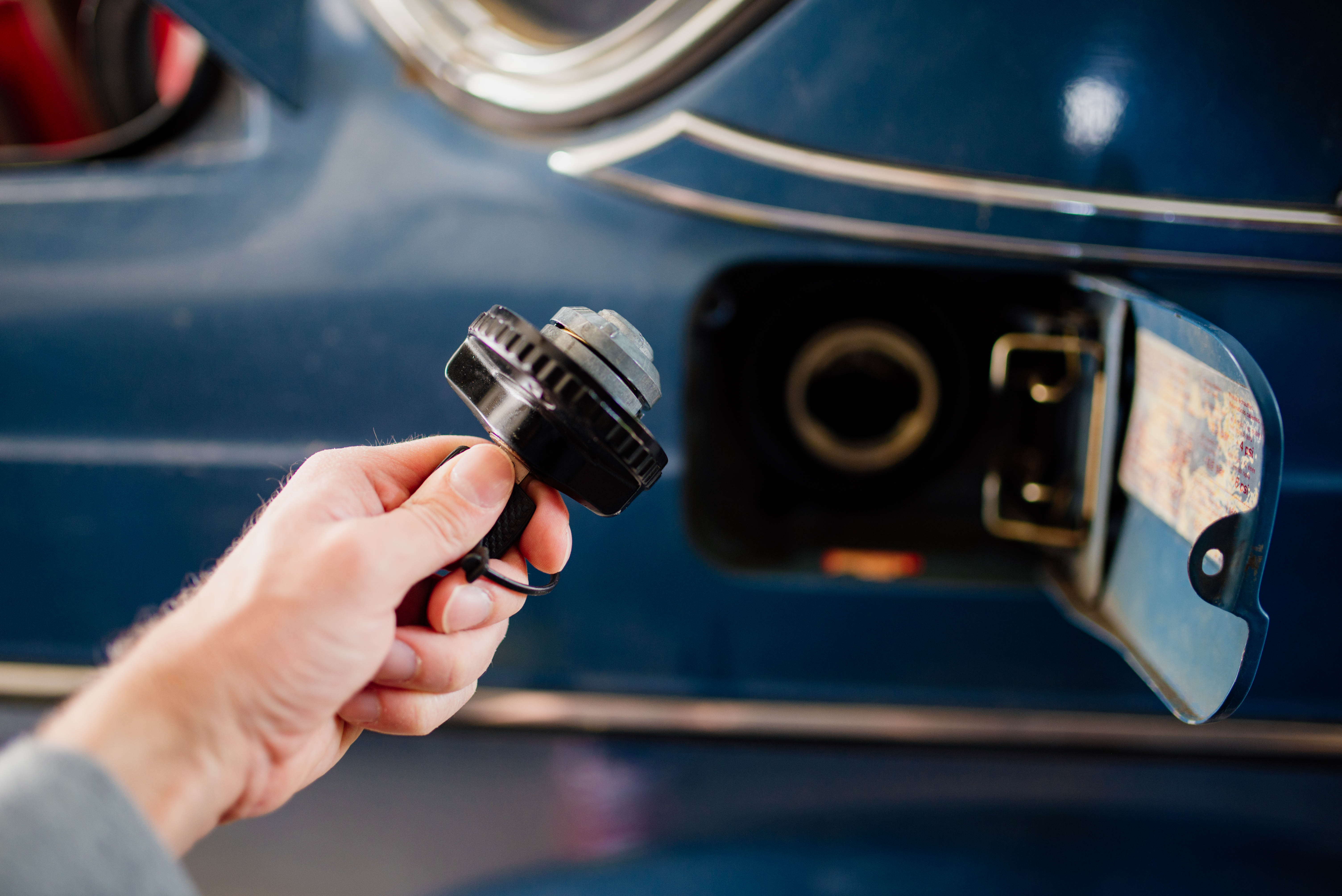
The gas cap is the most-handled seal in the evaporative emissions system, and the most common failure point. Photograph: Shixart1985/Wikimedia Commons
Image Credits: Wikimedia Commons / Shixart1985
It is the most anticlimactic dashboard warning in motoring. The check engine light glows, the heart sinks, and the cause turns out to be a cap that was not twisted on tightly after refueling. This is not a fluke.
A loose or worn gas cap is the single most common cause of a check engine light in the United States, accounting for roughly one in five EVAP-related codes triggered each year, according to Steer.
The reason is structural, not incidental. The gas cap is the final seal in a carefully sealed emissions system, and the car's computer is specifically designed to catch it when that seal fails. This article explains what the EVAP system does, how the car tests it, which trouble codes a loose cap produces, and how to clear the light.
The EVAP system and its sealed design
Gasoline constantly evaporates. The Evaporative Emission Control (EVAP) system exists to capture those vapors and route them to the engine to be burned, instead of letting raw hydrocarbons escape into the atmosphere. Federal regulations under the Clean Air Act require vehicle fuel systems to prevent vapor leaks, which is why the whole circuit, tank, vapor lines, charcoal canister, and filler neck, is sealed by design.
The gas cap is the most-accessed seal in that system. It gets opened at every fill-up, handled by hand, exposed to dirt and weather, and closed again. As Steer puts it, it is also the cheapest and most common failure point.
When the cap is left loose, cross-threaded, or fitted with a cracked rubber gasket, the system can no longer hold its test pressure or vacuum.
It helps to reset expectations about what the light means here. A loose cap does not cause a misfire or any mechanical engine problem, a point EngineerFix stresses.
The check engine light in this scenario is an emissions alert, not a notification of engine breakdown. The car usually drives perfectly normally.
How the car detects the leak
The engine control module does not watch the gas cap directly. Instead, it periodically runs an EVAP monitor, a self-test that seals the fuel system and checks whether it holds pressure.
On most systems, the module closes the canister vent valve, opens the purge valve to draw engine vacuum into the tank, and then monitors the fuel tank pressure sensor. If the pressure never reaches its target or bleeds off almost immediately, the module stores a code and turns on the light.
The monitor runs under specific conditions: a cold start, fuel level between roughly a quarter and three-quarters of a tank, engine fully warmed, and stable driving. Identifix notes that because of these conditions, the code may take a day or two to set after the leak appears, and it may not set on every drive. That delay explains why the light sometimes appears days after a sloppy refueling stop.
The system's sensitivity is remarkable. Federal OBD rules require manufacturers to demonstrate detection of leaks as small as a 0.020-inch orifice. A loose cap is a far larger opening than that, which is why the computer almost always catches it.
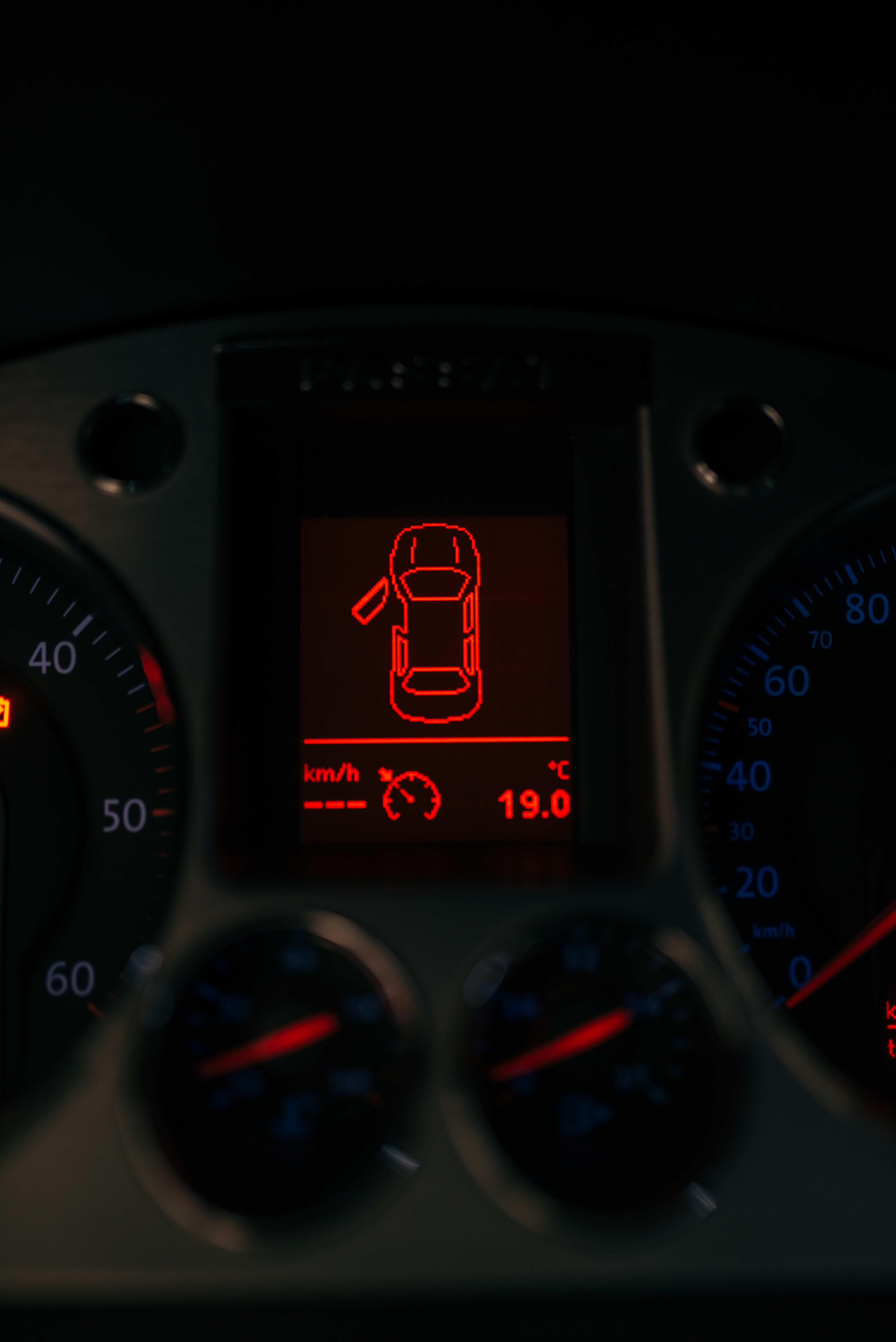
The check engine light is the primary and often the only symptom of an EVAP leak code. Photograph: Shixart1985/Wikimedia Commons
Which codes a loose cap produces
EVAP codes live in the P04xx family, and they categorize the leak by size. A loose or missing gas cap most commonly triggers P0455, defined as Evaporative Emission System Leak Detected (Gross Leak). Identifix explains that a P0455 leak is larger than 0.040 inches in diameter, or effectively no seal at all, which matches a cap left off after refueling.
A cap that is merely loose, or one with a cracked or worn gasket, may instead set P0442, the small-leak code, equivalent to an opening around 0.040 inches. Many late-model vehicles also use P0457, which is specifically calibrated to flag a loose cap before the broader EVAP monitor triggers P0442 or P0455. According to Steer, when P0457 appears alone, the cap is the culprit nine times out of ten. P0456 covers very small leaks around 0.020 inches, usually a hairline hose crack rather than a cap issue.
Reading the exact code with an OBD-II scanner narrows the diagnosis fast. A lone P0457 points at the cap.
A P0455 could be the cap or a disconnected line, a stuck-open valve, or a damaged canister. A P0442 or P0456 with a known-good cap points deeper into the system.
The fix and how the light clears
Start with the obvious. Remove the cap, inspect the rubber gasket for cracks or debris, wipe the filler neck sealing surface, and reinstall the cap until it clicks three to four times. If the gasket is cracked or the cap no longer clicks, replace the cap.
Rohnert Park Transmission reports that roughly 40 percent of all P0455 codes they see are resolved with a gas cap replacement costing less than 25 dollars, and the general repair range runs from about 20 dollars for a cap to 200 to 600 dollars for deeper component replacement.
The light will not switch off instantly. The stored code must clear from the module's memory, which happens in one of two ways. An OBD-II scanner can erase it immediately.
Without a scanner, federal OBD regulations allow the module to turn the light off after three consecutive drive cycles in which the EVAP test passes, and it erases the stored code after roughly 40 warm-up cycles without a repeat, according to Identifix. In practice, that means several days of normal driving.
One caution: if you tighten or replace the cap and the code returns within a week, the cap was not the root cause. The leak is elsewhere in the EVAP system, such as a failing purge solenoid or vent valve, and a smoke test at a shop is the standard next step. Also note that an active emissions code causes an automatic smog check failure in California, so clear it before an inspection.
Drivers who want to understand their dashboard better can also read our guide on what a lane keep assist system does versus lane centering, and anyone watching fuel costs may like how driving slower affects fuel economy.
Will the check engine light go off by itself after tightening the gas cap?
Yes, usually within a few days of normal driving. The module must run the EVAP test and see it pass across three consecutive drive cycles before it switches the light off. An OBD-II scanner clears it immediately.
Can a loose gas cap cause a failed emissions test?
Yes. An active check engine light or stored emissions code causes an automatic smog check failure in states with emissions inspections, regardless of actual tailpipe readings. Fix the leak and clear the code first.
How tight should the gas cap be?
Tighten until it clicks three to four times. That ratcheting click is the cap's torque limiter confirming a proper seal. Stopping short of the clicks is the most common way the problem starts.
Does a loose gas cap waste fuel?
It lets fuel vapors escape, which is an emissions problem rather than a large fuel-economy problem. The bigger cost risk is ignoring a real EVAP fault that masks itself behind the familiar cap story.
The bottom line
A loose gas cap triggers the check engine light because the car's EVAP monitor is doing exactly what regulators designed it to do: prove the fuel system is sealed, and report when it is not. Check the cap first, click it properly, give the car a few drive cycles, and the light usually resolves itself. If it comes back, the system is telling you the leak is real and somewhere deeper, and that is when a professional diagnosis earns its keep.
Latest in Automotive
- Lane keep assist vs lane centering: the difference
- Does driving slower everywhere improve fuel economy?
- How to clean cloudy car headlights
Subscribe for weekly car diagnostics explainers in plain English.
Related stories

Why Does Tire Pressure Drop in Cold Weather?
Cold weather can cut tire pressure by 1 psi for every 10°F drop, thanks to the ideal gas law. Here is what happens inside the tire and what

Why Do Brake Rotors Warp, or Do They Actually?
Mechanics rarely see a truly warped rotor. The shudder usually comes from uneven pad deposits a few thousandths of an inch thick. Here

How to Buy a Used Car Without Getting Scammed: The Checklist
Over 450,000 cars a year have rolled-back odometers, NHTSA says. This checklist covers VIN checks, title washing, and the inspection that