
Why Do Brake Lights Turn On Before You Feel the Car Slow
Key takeaways
- Brake lights trigger from a simple pedal switch, so they light up the instant your foot moves, before the brake pads bite.
- LEDs reach full brightness in under 100 milliseconds, while incandescent bulbs need about 50 milliseconds just to show light.
- A Road Safety Trust study found LED brake lights cut followers' reaction times by about 170 milliseconds versus bulbs.
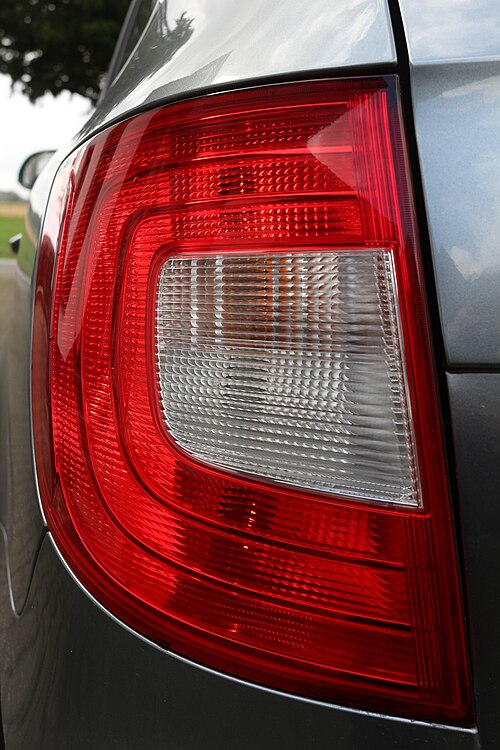
The brake light is wired to fire before the brakes themselves engage. Photograph: Wikimedia Commons contributor
Image Credits: Wikimedia Commons
Watch a car ahead in traffic and you will notice something odd: its brake lights glow a beat before you sense it slowing. The lights are not predicting the stop.
They are simply wired to react faster than the brakes can. This article explains the pedal-switch timing, why bulb technology changes the gap, and what research says about those milliseconds.
The pedal switch fires first
A brake light circuit is about as simple as car electronics get. The brake pedal carries a small switch, and pressing the pedal closes it, sending current straight from the battery through a fuse to the rear lamps.
The lights have no connection to the hydraulic braking system itself. They respond to your foot, not to the brake pads.
That is why the lights can glow even with the engine off. The switch is a purely electrical trigger.
Your foot travels only a few millimeters before the switch closes, while the master cylinder still needs to build hydraulic pressure, squeeze the pads against the rotors, and start converting speed into heat. That mechanical sequence takes noticeably longer than closing a switch.
So the timeline in a normal stop runs like this: your foot moves, the switch closes, the lamps light, and then the car begins to slow. The gap is small, but your eyes register the light before your body registers the deceleration, which is exactly the effect the system is designed to produce.
Why the warning matters
The whole point of the early signal is to buy the driver behind you time. Rear-end collisions account for around 8 percent of all vehicle crashes in the United Kingdom, and the failure to notice or react to a brake light in time is a major contributory cause, according to research funded by the Road Safety Trust.
Every millisecond of earlier warning shortens the chain of events for the following driver: notice the light, release the accelerator, move the foot, press the pedal. The brake light cannot make anyone react faster, but it can start their reaction sooner. That is the entire logic of wiring the lamp to the pedal instead of to the brake pads.
This kind of split-second signaling shows up across modern interfaces. Cars, phones, and appliances all use light and vibration to close feedback loops quickly, a design language explored in how phones vibrate differently for calls and notifications.
Bulbs versus LEDs: the millisecond gap
Not all brake lights are equally quick, and the bulb technology sets a second layer of timing on top of the switch. Traditional incandescent bulbs contain a tungsten filament that must heat up before it glows. Research shows there is generally no discernible optical output for around 50 milliseconds after power is applied.
LEDs work differently. They emit light the moment current passes through the semiconductor, reaching full brightness in under 100 milliseconds, and effectively instantaneously compared with a heating filament. LEDs also draw far less power and last much longer, which is why manufacturers have been switching over.
A 2021 study published in IEEE Access measured what those milliseconds do to real drivers. Twenty-two subjects responded to ten physical brake light assemblies, two with incandescent bulbs and eight with LEDs, in a simulated driving setup.
The incandescent units produced significantly slower reaction times across the board. Beyond the 50-millisecond illumination delay, the cognitive reaction delay was about 170 milliseconds longer for bulbs than for their LED equivalents. That is the difference between noticing the stop in time and noticing it late.
Why the gap feels larger than it is
Part of the sensation is physics and part is perception. Physically, the light leads the deceleration by the time it takes the hydraulic system to build pressure plus the bulb's own warm-up delay.
Perceptually, your eyes are faster than your sense of motion. Vision registers a bright red lamp almost instantly, while your inner ear and body need a stronger change in speed before they report slowing.
LEDs widen the useful gap because they cut the bulb's warm-up time to nearly zero. The switch still fires first, but with an LED the light is at full brightness while an incandescent bulb would still be warming up. In fast traffic, that fraction of a second is the margin the engineers are chasing.
Regulations lock in the basics. In North America, stop lamps must emit red light and be clearly brighter than the dimmer tail lights they often share a housing with, which is achieved with dual-filament bulbs or by varying power to an LED array.
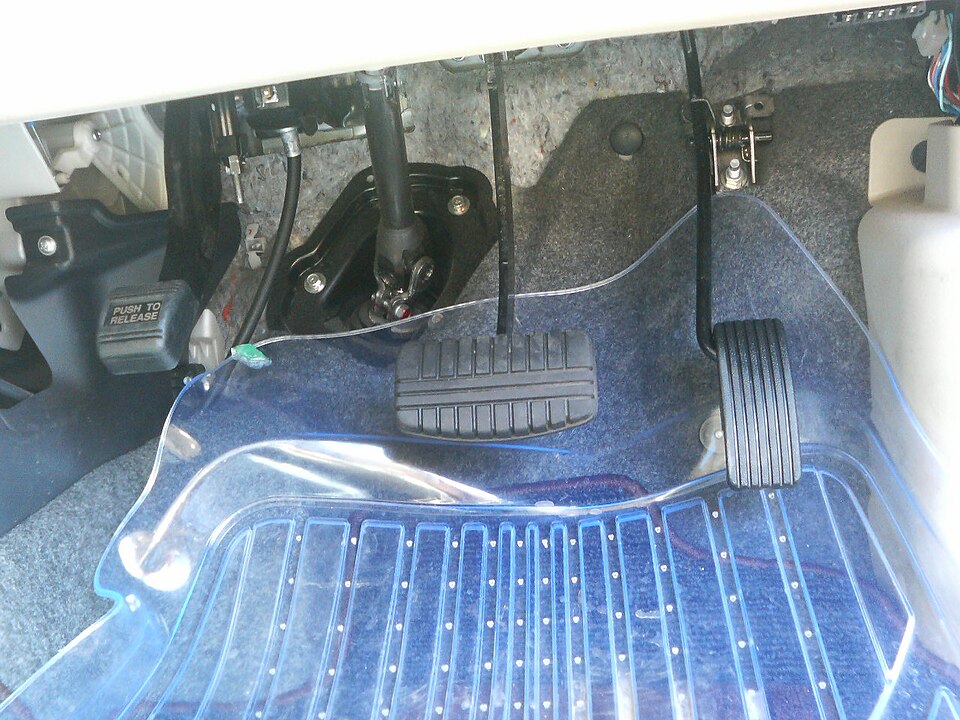
The brake pedal's switch closes within millimeters of foot travel. Photograph: Wikimedia Commons contributor
Image Credits: Wikimedia Commons
Do brake lights come on if the brakes fail?
Yes, usually. The lights run on a separate electrical circuit triggered by the pedal switch, so they can glow even if the hydraulic brakes lose pressure. Pressing the pedal with the engine off still lights them.
Why do my brake lights stay on when the car is parked?
The pedal switch is likely stuck or misadjusted, or the small pad it presses against has crumbled with age. The circuit is live from the battery, so a stuck switch keeps the lamps on and can drain the battery overnight.
Are LED brake lights really safer than bulbs?
Research supports it. The IEEE Access study found followers reacted about 170 milliseconds faster to LED brake lights than to incandescent equivalents, combining the faster illumination with a quicker cognitive response. That margin matters in sudden stops.
Why do brake lights look brighter than tail lights?
They are built that way. Regulations require stop lamps to be significantly brighter than running tail lights, using a second filament or higher LED power, so the braking signal stands out clearly.
The bottom line
Brake lights beat the brakes themselves because a pedal switch fires in milliseconds while hydraulics take longer to bite, and LEDs stretch that lead by lighting up almost instantly. The result is an early warning measured in fractions of a second, which is exactly the margin that helps prevent rear-end collisions.
Latest in Automotive
- Why cars have a rev limiter
- Essex police car windscreen case on the A120
- Tesla Cybertruck cancelled for Australia
Subscribe for one practical car explainer in your inbox every morning.
Related stories

Why Does Tire Pressure Drop in Cold Weather?
Cold weather can cut tire pressure by 1 psi for every 10°F drop, thanks to the ideal gas law. Here is what happens inside the tire and what
Why Do Brake Rotors Warp, or Do They Actually?
Mechanics rarely see a truly warped rotor. The shudder usually comes from uneven pad deposits a few thousandths of an inch thick. Here

How to Buy a Used Car Without Getting Scammed: The Checklist
Over 450,000 cars a year have rolled-back odometers, NHTSA says. This checklist covers VIN checks, title washing, and the inspection that