
Why Some Cars Beep When You Lock Them: The Signal Explained
Key takeaways
- The beep is a confirmation signal from the Body Control Module that all doors, the trunk, and the hood are locked and the alarm is armed.
- Different carmakers use different sounds: Honda favors a soft electronic beep, Toyota a muted chirp, and General Motors a deep horn honk.
- Most cars let you switch between honk, chirp, or silence in the settings, so a silent lock often means a setting changed, not a fault.
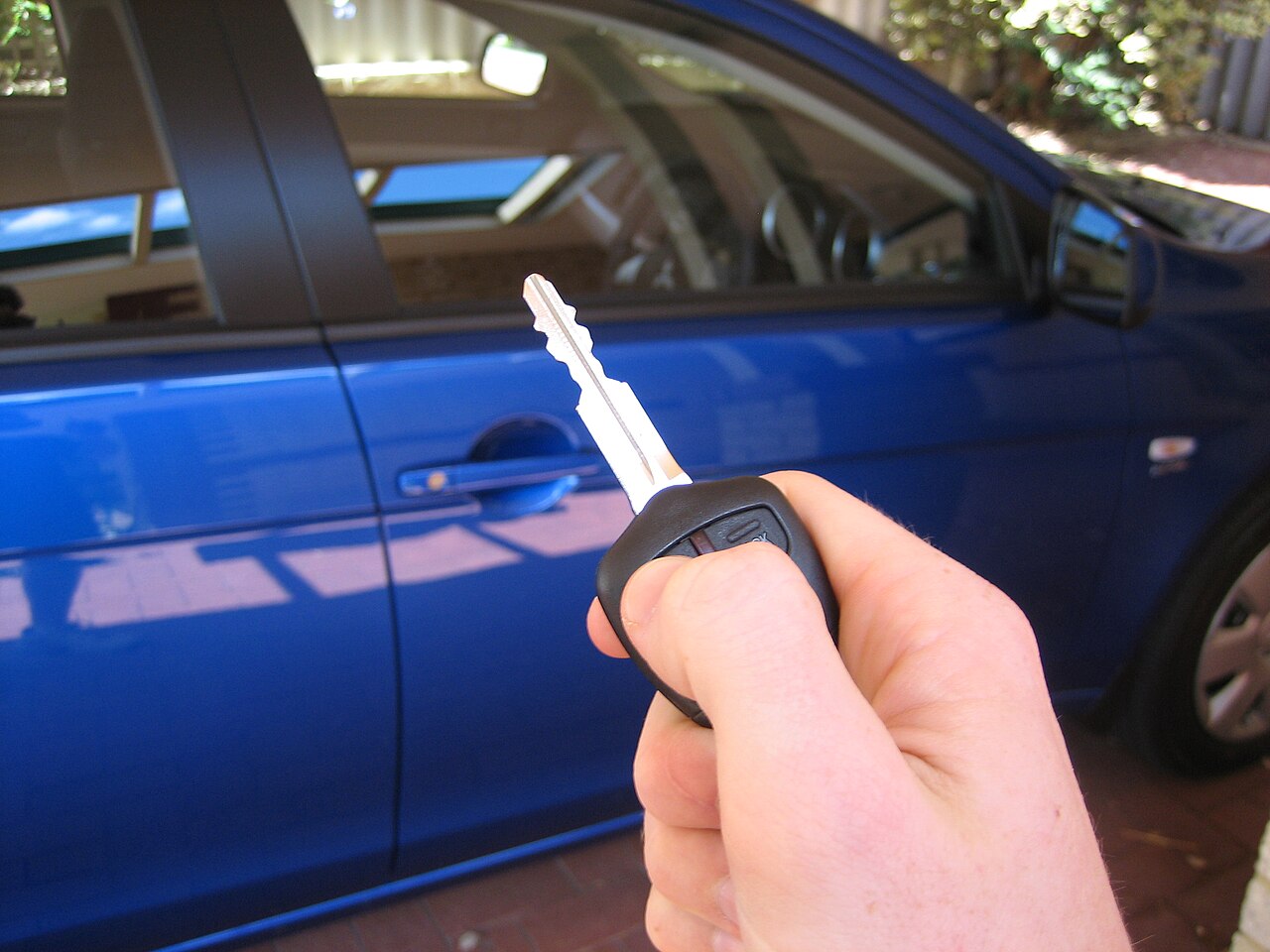
A remote keyless fob sends the lock command that triggers the confirmation beep. Photograph: Wikimedia Commons contributor
Image Credits: Wikimedia Commons
That short beep after you press the lock button on your key fob is not a quirk. It is a status report from your car.
Press lock, and the car's computer checks that every entry point is shut, engages the locks, and arms the anti-theft system. The beep tells you all of that finished correctly.
This article explains what the sound means, why it differs between brands, and what silence or an unusual pattern is trying to tell you.
What the beep actually confirms
The beep is the audible half of a two-part confirmation. When you press lock on the fob, the request goes to the Body Control Module, the computer that manages locks, lighting, and the security system. The module checks signals from the door latch sensors, the trunk or hatch sensor, and often a hood latch sensor before it finalizes the locking cycle, according to Engineer Fix.
Only when every sensor reports closed does the module arm the alarm and fire the confirmation sound. That is why the beep matters: it certifies that the whole sequence completed, not just that the doors clicked. Without it, you would need to walk back and pull each handle to be sure the car is secure.
Many cars pair the sound with a visual cue. The indicator lights usually flash once or twice as the locks engage. On noisy streets or in bright parking lots, the beep is the channel that actually reaches you.
Why different cars make different sounds
Carmakers do not share a standard for the confirmation sound, so the noise varies by brand and model. A guide to alarm tones catalogs the common patterns: Honda and Acura use a soft, high-pitched electronic beep; Toyota and Lexus use a muted electronic chirp; Ford uses a sharp, loud chirp; and General Motors vehicles use a deep, resonant honk from the car's own horn.
The sound source itself differs too. Some systems use the car's main horn, which keeps costs down by reusing existing hardware.
Others use a dedicated alarm siren or a small piezo-electric actuator, which produces the gentler electronic chirp many drivers prefer. The Body Control Module sends a low-current signal through a relay to whichever component the car was built with.
The tone is deliberately short and distinct. Engineers want it audible in a busy parking lot without being confused with an emergency signal. That balance is why you get a quick chirp rather than a full horn blast, similar to how your phone uses different vibration patterns to signal different alerts, as described in how phones vibrate differently for calls and notifications.
Why some cars stay silent
A silent lock is often not a malfunction at all. Most contemporary vehicles let the owner customize the feedback in the infotainment or cluster settings, offering a loud horn honk, a soft electronic chirp, or complete silence. A setting can change accidentally, through a software update, or when someone else borrows the car.
The security system also withholds the beep on purpose in some situations. If a door, trunk, or hood is even slightly ajar, the module refuses to arm fully and stays quiet, which is a deliberate interlock rather than a bug. Some vehicles also suppress the sound when a second paired key fob is detected inside the cabin, to stop you from locking your spare keys in the car.
When the sound disappears for no obvious reason, the checks are simple. Confirm every door, the trunk, and the hood are firmly shut.
Then look through the vehicle settings for a lock-feedback or confirmation option. If the setting is on and the car still stays silent, the cause is usually hardware: a blown fuse in the horn or alarm circuit, a failed door latch sensor, a weak key fob battery, or a failed sound-producing component.
What unusual patterns mean
The system speaks in patterns, and learning a few of them saves a trip to the shop. One short chirp or honk means armed and locked, which needs no action.
Two quick chirps usually mean unlocked and disarmed. A longer honk or a rapid series of chirps after you press lock is an error message: the car is telling you it cannot arm properly.
The most common trigger for that error pattern is an open entry point, often the hood, which drivers overlook because they rarely open it. A weak car battery can also cause strange behavior, since low voltage confuses the module and can produce false or missing chirps. In older cars, leaving a key in the ignition blocks arming the same way.
Treat a new pattern as a question, not a catastrophe. Walk around the car, close everything firmly, and press lock again.
If the normal sound returns, the interlock did its job. If it does not, the owner's manual usually documents the specific patterns for your model, much like the way automakers document other driver alerts, including recent news like Tesla's Cybertruck cancellation in Australia showing how regional rules reshape car features.
The horn honk versus the electronic chirp
There is a practical reason many drivers prefer the soft chirp over the full horn honk. A horn blast at night in a quiet neighborhood is antisocial, while a chirp carries far enough to confirm without waking anyone. That is why the trend across manufacturers has been toward electronic chirps or piezo beeps rather than the traditional horn honk.
Cost also plays a role. Using the existing horn requires no extra parts, which is why budget models and older designs lean on it. A dedicated piezo actuator adds a component but gives designers control over volume and tone, which is why premium cars and newer models favor it.
Either way, the function is identical. The sound is a closed loop between you and the car's computer: you asked for a lock, the car confirms it happened, and you walk away without a second thought.
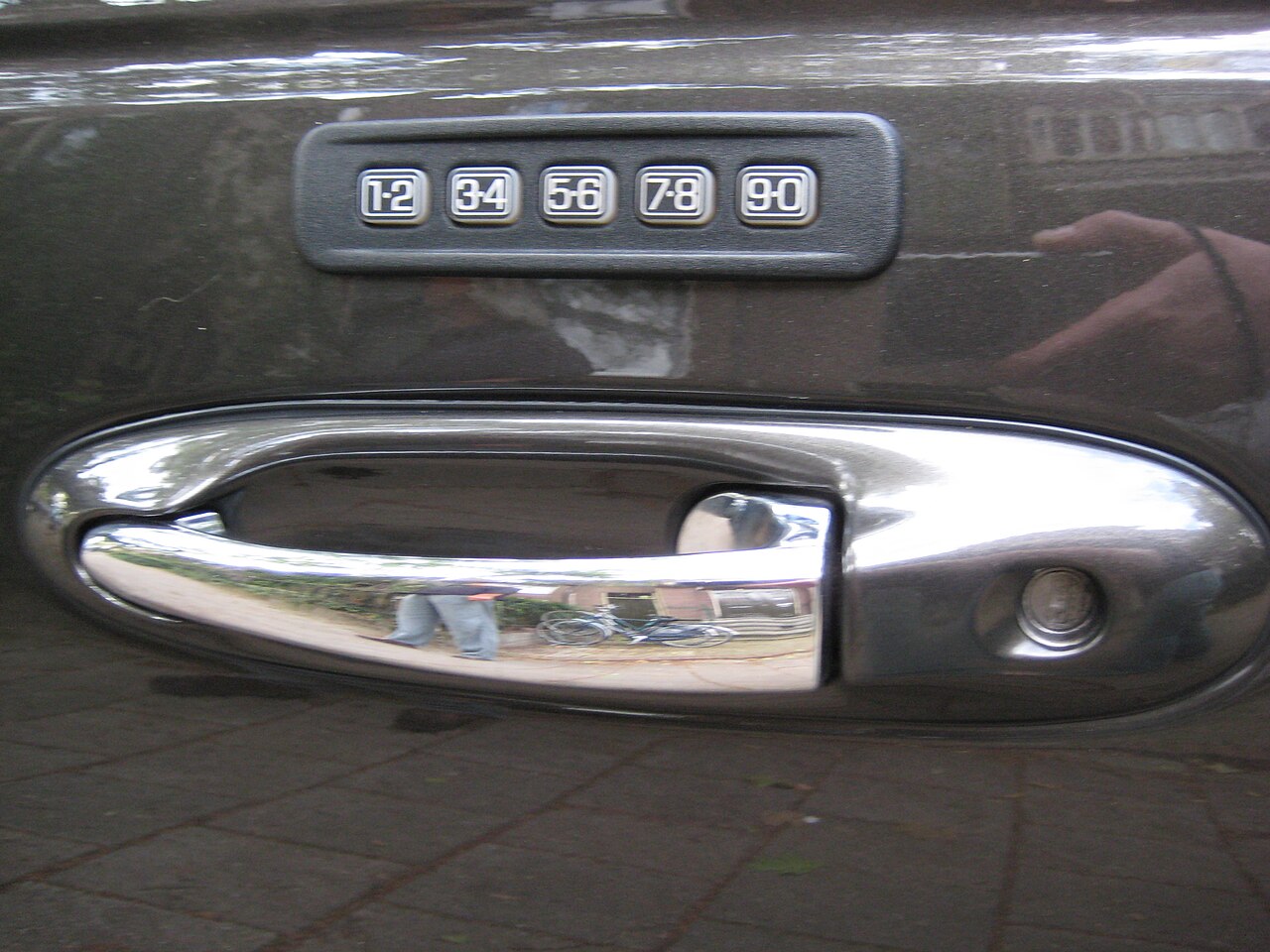
A door latch sensor must report fully closed before the confirmation sound fires. Photograph: Wikimedia Commons contributor
Image Credits: Wikimedia Commons
Why does my car honk twice when I lock it?
A double honk usually means the system could not fully arm. Check that every door, the trunk, and the hood are latched. On many models, pressing the lock button twice on purpose triggers the horn as a "find my car" feature, so check your manual for that behavior.
Can I turn off the beep when locking my car?
In most modern cars, yes. Look in the infotainment or instrument-cluster settings for lock feedback, confirmation sound, or silent lock options. Choices typically include a horn honk, an electronic chirp, or no sound with light flashes only.
Why did my car stop beeping when I lock it?
The usual causes are an ajar door, trunk, or hood; a changed setting; a weak key fob battery; or a blown fuse in the horn or alarm circuit. Check the physical entry points and the settings first, since those account for most cases.
Is the beep the alarm or the lock?
It is both, in sequence. The sound confirms the doors locked and the anti-theft system armed. A full alarm siren, by contrast, only sounds when the system detects an intrusion, such as a door opening or glass breaking.
The bottom line
The beep is your car's way of closing the loop: locks engaged, alarm armed, all entry points verified. Different brands voice it differently, and silence usually points to a setting or an unlatched door rather than a breakdown. Learn your car's normal pattern, and any change in it becomes useful information instead of background noise.
Latest in Automotive
- Why cars have a rev limiter
- Essex police car windscreen case on the A120
- Tesla Cybertruck cancelled for Australia
Subscribe for one practical car explainer in your inbox every morning.
Related stories

Why Does Tire Pressure Drop in Cold Weather?
Cold weather can cut tire pressure by 1 psi for every 10°F drop, thanks to the ideal gas law. Here is what happens inside the tire and what
Why Do Brake Rotors Warp, or Do They Actually?
Mechanics rarely see a truly warped rotor. The shudder usually comes from uneven pad deposits a few thousandths of an inch thick. Here

How to Buy a Used Car Without Getting Scammed: The Checklist
Over 450,000 cars a year have rolled-back odometers, NHTSA says. This checklist covers VIN checks, title washing, and the inspection that