
Why Do Students Overestimate How Ready They Are for Exams?
Key takeaways
- In the landmark 1999 study, the lowest-scoring students estimated themselves at the 62nd percentile while actually scoring near the 12th: weak skill brings weak self-judgment.
- Students mistake fluency for mastery: rereading feels productive because the material is familiar, but recognition is not recall.
- Calibration can be trained: predicting quiz scores before marking, spacing practice, and testing yourself all shrink the confidence gap.
Most students have lived this moment: walking into an exam feeling prepared, then staring at the first question in blank panic. The feeling of readiness was real. It was also wrong.
Research on metacognition, the mind's ability to judge its own knowledge, shows that students systematically overestimate how much they know, and the weakest students overestimate the most.
This article explains why students overestimate how ready they are for exams, including the famous 1999 findings, the fluency trap, what newer research says, and the study habits that actually calibrate confidence.
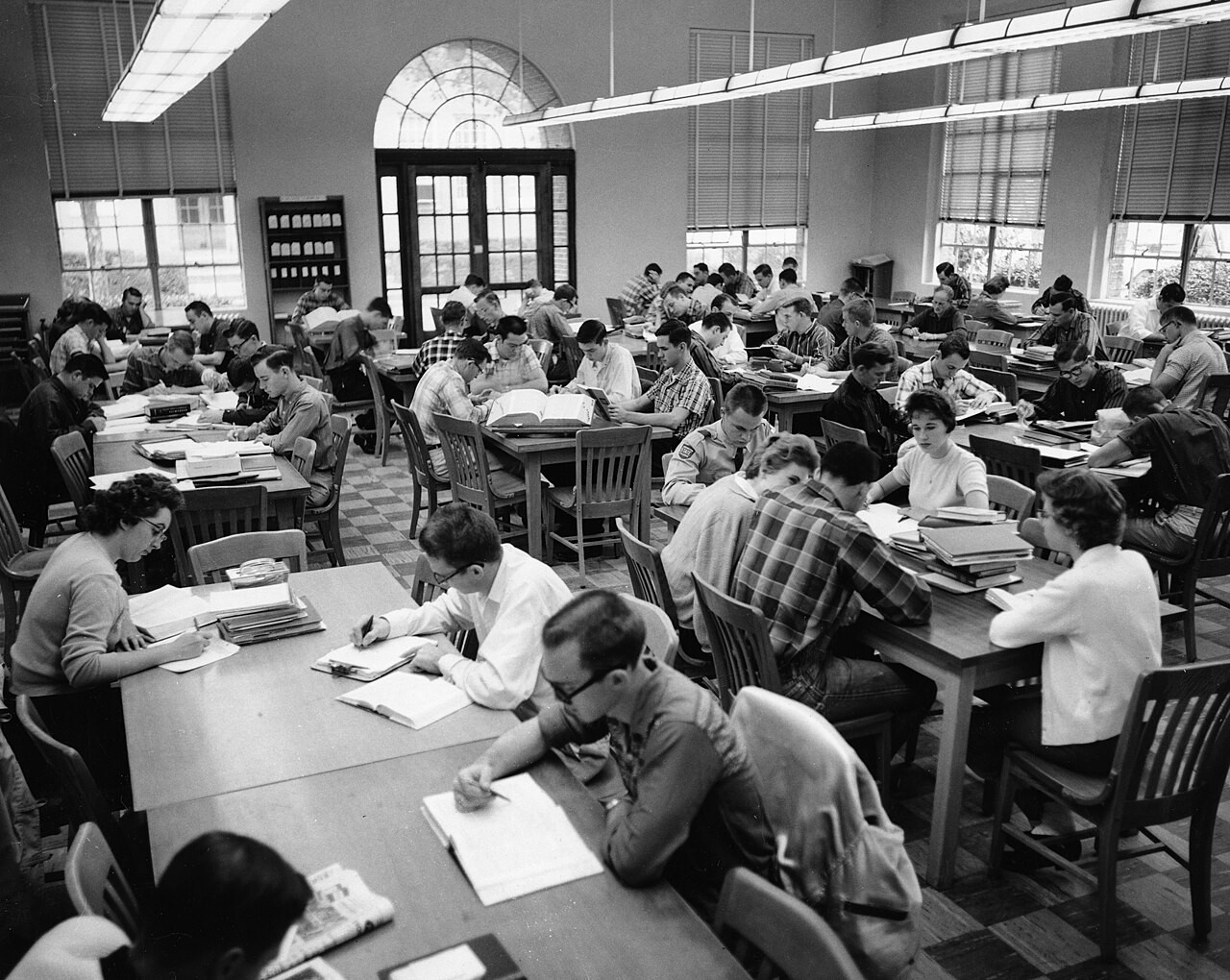
The 1999 finding that started it all
In 1999, Cornell psychologists David Dunning and Justin Kruger published a paper on why incompetent people fail to recognize their own incompetence. They ran four studies with Cornell undergraduates, testing humor, grammar, and logical reasoning with 65, 45, 84, and 140 participants. Each participant took a test and then estimated how they ranked against their peers.
The pattern was striking. Participants in the bottom quartile scored around the 12th percentile on average, yet estimated themselves around the 62nd percentile, according to a research summary by Morso. Top performers erred the other way, underestimating their standing because they assumed everyone else had found the test as easy as they did.
Kruger and Dunning called the mechanism a "dual burden": the skills you need to do a task well are the same skills you need to judge how well you did it. A student who does not know the rules of grammar cannot spot which of their answers break them.
The deficit hides itself. Importantly, the study measured estimated rank on specific tests, not arrogance as a personality trait, and the participants were students, so the numbers are a starting point rather than a law of nature. It is also worth noting that the famous "Mount Stupid" graph circulating online does not appear anywhere in the original paper.
The most useful result for learners came from the fourth study. The researchers gave some bottom-quartile participants a short training session on the logic task.
Afterward, those 19 participants rated their ability at the 44th percentile and their test performance at the 32nd, far closer to reality. The authors reported that they "became more calibrated in every way." When people learned the skill, they also got better at judging themselves.
The fluency trap
The Dunning-Kruger framing explains part of student overconfidence, but a second mechanism hits even strong students: mistaking fluency for mastery. Rereading notes or a textbook feels productive because each pass gets smoother. That smoothness is familiarity, not learning.
Structural Learning's guide to metacognitive monitoring puts it bluntly: students mistake familiarity for fluency, and confuse recognizing something with recalling it.
This is why cramming fails for long-term learning: the material feels known in the moment because it is fresh, and the student walks away believing the knowledge is durable. A related error is the freshness illusion. A confidence rating made immediately after a lesson measures how fresh the material feels, not how well it is stored.
Nelson and Dunlosky showed in 1991 that delaying the self-assessment by a day gives a far more honest reading, because the material has had time to fade if it was never truly learned.
The antidote is retrieval. Testing yourself forces the brain to produce the answer from memory, which is the exact skill the exam demands. This is why active recall outperforms passive review: a student who can recite an explanation from a blank page knows they know it, while a student who merely recognizes it on the page does not.
The evidence lands the same way every time: the study method that feels hardest is usually the one building real readiness.

What the critics say
The Dunning-Kruger story has taken hits from statisticians, and honest reporting includes them. Edward Nuhfer and colleagues tested 1,154 people on science literacy in two papers published in the journal Numeracy in 2016 and 2017. When they fed random numbers, with no relationship between self-assessment and score, through the same quartile analysis, the random data produced quartile averages that differed "greatly and systematically," mimicking the effect.
Something Navy's review of the research explains that part of the famous pattern is a statistical artifact of how the groups are sliced.
With methods less prone to that artifact, the picture was calmer. About 48.5% of people rated themselves within 10 percentage points of their actual score. On average the whole group overestimated by just 1.2 points, and only 5.3% were extremely overconfident.
Novices overestimated by 2.1 points on average while experts underestimated by 2.4. Expertise brought tighter calibration, not a dramatic cure for delusion.
Does this sink the idea? Not quite. A 2021 model comparison by Jansen and colleagues found the effect is not only a statistical artifact, and the practical pattern, that low performers judge themselves worse than high performers do, keeps showing up across domains.
The fair summary: the meme version is exaggerated, but the core finding, that weak skill comes with weak self-judgment, has survived serious scrutiny. For students, the actionable part never depended on the meme. Calibration is a trainable skill, and the training works.
How to calibrate your confidence
Overconfidence is fixed the same way any measurement error is fixed: by comparing the estimate against reality, repeatedly. Structural Learning recommends a simple classroom routine. Before every short quiz, students write a predicted score out of ten in the corner of the page.
The quiz is marked, they write the actual score beside it, and the gap is tracked until confidence follows evidence. Classroom calibration training with feedback reduces overconfidence across subjects.
Three habits do most of the work. First, test yourself from a blank page before you decide you are ready. If you cannot produce the answer without cues, you do not know it yet.
Second, space your practice across days rather than massing it into one night. Spaced sessions strip away the freshness illusion and reveal what actually stuck, and the evidence on study spacing is among the strongest in the learning literature.
Third, delay your self-assessment. Ask on Tuesday whether you know Monday's material. A rating made while the lesson is fresh measures freshness, not memory.
For exam week specifically, build a calibration loop into the schedule. Do a full past paper under timed conditions, mark it honestly, and compare the score to your predicted score. If the gap is large, you are not ready, no matter how ready you feel.
That single exercise, repeated two or three times before the real exam, does more for readiness than another round of rereading. It also explains why open-book exams still catch students off guard: access to the material is not the same as command of it.
Why do I feel ready and then blank on the test?
Because the feeling came from recognition fluency, not recall strength. You recognized the material while reviewing, which felt like knowing it. Under exam pressure, with no cues in front of you, recognition is unavailable and the gap shows.
This is also behind blanking out during tests despite studying.
Does overconfidence affect good students too?
Yes, though less. Nuhfer's research found experts underestimate slightly, by about 2.4 points, because they assume others found things as easy as they did. Good students are miscalibrated in the modest, fixable way; weak students are miscalibrated in the dangerous way.
Is the Dunning-Kruger effect real?
The core finding has survived scrutiny: low performers overestimate their performance more than high performers do. The internet meme version, with its "Mount Stupid" graph, is exaggerated and partly a statistical artifact of quartile sorting. Read the 1999 paper's actual numbers, not the cartoon.
What is the fastest way to check if I am really ready?
Take a past paper under timed conditions with no notes and mark it strictly. Compare your predicted score with the real one. If they match within a few points, your calibration is honest and your preparation is working.
The bottom line
Students overestimate exam readiness because the brain is a poor judge of its own knowledge: weak skills hide the very gaps they create, and fluent rereading feels like learning when it is only familiarity. The research is clear that calibration is trainable. Predict your score, test yourself from a blank page, and let the gap between prediction and reality guide your studying.
Latest in Education & Study
- What Is Active Recall and How to Use It
- Why Cramming Is Ineffective for Long-Term Learning
- Does the Pomodoro Technique Work?
Subscribe to the Rive News newsletter for one practical explainer like this every week.

Related stories

Why Do I Blank Out During Tests Despite Studying: Test Anxiety and Retrieval Failure
Blanking out in exams is retrieval failure, not missing knowledge. Anxiety drains working memory; rereading builds false confidence. Here

How to Study for Exams Without Burning Out
Sleep 7-8 hours, study in 25-50 minute blocks, and exercise daily. The science-backed way to study for exams without burning out, and what

Why Do I Forget What I Just Read? Science Has an Answer
You forget what you just read because of the forgetting curve, mapped by Ebbinghaus in 1885. Science explains why memory fades fast and how