
Why some students study better in the morning
By Rive News / Research desk | Rive News / Published October 28, 2026 at 9:00 AM PKT
Key takeaways
- Morning study works best for students whose circadian peak falls early, not for everyone equally.
- Morning-type students tend to score higher, partly because school schedules match their biology.
- Evening types can still study well in the morning, but only after enough sleep and a slow warm-up.
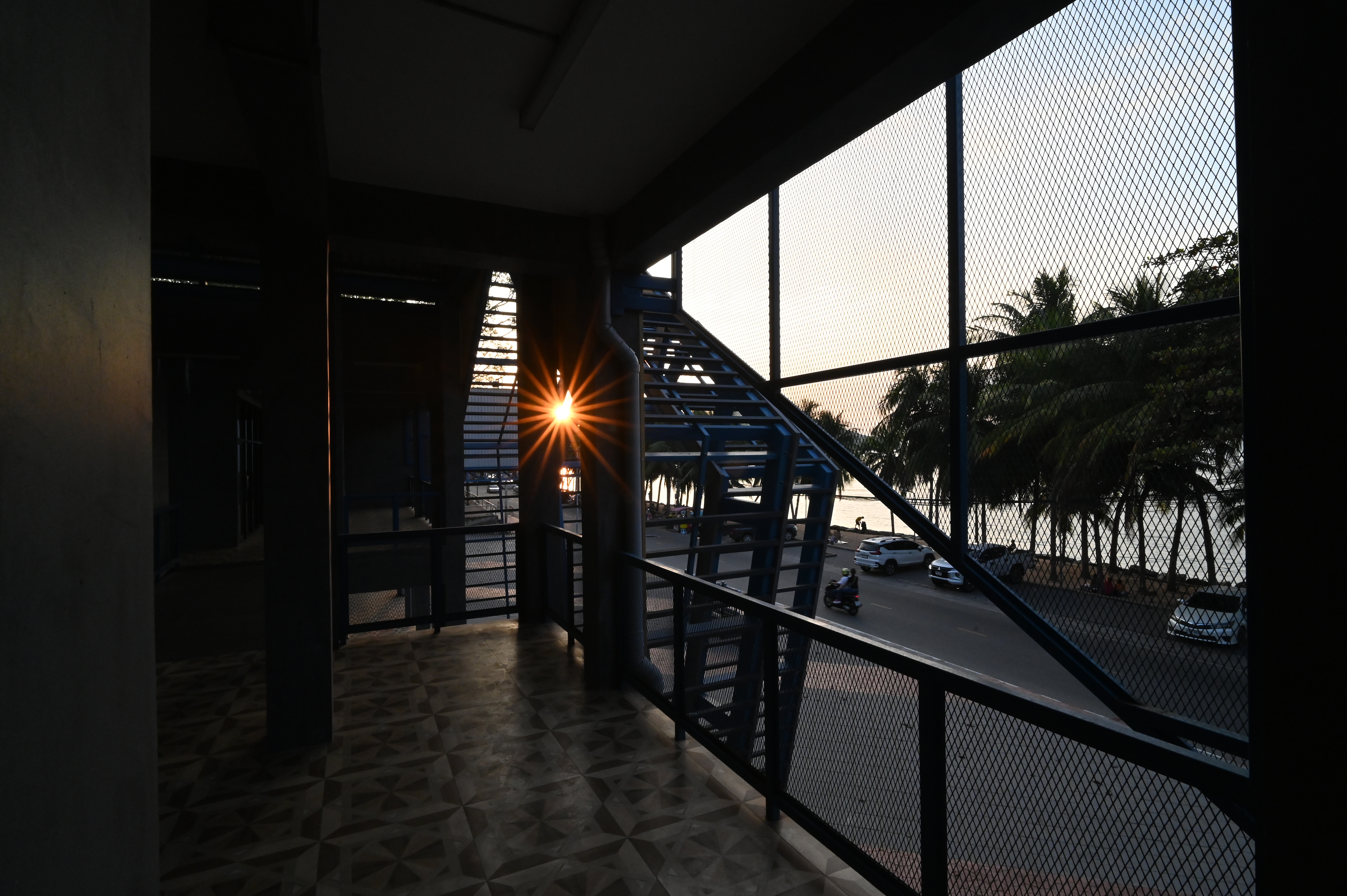
[Sunlight bursts through a covered walkway in the morning, casting bright light across the floor.] Photograph: PattayaPatrol
Image Credits: Wikimedia Commons
Some students open a textbook at 7 in the morning and feel sharp within minutes. Others stare at the same page until noon.
The difference is not willpower alone. It comes from chronotype, the body's internal preference for morning or evening activity, and from how well a student's schedule matches it.
This article explains why some students study better in the morning, including what chronotype is, what the research says about morning types and grades, why evening types struggle early, and how to test your own best study window.
What chronotype actually means
Chronotype describes where a person's circadian rhythm sits. The circadian system is the roughly 24-hour internal clock that governs sleep, alertness, and body temperature, and it runs slightly early in some people and slightly late in others.
Researchers divide people into morning, intermediate, and evening types. Most people fall in the middle, with a smaller group at each end. The standard questionnaire for measuring this is the morningness-eveningness questionnaire, developed by Horne and Ostberg in 1976.
Chronotype shifts with age. Children tend toward earlier types, and the preference drifts later through adolescence, reaching maximum lateness at about age 20 before gradually moving earlier again in adult life.
That drift matters for students. A teenager forced into a 7 in the morning start is often being asked to perform at a time their biology treats as night, while a morning-type classmate of the same age is already near peak alertness.
What the research says about morning types
Studies of university students repeatedly find that morning types achieve higher grades than evening types. A review in a medical-student study notes that this advantage persists even when class and exam times are accounted for.
One reason is sleep. Evening types on early schedules accumulate sleep debt, because they cannot fall asleep early enough to get a full night before a morning start. Tired students learn worse, whatever time they study.
Morning types also show stronger academic self-regulation in several studies, including better coping during remote learning. That may reflect the same alignment: their peak alertness coincides with the hours when teaching, deadlines, and exams are scheduled.
The picture is not unanimous. A 2022 study by Balcı and Caliskan found no relationship between chronotype and academic achievement, a reminder that chronotype is one influence among many, not a destiny.
Why timing of the test matters
The strongest evidence for a timing effect comes from matching tests to chronotype. In a study by van der Vinne and colleagues in 2015, late chronotypes underperformed early chronotypes in morning lessons between 8:15 and 12:15.
The same study found no such gap in the early afternoon, between 12:45 and 3:00. The late types were not weaker students. They were weaker at a time of day when their cognitive peak had not yet arrived.
An earlier finding points the same way. Callan found in 1999 that students with a morning learning preference scored better on an algebra test than students who preferred afternoon or evening learning.
The lesson for revision is direct. A morning study session helps most when it lands inside your personal alertness peak, and it helps least when it lands inside your sleep window.
Why mornings feel good for some students
Mornings offer practical advantages that have nothing to do with biology. The house is quiet, messages have not yet piled up, and the day's decisions have not yet drained willpower.
For morning types, those quiet hours coincide with a genuine alertness peak. Attention is easier to sustain, and the first study block of the day often produces the most durable learning.
Sleep quality plays a supporting role. A student who slept well wakes with a full tank, and the first hours after waking are when sleep-dependent memory consolidation from the night before is freshest.
Mornings also protect study from being crowded out. Evening plans expand to fill the day, but a morning session happens before competing demands arrive.
[A quiet university library study room with desks arranged for individual study.] Photograph: Lsu MIN oTihew 338
Image Credits: Wikimedia Commons
Why mornings feel terrible for others
Evening types are not lazy. Their internal clock simply runs later, so a 6 in the morning alarm interrupts deep sleep and leaves them in a fog that can last hours.
This fog has a name in sleep science: sleep inertia, the grogginess that follows waking from deep sleep. For a late chronotype woken early, it can blunt concentration through the whole morning session.
Social jetlag adds a second cost. Evening types on weekday early schedules sleep far less than they need, then oversleep at weekends, and the weekly shift between the two patterns disrupts their rhythm further.
Forcing morning study on a sleep-deprived evening type often backfires. The hours feel productive because the student sat at the desk, but recall the next day shows little of it stuck.
Can you shift your morning peak?
Light is the strongest lever. Morning exercise has been shown to advance the circadian phase in adolescents with a late chronotype, in one laboratory study by 27.5 minutes after 45 minutes of walking on five consecutive mornings.
That study involved only 18 physically inactive male adolescents aged 15 to 18, so it is a proof of concept rather than a prescription. Still, bright light and activity in the morning are the standard tools for nudging a late clock earlier.
Sleep regularity matters more than any single trick. Going to bed and waking at the same times, including weekends, lets the clock settle instead of lurching between two schedules.
A gradual shift works better than a sudden one. Moving wake time earlier by 15 minutes every few days gives the body time to adjust, while a single brutal early alarm mostly produces one miserable morning.
How to find your own best window
Test rather than guess. Study the same kind of material at three different times across a week, then quiz yourself on each batch the next day. The time that produces the best next-day recall is your window.
Control for sleep in the test. A morning session after a short night tells you nothing about mornings, only about tiredness.
If your best window turns out to be late morning rather than dawn, that is still a morning win. The useful question is not whether you are a 5 in the morning person, but whether your hardest study lands inside your alertness peak.
Does studying in the morning improve grades?
For morning-type students, yes, on average, because their peak alertness matches school and exam schedules. Evening types often do better later, so the effect depends on chronotype.
What is a chronotype?
Chronotype is your circadian preference for morning or evening activity, measured by questionnaires such as the morningness-eveningness questionnaire from Horne and Ostberg in 1976.
Are teenagers naturally night owls?
Mostly, yes. Chronotype drifts later through adolescence and reaches maximum lateness at about age 20, which is why early school starts clash with teenage biology.
Can evening types learn to study in the morning?
They can shift somewhat with regular sleep times and morning light, but a large shift takes weeks, and studying on too little sleep usually hurts more than it helps.
Is it better to study before or after sleep?
Both help. Study before sleep lets the night consolidate new material, and a short review the next morning tests whether it survived.
The bottom line
Some students study better in the morning because their circadian peak falls early and school schedules reward that timing, while others struggle because their peak arrives later and early starts cut their sleep short. The practical move is to find your own alertness window with a simple recall test, protect your sleep, and put your hardest material inside the hours when your brain is actually awake.
Tags: morning study, chronotype, circadian rhythm, study timing
Rive News's research desk writes evidence-based explainers on study science, drawing on published research and public sources.
Related
- Why morning people and night owls study differently
- How sleep consolidates what you studied
- Why study breaks improve focus and memory retention
- How to stay focused while studying at home
Subscribe to the Rive News newsletter for one study-science explainer each week.
Rive News publishes general educational explainers based on public sources; claims are attributed in the text.
Related stories
Why Do I Blank Out During Tests Despite Studying: Test Anxiety and Retrieval Failure
Blanking out in exams is retrieval failure, not missing knowledge. Anxiety drains working memory; rereading builds false confidence. Here

How to Study for Exams Without Burning Out
Sleep 7-8 hours, study in 25-50 minute blocks, and exercise daily. The science-backed way to study for exams without burning out, and what

Why Do I Forget What I Just Read? Science Has an Answer
You forget what you just read because of the forgetting curve, mapped by Ebbinghaus in 1885. Science explains why memory fades fast and how