
Why you feel wobbly after a long bike ride
By Rive News / Research desk | Rive News / Published October 28, 2026 at 9:00 AM PKT
Key takeaways
- Wobbly legs are usually a temporary mix of nerve fatigue and low fuel.
- The feeling often peaks in the first minutes after you climb off the bike.
- Gentle walking, fluids, and food normally settle it within minutes.
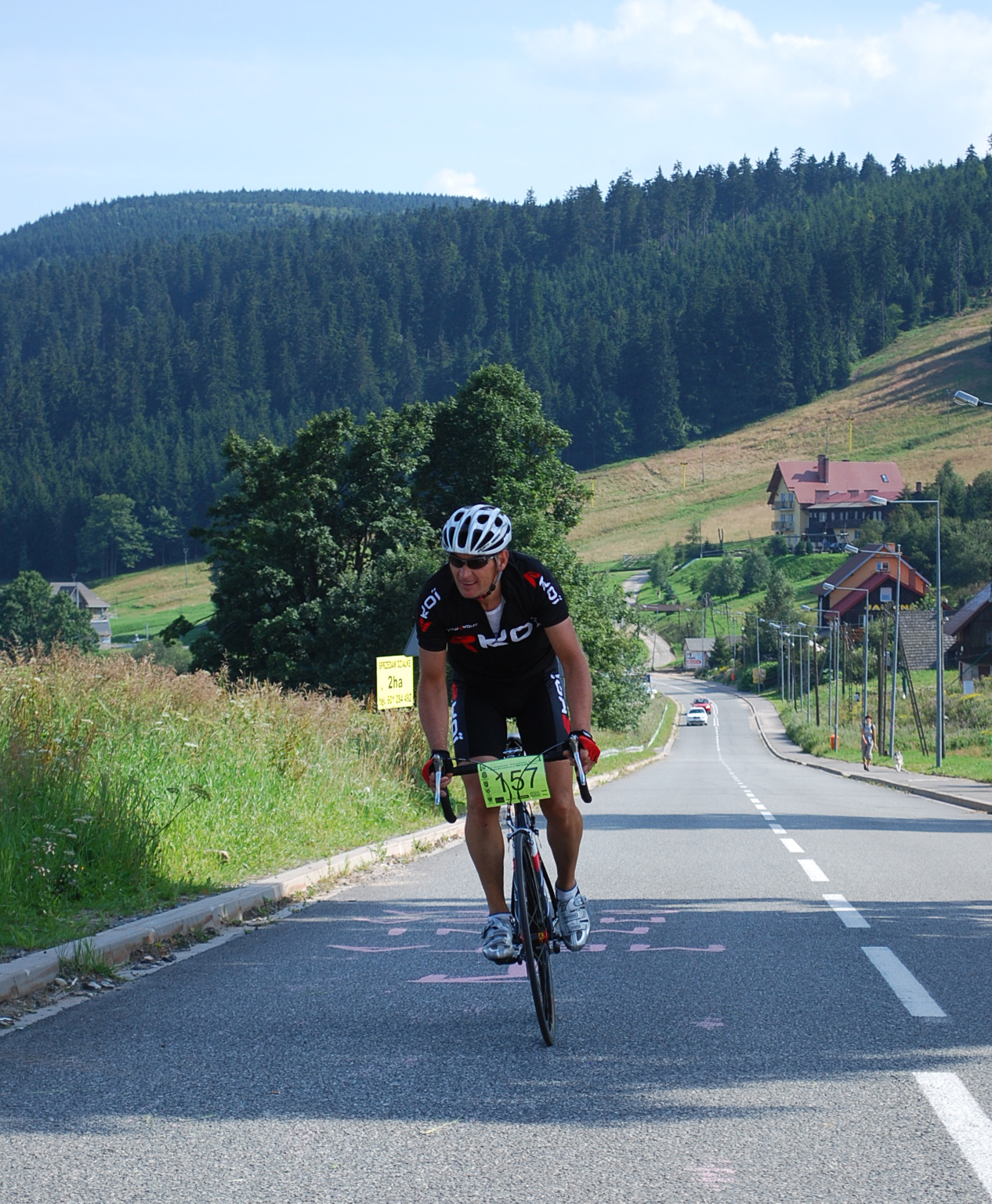
[A cyclist in Zieleniec.] Photograph: the subject
Image Credits: Wikimedia Commons
Climbing off the bike after a long ride and finding your legs will not hold you straight is a common experience. The legs feel soft, uncoordinated, and oddly disconnected, as if the pedalling motion has followed you onto solid ground.
This article explains what causes that wobble, why it often feels worst right after you stop, and when it is a sign to seek medical help. This article is for general information only and is not medical advice; talk to a clinician about any symptoms.
The main cause: tired nerves, not just tired muscles
The most direct cause of the wobble is fatigue in the connection between nerves and muscles. Exercise physiologist Andrew Jagim of the University of Wisconsin has described jelly legs as a temporary state of fatigue in which the nervous system and muscles stop communicating cleanly.
When that signalling falters, the body cannot switch muscle fibres on and off with its usual precision. Contractions become ragged, small stabilising muscles fire late, and the result feels like wobbliness rather than simple weakness.
Athletic trainer Patrick Maloney of the Tulane Institute of Sports Medicine has put the same point in practical terms: unsteady muscles after maximal effort are the body asking for rest. The wobble is a warning signal, not a badge of a good workout.
Beginners notice it most, because untrained nervous systems fatigue faster. Experienced riders still get it, but usually only after longer or harder rides than they are used to.
The fuel side: empty glycogen stores
Muscles run on adenosine triphosphate, the cell's energy currency, which the body rebuilds from stored carbohydrate called glycogen. A long ride drains those stores steadily, and the harder the ride, the faster they empty.
When glycogen runs low, muscles cannot produce force cleanly even when the rider wants them to. That empty feeling is different from soreness: the legs feel hollow and unreliable rather than painful.
Fuel depletion also explains why the wobble can return after a cafe stop. Eating carbohydrate raises insulin, which drives glucose into muscles, and restarting hard riding can briefly drop blood glucose before the liver releases its own stores.
Riders who report feeling weak and wobbly for about 20 minutes after restarting a ride are often describing this rebound. Eating a small snack 15 to 30 minutes before the stop, rather than only at it, is one way riders manage the dip.
The circulation side: blood pooling when you stop
A third factor strikes in the minutes after dismounting. During the ride, the leg muscles squeeze veins with every pedal stroke and pump blood back to the heart, a mechanism called the skeletal muscle pump.
When pedalling stops, that pump stops too. Blood pools in the lower limbs, venous return falls, and blood pressure can dip, leaving the rider light-headed as well as wobbly.
This is why the wobble often feels worst when standing still after the ride rather than while riding. Walking for 5 to 10 minutes after dismounting keeps the muscle pump working while the cardiovascular system settles.
Dehydration makes all three causes worse. Sweat losses reduce blood volume, which lowers the margin the circulation has to work with, and they disturb the salt balance that nerves and muscles rely on for signalling.
The calcium leak found in endurance athletes
Deeper research has found a cellular cause behind prolonged fatigue. Researchers at Columbia University Medical Center, including Bellinger and colleagues, studied athletes after extended high-intensity exercise.
After 3 hours of cycling by experienced cyclists, the team found tiny leaks of calcium inside muscle cells. Calcium controls contraction, and the leak weakened contraction while activating an enzyme that attacks muscle fibres.
Those leaks stopped after a few days of rest. The finding helps explain why wobbliness after a very long ride can linger longer than the few minutes of jelly legs after a short hard effort.
It also explains why the wobble is not simply lactic acid. Lactate clears from the blood within an hour or two of stopping, yet the heavy, unreliable feeling after a long ride can persist well beyond that window.
[A cyclist with a bicycle, photographed in the Russian Empire period.] Photograph: the subject
Image Credits: Wikimedia Commons
Why walking feels strange after cycling
Cycling uses a fixed, seated, circular pedalling pattern with no impact. Walking demands upright posture, impact absorption, and different stabilising muscles, so the nervous system must switch patterns at the exact moment it is most fatigued.
Triathletes know this switch well. After long periods riding in a fixed position, the first kilometres of running feel awkward and unstable, because the body must suddenly redistribute work across different muscles.
Brick training, which pairs cycling immediately with running, reduces the strangeness over time. It trains the nervous system to make the switch faster, though it never removes the transition entirely.
Poor pacing makes the switch worse. Riding above a sustainable effort increases lactate accumulation, glycogen depletion, and neuromuscular breakdown, so the rider starts the walk or run already heavily fatigued.
What helps, and what to watch for
Walk for a few minutes after the ride instead of sitting down immediately. Gentle movement keeps blood returning to the heart and gives the nervous system a low-demand pattern to settle into.
Drink fluids, and add electrolytes after a long or sweaty ride. Eat a mix of carbohydrate and protein within the first hour, since carbohydrate refills glycogen and protein supports repair.
Stretching lightly can feel good, but it does not fix nerve fatigue or refill fuel. Rest, food, and fluids do the real work, and most wobbliness fades within minutes to an hour.
Seek medical attention if the wobble comes with chest pain, fainting, confusion, or weakness on one side of the body. Wobbliness that persists for days, or that appears without hard exercise, also deserves a clinical check rather than a training explanation.
Frequently asked questions
How long do wobbly legs last after cycling?
Most riders feel steady within a few minutes of walking around, and the feeling usually clears within an hour. After a very long ride, a heavy-legged feeling can linger into the next day.
Is lactic acid the cause?
Lactic acid contributes to the burning feeling during hard effort, but it clears within an hour or two. The wobble itself comes more from nerve fatigue, low glycogen, and blood pooling.
Why do I feel worse after a cafe stop than before it?
Eating raises insulin, which pushes glucose into muscles, and restarting hard can briefly lower blood glucose. A small snack before the stop, plus an easy restart, usually softens the rebound.
Will training stop the wobble?
Training raises the threshold at which it appears, and brick sessions shorten the awkward transition. It never disappears entirely, because any ride long or hard enough will eventually fatigue the same systems.
The bottom line
Wobbly legs after a long ride are the visible result of several systems tiring at once: nerves signalling less cleanly, glycogen stores running low, and blood pooling when the pedalling pump stops. Each cause is temporary, and together they explain why the feeling peaks right after you stop.
Walk it off, drink, and eat, and the legs normally come back within minutes. If the wobble brings fainting, chest pain, or one-sided weakness, skip the recovery snack and get medical help instead.
Tags: cycling, muscle fatigue, recovery
The Rive News research desk writes plain-language explainers from published research and public guidance, with sources listed for every article.
Related
- Why do your legs feel heavy during a run?
- Why do muscles shake during exercise?
- Why your heart rate stays high after you stop exercising
Subscribe to the Rive News newsletter for one research-backed explainer each week.
Rive News publishes general information explainers; claims are attributed to their sources, and corrections are published when an error is found.
Related stories

How long does it really take to build noticeable muscle?
Strength gains start in week one, but visible muscle takes 8-12 weeks for most beginners. What the Oklahoma CT-scan study measured,
Why you feel dizzy after a workout: the 5 common causes
Post-workout dizziness usually comes from a blood pressure dip, dehydration, or low blood sugar. The numbers behind each cause, and when
Why Do Knees Hurt When Squatting but Not Running?
Knees hurt when squatting but not running because deep bends multiply force on the kneecap. Learn the mechanics, common causes, fixes,