
Why your legs feel heavy on the first run back after a break
By Rive News / Research desk | Rive News / Published October 27, 2026 at 9:00 AM PKT
This article is for general information only and is not medical advice; talk to a clinician about any symptoms.
Key takeaways
- Heavy legs on a comeback run come mostly from a fast drop in blood volume, not from losing all your fitness.
- Two to four weeks off cut blood volume by 9% and VO2max by 6% in trained men, in one classic study.
- Ease back with short, easy runs, since the systems that faded fastest also rebuild fastest.

[A runner on a forest trail, where a first run back after a break often feels harder than expected.] Photograph: Wikimedia Commons contributor
Image Credits: Wikimedia Commons
Heavy legs on the first run back are the legs feeling slow, unresponsive and hard to lift with each step. The sensation is familiar to almost every runner who returns after a holiday, an illness or a busy few weeks away from training.
It feels like fitness has vanished, but the research tells a kinder story. The systems that fade first are also the ones that return first, and the heaviness is usually a sign of a body out of rhythm rather than a body starting over.
This article explains what heavy legs actually are, why blood volume drops first, how muscles lose their rhythm, how soreness differs from detraining, how to ease back in, and when to get checked.
What heavy legs actually are
Heavy legs are a perception as much as a measurement. Peloton instructor Becs Gentry describes them as legs that have literally become heavy to lift with each step, a feeling that slows the run and makes it more tiring than it should be.
Physical therapist Eli Lamberson adds that legs may feel slightly numb or slow to respond, and he distinguishes this from acute pain or injury discomfort. Timing matters for interpretation: feeling it at the start of a run may suggest an inadequate warm-up or leftover fatigue, while feeling it late in a run points more to fatigue, dehydration or low fuel.
The key point is that heaviness alone does not mean damage. It is a normal signal when the body's running systems are out of sync, and it usually fades as the run goes on or across the first few sessions back.
Why blood volume drops first
The fastest change during a break happens in the blood. In a classic study by Coyle and colleagues, eight endurance-trained men stopped training for two to four weeks, and their blood volume fell by 9%, from 5,177 ml to 4,692 ml, driven mainly by a 12% drop in plasma volume.
With less blood to pump, stroke volume fell by 12% and maximal oxygen uptake fell by 6%. Heart rate during submaximal exercise rose by 11%, which is exactly why an easy pace feels harder: the heart must beat faster to move the same amount of oxygen.
The researchers proved the mechanism by restoring blood volume with a dextran infusion. When blood volume returned to trained levels, stroke volume and VO2max recovered to within 2 to 4% of trained values, showing that the early performance drop was largely a plumbing problem rather than a fitness collapse.
A second study of 12 distance runners found the same pattern after just 14 days off. VO2max fell by about 4%, time to exhaustion dropped by 1.2 minutes, resting plasma volume fell by 5.1%, and muscle citrate synthase activity, a marker of aerobic enzyme capacity, fell by 25.3%.
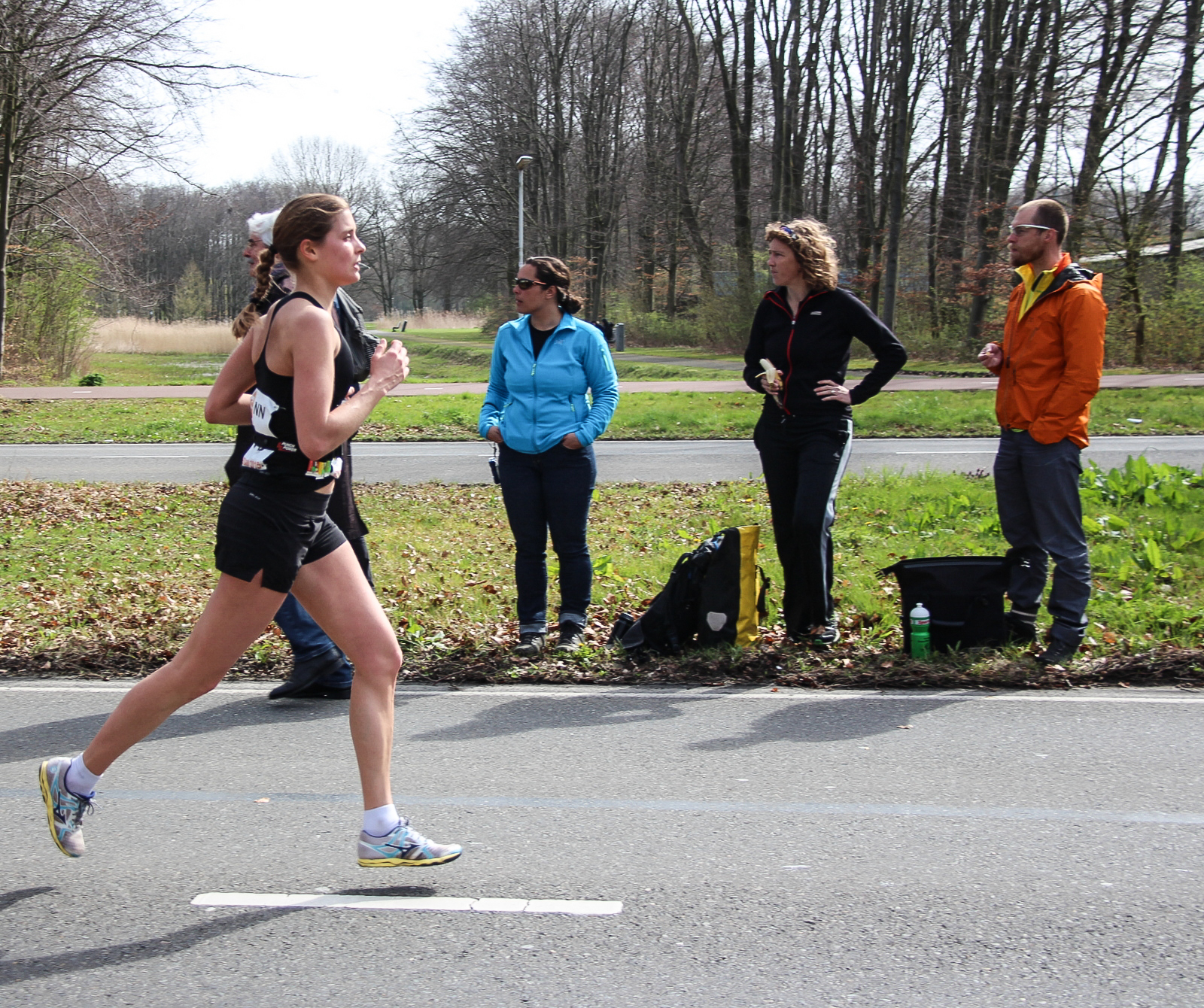
[A runner in a road marathon, where blood volume and aerobic enzymes decide how heavy the legs feel.] Photograph: Wikimedia Commons contributor
Image Credits: Wikimedia Commons
How muscles lose their rhythm
Blood volume is only half the story. Muscles also lose some of their coordination during a break, because the nervous system gets less practice firing the exact patterns that running demands.
That loss of rhythm shows up as clumsiness rather than weakness. Stride feels less smooth, the legs feel less springy, and effort feels higher even though the muscles themselves have barely changed in size over a short break.
Glycogen stores also dip during time off, which matters because carbohydrate is a key fuel for running. Lamberson notes that not eating enough carbohydrate can leave glycogen stores low and bring on premature fatigue, adding to the heavy feeling.
Sleep plays a part too. Without enough rest, the body cannot repair muscle tissue or refill energy stores effectively, so a comeback run after a disrupted few weeks carries two handicaps at once.
How soreness differs from detraining
Not all heaviness on a return is detraining. Delayed onset muscle soreness, the stiffness that follows an unfamiliar or harder-than-usual effort, develops 12 to 24 hours after exercise and peaks between 24 and 72 hours.
That distinction matters for planning. Detraining heaviness is worst at the start of the first run back and eases as blood volume and rhythm return, while soreness arrives the day after a run and fades over a few days of recovery.
Many runners get both at once: a detrained body on the first run, then soreness the next morning from an effort the body was not ready for. That combination is why the second run back can feel worse than the first, even though fitness is already recovering.
Mild dehydration adds a third layer. Lamberson notes that even mild dehydration can significantly affect performance, because the heart has a harder time delivering oxygen and nutrients to working muscles when fluid is low.
How to ease back in
The comeback rule is simple: run shorter and easier than you think you should, and let the fast-recovering systems catch up. Blood volume rebuilds within a couple of weeks of resumed training, so patience in week one pays off quickly.
Start with a gentle warm-up, since a cold start is a common reason the first kilometres feel heavy. Lamberson recommends dynamic moves such as leg swings, side lunges and high knees before running, rather than jumping straight into pace.
Keep the first week conversational and short, and add distance gradually rather than trying to match your pre-break long run. If the legs still feel heavy after the warm-up, treat that as information and cut the run short instead of pushing through.
Cross-training can fill the gap without pounding tired legs. Low-impact cycling or swimming builds aerobic work while the running-specific systems, including tendons and bones that adapt more slowly, get time to readjust.
[A smiling runner on the road, the right mood for an easy first run back after a break.] Photograph: Wikimedia Commons contributor
Image Credits: Wikimedia Commons
When to get checked
Heavy legs are usually harmless, but some signs deserve professional attention. If heaviness comes with pain, swelling, numbness that does not fade, or a feeling that one leg is very different from the other, stop and get checked rather than running through it.
Lamberson's advice is direct: if the legs start to feel too heavy, skip the run and see a professional, especially when heaviness is accompanied by pain, since that could indicate an injury.
People with conditions that affect circulation, such as diabetes or high blood pressure, should also talk to a clinician about their return plan. Reduced blood flow can make legs feel heavy during activity for reasons that have nothing to do with training.
Frequently asked questions
How much fitness do you lose after two weeks off?
In trained runners, about 4% of VO2max after 14 days, with a bigger rise in heart rate at a given pace. The larger feeling of lost fitness comes from the blood-volume drop, which makes the same pace cost more effort.
Why do the first few minutes feel worst?
The body needs time to wake its systems up. Blood flow, muscle coordination and breathing rhythm all take minutes to settle into running mode, and a break makes that settling period longer and clumsier.
Should I stretch before a comeback run?
A dynamic warm-up, with leg swings and lunges, is more useful than static stretching before running. It raises muscle temperature and rehearses the movement patterns the run will demand.
Will the heaviness go away on its own?
Usually yes, across the first few sessions back, as blood volume and coordination return. If it persists for weeks despite easy, regular running, or comes with pain, get it checked.
The bottom line
Heavy legs on the first run back are mostly a blood-volume and rhythm problem, not a fitness disaster. Two to four weeks off cut blood volume by 9% and VO2max by 6% in trained men, yet restoring blood volume brought those numbers almost back to trained levels.
Run short and easy for the first week, warm up properly, and let the fast-recovering systems catch up. The legs usually feel like themselves again within a few sessions, and the fitness you built over months was never as lost as it felt.
Tags: running, detraining, muscle soreness, recovery
Rive News's research desk covers everyday motoring, home and work topics from published sources and official guidance.
Related
- Why your legs feel heavy during a run
- Why muscles get sore two days after exercise
- Why your shins hurt when you start running
- How to cool down properly after a run
Subscribe to Rive News for one practical explainer in your inbox each morning.
Rive News publishes research-based explainers and corrects errors promptly when readers point them out.
Related stories

How long does it really take to build noticeable muscle?
Strength gains start in week one, but visible muscle takes 8-12 weeks for most beginners. What the Oklahoma CT-scan study measured,

Why you feel dizzy after a workout: the 5 common causes
Post-workout dizziness usually comes from a blood pressure dip, dehydration, or low blood sugar. The numbers behind each cause, and when
Why Do Knees Hurt When Squatting but Not Running?
Knees hurt when squatting but not running because deep bends multiply force on the kneecap. Learn the mechanics, common causes, fixes,