
Why cheese melts differently: mozzarella vs cheddar vs parmesan
By Rive News
Research desk | Rive News
Key takeaways
- Melting is the cheese's protein network collapsing and its fat flowing. Moisture, fat-to-protein ratio, acidity, salt, and age all steer the result.
- Mozzarella flows and stretches, young cheddar softens without flowing, and parmesan crisps instead of pooling.
- For smooth sauces and pizza, pick high-moisture, lower-acid cheeses. Use parmesan as a finisher, not a melter.
Put mozzarella on a pizza and it flows into a molten sheet. Put parmesan there and it browns into crisp shards.
Both are cheese. Both are mostly casein protein (milk protein), fat, and water. Yet they behave like different materials. The difference comes down to how each cheese was built.
This article explains why cheese melts differently, including what happens when cheese heats, why mozzarella flows, how age changes cheddar, why parmesan crisps, and how to pick the right cheese.
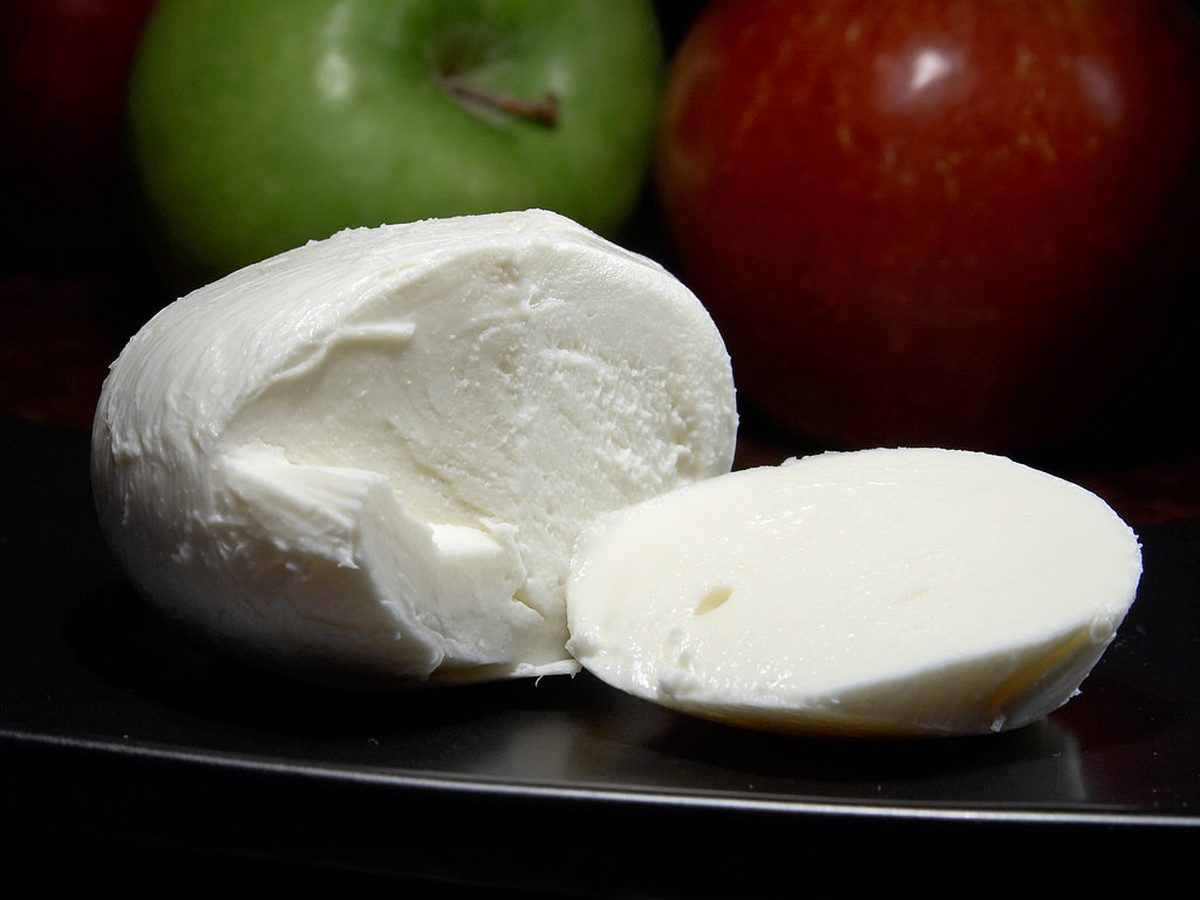
Fresh mozzarella is high in moisture with loosely linked proteins, the recipe for a flowing melt. Photograph: Jon Sullivan/Wikimedia Commons (public domain)
Image Credits: Wikimedia Commons (public domain)
What happens inside cheese when it heats
Cheese is a network of casein proteins that trapped fat and water when the curd was formed. When you heat cheese, you soften the milk proteins and fats to varying degrees, as The Kitchn explains. The protein network collapses. The fat, now liquid, helps everything flow.
How far that process goes depends on the cheese's construction. Moisture is the biggest lever: water helps protein strands separate under heat. So high-moisture cheeses soften at lower temperatures and flow more freely.
Fat is the lubricant that carries that flow. The protein structure itself matters too. Tight, heavily linked protein bonds resist breaking apart.
"Fat content, acidity, stretch, elasticity, moisture level and age are all factors that play a role in how a cheese performs on a pizza," Rachel Kerr of the Wisconsin Milk Marketing Board told PMQ. Mark Todd, a chef and consultant with the California Milk Advisory Board, narrowed it further: "There are three factors in melting: fat to protein ratio (whole-milk cheeses melt and flow better than part-skim), salt content and pH. Higher salt and lower pH (higher acidity) means less melting."
Why mozzarella flows and stretches
Mozzarella is a pasta filata cheese. That means its curds were stretched and kneaded in hot water during making. That stretching lines the proteins up in long, aligned fibers. That is why mozzarella pulls apart in strings like chicken breast, as PMQ describes.
Fresh mozzarella is also high in moisture and fairly young. So its protein bonds are loose and lightly linked. When heated, the water becomes mobile, the fat liquefies, and the aligned proteins slide past each other instead of locking up. The result is the classic pizza melt: flowing, stretchy, cohesive.
Whole-milk versus part-skim matters here. A standard whole-milk cheese is roughly 50 percent fat and 50 percent protein once water is removed, according to PMQ.
Part-skim mozzarella has more protein than fat. That is why many pizzerias blend mostly part-skim mozzarella for browning with 10 to 25 percent whole-milk cheese for added flow. High protein browns beautifully but flows less. High fat flows beautifully but resists browning.
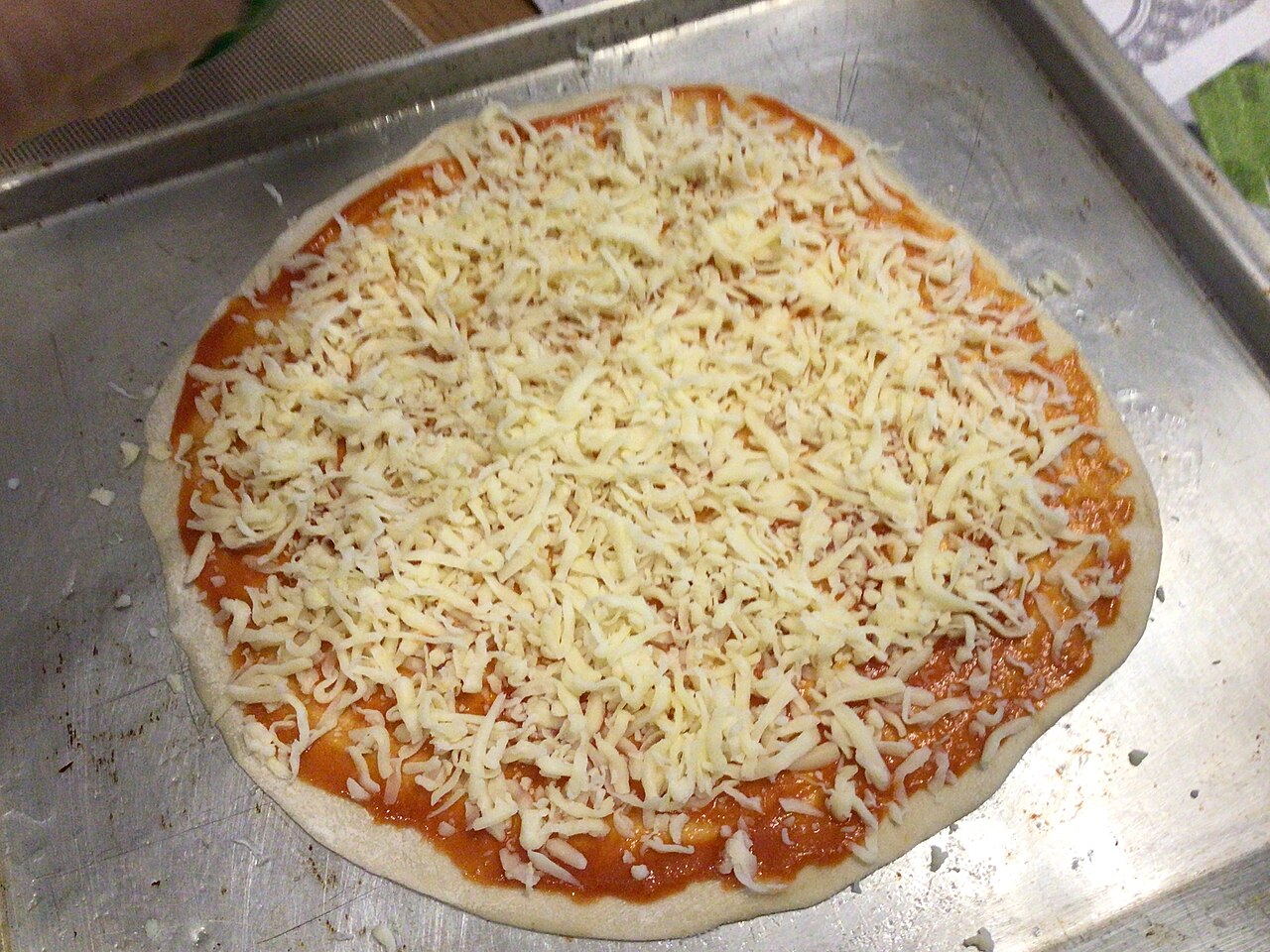
Mozzarella's aligned protein fibers and high moisture are what make pizza cheese flow and stretch. Photograph: FrameOverdose/Wikimedia Commons
Image Credits: Wikimedia Commons (CC0)
How age changes the way cheddar melts
Cheddar is the same milk as mozzarella treated differently. Aging rewrites its melting behavior. Young cheddar has extremely tight protein bonding, so it softens without melting and flowing, PMQ reports. Melt a mild cheddar and you get a soft, bendable slab rather than a pourable one.
Age the cheddar six months or more and the picture changes. Enzymes (natural protein-breaking substances) break down the protein network. The pH shifts, loosening the bonds that held the young cheese rigid. Aged cheddar becomes more flow-friendly. But very old, dry cheddars can turn crumbly or oily instead of smooth, because so much moisture has evaporated.
Acidity plays a role across all of this. Dairy scientist John Lucey told Scientific American that high-acid cheeses like feta are brittle and chalky precisely because of their acid content. A cheese with too little acid, like panela, is held together too firmly to flow. Cheddar sits in the workable middle. Where it lands depends on its age and make.
Why parmesan crisps instead of melting
Parmesan is built to resist melting. It is aged for a year or more, losing moisture until it sits well under 35 percent water.
Its proteins are densely linked, and its calcium content reinforces the structure into something rigid and glasslike. When heated, the proteins rearrange into a firmer, more brittle state instead of flowing.
Lower moisture makes parmesan less conducive to melting, Lucey told Scientific American. The Kitchn adds that hard, low-moisture cheeses need higher temperatures because their concentrated protein bonds are harder to break down. When they do give way, they melt as individual shavings rather than one connected mass. Nobody makes a grilled cheese from dry aged pecorino for the same reason.
What parmesan does instead is brown. Aging fills it with free amino acids and small peptides, which react with sugars under heat in the Maillard reaction (the browning reaction), producing deep flavor and golden color.
That is why grated parmesan turns into crisp, nutty shards on a hot dish. The same browning chemistry that colors seared meat is at work here. That is why parmesan excels as a finisher and fails as a melter.
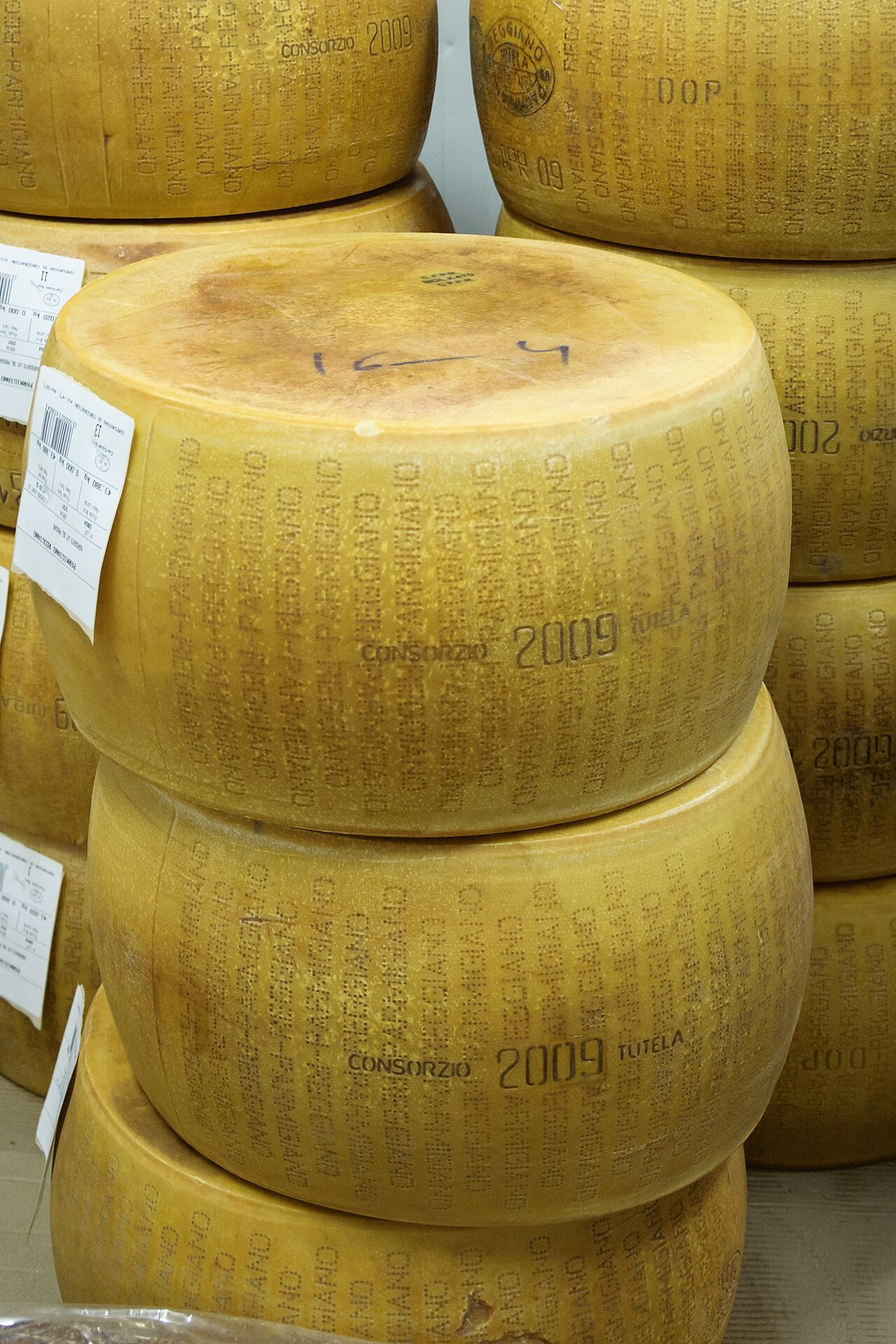
Aged wheels of Parmigiano Reggiano: a year or more of aging leaves too little moisture for a flowing melt. Photograph: Myrabella/Wikimedia Commons
Image Credits: Wikimedia Commons (CC BY-SA 4.0)
How to pick cheese that melts the way you want
For flowing, stretchy melts, choose young, high-moisture cheeses: fresh mozzarella, fontina, Monterey Jack, young Gouda. For smooth sauces, add cheese off the heat or at low temperature. Toss shredded cheese with a little starch first. That keeps the proteins from clumping into grainy lumps.
For flavor with decent melt, use aged cheddar or Gruyere. Expect a thicker, less stretchy result than mozzarella. Grate cheese yourself: pre-shredded cheese is coated in anti-caking starch that dulls melting.
Use parmesan, pecorino, and other hard aged cheeses as finishers. Shower them over hot food at the end, where they soften into the dish and brown on top, rather than asking them to do the melting. And if a cheese refuses to melt at all, check the label: reduced-fat versions of normally good melters turn rubbery because they lack the fat that carries the flow.
Why does mozzarella get stringy?
Its curds are stretched in hot water during making, aligning the casein proteins into long fibers. Those fibers slide apart in strands when heated. That is the stretch you see on pizza.
Can you make parmesan melt smoothly?
Not really. Its low moisture and tightly linked proteins mean it will soften and brown rather than flow. For a smooth parmesan sauce, melt it into a starch-thickened base like a bechamel instead of heating it alone.
Does aged cheese melt better or worse?
It depends on the cheese. Cheddar often melts better after months of aging as enzymes loosen its protein network. But very long-aged, dry cheeses like parmesan melt worse, because moisture loss eventually dominates.
Why does cheese sometimes turn oily instead of creamy?
The fat has separated from the protein network. This happens with overheating, very aged cheese, or low-moisture cheese heated too fast. Lower, slower heat keeps the mixture together.
The bottom line
Mozzarella flows because it is young, wet, and built from stretched protein fibers. Cheddar's melt changes with age as enzymes loosen its structure.
Parmesan refuses to pool because a year of aging leaves it too dry and too tightly knit, so it crisps and browns instead. Match the cheese to the job: melters for the melt, hard aged cheeses for the finish, and you will stop fighting your ingredients. For the stovetop science behind the browning, the Maillard reaction explained simply is worth a read.
---
Rive News is the research desk of this publication, covering the science behind everyday questions with sourced, verifiable reporting.
Latest in food
- Why pancakes come out flat instead of fluffy
- Why cookies spread thin or stay thick
- The Maillard reaction, in simple terms
Subscribe for one research-backed explainer every morning.
Corrections: if you spot an error, contact the research desk and we will correct it promptly. Published October 12, 2026. Copyright Rive News 2026.
Related stories

Why Does Bread Go Stale Faster in the Refrigerator?
Bread goes stale faster in the fridge because starch recrystallizes fastest near 4°C. Here is the retrogradation science and the right way t

Baking soda and baking powder: what's the difference?
Baking soda is pure sodium bicarbonate; baking powder adds two dry acids for double-acting lift. Learn when to use each, plus exact substitu

What Is the Maillard Reaction in Simple Terms?
The Maillard reaction is the browning chemistry between amino acids and sugars above 140 C that creates the crust, color, and rich flavor of