
Pancakes Come Out Flat? Why Your Stack Never Gets Fluffy
Key takeaways
- Expired baking powder is the top culprit. It loses its acid-base punch and releases too little carbon dioxide to lift the batter.
- Overmixing develops gluten that traps a dense crumb. A batter left sitting loses its gas bubbles before it hits the griddle.
- Five fixes cover almost every case: fresh double-acting powder, gentle mixing, a short 5-minute rest, correct heat, and the right batter thickness.
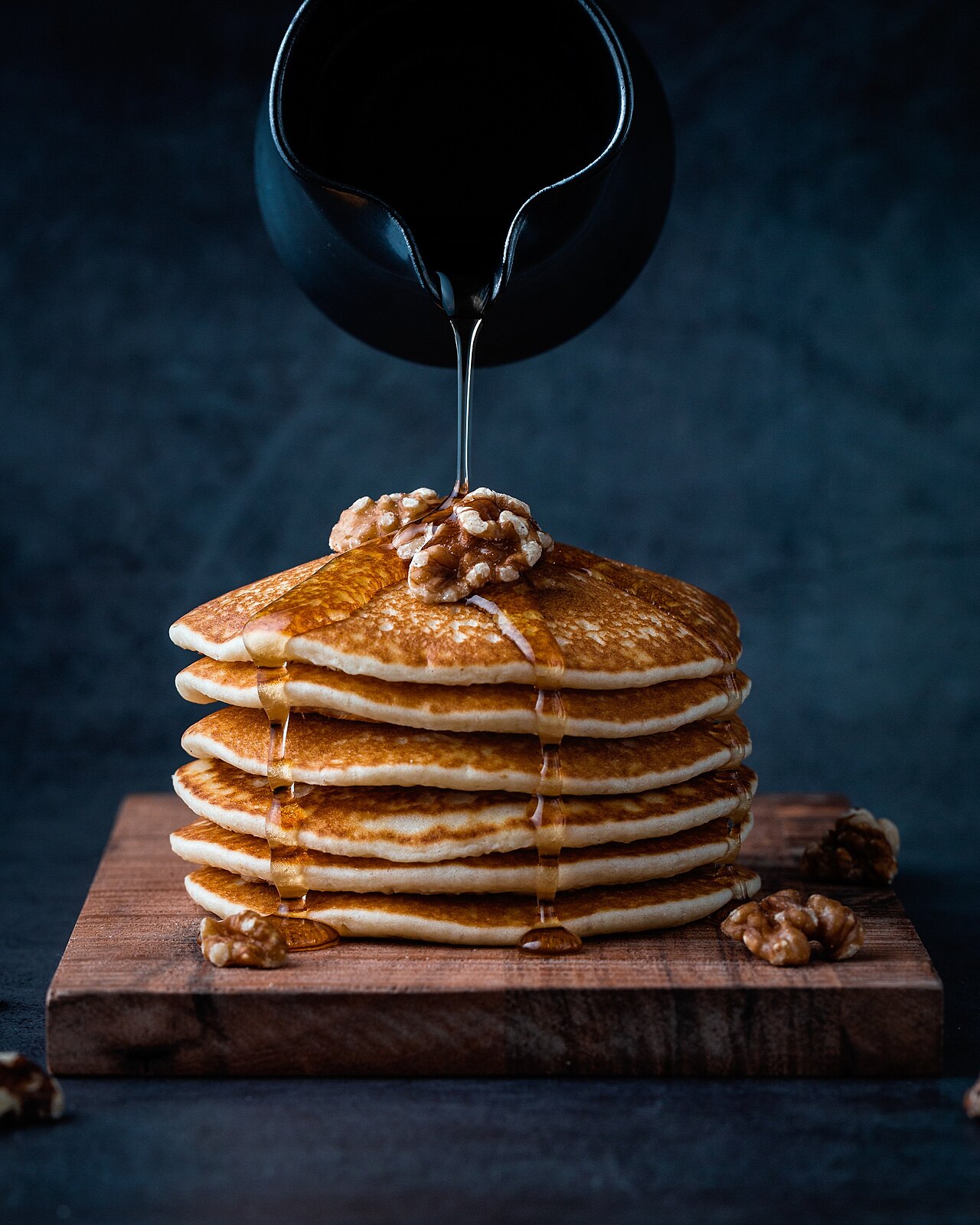
A tall stack of fluffy pancakes, the result of fresh leavening and a batter that is mixed gently and cooked promptly. Photograph: Mae Mu/Wikimedia Commons
Image Credits: Wikimedia Commons
Pancakes rise because of a small chemistry experiment inside the batter. A leavening agent, usually baking powder, releases carbon dioxide gas bubbles. A leavener is something that makes dough or batter rise.
It does this when it meets liquid and again when it meets heat. Those bubbles get trapped in the batter as it cooks. The trapped gas makes a pancake thick and airy instead of thin and flat.
When pancakes come out flat, the gas went missing. Either too little was produced, the batter could not hold it, or it escaped before cooking finished. Almost every flat stack traces back to one of five causes.
This article explains why pancakes come out flat instead of fluffy. It covers what baking powder actually does, the five mistakes that flatten a stack, and the fixes that restore real lift.
What baking powder actually does in pancakes
Baking powder is a blend of an acid and an alkaline base, usually cream of tartar and baking soda. It also has a little cornstarch to keep it dry. When the powder gets wet, the acid and base react and release carbon dioxide gas.
Double-acting baking powder, the kind most recipes call for, does this twice. Once when mixed with liquid, and again when the batter heats up on the griddle.
Those gas bubbles are the entire structure of a fluffy pancake. They expand in the heat of the skillet, pushing the batter upward. Meanwhile the egg proteins and flour starches set around them and lock the height in place.
Without enough gas, nothing pushes the batter up. Without a batter strong enough to trap it, the gas escapes and the pancake sets flat. Every cause below breaks one of those two links.
Cause 1: your baking powder is dead
This is the most common reason flat pancakes happen, and the easiest to miss. Fresh baking powder lifts effectively, but an expired canister quietly loses its leavening power, as Tasting Table explains. The acid and alkaline parts can separate or react with moisture absorbed in the jar.
So they release too little carbon dioxide when you need it.
Test yours before you blame anything else. Stir half a teaspoon of baking powder into a quarter cup of hot water. It should fizz energetically.
Weak fizz or none at all means the canister is dead. Replace it.
Store the new one with the lid tight, away from steam and heat. A baking powder canister kept open next to the stove degrades far faster than its printed expiration date suggests.
Cause 2: you overmixed the batter
Lumps are fine. Flat is not. When you stir batter aggressively to make it smooth, you develop gluten.
Gluten is the elastic protein network in wheat flour. It is the same network kneading develops in bread dough. A little gluten gives the pancake structure.
Too much turns the crumb tough and rubbery instead of airy.
Overmixed batter also lets gas escape. The gluten network tightens around the bubbles rather than ballooning around them. Aggressive stirring knocks out bubbles that already formed.
LaidBackBites puts it plainly: mix just until the ingredients are combined, and leave the lumps alone.
This is the same gluten logic behind other baked goods. If you have ever wondered why cake sinks in the middle after baking, structure gone wrong is part of that story too. For the full acid-base distinction that matters here, our guide on the difference between baking soda and baking powder lays out exactly what each leavener needs to work.
Cause 3: the batter sat too long
Fresh baking powder starts its first reaction the moment liquid touches it. The clock starts the second you finish mixing. Gas keeps escaping while the batter waits.
LaidBackBites advises cooking the batter right after mixing. Letting it sit too long lets those precious gases escape and leaves flat pancakes. The Gourmet Host adds the same warning for baking soda swaps.
The bubbles from a soda-and-acid reaction fade within minutes.
A short rest of about 5 minutes is the sweet spot. It lets the flour hydrate, which improves texture, without losing much gas. Hydrate means soak up water.
Thirty minutes on the counter, though, will cost you noticeable height.
Cause 4: the griddle heat was wrong
Heat does two jobs at once. It triggers the second wave of gas release from double-acting baking powder. It sets the pancake's structure before the bubbles collapse.
Both jobs need the right temperature.
Too cool, and the structure sets slowly while gas seeps out. You get pale, limp discs. Too hot, and the outside sets before the inside has finished rising.
That can also leave a dense center. The Cooking Facts recommends cooking pancakes over medium-high heat for 1 to 2 minutes per side until lightly browned.
A quick heat test: flick a few drops of water onto the griddle. They should sizzle and dance. They should not sit still and steam, and not vanish instantly.
That sizzle tells you the surface is ready to trigger the second lift. Keeping your cooking surface in good shape helps too. That is why our guide to seasoning cast iron matters for griddle-cooked breakfasts.
Cause 5: the liquid ratio was off
Batter thickness matters more than most people think. Too much liquid makes a thin batter. It spreads wide and cooks thin, like a crepe.
Too little liquid makes a dry, heavy batter that cannot expand properly.
The Cooking Facts points out this balance with pancake mixes. Adding too much liquid leads to thin, flat pancakes. Too little gives dry, dense ones.
Follow the recipe's ratio first, then adjust by the spoonful. A good pancake batter pours off the spoon slowly. It holds its shape briefly before spreading.
If you thicken batter, let it rest 10 to 15 minutes. The flour absorbs the liquid. Do not add more flour, which would throw off the leavening ratio and make the pancakes heavy.
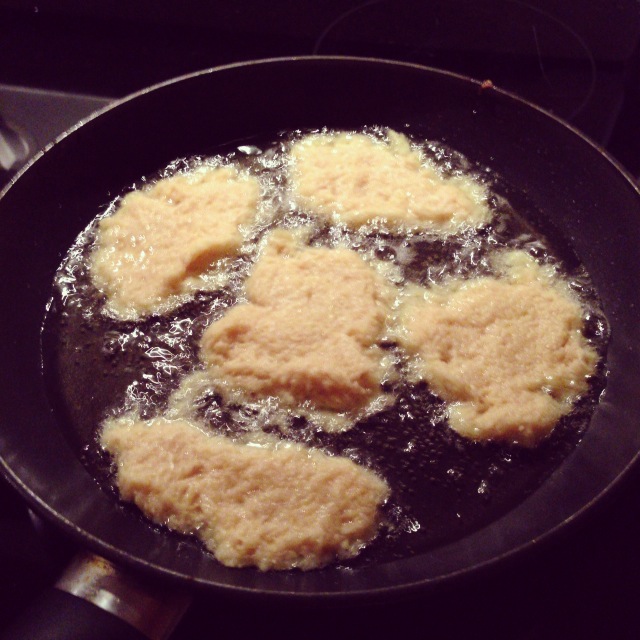
Pancakes cooking in a hot frying pan, where the heat triggers the second wave of lift from double-acting baking powder. Photograph: senapa/Wikimedia Commons
Image Credits: Wikimedia Commons
Quick fixes that actually work
Once you know the cause, the fixes are straightforward:
- Check and replace baking powder. The hot-water fizz test takes 30 seconds and rules out the most common culprit.
- Separate the eggs. Whip the whites to soft peaks and fold them in last. The beaten whites act like a natural leavener, adding air that expands on the hot griddle, a trick LaidBackBites highlights for extra-fluffy results.
- Rest 5 minutes, not 30. Hydration helps texture; waiting half an hour costs you gas.
- Preheat properly. A medium griddle that passes the water-sizzle test triggers the full double lift.
- Measure the batter. Use a quarter cup per pancake for consistent thickness and even cooking.
Flat or fluffy: a quick diagnosis table
| What you see | Most likely cause | Fix first |
|---|---|---|
| Dense and thin, like a crepe | Dead or missing leavener | Replace baking powder |
| Tough and rubbery | Overmixed batter | Stir gently, accept lumps |
| Pale and limp | Griddle too cool | Medium-high heat, water test |
| Flat but spongy | Batter sat too long | Cook within 10 minutes of mixing |
| Thin and crispy-edged | Too much liquid | Thicken and rest the batter |
Frequently asked questions
Can I fix pancakes that are already flat?
Not really, but you can repurpose them. Flat pancakes still work for roll-ups, breakfast wraps, or as a base for a pancake lasagna. The fixes in this article prevent the next batch from coming out the same way.
Does resting the batter really matter that much?
A 5-minute rest helps; a long rest hurts. The flour hydrates and thickens slightly in a few minutes. But every extra minute after that costs you carbon dioxide from the already-activated leavener.
Will whipped egg whites replace baking powder?
They help a lot but work best alongside it. The Gourmet Host notes that whipped whites lift through air expansion rather than chemical reaction. The foam deflates if the batter waits.
Use them as a boost, not a substitute for dead powder.
Why do my pancakes come out flat with a box mix?
Box mixes rely on their included baking powder, which ages on the shelf. Check the mix's date, measure the liquid ratio exactly, and avoid overmixing. The same rules apply: fresh leavener, gentle stirring, prompt cooking, right heat.
The bottom line
Flat pancakes are almost always a chemistry problem, not a cooking-skills problem. Start with fresh baking powder. Stir the batter just until combined.
Let it rest only a few minutes. Cook it on a properly heated griddle. Get those four right and the carbon dioxide will do the rest.
You will get the tall, tender stack you were aiming for.
---
Topics: pancakes, baking powder, baking science, leavening, breakfast recipes, cooking tips
Author bio: Rive News's research desk compiles science explainers from peer-reviewed studies and primary sources. It covers fitness, health, food, and everyday science for curious readers.
Latest in food
- Why Your Cake Sinks in the Middle After Baking
- The Difference Between Baking Soda and Baking Powder
- Why Cheese Melts Differently: Mozzarella vs Cheddar vs Parmesan
Subscribe to the Rive News newsletter for one science-backed explainer in your inbox each morning.
Copyright 2026 Rive News. Articles are written from public sources with named attribution. Report errors via the contact page.
Related stories

Why Does Bread Go Stale Faster in the Refrigerator?
Bread goes stale faster in the fridge because starch recrystallizes fastest near 4°C. Here is the retrogradation science and the right way

Baking soda and baking powder: what's the difference?
Baking soda is pure sodium bicarbonate; baking powder adds two dry acids for double-acting lift. Learn when to use each, plus exact

What Is the Maillard Reaction in Simple Terms?
The Maillard reaction is the browning chemistry between amino acids and sugars above 140 C that creates the crust, color, and rich flavor