
Why cake sinks in the middle after baking: 6 fixes that work
By Rive News
Research desk | Rive News
Key takeaways
- A sunken middle is the classic sign of an underbaked cake: the edges set while the center is still liquid and collapses as it cools.
- Too much leavening, opening the oven door early, and wrong oven temperature cause the same crater for different reasons.
- Most cakes are done at an internal temperature of 200 to 210 F, per King Arthur Baking: a thermometer ends the guessing.
A cake rises in the oven, looks magnificent through the glass, and then caves in the middle as it cools. The crater is not bad luck. It is physics, and almost always one of a short list of causes, each with its own fix.
This article explains why cakes sink in the middle: the main culprits, how to tell when a cake is truly done, how to prevent sinking next time, and what to do with a cake that already sank.
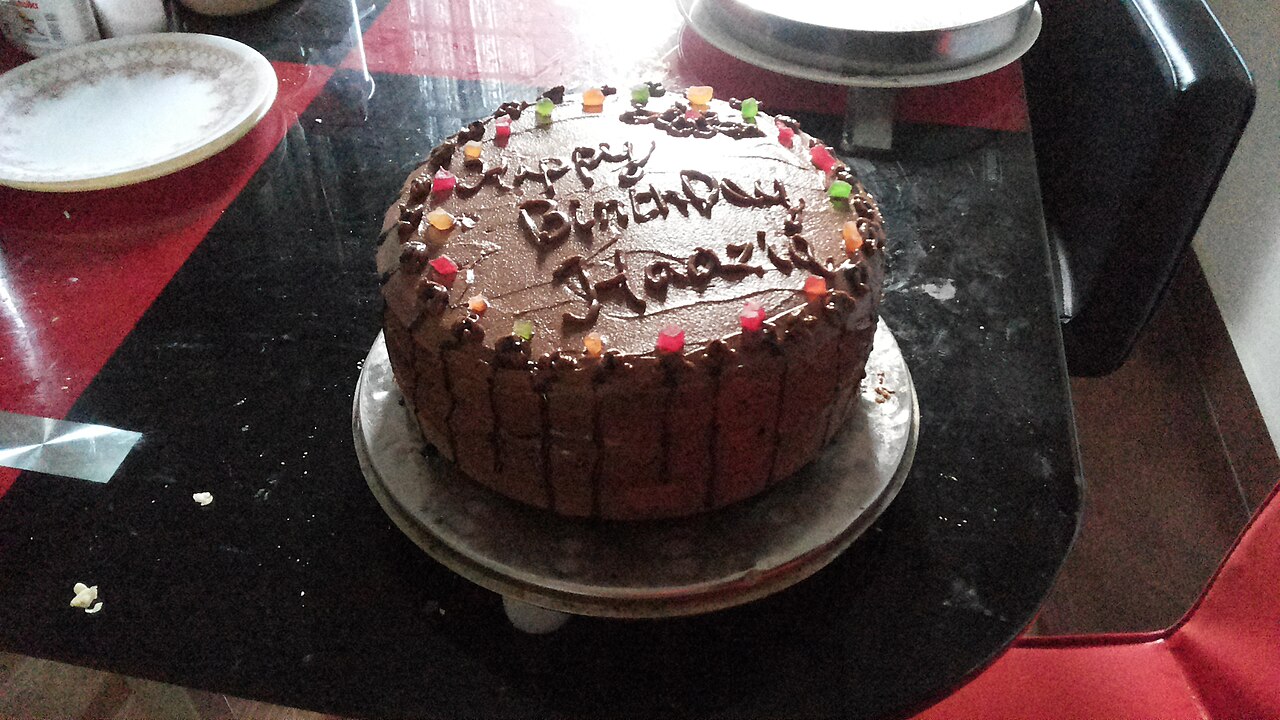
A level, fully baked cake holds its structure because the center had time to set. Photograph: Maniablooming/Wikimedia Commons
Image Credits: Wikimedia Commons (CC BY-SA 4.0)
The main culprits behind a sunken cake
Underbaking is the number one cause. A cake sets from the outside in. If you pull it too early, the edges and top look done while the center is still loose batter. As it cools, the unset middle cannot support itself and slumps. Wilton, the baking supply company, explains it exactly this way: if the center sinks, only the outside of the cake was cooked, and the fix is simply more time in the oven, as reported by Tasting Table.
Too much leavening agent. Baking powder and baking soda release gas that lifts the batter. Too much of either makes the cake shoot up fast, stretching its structure beyond what it can hold, and then collapse. The rise looks dramatic and the fall is worse. This is why measuring leaveners precisely matters more than measuring almost anything else in the recipe.
Opening the oven door too early. A blast of cool air drops the oven temperature suddenly, and an unset cake can deflate before its structure firms up. Every peek costs heat and time. Ingredients of a Fit Chick's troubleshooting guide lists this alongside underbaking and excess leavening as the big three.
Wrong oven temperature. Too cool, and the cake never sets properly in the middle. Too hot, and the outside sets and browns while the inside stays raw, which then sinks. Many home ovens run 15 to 25 degrees off their dials, so the temperature you set is not always the temperature you get.
Overmixing and weak structure. Beating the batter too long after adding flour develops gluten, the protein network that gives bread its chew. In cake, excess gluten makes a tough, tunnel-riddled crumb that can collapse unevenly. A thread on Baking Forums cites King Arthur Baking's own guidance that overcreaming the butter and overmixing after adding flour cause dense, gluey streaks, and references Paula Figoni's baking science text How Baking Works on the same point.
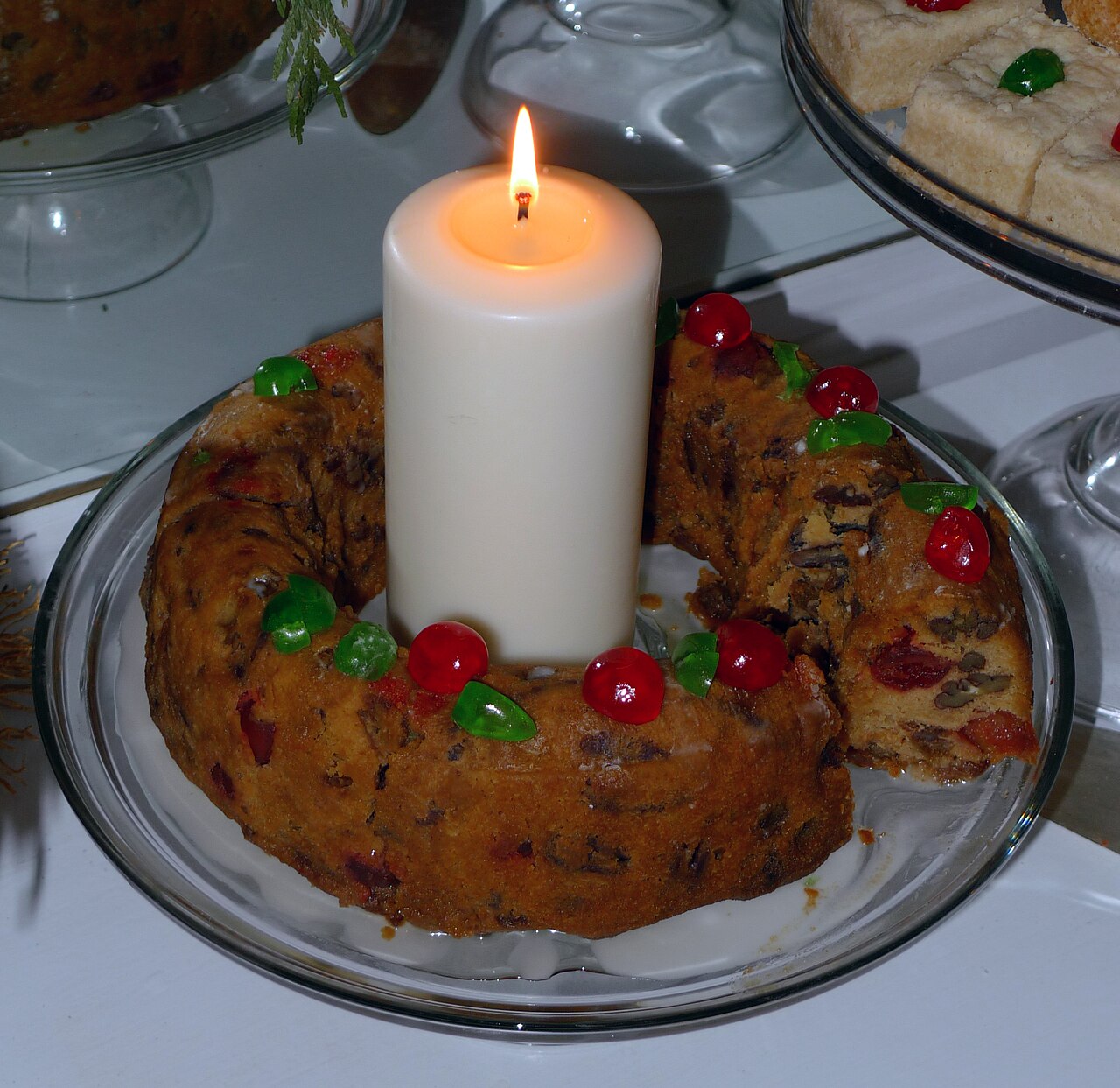
Heavy, dense batters like fruitcake are especially prone to sinking if the structure never fully sets. Photograph: Don Ramey Logan/Wikimedia Commons
Image Credits: Wikimedia Commons (CC BY-SA 4.0)
How to tell when a cake is truly done
Stop trusting the clock alone and start trusting tests. The toothpick test is the classic: insert a toothpick or skewer in the center, and it should come out mostly clean, with no wet batter clinging to it, according to The Spruce Eats via Tasting Table.
The touch test is faster. Press the top of the cake lightly with your fingertip. If it springs back, the crumb has set. Bon Appetit recommends exactly this check.
The most reliable method is a thermometer. King Arthur Baking advises that most cakes finish baking at an internal temperature of 200 to 210 degrees Fahrenheit. A forum baker troubleshooting a pound cake found the center reading 195 F while the edges were at 208 F, which explained the sunken, undercooked middle perfectly.
When the center hits the target range, the cake is done no matter what the timer says. This is the same discipline that fixes flat pancakes: structure first, timing second.
How to prevent sinking next time
- Calibrate your oven. An inexpensive oven thermometer tells you the real temperature. Adjust the dial so the oven actually holds what the recipe asks for, and preheat fully before the pan goes in.
- Measure leaveners precisely. Level off every teaspoon of baking powder or soda. Know the difference between baking soda and baking powder before substituting, and check that yours is fresh: old leavening loses its lift.
- Mix just until combined. Once flour goes in, stir only until the streaks disappear. Overmixing builds gluten that toughens the crumb and invites collapse.
- Use room-temperature ingredients. Cold eggs and milk do not emulsify evenly, which leads to uneven texture and rise. Set them out 30 to 60 minutes before baking.
- Keep the oven door shut. Resist peeking for at least the first three-quarters of the bake time. If you must check, be quick and close the door gently.
- Use the right pan and fill it correctly. A pan that is too small or too deep leaves the center underbaked while the edges overbake. Fill pans no more than two-thirds full so heat reaches the middle.
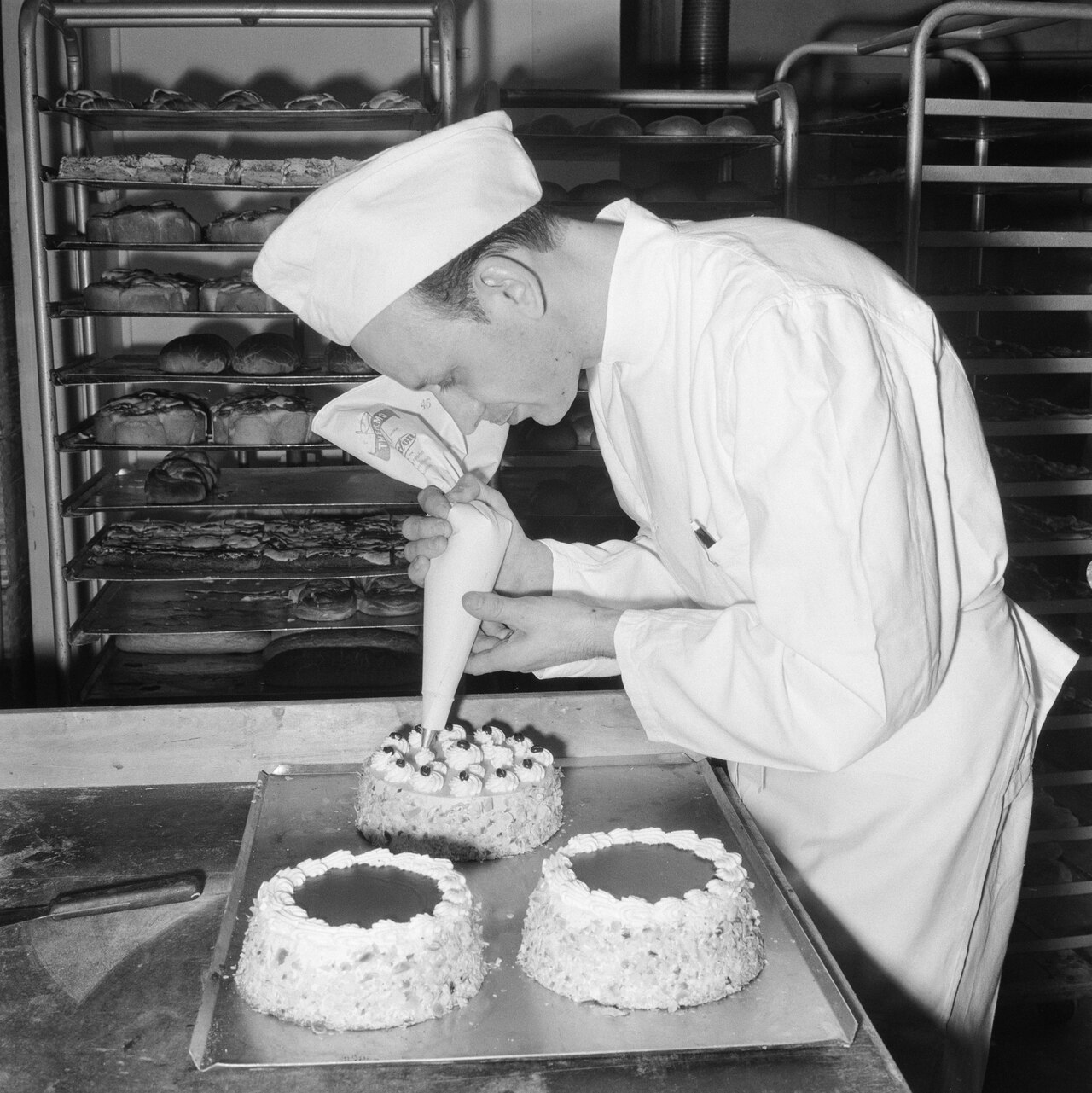
Generations of bakers have judged doneness by touch, sight, and testing rather than the clock alone. Photograph: U. A. Saarinen/Wikimedia Commons
Image Credits: Wikimedia Commons
What to do with a cake that already sank
A sunken cake is rarely a total loss. If the middle is merely dipped but fully baked, level the top with a serrated knife and frost it. Filling the crater with frosting, fruit, or ganache turns a flaw into a feature.
If the center is still wet and raw, the cake is underbaked rather than sunken. Put it back in the oven for 5 to 10 more minutes and test again. For a cake that is done but cratered beyond saving as a layer, cut it into cubes for trifle, where the sunken middle disappears under cream and fruit.
Heavy add-ins make sinking more likely, so next time toss fruit or chocolate chips in flour before folding them in. The coating helps them grip the batter instead of dragging the center down, the same principle that keeps cookies thick instead of spreading thin.
Can you fix a cake that sank in the middle?
If it is fully baked, disguise it: level, fill, and frost the crater, or repurpose it as trifle. If the center is wet, return it to the oven for a few more minutes. You cannot re-inflate a collapsed crumb, but you can almost always serve it.
Why does my cake rise and then fall?
The structure rose on gas from the leavening before the crumb set, then collapsed under its own weight. Usual suspects are too much baking powder or soda, an oven that is too hot, or the cake coming out before the center firmed up.
Does opening the oven door really make cake sink?
It can. The sudden temperature drop deflates a cake whose center has not set yet. Keep the door closed for at least the first 75 percent of the baking time.
What temperature should the inside of a cake be?
King Arthur Baking gives 200 to 210 degrees Fahrenheit as the finished range for most cakes. An instant-read thermometer in the center is the most reliable doneness test there is.
The bottom line
A cake sinks because its center never set, rose too fast on excess leavening, or lost heat at the wrong moment. Bake to internal temperature rather than the clock, measure your leaveners, mix gently, and leave the oven door alone. Do those six things and the middle will stay where it belongs: level with the rest of the cake.
---
Rive News is the research desk of this publication, covering the science behind everyday questions with sourced, verifiable reporting.
Latest in food
- Why pancakes come out flat instead of fluffy
- Why cookies spread thin or stay thick
- Baking soda vs baking powder: the difference
Subscribe for one research-backed explainer every morning.
Corrections: if you spot an error, contact the research desk and we will correct it promptly. Published October 12, 2026. Copyright Rive News 2026.
Related stories

Why Does Bread Go Stale Faster in the Refrigerator?
Bread goes stale faster in the fridge because starch recrystallizes fastest near 4°C. Here is the retrogradation science and the right way t

Baking soda and baking powder: what's the difference?
Baking soda is pure sodium bicarbonate; baking powder adds two dry acids for double-acting lift. Learn when to use each, plus exact substitu

What Is the Maillard Reaction in Simple Terms?
The Maillard reaction is the browning chemistry between amino acids and sugars above 140 C that creates the crust, color, and rich flavor of