
Why Cast Iron Needs Seasoning and What Seasoning Actually Is
By Rive News
Research desk | Rive News
Key takeaways
- Seasoning is oil baked onto cast iron. Heat changes it (polymerization) into a hard, plastic-like layer stuck to the metal.
- Bare cast iron rusts when it touches moisture. Seasoning is the barrier that stops the rust.
- Unsaturated oils work best. The oven method: a thin coat of oil, pan upside down, baked at about 450°F for an hour.
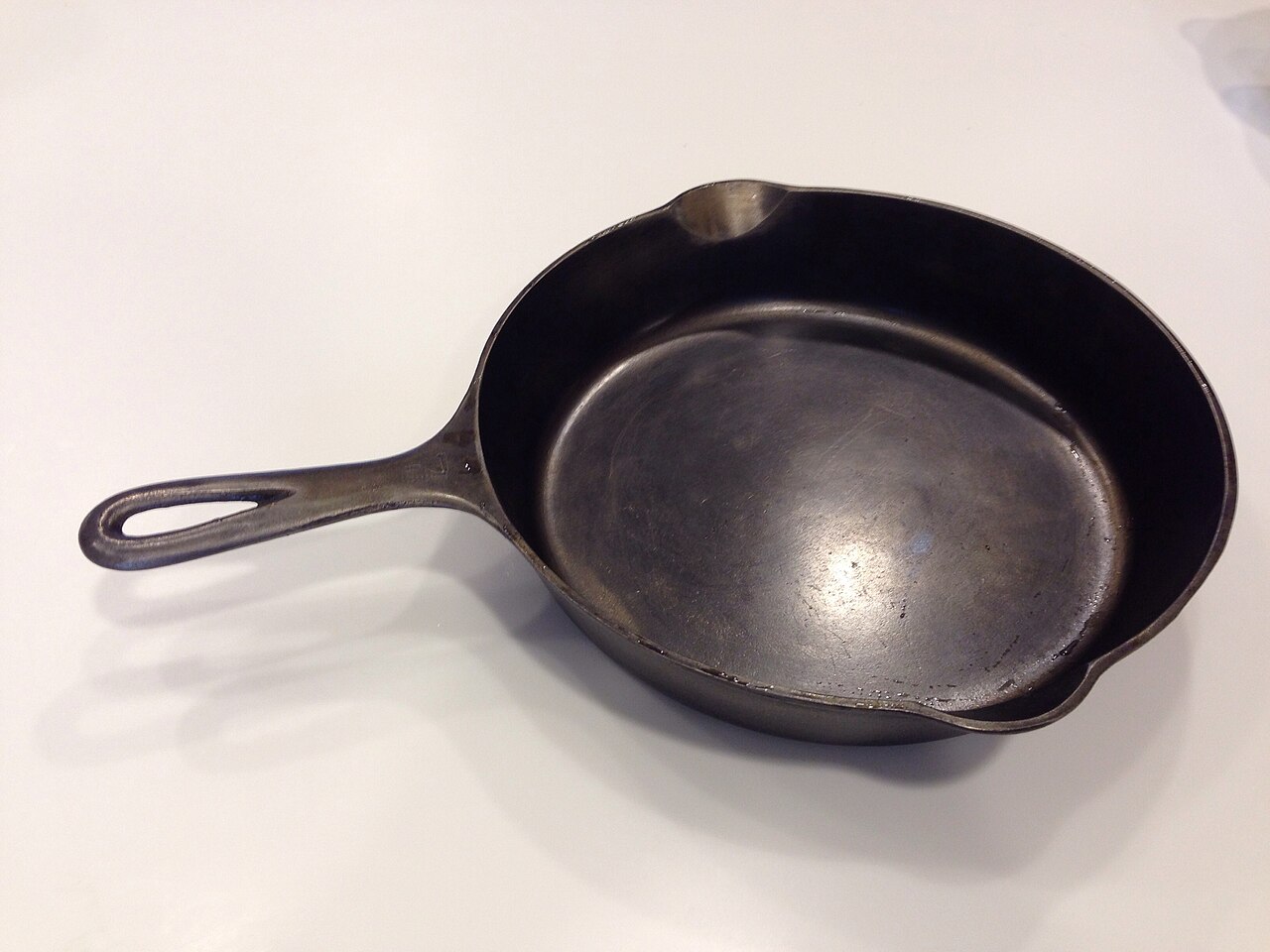
A well-seasoned cast iron skillet showing the black patina of polymerized oil. Photograph: Wikimedia Commons
Image Credits: Wikimedia Commons (CC BY-SA 4.0)
A new cast iron skillet arrives looking dry and gray. It looks nothing like the glossy black workhorse in your grandmother's kitchen. The difference between the two is seasoning. Despite the cooking-sounding name, it has nothing to do with salt and pepper. Seasoning is a layer of oil that heat has changed and bonded to the iron itself.
Cast iron needs that layer for one blunt reason: iron rusts. Without a barrier between the metal and the moisture in food and air, a bare pan corrodes (eats away), pits (gets tiny holes), and finally becomes unusable. This article explains what seasoning is at the chemical level, why the pan cannot do without it, and how to build the layer properly.
What is seasoning, exactly?
Lodge, the American foundry that has made cast iron cookware since the 19th century, defines it plainly in its seasoning guide: "Seasoning is just oil baked onto cast iron and carbon steel. It gives your cookware that classic black patina." The same guide explains the science: "When oil is heated in cast iron, it bonds with the metal through a process called polymerization, creating a layer of seasoning."
Polymerization is the heart of the whole thing. Cooking oil is made of fatty acid chains.
Heat those chains past their smoke point (the temperature where the oil starts smoking) near iron, and they link together into long, hard polymers. That makes a dry, plastic-like coating that is chemically bonded to the pan, not just sitting on it. Each round of cooking adds another paper-thin layer. That is why Lodge's manual notes that seasoning "is an ongoing process that gets better and better the more you cook."
That bonded layer does two jobs at once. It seals the iron away from water and air, which stops rust. It also fills in the naturally rough, pebbly texture of cast metal, which gives food less to grip. The nonstick quality everyone prizes is a side effect of a surface that layer upon layer of hardened oil has smoothed and sealed.
Why does cast iron need it?
Cast iron is nearly pure iron with some carbon. Iron's chemistry with water is unforgiving. Leave a bare pan damp, and orange rust blooms within hours.
Rust is not just cosmetic: it pits the surface, flakes into food, and shortens the pan's life. Guides on cast iron care always name moisture as the enemy. Bad drying, humid storage, and skipped oiling are the standard causes of rust.
Seasoning breaks that cycle by making the surface water-repelling and airtight. Water beads on polymerized oil instead of reaching the metal. The iron underneath stays intact. This is also why the standard care routine is wash, dry fully, and rub in a light coat of oil while the pan is still warm. Lodge's owner manual instructs: "Rub with a very light layer of vegetable oil, preferably while the cookware is still warm."
Note that seasoning is not a factory-made chemical coating like the PTFE on nonstick pans. There is nothing synthetic in it, just oil and heat. You can repair it at home whenever it wears thin.
Lodge pre-seasons its cookware with soy-based vegetable oil and nothing else, according to the company's manual. But the pan you buy is only the starting point. The real seasoning builds up in your kitchen, one fried egg at a time.
Which oil actually works?
Here the chemistry gets opinionated, and a lot of folk wisdom fails the test. The polymerization that creates seasoning needs unsaturated fatty acids. These are the bendy chains in vegetable oils that link together easily under heat. Saturated fats, the straight chains in bacon grease or lard, mostly do not polymerize at all.
Cast-iron expert de Geus put it bluntly in an interview with The Takeout, as reported by Tasting Table: "It's an old myth to season with a saturated fat (bacon fat, for example)." His reasoning: "From a chemistry perspective, saturated fats by nature don't polymerize." The reason grandmothers' bacon-grease pans still worked is that animal fats contain some unsaturated fat mixed in. That is what actually formed the layer, just inefficiently.
The practical advice from multiple seasoning guides is the same: use a neutral, unsaturated oil with a high smoke point. Canola, grapeseed, sunflower, and plain vegetable oil all qualify. They are cheap and flavorless.
Flaxseed oil polymerizes very fast but costs more and can flake if applied thickly. Olive oil and butter are poor choices for the first bake. Their low smoke points make them burn before they bond properly.
The more important variable than the oil is the thickness of the coat. Nearly every guide stresses the same rule: wipe the oil on, then wipe it off like you made a mistake.
A thick layer does not polymerize cleanly. It turns sticky or gummy. The pan should look almost dry before it goes into the oven.
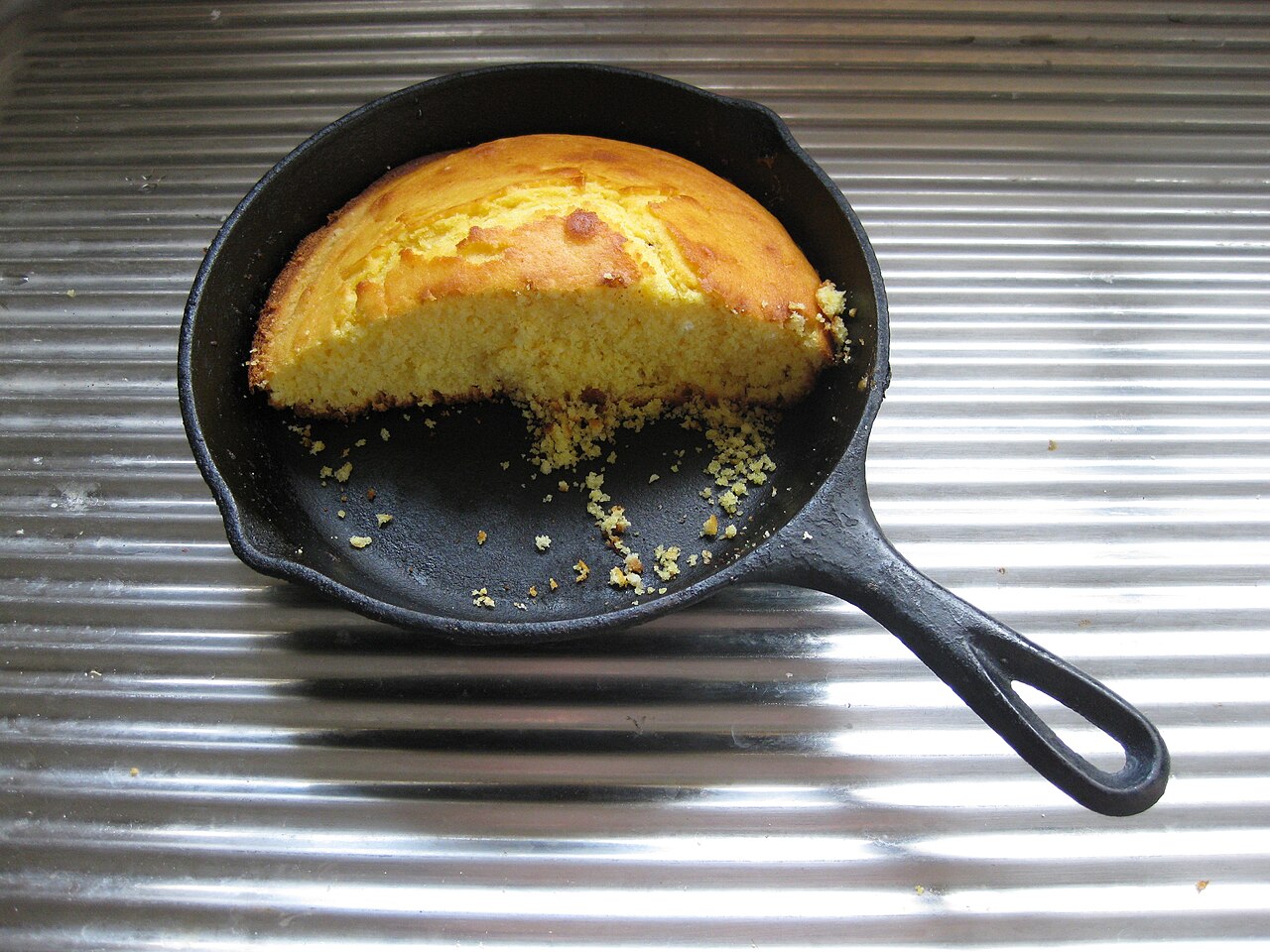
Cornbread baked in cast iron, which builds seasoning with every use. Photograph: Wikimedia Commons
Image Credits: Wikimedia Commons (CC BY 3.0)
How to season a pan step by step
The oven method that Lodge and independent guides agree on goes like this. Start with a clean, fully dry pan. Any moisture left on the iron will fight the oil.
Rub a very thin, even layer of unsaturated oil over the whole pan, inside and out, including the handle. Then wipe it down again with a clean cloth until the surface looks nearly dry.
Place the pan upside down in an oven heated to 450 to 500 degrees Fahrenheit, with foil on the rack below to catch drips. Bake for one hour.
That steady high heat is what drives polymerization to completion, as Tasting Table's temperature guide and This Old Baker's walkthrough both describe. Let the pan cool in the oven. Then repeat the cycle two or three more times for a new or stripped pan.
Upkeep is simpler than the full process. After cooking, wash with hot water and a soft sponge. Use only a small amount of mild soap for stubborn residue.
Dry the pan right away and fully. A few minutes on a warm burner works. Then rub in that whisper-thin coat of oil while it is still warm. Lodge's manual is clear about what to avoid: dishwashers, metal scouring pads, and harsh detergents all damage the seasoning you worked to build.
If rust does appear, it is fixable. Scour the rusted area with steel wool. Wash, dry fully, oil lightly, and run the oven cycle again. The seasoning is renewable, which is the whole point: a cast iron pan can outlive its owner because its protective layer can always be rebuilt.
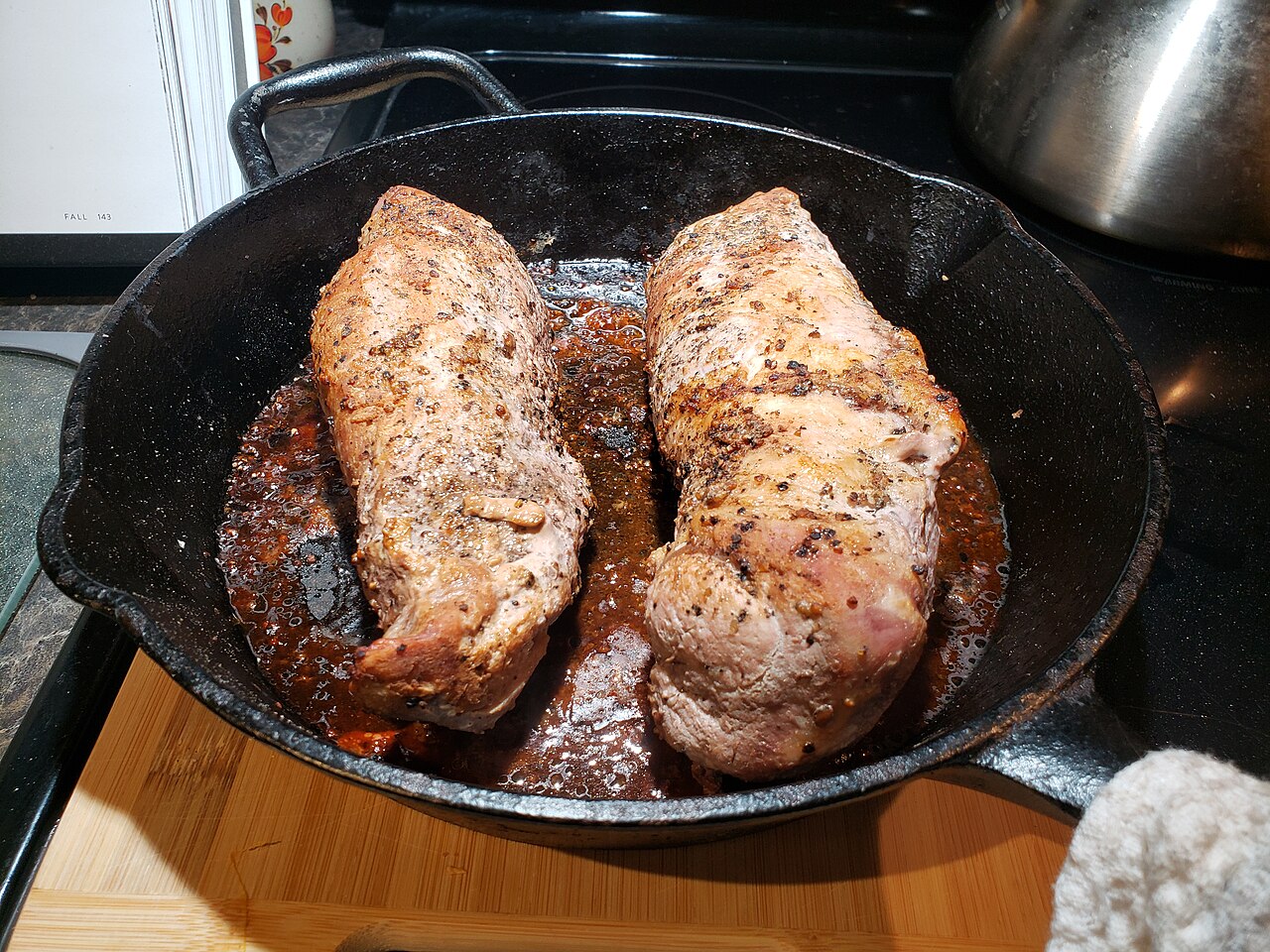
A pork tenderloin seared in cast iron, where high heat and oil keep building the patina. Photograph: Wikimedia Commons
Image Credits: Wikimedia Commons (CC BY 4.0)
The bottom line
Seasoning is polymerized oil bonded to iron: a hard, black, rust-proof skin that also cooks like a natural nonstick surface. Cast iron needs it because bare iron plus moisture is a short road to rust. The layer is easy to maintain once you know the rules.
If your pan is new or looking dull, run one full oven cycle this weekend: thin coat of canola oil, upside down at 450°F for an hour, then cook something fatty in it. Regular use does the rest. For the browning chemistry that makes cast-iron searing so good, see our explainer on the Maillard reaction, and if dinner is steak night, read why you should rest meat after cooking.
Frequently asked questions
Can you use soap on cast iron?
Yes, in small amounts. Lodge's own care instructions allow mild soap for stubborn food, as long as you dry the pan right away and re-oil it. What damages seasoning is soaking, dishwashers, and harsh detergents, not a brief wash.
Why is my seasoning sticky?
Too much oil. A thick coat cannot polymerize fully and hardens into a gummy layer instead. The fix is to wipe the oil off until the pan looks dry before baking, and to bake hot enough and long enough for the thin film to harden.
Does bacon grease work for seasoning?
Poorly. Saturated fats barely polymerize, so bacon grease builds seasoning slowly and unevenly compared with unsaturated oils like canola or grapeseed. It works for everyday cooking upkeep, but it is a bad choice for the first oven seasoning.
How often should you re-season?
Only when the pan tells you to: dull patches, food starting to stick, or any sign of rust. With regular cooking and light oiling after each wash, a full oven re-seasoning is rarely needed, sometimes only once or twice a year.
---
Rive News is the research desk behind these explainers. We read the primary sources, check the numbers, and write what we can verify.
Latest in Food
- The Maillard Reaction in Simple Terms
- Why Should You Rest Meat After Cooking?
- Why Do Pancakes Come Out Flat Instead of Fluffy?
- Why Does Cheese Melt Differently: Mozzarella vs Cheddar vs Parmesan?
Subscribe for one verified food-science explainer in your inbox every morning.
Corrections: spotted an error? We fix verified mistakes promptly and note the update. Standards: every claim traced to a named source; no invented quotes, statistics, or experts.
Related stories

Why Does Bread Go Stale Faster in the Refrigerator?
Bread goes stale faster in the fridge because starch recrystallizes fastest near 4°C. Here is the retrogradation science and the right way t

Baking soda and baking powder: what's the difference?
Baking soda is pure sodium bicarbonate; baking powder adds two dry acids for double-acting lift. Learn when to use each, plus exact substitu

What Is the Maillard Reaction in Simple Terms?
The Maillard reaction is the browning chemistry between amino acids and sugars above 140 C that creates the crust, color, and rich flavor of