
Why Do You Need to Rest Meat After Cooking
Key takeaways
- Heat tightens muscle fibers and squeezes juice out of them, so a fresh-cut steak loses more juice than a rested one.
- Resting lets fibers relax and reabsorb some juice while the internal temperature evens out across the cut.
- The USDA sets 145 F plus at least 3 minutes of rest as the safe minimum for whole steaks, chops, and roasts.
Cut a steak the second it leaves the pan and juice floods the board. Wait a few minutes and the same steak stays moist on the plate.
The difference is not luck. It is muscle physics.
This article explains what heat does to meat fibers, what resting changes inside the cut, how long to rest each type of meat, and how resting connects to food safety.
What heat does to meat
Meat is mostly water held inside long muscle fibers. Those fibers are bundled together by connective tissue. When heat reaches them, the proteins in the fibers tighten.
Tight fibers hold less water. The water they squeeze out moves into the spaces between fibers and toward the surface.
That is why longer cooking dries meat out. The hotter and longer the cook, the harder the fibers contract, and the more water they push out.
A steak cooked past 150 F turns firm and dry because its fibers have contracted hard and forced out much of their moisture. A steak pulled near 130 to 135 F keeps a warm red center and a springier texture because its proteins have only begun to firm up.
The red juice that runs from a cut steak is not blood. It is water mixed with myoglobin, the protein that carries oxygen in muscle and gives meat its colour.
Knowing that helps make sense of resting. The goal is to keep that water inside the fibers, not to keep blood inside the meat.
What resting actually changes
Resting works through two shifts at once. First, as the meat cools slightly, the muscle fibers relax. Relaxed fibers can hold more water than tight ones.
Some of the juice that heat pushed out gets pulled back in. Tasting Table describes the same shift: resting lets fibers relax, which lets them hold more liquid and reabsorb some of the juices they pushed out.
Second, the temperature inside the cut evens out. The outside of a steak or roast is far hotter than the center when it leaves the heat. During the rest, heat keeps moving inward while the outer layers cool.
The result is a more even temperature from edge to center. The pressure that was driving juice toward the surface drops as the temperature gradient falls.
Think of it as a traffic problem. While the meat sits over high heat, juice is under pressure to escape. Cutting at that moment opens a gate.
Resting lowers the pressure first, so far less juice leaves when the knife goes in. The meat also finishes cooking during this window, a shift cooks call carryover cooking.
Carryover cooking: the rest keeps cooking the meat
A thick steak or roast keeps climbing in temperature after it leaves the heat. Many cooks pull a steak about 5 F below the target temperature and let carryover heat close the gap during the rest.
A thick roast can climb more. A thin cut climbs less.
This is why thermometers beat timers. A roast that reads 140 F at the center when it leaves the oven may read 145 F after a few minutes on the board. Pulling at the final target instead of below it risks overshooting into dry territory.
Carryover also explains why the USDA rest rule is part of the safety rule, not a garnish. For whole steaks, chops, and roasts, the USDA sets a minimum internal temperature of 145 F, followed by a rest of at least 3 minutes.
The rest lets the temperature even out and stay in the safe zone while the meat finishes. KitchPrep notes the same point: the 3-minute rest is part of the safety guidance, since temperature inside the steak continues to even out during those minutes.
How long to rest each cut
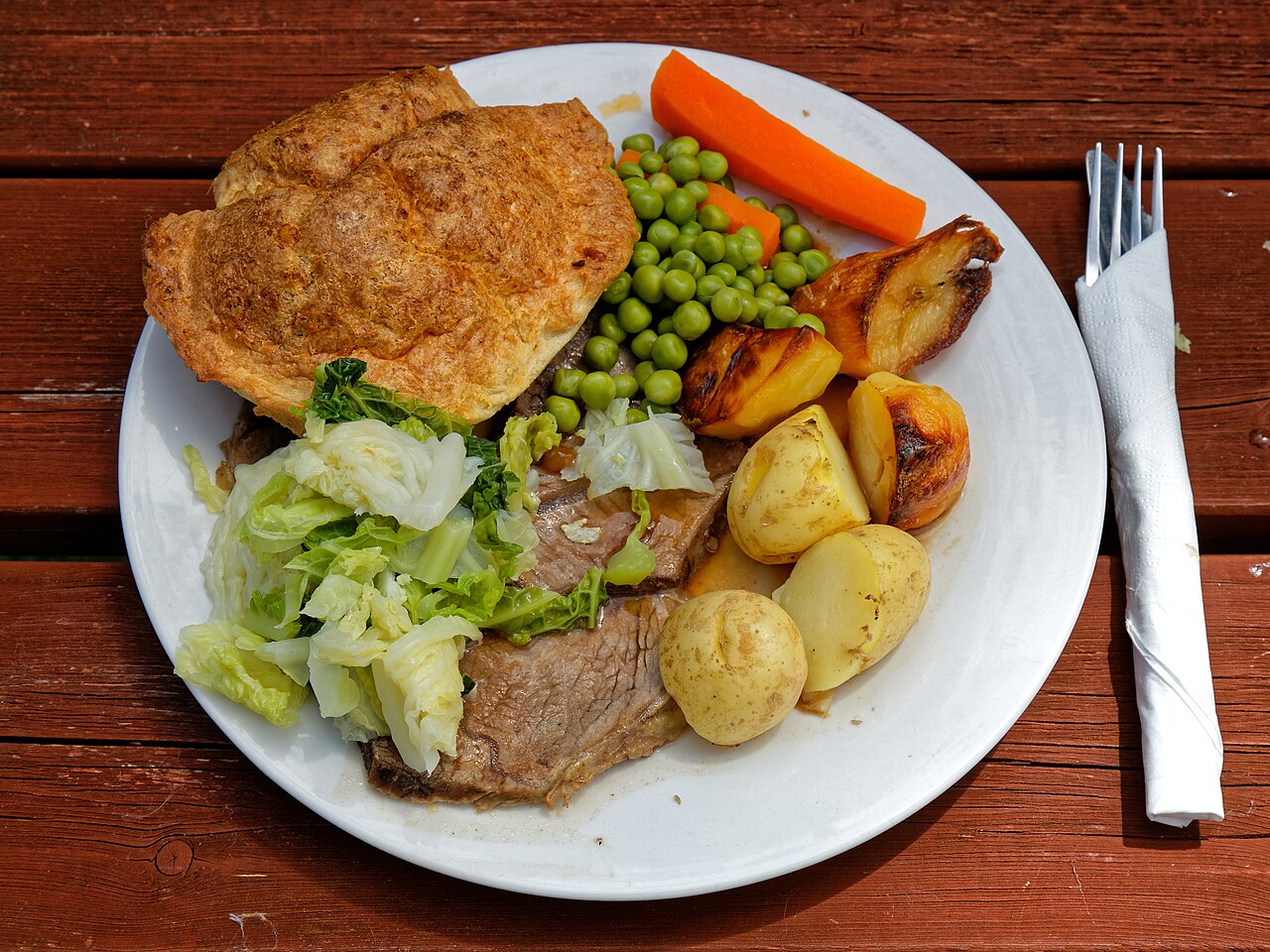
Rest time scales with size. Small cuts need minutes. Large roasts need most of an hour.
Steaks and chops need about 5 to 10 minutes. A common rule of thumb is about 5 minutes per inch of thickness.
Thicker steaks benefit from the longer end of that range. Tasting Table calls 5 minutes a good baseline and notes that closer to 10 minutes works best for a juicy steak.
Whole roasts need 20 to 40 minutes, depending on size. A large prime rib or turkey needs time for its deep center to even out.
Tenting with foil keeps the surface warm without steaming the crust soft. A warm oven near 150 F can hold a steak during a longer rest without overcooking it.
Chicken and other poultry need about 10 to 15 minutes for a whole bird, and about 5 minutes for breasts and thighs. Ground meat patties need only a few minutes, and the USDA sets their safe minimum at 160 F. Whole poultry needs 165 F.
Resting does not replace those temperatures. It works alongside them.
One warning applies to every cut. Resting on a cold plate or a cold board pulls heat away fast.
Rest on a warm plate or a wooden board, loosely tented with foil. The foil should sit loosely so steam escapes and the crust stays crisp.
The thermometer habit that matters most
The USDA reports a telling gap. In a meal preparation study from its Food Safety and Inspection Service, only 55% of people used a food thermometer to check doneness, even though 88% said they owned one.
The rest judged by colour, firmness, or time. The USDA advises against relying on colour, firmness, or time alone.
Colour misleads in both directions. Ground beef can stay pink inside after reaching a safe temperature.
A steak can look brown outside while the center is still cool. A thermometer placed in the thickest part, away from bone, fat, or gristle, gives the number that matters.
The habit to build is simple. Probe early, pull near the target, rest, then probe again if you want to confirm. For a whole steak, the reading after the rest is the one that should meet the 145 F minimum.
For ground meat, the reading should meet 160 F. For poultry, it should meet 165 F.
Common resting mistakes
Cutting too early is the classic mistake. The board floods, the first slices look dry, and the rest of the meat follows.
If juice pours out when you cut, the meat was still too hot inside. Next time, add a few minutes.
Wrapping tightly in foil is the second. A tight wrap traps steam and softens a crisp crust.
Tent the foil loosely, with air gaps at the sides. The goal is gentle warmth, not a steam bath.
Resting in a cold kitchen is the third. A drafty counter or a cold metal tray can cool a thin steak too far before the rest pays off. A warm plate, a wooden board, or a low oven holds the meat in the right zone.
Skipping the rest for thin cuts is the fourth. A thin steak or a pork chop needs only a few minutes, but those minutes still count.
Even a 3-minute pause lets the surface settle and the juice redistribute. The USDA minimum rest of 3 minutes is a floor, not a suggestion to ignore for small cuts.
FAQ
Does resting make meat more tender?
Resting does not change the toughness of the fibers themselves. It keeps more juice inside the meat, and juicy meat feels more tender on the bite. The tenderness gain comes from moisture, not from any softening of the muscle.
Should I rest meat before or after slicing?
Rest whole cuts before slicing. Slicing exposes far more surface, so juice escapes faster from slices than from a whole piece. Slice after the rest, and serve promptly.
Does resting apply to sous vide meat?
Sous vide meat cooks evenly at a steady temperature, so the temperature gradient is smaller. A short rest of a few minutes still helps the surface settle after searing. Long rests matter less for sous vide than for oven or grill cooking.
Can meat rest too long?
Yes. A steak left for 30 minutes goes cold and loses the benefit.
A large roast holds heat longer and can rest 40 minutes or more. Match the rest to the size of the cut, and keep the resting spot warm.
The bottom line
Resting meat works because heat tightens fibers and pushes juice out, and a short pause lets those fibers relax and pull some juice back in. The temperature evens out at the same time, and carryover cooking finishes the job. Rest steaks and chops 5 to 10 minutes, roasts 20 to 40 minutes, and poultry 5 to 15 minutes.
Use a thermometer, respect the USDA minimums, and let the knife wait a few minutes. The board stays drier, and the meat stays juicier.
Tags: cooking, meat, food science, steak
Latest in Food
- How to sharpen a kitchen knife without a sharpener
- How to cook rice that is never sticky or burnt
- How the Maillard reaction makes food taste better
Subscribe for one practical food guide in your inbox each week.
Related stories

Why Does Bread Go Stale Faster in the Refrigerator?
Bread goes stale faster in the fridge because starch recrystallizes fastest near 4°C. Here is the retrogradation science and the right way

Baking soda and baking powder: what's the difference?
Baking soda is pure sodium bicarbonate; baking powder adds two dry acids for double-acting lift. Learn when to use each, plus exact

What Is the Maillard Reaction in Simple Terms?
The Maillard reaction is the browning chemistry between amino acids and sugars above 140 C that creates the crust, color, and rich flavor