
What Is Blossom End Rot on Tomatoes and What Causes It?
Key takeaways
- Blossom end rot is a calcium-uptake disorder, not a disease or pest. It starts as a tan spot on the fruit's blossom end that turns black and leathery.
- Most cases come from irregular watering blocking calcium delivery to the fruit, not from calcium missing in the soil.
- Water deeply and evenly, mulch the bed, and remove damaged fruit. Later fruit usually comes in clean.
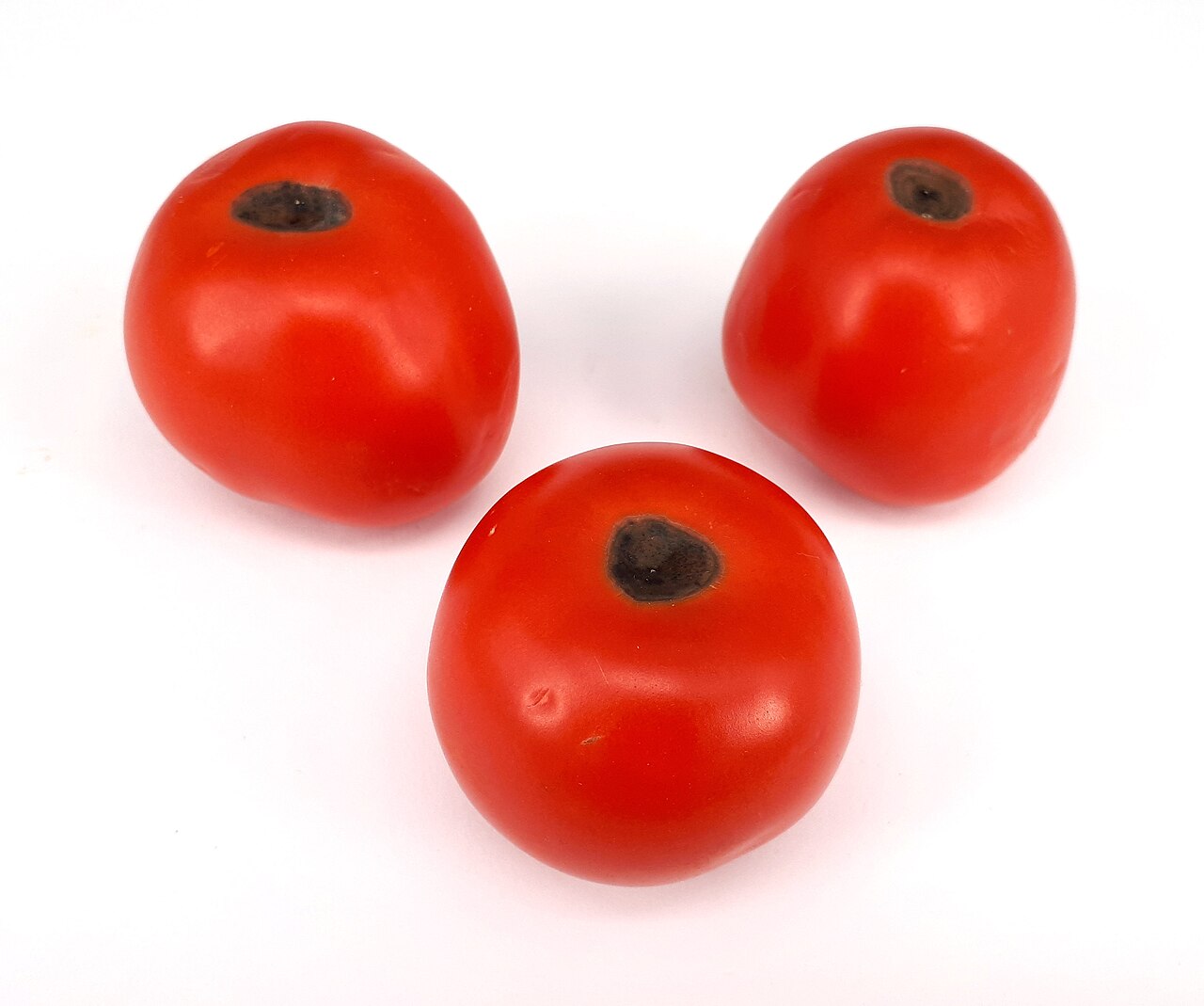
Image Credits: Wikimedia Commons
Blossom end rot is a disorder that turns the bottom of a tomato black, sunken, and leathery. It begins as a small tan or water-soaked spot where the blossom was, then spreads and darkens as the fruit grows.
It is not a disease, and no insect causes it. It is a calcium delivery failure inside the fruit, most often triggered by uneven watering that interrupts the flow of water, and with it calcium, from the roots to the fruit.
This article explains blossom end rot: what it looks like, what causes it, which fixes actually work, and which popular remedies do not.
What does blossom end rot look like?
Ken Johnson, a horticulture educator with the University of Illinois Extension, describes the progression: a light tan spot at the end of the fruit where the blossom was, which expands and eventually turns black and leathery.
The disorder favors big fruit. "When it comes to tomatoes, it is most commonly seen on larger fruited cultivars or long-fruited varieties like Roma," Johnson said. Paste tomatoes and beefsteaks show it far more often than cherry types.
It is not limited to tomatoes. The same disorder strikes peppers, eggplants, squash, and watermelons, according to Johnson.
The dead tissue is dry and leathery rather than soft and wet, which helps distinguish it from fungal fruit rots. Badly affected fruit can invite secondary mold, so it should come off the plant rather than hang there.
What causes blossom end rot?
Contrary to popular belief, blossom end rot is not caused by a disease or insects. Illinois Extension classifies it as a physiological disorder caused by low calcium levels inside the fruit.
Here is the nuance most garden advice misses: most home garden soils already contain enough calcium. The failure is usually uptake, not supply. "Usually, it's not an issue of a lack of calcium in the soil, but how well a plant can absorb calcium," the Illinois Extension article explains.
Calcium travels through the plant with water, so anything that disrupts water flow disrupts calcium delivery. Johnson puts the mechanism plainly: "Anything that gets in the way of transpiration can reduce calcium uptake." Transpiration is the plant's movement of water from roots to leaves and fruit.
The usual suspects, according to Illinois Extension:
- Drought stress and inconsistent soil moisture, the most common trigger
- Cold or waterlogged soils that shut down root activity
- Rapid vegetative growth from too much nitrogen fertilizer
- High levels of ammonium, potassium, and magnesium from over-fertilization, which compete with calcium for uptake
Dr. Tom Koske, an LSU AgCenter horticulturist, adds the same core point from another angle: calcium is carried into the plant by water, so drought conditions can bring the disorder on. He recommends keeping soil pH around 6.5, adjusting with lime where a soil test shows it is needed.
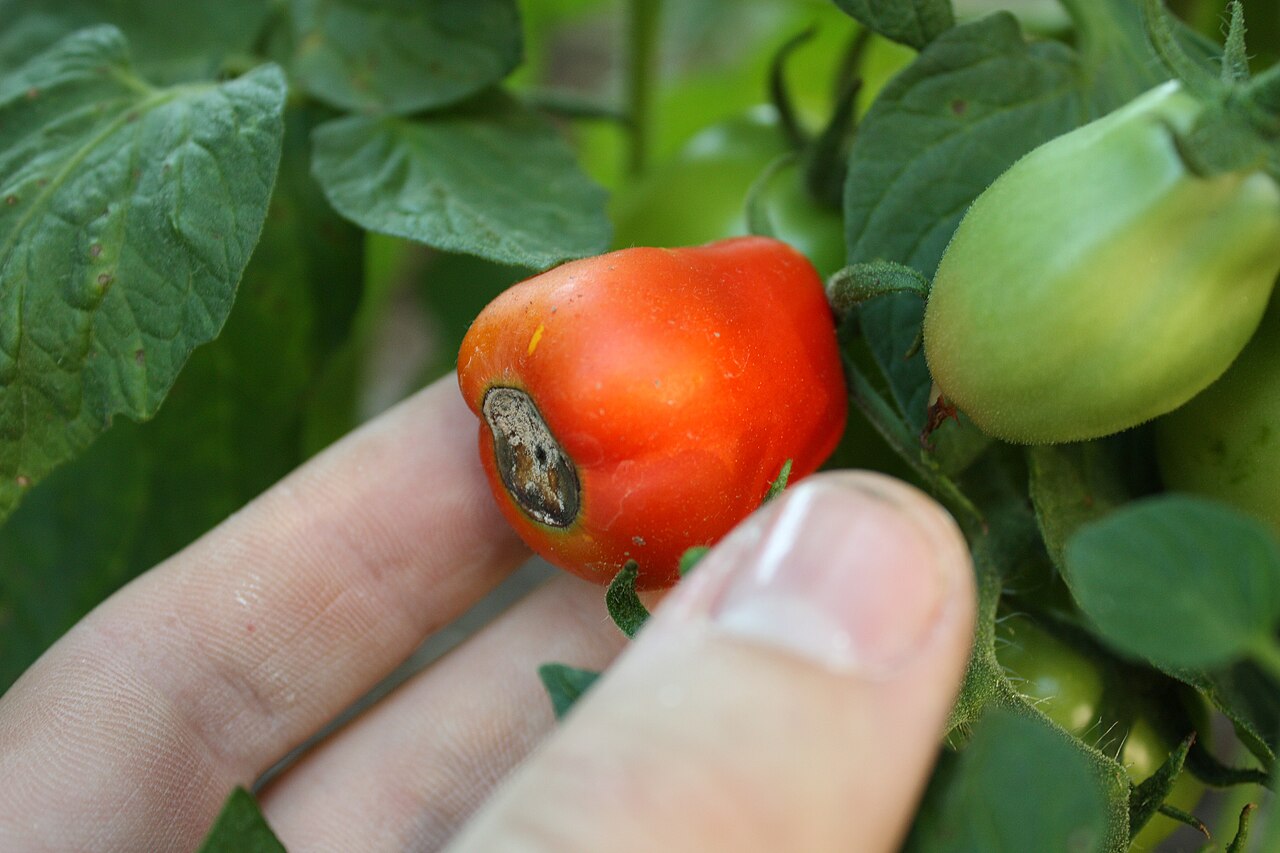
Image Credits: Wikimedia Commons
How to fix and prevent it
Remove badly affected fruit first. It will not heal, and the plant wastes energy on it. Fruit with only a small dry patch can be salvaged by cutting the damaged part away. The rest is safe to eat because the disorder is not a disease or a toxin.
Fix the water before reaching for any product. Deep, even watering once or twice a week beats daily surface splashes, since calcium delivery depends on a steady flow of water through healthy roots. Containers dry out faster than beds, so check them more often. The finger test for overwatering versus underwatering works for vegetables too.
Mulch the bed with 2 to 3 inches of straw, shredded leaves, or wood chips, kept a few inches away from the stem so the crown stays dry. Mulch evens out soil moisture and temperature, which steadies calcium delivery.
Test the soil before adding calcium. Gypsum or lime helps only when the soil is genuinely deficient, which is uncommon in home gardens. Crushed eggshells and antacid tablets break down far too slowly to matter this season.
Skip the Epsom salt. It is magnesium sulfate with no calcium at all, and North Dakota State University Extension notes that the added magnesium competes with calcium for uptake, so it can actually worsen the disorder.
Foliar calcium sprays are not the answer either. Calcium applied to leaves does not travel into the fruit, so spraying the foliage cannot fix a fruit-level shortage.
One more reason to stay calm: the disorder usually hits the first fruit set hardest, when young plants are still building roots. Once watering steadies and the root system catches up, later fruit typically comes in clean, a pattern tomato growers see with yellowing lower leaves and other early-season stresses too.
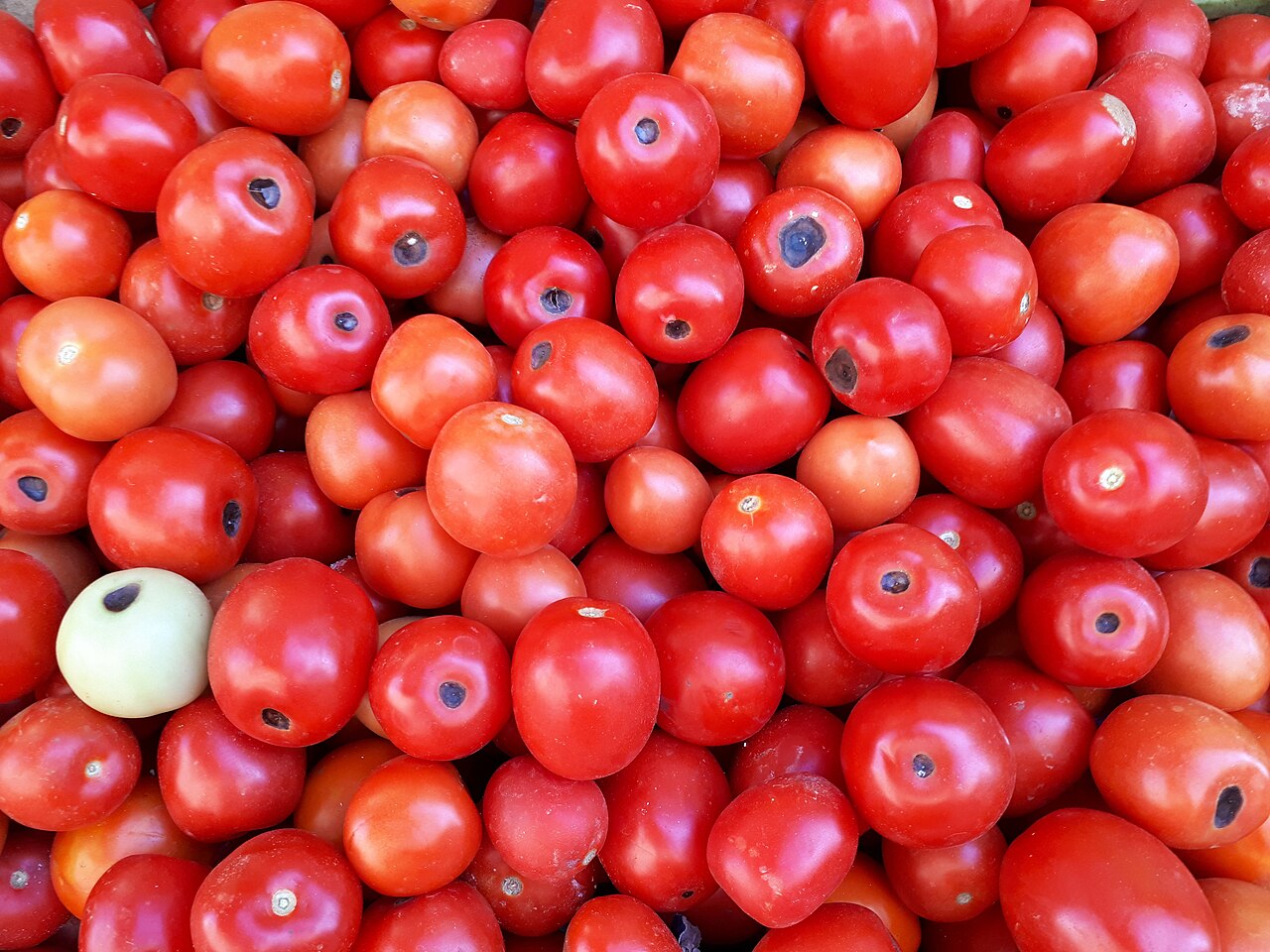
Image Credits: Wikimedia Commons
Frequently asked questions
Can I still eat a tomato with blossom end rot?
Yes. Cut away the dark, leathery patch and use the rest normally. The unaffected flesh tastes fine. Discard any fruit that is soft, moldy, sour-smelling, or leaking.
Will calcium spray fix blossom end rot?
No. Damaged fruit never heals, and leaf sprays cannot move calcium from the leaves into the fruit. Steady watering is the only reliable fix.
Why do only my first tomatoes get it?
Young plants are under real stress as they establish roots and set their first fruit at the same time. Once the plant matures and soil moisture steadies, calcium delivery evens out and later fruit comes in clean.
Does Epsom salt help blossom end rot?
It hurts. The magnesium in Epsom salt competes with calcium uptake and can worsen the disorder. It is one of the most stubborn garden myths around this problem.
Should I add lime to the soil?
Only if a soil test shows the pH or calcium is actually low. Dr. Koske recommends adjusting soil pH to around 6.5 with lime, but most home garden soils already hold enough calcium.
The bottom line
Blossom end rot is a watering problem wearing a calcium costume. Keep moisture deep and steady, mulch the bed, and skip the miracle amendments. The next fruit set usually tells you whether the fix worked.
Rive News is the in-house research desk behind these explainers. It reads the sources so you don't have to.
Latest in Gardening
- Determinate versus indeterminate tomatoes
- Tomato leaves turning yellow at the bottom
- Saving seeds from tomatoes for next year
- Overwatering versus underwatering: the finger test
Subscribe to the Rive News newsletter for one plant-science explainer in your inbox every morning.
Corrections: we fix errors promptly; write to the research desk. © 2026 Rive News. Reporting standards: every claim is sourced; no invented quotes, statistics, or experts.
Related stories

What Is Companion Planting and Does It Work?
Marigolds work as a nematode cover crop, but the basil flavor claim failed repeated tests. An honest evidence review of what companion plant

Determinate vs. indeterminate tomatoes: growth, pruning, and harvest differences
Determinate tomatoes grow to a set size and ripen all at once, while indeterminate types vine all season. That one difference shapes pruning

How to improve clay soil for gardening
Gypsum will not fix ordinary clay soil, say extension experts. What actually works: 2 to 3 inches of compost, mulch, better drainage, and a