
How to Compost Without a Bin: 4 Beginner Methods
Key takeaways
- You do not need a bin to compost: trenching, sheet mulching, open heaps, and pit composting all work with kitchen scraps and yard waste.
- Keep browns and greens balanced near a 30:1 carbon-to-nitrogen ratio, or roughly three parts brown to one part green, per university extension guidance.
- Hot piles reach 110 to 150 degrees Fahrenheit; cool or trench methods take longer but need almost no turning or watering.
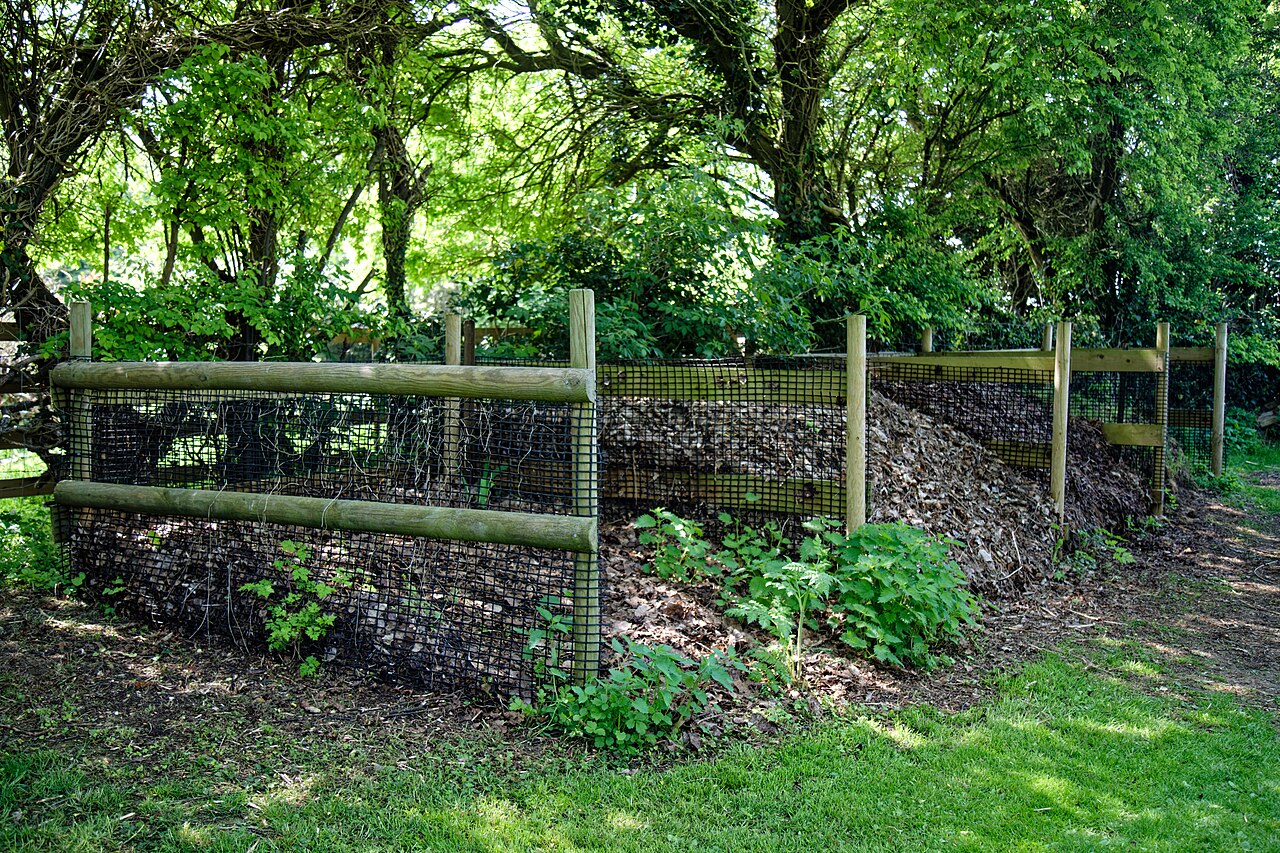
An open compost heap in a garden, breaking down leaves and scraps with no container around it.
Image Credits: Wikimedia Commons
Composting is the natural process of turning food scraps and yard waste into dark, crumbly soil. Microbes, worms, and fungi do the work by feeding on organic material and breaking it down over time.
The bin is optional. It is a container, not a requirement, and skipping it means skipping the cost and the assembly too.
This article explains how to compost without a bin, including four beginner methods: trench composting, sheet mulching, the open heap, and pit composting. It also covers what to put in and what to leave out, how long each method takes, and the mistakes beginners make most.
1. Trench composting: dig, drop, cover
Trench composting is the simplest method on this list. You dig a trench in a garden bed or between crop rows, bury food scraps in it, and cover them with soil. The composting happens underground, out of sight.
Dig the trench before you plant anything in that spot. Toss in vegetable peels, coffee grounds, and eggshells, then cover everything with several inches of soil. Mark the spot so you remember where the scraps went.
This method feeds the soil directly where future plants will grow, and buried scraps improve heavy soils over time, which pairs well with the advice in our guide on improving clay soil. A covered trench also draws far less animal attention than an exposed pile, and you can find more deterrent ideas in keeping squirrels out of garden beds.
2. Sheet mulching: compost in place, no digging
Sheet mulching, also called lasagna gardening, builds compost right on top of the ground. You layer cardboard, leaves, grass clippings, and other organic material into a bed that rots into plantable soil. Erin LaFaive of University of Wisconsin Extension notes that lasagna gardening is another name for sheet composting, and it sits somewhere between making a raised bed and running a cold compost pile.
Start with a base of wet cardboard or thick newspaper, overlapping the edges by 3 to 4 inches so weeds cannot push through. LaFaive recommends removing packaging tape from cardboard before laying it down. Then alternate layers of browns (dry leaves, straw, shredded cardboard) and greens (grass clippings, vegetable scraps, manure), keeping roughly 3 parts brown to 1 part green.
Build the stack 18 to 24 inches deep. It will settle to 6 to 12 inches as it rots, according to the UW Extension guidance. Water each layer as you go, then finish with 4 to 6 inches of topsoil and 3 to 4 inches of organic mulch, the topping Hennepin County Master Gardeners recommend.
You can plant straight into a finished lasagna bed, moving the mulch aside to tuck transplants in. Once the bed is settled, it is also a good spot to try companion planting and make the space work harder.
3. The open heap: the classic no-bin pile
The open heap is what most people picture when they think of compost. You stack browns and greens in a free-standing pile on the ground, no walls, no container. It is the fastest bin-free method, but it asks the most from you in return.
Size matters. Montana State University Extension sets the minimum working pile at 3 feet by 3 feet by 3 feet, which is one cubic yard. Anything smaller struggles to hold heat, and heat is what makes a pile work fast.
Build the pile in alternating layers: greens about 4 inches thick, browns about 8 to 10 inches, starting with browns on the bottom. That is the layering sequence recommended by the UC Master Gardener Program of Sonoma County. Aim for a carbon-to-nitrogen ratio near 30:1, which Montana State calls the best ratio for aerobic decomposition.
A hot, well-built pile runs between 110 and 150 degrees Fahrenheit at its core, per Montana State Extension. At 131 degrees, most pathogens are destroyed, and at 145 degrees, most weed seeds and fly larvae are killed. University of Georgia Extension puts the active phase at 131 to 160 degrees and notes that those temperatures also speed up microbial activity.
Turn the pile every week or two to feed it oxygen. Keep it as damp as a wrung-out sponge; the finger test for plant watering teaches a similar moisture check. All this attention pays off with finished compost in as little as a few weeks.
4. Pit composting: the buried slow burn
Pit composting is trench composting's lazier cousin. Dig a hole wherever you have spare ground, toss in kitchen scraps as you generate them, and keep the hole covered with a board or a lid of soil between additions.
Unlike the trench method, you do not pre-plan a planting row. A pit works in a back corner, behind the shed, or anywhere you will not trip over it. When the pit fills, cover it with a thick layer of soil and start a new one.
The tradeoff is speed. A pit gets no turning and little airflow, so treat it as a disposal habit that enriches the ground, not as a production system with a delivery schedule.
What to put in, and what to leave out
Most kitchen scraps and yard waste are fair game. Good inputs include vegetable peels, fruit scraps, coffee grounds and filters, tea bags, eggshells, fresh grass clippings, dry leaves, straw, shredded newspaper, and plain cardboard.
Montana State Extension publishes a clear list of what to leave out: meat, fish, cheese and other dairy, oils and greasy foods, bones, cat and dog manure, and diseased or insect-infested plants. These attract pests, break down slowly, or carry pathogens and herbicide residue that can survive a home pile.
The U.S. Environmental Protection Agency reports that yard trimmings and food make up roughly 28 percent of municipal solid waste. Every banana peel in the trench is one less in a landfill truck.
How long does bin-free composting take?
Speed depends on heat, air, and attention. A hot open heap that is turned regularly can finish in about 2 weeks with daily turning, about 3 weeks with turning every other day, or 6 to 8 weeks with weekly turning, according to the UC Master Gardener Program of Sonoma County.
A passive pile that you never turn takes six months to a year, per the same UC Master Gardener guide. Sheet-mulched beds follow a similar slow curve: build one in fall and it is usually plantable by spring. Trench and pit composting take a few months underground.
Finished compost is done when it looks like soil: dark, crumbly, and smelling earthy, with no recognizable food scraps left. If you can still identify what went in, it needs more time.
Finished compost also feeds plants differently than a store-bought bag of fertilizer. It releases nutrients slowly as soil life processes it, a gentler approach than the quick nutrient delivery explained in our NPK fertilizer guide.
Common mistakes beginners make
Too many greens is the number one error. A pile heavy on kitchen scraps and fresh grass goes slimy and gives off an ammonia smell. University of Georgia Extension explains that a low carbon-to-nitrogen ratio leads to ammonia odors, which is the signal to add more browns.
Building too small is the second. A dinky pile cannot trap heat, so it sits cold for months. Respect the 3-foot cube minimum from Montana State Extension before you complain that nothing is happening.
Skimping on moisture stalls everything. UGA Extension recommends keeping compost at 40 to 60 percent moisture and using the squeeze test: a handful of material should release a few drops of water when squeezed. In a hot, dry spell, a heap may need a hose.
Burying scraps too shallow invites trouble. Food waste sitting near the surface draws flies, rodents, and the neighbor's dog. Cover every addition with several inches of soil or browns, and never add meat or dairy to an open or shallow system.
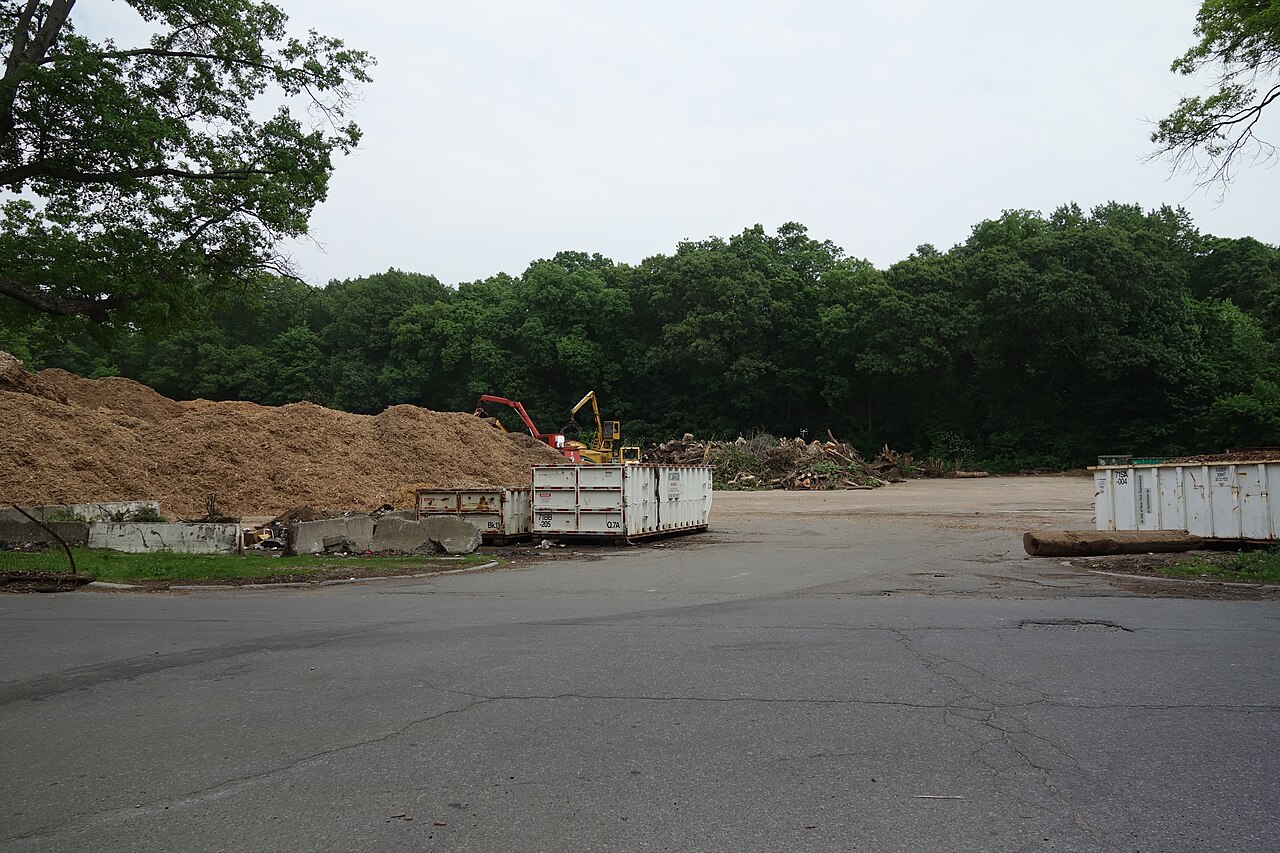
A thick layer of wood chips on the ground, the same kind of brown material used in sheet mulching and no-bin compost beds.
Image Credits: Wikimedia Commons
Frequently asked questions
Can you compost without a bin at all?
Yes. Decomposition is done by microbes, worms, and fungi, none of which need walls. A bin mainly tidies the pile and keeps pests out.
Does composting without a bin smell?
A balanced pile smells like forest soil. Bad smells come from too many greens, too little air, or food scraps left exposed. Add browns, turn the pile, and bury scraps under several inches of cover material, and the smell problem usually disappears within days.
Will trench composting attract rats or raccoons?
It can if scraps sit near the surface. Bury food waste well, cover it with a thick layer of soil, and keep meat, dairy, and fats out entirely, since Montana State Extension flags those as the inputs that attract animal pests. A properly covered trench is rarely disturbed.
What is the fastest way to compost without a bin?
The open heap. A pile built to the 3-foot cube minimum, with the right browns-to-greens balance and daily turning, can finish in as little as 2 weeks, per the UC Master Gardener Program of Sonoma County.
How deep should a compost trench be?
Deep enough to hold your scraps plus a solid layer of soil on top. Dig the trench, add scraps in a loose layer, then refill with several inches of soil so nothing is exposed. You are burying waste for soil life to process, not planting the scraps themselves.
The bottom line
Pick the method that matches your energy. Want finished compost fast and do not mind the work? Build an open heap. Want to feed a future garden bed with almost zero effort? Dig trenches or layer a sheet-mulched bed this weekend. Want somewhere to put scraps with no fuss at all? Start a pit.
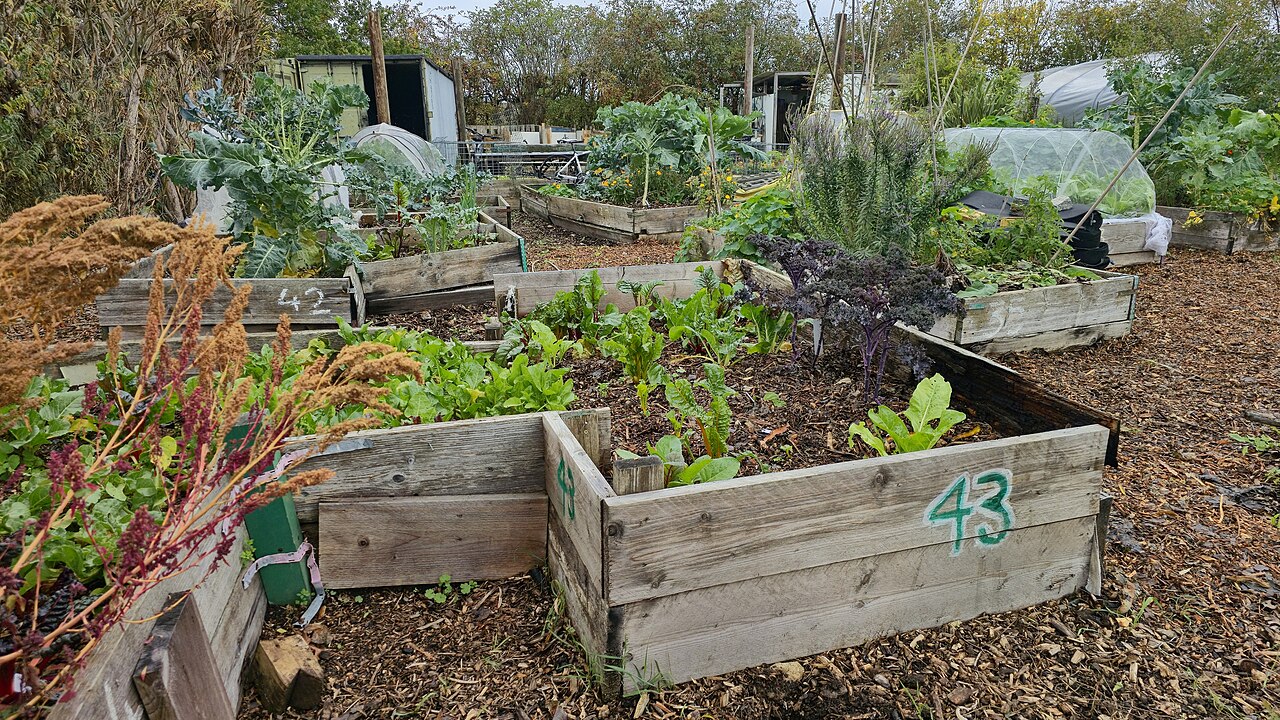
Raised vegetable beds topped with dark, mulched soil, the kind of growing space that bin-free composting builds for free.
Image Credits: Wikimedia Commons
Your first step is small: grab a spade, dig one trench in an unused corner of the garden, and empty your vegetable peelings into it today. That single trench is your whole composting setup.
Tags: composting, trench composting, sheet mulching, no-bin composting, soil health, beginner gardening
Rive News is the research desk behind these gardening guides, turning extension-service science into plain-English how-tos.
Latest in Gardening
- What Is Companion Planting and Does It Work?
- What Does NPK on Fertilizer Actually Mean: Nitrogen, Phosphorus, and Potassium
- How to improve clay soil for gardening
- How to keep squirrels out of garden beds: barriers that work
Get one practical gardening guide in your inbox every week. No spam, just soil science you can use.
Copyright 2026 Rive News. All rights reserved.
Related stories

What Is Companion Planting and Does It Work?
Marigolds work as a nematode cover crop, but the basil flavor claim failed repeated tests. An honest evidence review of what companion

Determinate vs. indeterminate tomatoes: growth, pruning, and harvest differences
Determinate tomatoes grow to a set size and ripen all at once, while indeterminate types vine all season. That one difference shapes

How to improve clay soil for gardening
Gypsum will not fix ordinary clay soil, say extension experts. What actually works: 2 to 3 inches of compost, mulch, better drainage,