
How day length triggers plants to flower: photoperiodism explained
By Rive News / Research desk | Rive News / Published October 24, 2026 at 9:00 AM PKT
Key takeaways
- Plants respond to the length of the night, not the day, when deciding to flower. Scientists call this photoperiodism.
- A light-sensitive pigment called phytochrome flips between two forms to track darkness hours.
- Gardeners can manipulate blooming with blackout covers or extra light, a trick discovered in 1920.
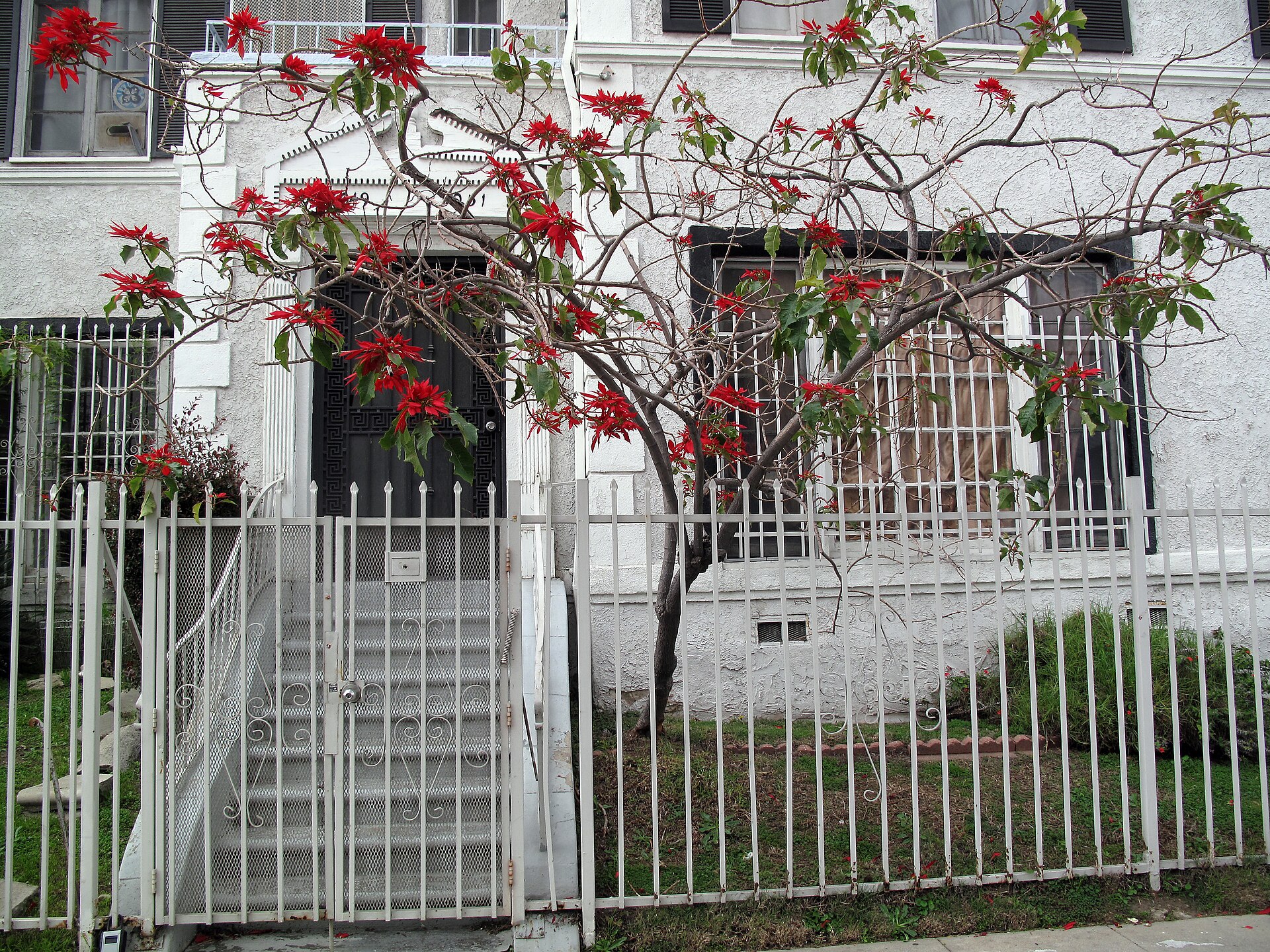
[A large poinsettia tree covered in red bracts. Photograph: poinsettia tree in bloom]
Image Credits: Wikimedia Commons
Photoperiodism is a plant's response to the relative lengths of light and darkness in a 24-hour cycle. It is the internal calendar that tells a chrysanthemum to bloom in autumn and a spinach plant to bolt in late spring.
The surprising part is what the plant actually measures. Despite the name, most flowering plants track the length of the night. The day is just the filler between two dawns.
This article explains how day length triggers flowering in plants, including how plants measure the night, the three plant categories growers should know, the 1920 experiment that revealed the mechanism, and what gardeners can do with this knowledge.
How plants measure the night
The measuring device is a pigment called phytochrome. It sits in the leaves, which is where the plant senses the light cycle, and it exists in two interconvertible forms.
During the day, the inactive form (Pr) absorbs red light and converts into the active form (Pfr). At night, Pfr slowly converts back to Pr. Long nights drain the Pfr pool; short nights leave plenty behind.
That balance is the actual signal. In short-day plants, leftover Pfr suppresses flowering, so they only bloom once nights grow long enough to clear it. In long-day plants, the logic inverts: Pfr promotes flowering, so they bloom when nights stay short.
The night-length claim has a famous proof. Cockleburs adapted to Michigan's latitude flower only after at least 8.5 hours of uninterrupted darkness, according to Biology LibreTexts. A single flash of light in the middle of that night resets the count and stops flowering.
Even the color of the flash matters. Red light at 660 nanometers is the most effective at interrupting the dark period, and far-red light at 730 nanometers reverses the effect. These two wavelengths are what led researchers to identify phytochrome in the first place.
Modern biology adds a second layer. Researchers now believe plants combine the phytochrome signal with their circadian clock, matching the active pigment forms against an internal 24-hour rhythm, as Wikipedia's photoperiodism entry describes. The clock tells the plant when dawn should come; phytochrome reports what actually happened.
Short-day, long-day, and day-neutral plants
Growers sort flowering plants into three groups based on their night-length requirements.
Short-day plants, more accurately called long-night plants, need nights longer than a critical length to flower. Poinsettias, chrysanthemums, rice, and morning glories belong here. This is why your poinsettia blooms for the holidays and not in June.
Long-day plants need short nights. Spinach, lettuce, wheat, and radishes flower as spring nights shrink. If you have ever watched spinach bolt the moment warm weather arrives, you have seen a long-day response in action.
Day-neutral plants ignore the calendar entirely. Tomatoes, cucumbers, sunflowers, and cotton flower based on age or size rather than light. For beginners, these are the forgiving choices.
There is also a subtler split within each group. Some plants are obligate: they absolutely require the right night length or they never flower.
Others are facultative and simply flower faster or more heavily under the right conditions. Seed catalogs sometimes note this distinction, and it matters when you are pushing a plant outside its comfort zone.
Photoperiodism reaches beyond blooms, too. The same sensing system influences stem elongation, dormancy, leaf drop, and even bulb and tuber formation in crops like onions and potatoes, according to horticultural references on photoperiod in cultivation.

[Poinsettia plants for sale at a garden center. Photograph: potted poinsettias in a retail display]
Image Credits: Wikimedia Commons
The experiment that started it all
The story begins with a mutant tobacco plant.
In 1920, two US Department of Agriculture employees, W W Garner and H A Allard, were studying tobacco at a Maryland research station when they noticed one variety that refused to flower all summer.
The variety, later named Maryland Mammoth, grew enormous without producing a single bloom. It finally flowered in late December. Garner and Allard suspected light, so they tested the plant with artificial lighting in winter and artificial darkening in summer.
The results were decisive. Maryland Mammoth flowered only under short days, so they classified it as a short-day plant and published their findings in 1920. Within a few years, laboratories around the world were testing other species, and the three-category system took shape, as Science Donga recounts in its history of the discovery.
What Garner and Allard got slightly wrong is worth knowing. They believed day length was the controlling factor.
Later experiments with night-interrupting flashes of light proved it was the continuous dark period that mattered. The old names stuck anyway, which is why gardeners still say "short-day" when they mean "long-night."
As Clare Nunamaker wrote in her IATP column on the subject: "How wondrous it is that plants have evolved to develop and depend upon their own internal calendars!" A century after the discovery, the wonder has not worn off.
What gardeners can do with this knowledge
Understanding photoperiodism turns into practical tricks fast.
To force a poinsettia to color up for the holidays, growers give it 14 hours of total darkness every night for about eight weeks, starting in early autumn. Even a hallway light leaking under a door can break the dark period, so serious growers use blackout covers or move plants into closets.
To keep a long-day plant vegetative, do the reverse. Lettuce and spinach stay leafy longer under shade cloth or when you harvest before the nights shrink past their threshold. Once the flower stalk appears, the leaves usually turn bitter.
Street lights and porch lights genuinely interfere. A bright security light can delay or prevent blooming in short-day ornamentals planted nearby. If your chrysanthemums bloom late or unevenly, check what is glowing at night before you blame the fertilizer.
Light pollution also explains some garden mysteries that look like disease. When orchid flowers fall off after a move, stress gets the blame, but a sudden change in night length on a windowsill can play a role too. And when zucchini plants make flowers but no fruit, the cause is usually pollination rather than photoperiod, which is exactly why ruling light in or out matters.
Planning ahead helps as well. Choosing what to plant in autumn for spring flowers works because bulbs use a different cue, winter chilling, layered on top of the day-length system. And while you are diagnosing, remember that black spots on rose leaves signal a fungal problem, not a light problem, so do not reach for the blackout cloth there.
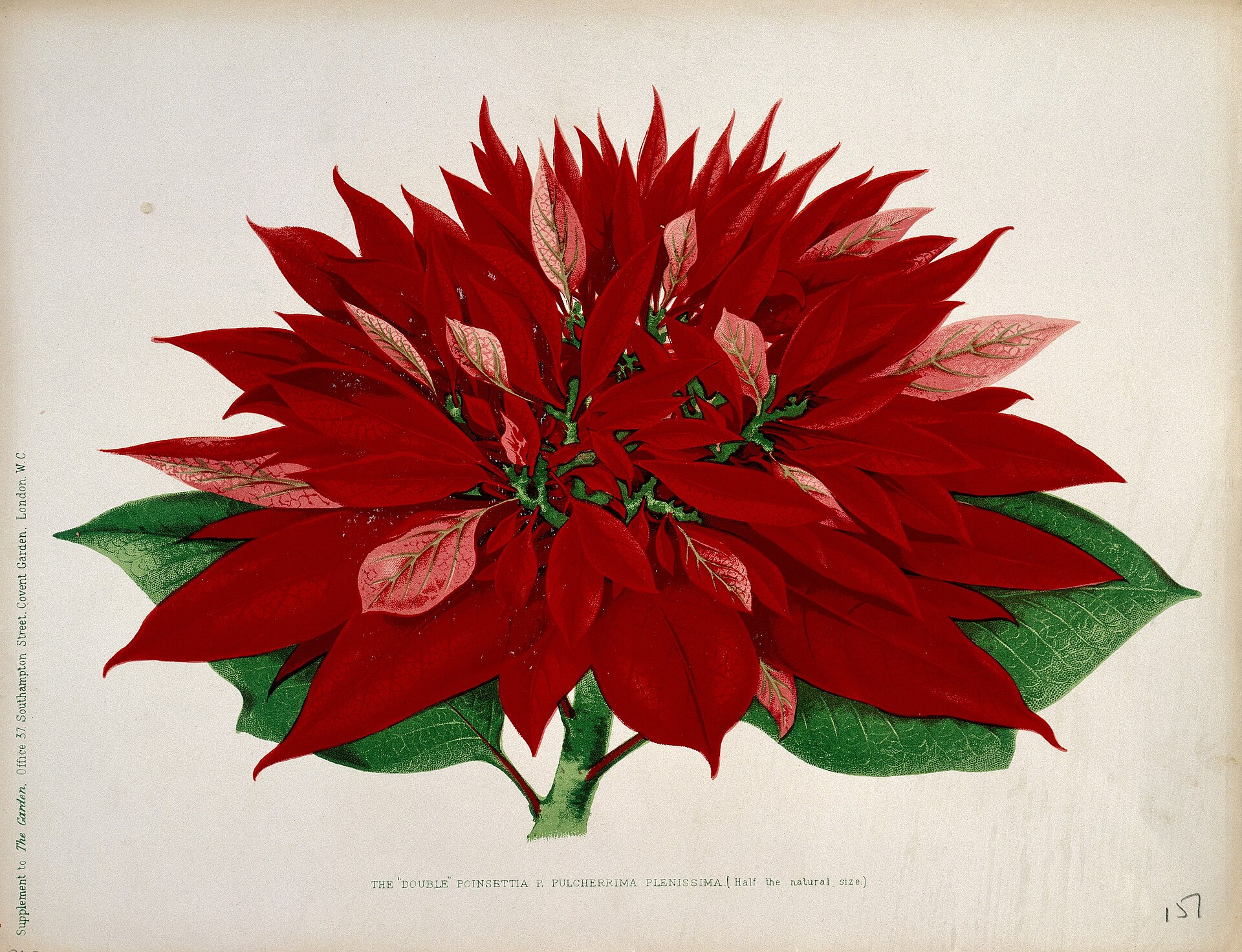
[A double-flowered poinsettia bloom in close-up. Photograph: poinsettia flower detail]
Image Credits: Wikimedia Commons
Can a porch light really stop a plant from flowering?
Yes, for sensitive short-day plants. Experiments show that even brief light during the critical dark period can suppress blooming.
Red-rich light is the worst offender. If a plant sits under a bright lamp all night, it may never accumulate enough uninterrupted darkness.
Do vegetables care about day length?
Many do. Spinach, lettuce, and radishes are long-day plants that bolt as nights shorten.
Onions are famously fussy: varieties are bred for specific latitudes because bulb formation depends on day length. Check whether a variety is labeled long-day, short-day, or intermediate before buying.
Why do some plants flower no matter what?
Day-neutral plants like tomatoes and cucumbers run on internal age or size signals instead of light. Breeders have also selected day-neutral versions of some traditionally sensitive crops, which is why modern strawberries fruit across more of the season than older varieties did.
How long does a plant need the right nights before it blooms?
Most plants require several weeks of the correct cycle, not just a night or two. Poinsettia growers use roughly eight weeks of long nights. One odd night will not trigger or cancel flowering on its own, but a repeated disruption will.
The bottom line
Day length triggers flowering through a night-measuring system, not a day-measuring one. Phytochrome tracks the hours of darkness, and each species has a critical night length that flips its internal switch.
For gardeners, the takeaway is control. Match plants to your latitude, guard the dark period of short-day bloomers, and use extra light or blackout covers when you want blooms on your schedule rather than the season's. The 1920 tobacco experiment still pays rent in every greenhouse that ships holiday poinsettias.
Tags: photoperiodism, flowering, plant science
The Rive News research desk compiles explainers from public sources, including university botany references and horticultural extension material, and every factual claim is checked against a named source before publication.
Related
- Why orchid flowers fall off after bringing them home
- Why do zucchini plants make flowers but no fruit?
- What to plant in autumn for spring flowers: bulbs, depths and timing
Subscribe for one practical gardening explainer each week.
Rive News standards: every claim traces to a named public source; no invented quotes, statistics, or experts.
Related stories
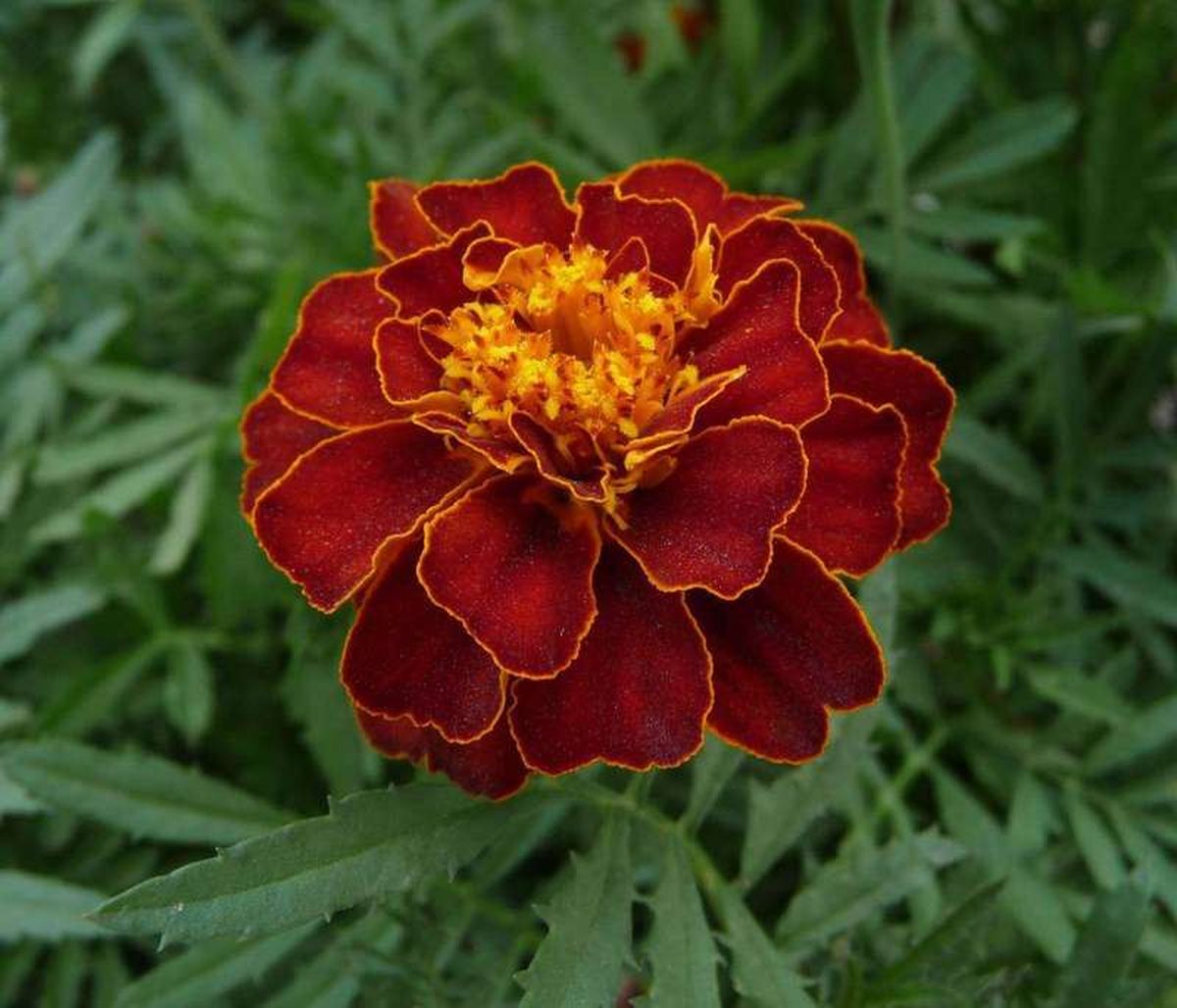
What Is Companion Planting and Does It Work?
Marigolds work as a nematode cover crop, but the basil flavor claim failed repeated tests. An honest evidence review of what companion
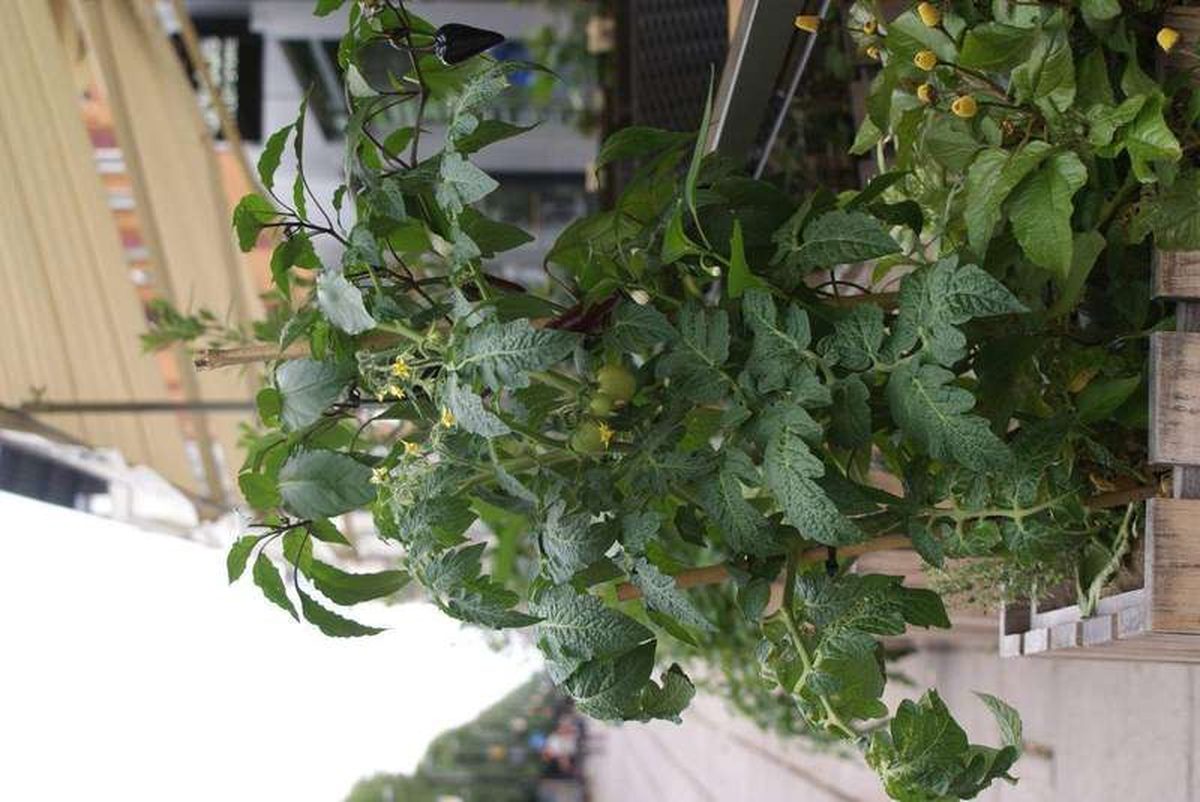
Determinate vs. indeterminate tomatoes: growth, pruning, and harvest differences
Determinate tomatoes grow to a set size and ripen all at once, while indeterminate types vine all season. That one difference shapes
How to improve clay soil for gardening
Gypsum will not fix ordinary clay soil, say extension experts. What actually works: 2 to 3 inches of compost, mulch, better drainage,