
How to Grow Carrots in Containers Without Forked Roots
Key takeaways
- Forked roots come from stones, compacted mix, crowding, and excess nitrogen, not bad luck.
- Use a deep container, a screened stone-free mix, and thin seedlings to 1 to 3 inches apart.
- Keep moisture steady and skip fresh manure or high-nitrogen fertilizer near carrots.
Why carrot roots fork
A carrot is a taproot. It wants to grow straight down through loose soil, chasing moisture and nutrients.
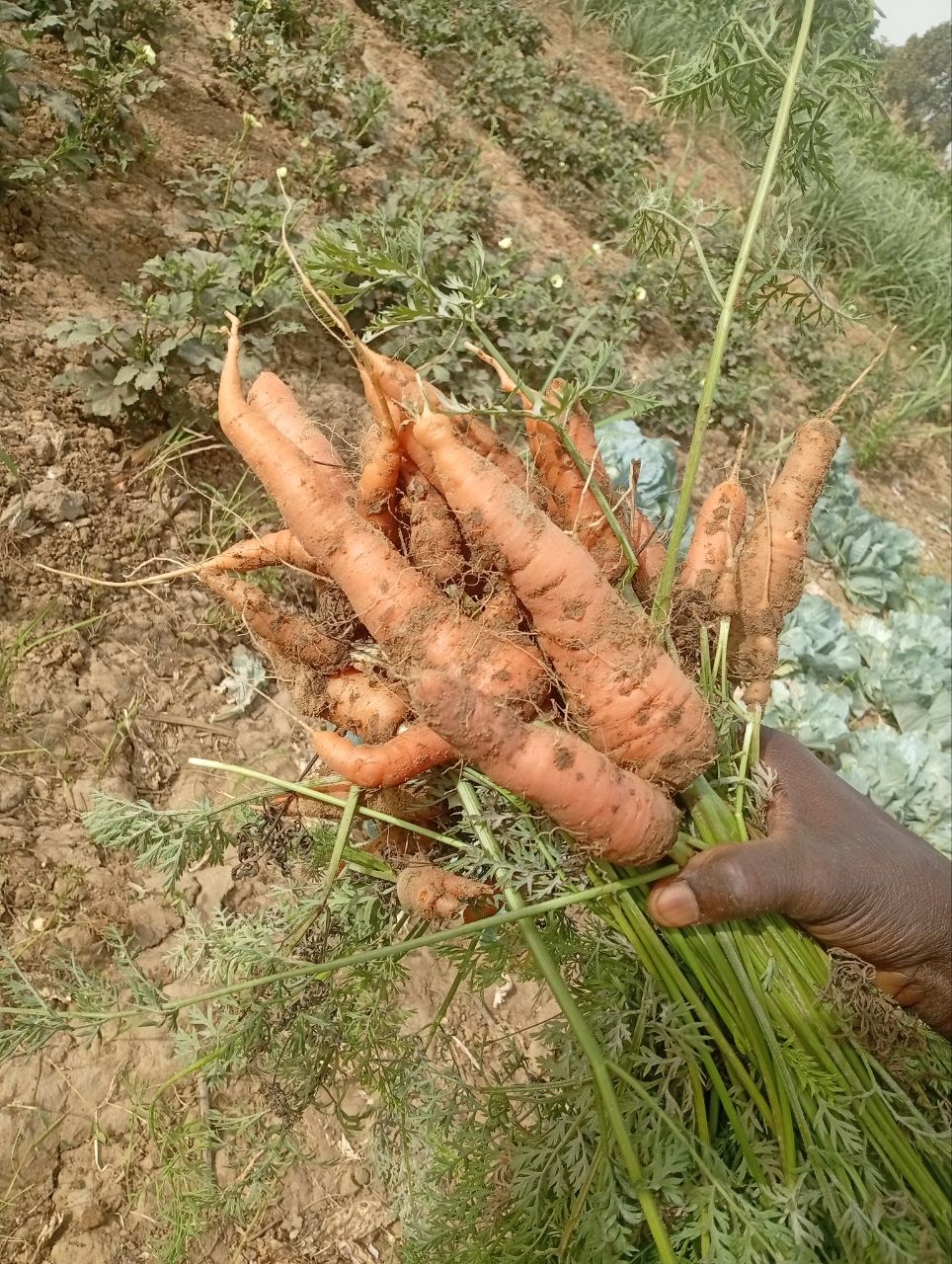
When the tip meets an obstacle, it stops, splits, or bends around the blockage. The result is a forked, twisted, or fingered root.
The obstacles are usually ordinary. A stone, a hard clump of soil, a compacted layer, or a neighboring seedling can each deflect the tip.
Excess nitrogen adds a second problem. It feeds side roots until they rival the main root, so the carrot grows fingers instead of one straight body.
Containers give you control over every one of these causes. You choose the mix, the depth, the spacing, and the feed. That control is why container carrots often grow straighter than bed carrots, provided the setup is right.
This article explains how to grow carrots in containers without forked roots, including the container, the mix, sowing, thinning, watering, and feeding. It draws on guidance from Epic Gardening, the University of Saskatchewan, and container-growing guides.
Why forked roots happen
Stones and hard clumps
Physical obstructions are the leading cause of forking. When a growing tip hits a stone or a hard clump, it splits around the obstacle. Two or more tips grow on, and the carrot forks.
The University of Saskatchewan's gardening guide states it plainly. Twisted and forked carrots are usually caused when carrots are planted too close together or when the soil is too hard for carrots to grow into a long, straight root. Rocky or overly compacted soils will also deform carrots.
In a container, stones arrive with cheap bagged soil, garden soil, or unfinished compost. Screening the mix removes them before sowing.
Crowding
Seedlings planted too close together compete for space. Their roots push against each other and bend. Crowding also slows growth, so roots stay thin and weak.
Carrot seeds are tiny, so even careful sowing drops them in clumps. Thinning feels wasteful, but it is the step that decides whether roots grow straight. Epic Gardening advises thinning carrots to at least 1 to 3 inches between each plant, depending on how large you want the roots.
Excess nitrogen
Too much nitrogen feeds leafy tops and side roots at the expense of the main taproot. Epic Gardening links forked carrots to excess nitrogen directly. When carrots do not form a large central root, it is usually a sign of excess nitrogen, and the carrots may look like little fingers instead of a taproot.
Fresh manure and high-nitrogen compost are common culprits. So are quick-release synthetic fertilizers. Carrots need a light touch with feed, and they punish rich soil with forked roots.
Shallow or compacted mix
A carrot that hits the bottom of a shallow container has nowhere to go. It bends, twists, or forks at the base. A compacted layer partway down does the same thing, even in a deep pot.
Compaction happens when mix settles, when you press it down hard, or when watering pounds the surface. Containers dry faster than beds, and repeated heavy watering can pack the top layer into a crust.
Pick the right container
Depth matters more than width. The Rike's container guide recommends containers at least 12 inches deep to accommodate proper root development. Standard five-gallon nursery pots strike a good balance between depth and manageability for most carrot varieties.
Shorter varieties need less room. Parisian or round types grow well in 8 to 10 inches of mix. Chantenay types need 10 to 12 inches.
Nantes types need 12 to 14 inches. Match the variety to the pot you own, rather than forcing a long variety into a shallow pot.
Mix a stone-free growing medium
Never fill a carrot container with garden soil. Garden soil holds stones, clods, weed seeds, and clay that packs hard in a pot. Use a potting mix built for containers.
The Rike suggests a blend of 60% high-quality potting soil, 20% well-decomposed compost, and 20% coarse sand or perlite for drainage. That mix holds moisture without packing, and it drains fast enough to keep roots healthy.
Screen the mix before you fill the pot. Push it through a quarter-inch mesh to remove stones, hard clumps, and debris.
This single step removes the most common cause of forking. It takes ten minutes and pays off at harvest.
Skip fresh manure and unfinished compost. Both carry excess nitrogen and chunky matter that deflects roots.
Use only mature, dark, crumbly compost that smells earthy. If the compost still looks like the material it came from, it is not ready for carrots.
Choose varieties that suit pots
Short and round varieties forgive shallow pots and tight spaces. Nantes types grow straight with blunt tips and suit 12-inch containers. Parisian types grow round, golf ball-sized roots that fit pots as shallow as 8 inches.
The University of Saskatchewan guide offers the same advice for problem soil. If soil is an issue, grow shorter rooted carrots such as Danvers or Nantes.
In containers, that advice becomes a plan. Pick a short variety, and you remove depth as a risk.
Sow thin and shallow
Moisten the container mix before sowing. Dry mix can pull moisture from seeds and stall germination. Water until liquid runs from the drainage holes, then wait a few minutes for the surface to settle.
Direct sow seeds about a quarter inch deep in rows spaced 2 to 3 inches apart. Carrot seeds are tiny, so mix them with fine sand in a 1 to 4 ratio before sowing. The sand spreads the seeds and makes spacing easier.
Cover seeds with a thin layer of fine mix, no more than a quarter inch. Deep sowing delays or blocks emergence. Press the surface lightly with your palm so seeds meet the soil, then mist the top.
Carrot germination takes 7 to 21 days. Keep the surface damp the whole time.
A single dry day can stall germination, since seeds sit near the surface where drying is fastest. Cover the container with lightweight fabric or plastic wrap to hold humidity, and remove the cover at the first sprout.
Place the container in partial shade during germination. Heat can block sprouting. Move it to full sun once seedlings stand up.
Thin without mercy
Thinning decides the harvest. When seedlings reach about 2 inches tall, thin them to 1 to 3 inches apart, depending on variety.
Small varieties need about an inch. Full-size varieties need 3 inches.
Snip extra seedlings at soil level with small scissors instead of pulling them. Pulling disturbs the roots of the seedlings you keep. That disturbance can itself cause forking, so cut, do not yank.
Thin in stages if the sowing was heavy. Take out the weakest seedlings first, then space the rest a week later. Two gentle passes beat one harsh pass that leaves bare patches.
Water for steady growth
Carrots crave steady moisture, not floods and droughts. Irregular watering causes splitting, bitterness, and woody texture. It also changes the mix as it swells and shrinks, which can deflect young roots.
Water when the top inch of soil feels dry to the touch. In warm weather, that may mean watering every 1 to 3 days. Containers dry faster than beds, so check daily in summer.
Apply water slowly until it runs from the drainage holes. Fast watering runs down the sides of a dry pot and leaves the center dry.
Slow watering soaks the whole mix. Morning watering cuts evaporation and fungal risk.
A thin layer of organic mulch, no more than a quarter inch, helps hold moisture and steady soil temperature. Keep mulch off the crowns so the shoulders stay dry. Too much mulch holds water against the tops and invites rot.
Feed lightly, if at all
Carrots need little fertilizer in a good container mix. The compost in the mix usually carries enough nutrition for one crop. Extra feed risks the excess nitrogen that causes forking.
Harvest at the right time
Check shoulders at soil level. Mature roots show 1 to 2 inches of shoulder diameter for most varieties.
Baby varieties show less. Pull one test carrot at the early end of the packet's maturity window and check size and taste, as you would when you tell potatoes are ready to harvest.
Moisten the soil before harvest. Wet mix releases roots with less force. Grip the greens near the root base and pull with steady pressure.
If a root resists, loosen the surrounding mix with a fork rather than forcing it. Forcing breaks roots and leaves stubs in the pot.
Remove greens at once after harvest. Tops pull moisture from roots and soften them. Brush away loose soil, but do not wash carrots until you use them.
Store them in perforated plastic bags in the fridge. Freshly harvested container carrots keep peak flavor for 2 to 3 weeks stored this way, according to The Rike.
Fix forking next season
If this season's carrots forked, diagnose before the next sowing. Dig through the spent mix and look for stones, clods, or a compacted layer. Check whether you fed the pot, and how close the seedlings stood.
Forked carrots are still edible, as the University of Saskatchewan guide notes. Peel them, cook them, and enjoy the odd shape.
Frequently asked questions
Can I grow long carrots in a shallow pot?
No. Long varieties need depth to grow straight.
A shallow pot suits round Parisian types or short Nantes types. Match the variety to the pot, not the other way around.
Are forked carrots safe to eat?
Yes. Forked carrots taste the same as straight ones once peeled.
They are harder to peel and chop, but they cook the same way. Only rot, mushiness, or a foul smell means a carrot should go to the compost.
How deep should a carrot container be?
At least 12 inches for most varieties, according to container guides. Short and round varieties manage in 8 to 10 inches.
When in doubt, go deeper. Extra depth never hurts a carrot.
The bottom line
Straight container carrots come from a deep pot, a screened stone-free mix, careful spacing, steady water, and light feeding. Remove the obstacles, give each root room, and keep nitrogen low.
The taproot will do the rest. For other cool-season crops, see how to protect plants from frost without a greenhouse and which vegetables grow in shade.
Tags: carrots, container gardening, root vegetables, gardening tips
Latest in Gardening
- How to Protect Plants From Frost Without a Greenhouse
- Which Vegetables Grow in Shade
- How to Tell Potatoes Are Ready to Harvest
Subscribe for one practical gardening tip each week.
Related stories

What Is Companion Planting and Does It Work?
Marigolds work as a nematode cover crop, but the basil flavor claim failed repeated tests. An honest evidence review of what companion

Determinate vs. indeterminate tomatoes: growth, pruning, and harvest differences
Determinate tomatoes grow to a set size and ripen all at once, while indeterminate types vine all season. That one difference shapes

How to improve clay soil for gardening
Gypsum will not fix ordinary clay soil, say extension experts. What actually works: 2 to 3 inches of compost, mulch, better drainage,