
How to Tell When Potatoes Are Ready to Harvest
Key takeaways
- Flowers signal new potatoes; yellow, collapsing foliage signals storage potatoes.
- The skin test is the most reliable check: firm skin means ready, skin that rubs off means wait.
- Cure storage potatoes for 10 to 14 days in a cool, dark place before long-term storage.
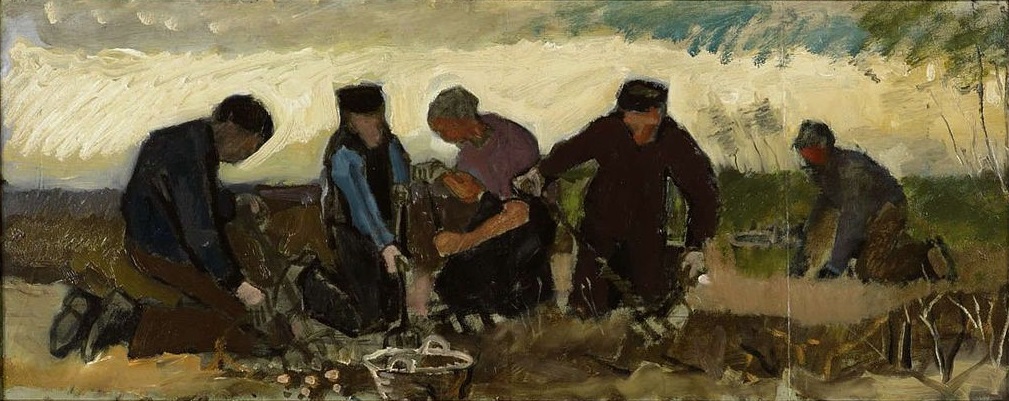
Potatoes are the only common vegetable you cannot see ripen. Tomatoes change color.
Beans swell in the pod. Potatoes grow in the dark, and the plant above ground gives only hints about what is happening below.
This article explains how to tell when potatoes are ready to harvest, including the difference between new potatoes and storage potatoes, the five signs that matter, and what to do after you dig.
First decide what you want
The harvest question has two answers, and everything else follows from the choice. New potatoes are immature tubers dug while the plant is still green and growing, prized for thin skins and sweet, waxy flesh.
Storage potatoes are mature tubers dug after the plant has finished its life, with thick skins that let them keep for months. They are the same plant at different stages, not different crops.
DiginGuide puts the timing in plain terms: new potatoes are ready about 6 to 8 weeks after planting, right around the time the plants flower, while storage potatoes need the foliage to die back first, usually 90 to 120 days from planting.
Variety sets the rough calendar. Early varieties run 70 to 90 days, mid-season types 90 to 110, and late or russet types 110 days and up, according to DiginGuide. The Royal Horticultural Society (RHS) gives a UK-flavoured version: first early varieties should be ready to lift in June and July, second earlies in July and August, and maincrop varieties from late August through to October.
The five signs that matter
1. Flowering
Flowering is the signal for new potatoes, not mature ones. When the plant pushes its white, pink, or lavender blooms, the tubers underground are roughly egg-sized and ready to steal. The Old Farmer's Almanac notes that earlies are usually lifted while the plants are still in flower, with tubers about the size of a hen's egg.
The RHS agrees: harvest earlies when the flowers are open or the buds drop, and expect tubers the size of hens' eggs. Patient Gardener adds detail: flowering usually begins when the first wave of tubers has reached approximately 1 inch in size. Full flowering means tubers are at new-potato size, and earlies could be harvested now.
2. Foliage die-back
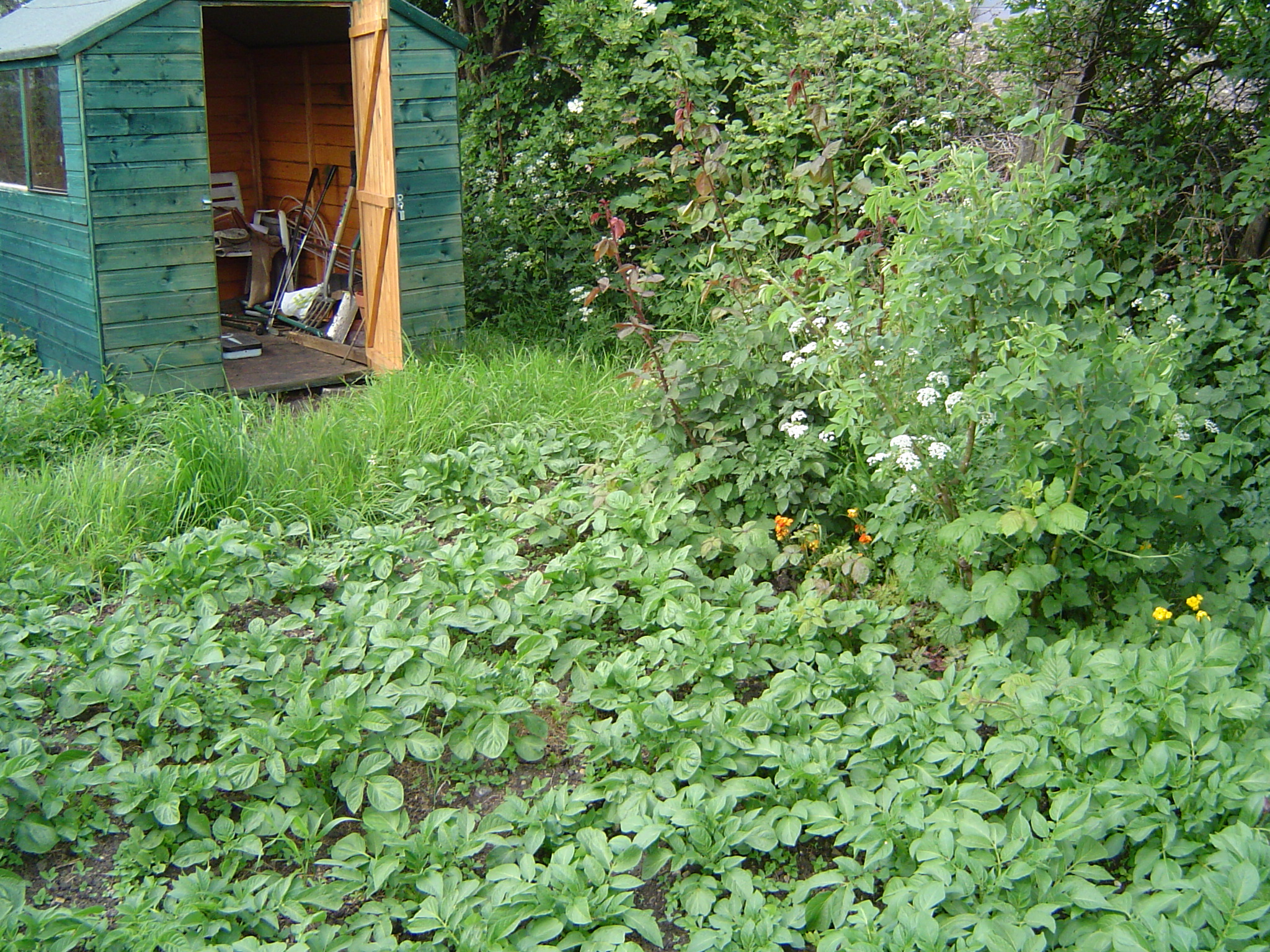
Yellowing, collapsing foliage is the clearest sign maincrop potatoes are ready. When the tops yellow and collapse on their own, without disease or drought forcing it, the plant has finished. This is senescence, the natural end of the season, and it means the tubers are at full size.
Patient Gardener describes the progression: a vigorous, green, upright potato plant transforms over two to three weeks into a sprawling, yellowing, dying mass. Once the leaves are about 50 percent yellow-brown, the tubers are at their maximum size and ready to harvest within the next 2 to 3 weeks.
For storage potatoes, wait longer. Patient Gardener advises waiting an additional 2 to 3 weeks after the leaves have completely died back before harvesting, because that extra time allows the tuber skins to fully set. The RHS gives a similar rule: delay harvesting until the leaves turn yellow, then cut off and remove all the top growth, and wait 10 days before digging.
3. Days to maturity
Count from planting day. Your seed potato bag or variety description gives a days-to-maturity number, and that number is your backstop when the plant gives mixed signals.
Patient Gardener lists common American varieties: Red Norland at 60 to 70 days, Yukon Gold at 70 to 90 days, Kennebec and Red Pontiac at 80 to 100 days, and Russet Burbank at 110 to 130 days. DiginGuide gives the same three bands in round numbers: earlies 70 to 90 days, mid-season 90 to 110, and late types 110 days and up.
4. The dig-and-feel test
For earlies, the leaf test does not work, because you harvest before natural senescence. The most reliable method is to check what is happening underground.
Gently push your hand into the soil at the base of the plant, working carefully outward from the main stem to avoid damaging the developing tubers. The RHS gives the same advice in different words: before you dig up your first plant, gently scoop away some of the soil to check on the size of the tubers, and cover them again if they are not yet big enough.
New potatoes are ready when they are the size of a chicken egg, roughly 1.5 to 2 inches in diameter. Check two plants, since one plant might be ahead or behind the others by 1 to 2 weeks.
If the tubers feel ready, harvest the plant. If they are still too small, gently reposition the soil, water lightly, and check again in 5 to 7 days.
5. The skin-set test
The skin test is the professional method, and it is the test most home gardeners have never heard of. Dig up a single tuber and rub your thumb firmly across the skin.
If the skin slips off easily, sometimes called feathering or scuffing, the potato is not fully mature yet. If the skin stays firmly in place under firm pressure, the skin has set, and the potato is ready for harvest and storage.
DiginGuide calls this the single test that has saved more crops than any calendar. Patient Gardener agrees: skin set is the single most important factor in whether your potatoes will store well.
Potatoes harvested with set skins can be stored for 4 to 6 months or longer. Potatoes harvested with un-set skins bruise during handling, and those wounds become entry points for storage rots.
Skin set happens about 2 to 3 weeks after the above-ground part of the plant has completely died back. The tuber skin is made of a tissue called the periderm, which contains a waxy compound called suberin.
Suberin makes the skin water-resistant, disease-resistant, and impermeable to bacterial invaders. When the plant senesces and tuber growth stops, suberin deposition increases, and the skin thickens and firms up.
The frost rule
Potato tops can take a light frost, but the tubers must never freeze in the ground. Frozen flesh turns mushy and sweet and rots in storage, and no amount of curing fixes it. That rule from DiginGuide is the one that saves a late-season crop.
If a hard frost is coming before the plants have died back on their own, do not wait. Cut the tops off at the soil line, leave the tubers underground for up to two more weeks to firm their skins, then dig before the ground freezes. Cutting the tops mimics natural die-back and tells the tubers to set skin without exposing them to the killing cold.
If die-back has already happened naturally, you have more flexibility. In mild zones you can leave mature potatoes in the ground a couple of weeks as a kind of root-cellar storage, as long as the soil stays dry and unfrozen and rodents are not a problem. The moment a hard freeze threatens, get them out.
How to dig without wrecking the crop
Wait for the foliage to die back, then leave the tubers in the ground about two weeks to set skin before you dig. Choose a dry day with dry soil. Wet digging means muddy, bruise-prone potatoes and a higher chance of rot.
Keep the dug potatoes out of direct sun. Light turns potato skins green, and green means solanine, a bitter compound you do not want to eat.
Move them to shade or a basket as you go. The RHS warns to discard any potatoes that are green, as they are potentially poisonous.
Curing and storing
Curing is the step that turns a fresh harvest into a winter food supply. It is a short rest that lets the skins thicken and small wounds heal over, a process called suberization.
Without it, even cold-stored potatoes rot within weeks. With it, they keep for months.
DiginGuide gives the numbers: cure dug potatoes for 10 to 14 days at 50 to 60 degrees Fahrenheit with high humidity, around 85 to 95 percent, in the dark. A basement, garage, or shed often hits this naturally in fall.
Do not wash them first. Brush off loose dirt and leave the skins intact.
After curing, move them to long-term storage at 40 to 50 degrees, dark, and well ventilated, where good potatoes keep four to eight months. The RHS gives the same shape of advice in metric terms: keep them in a dry, cool, frost-free place, such as a garage, in paper or hessian sacks or on slatted trays in the dark.
Questions people ask about harvesting potatoes
Can I harvest potatoes after the plant dies?
Yes, and you should for storage potatoes. Die-back means the tubers are mature. Leave them in the ground about two weeks after the tops die to thicken their skins, then dig on a dry day, as long as the soil has not frozen.
What happens if I harvest potatoes too early?
You get new potatoes, which are tender and tasty but have thin, fragile skins that will not store. They are fine to eat within a week. If your goal is potatoes that keep for months, wait for full die-back and the skin test before digging.
Should I water potatoes before harvest?
No. Stop watering once the foliage begins to die back.
Letting the soil dry out helps the skins set and reduces the chance of rot. Harvest in dry soil on a dry day for the cleanest, longest-keeping potatoes.
Why did my harvested potatoes turn green?
Light exposure. Potatoes left in the sun, or stored in light, produce chlorophyll and the bitter toxin solanine, which shows as green skin.
Keep harvested potatoes shaded during digging and store them in the dark. Cut away small green areas, or discard heavily greened potatoes.
The bottom line
Tell the harvest by the plant, not the calendar. Flowers mean new potatoes are ready to steal. Yellow, collapsing foliage means storage potatoes are finishing.
The skin test settles any doubt: firm skin means dig, skin that rubs off means wait. Cure the storage crop for 10 to 14 days in a cool, dark place, then store it dark and ventilated. Let the plant tell you it is time, and the harvest almost takes care of itself.
Tags: potatoes, harvest, vegetable garden, growing food
Latest in Gardening
- How to fix tomato leaves that curl
- How to plant garlic in autumn for a summer harvest
- How to fix a patchy lawn and bare spots
- How to grow carrots in containers without forked roots
Subscribe for one practical gardening guide in your inbox each week.
Related stories

What Is Companion Planting and Does It Work?
Marigolds work as a nematode cover crop, but the basil flavor claim failed repeated tests. An honest evidence review of what companion

Determinate vs. indeterminate tomatoes: growth, pruning, and harvest differences
Determinate tomatoes grow to a set size and ripen all at once, while indeterminate types vine all season. That one difference shapes

How to improve clay soil for gardening
Gypsum will not fix ordinary clay soil, say extension experts. What actually works: 2 to 3 inches of compost, mulch, better drainage,