
Why Indoor Plants Get Brown Leaf Tips and How to Fix Them
By Rive News
Research desk | Rive News
Key takeaways
- Brown tips are leaf cells that died at the far end of the water line, usually from dry air, salt buildup, or fluoride.
- Spider plants, dracaenas, and prayer plants are the most fluoride-sensitive; tap water alone can burn their tips.
- Dead tips never heal, so the fix is diagnosis first: check water, humidity, and fertilizer before changing anything.
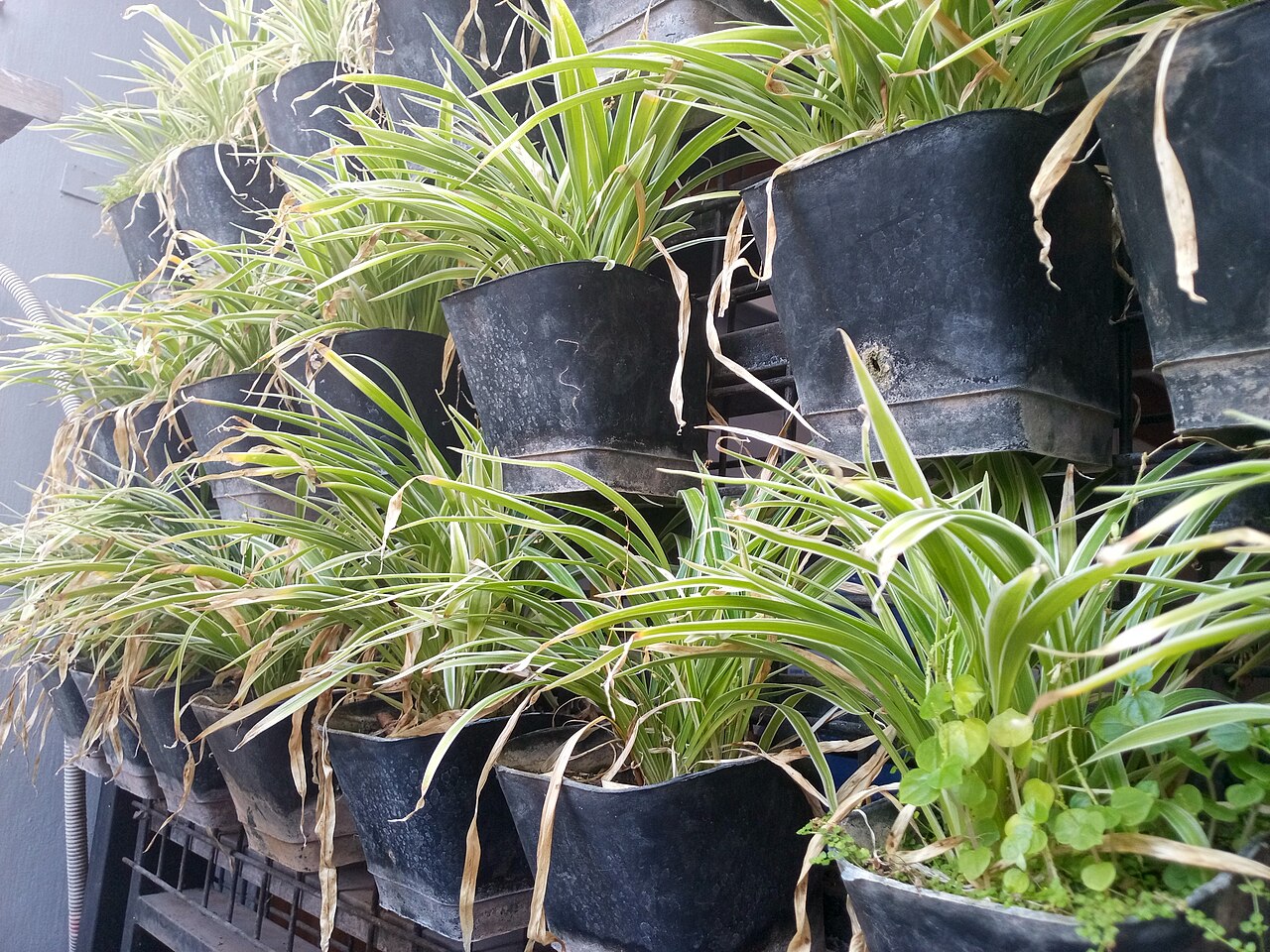
A spider plant, one of the species most sensitive to fluoride in tap water. Photograph: Wikimedia Commons
Image Credits: Wikimedia Commons (CC BY 4.0)
Crispy brown tips on otherwise healthy leaves are the most common complaint in indoor gardening, and the most misdiagnosed. The instinct is to water more, but brown tips are rarely a simple thirst signal. They are dead tissue at the very end of the leaf's water supply line, and the killer is usually something in the water or the air, not the amount in the pot.
This article explains why leaf tips brown, how to read the pattern to find your cause, which plants are fluoride-sensitive, and what actually fixes the problem.
Why do leaf tips brown first?
A leaf tip is the last stop on the plant's plumbing. Water travels up from the roots, through the stem, and out along the leaf veins, evaporating from tiny pores along the way.
Anything that disrupts that flow, or anything dissolved in the water that the plant cannot use, ends up concentrated at the tip. That is why damage shows there first, long before the rest of the leaf suffers.
Minerals are the quiet culprit. Water evaporates, but the dissolved minerals in it do not. Each watering leaves a little more residue behind in the soil, raising the salt concentration around the roots.
As EJ Garden Services explains in its report on hidden tip burn, high mineral levels create a tug-of-war at the root surface: salts pull water away from root hairs by osmosis (water moving toward saltier areas), the leaf's farthest cells go unfed, and the tips crisp. The piece sums up the grower's blind spot in one line: "Plants are honest; our routines are not."
Fluoride deserves special attention because it behaves differently from ordinary salts. Many municipal water supplies add fluoride, and several popular houseplants cannot tolerate it.
Plant Care Today, citing extension sources, names spider plants, dracaenas, ti plants, prayer plants, and calatheas as the most fluoride-sensitive, and notes that foliage grower Lynn Griffith counts cordylines among the worst affected. NC State Extension advises against tap water for spider plants specifically, because their long, tapered leaves shuttle dissolved minerals straight to the tip, where fluoride, boron, and sodium all show up as browning.
The five usual causes
Indoor-plant diagnosis guides converge on the same short list. Deep Green Permaculture names five: improper watering, low humidity, poor light and temperature conditions, salt or fertilizer buildup, and fluoride sensitivity. A 2013 diagnostic guide published by the Beacon Journal, written for indoor growers, lists the same territory in clinical form: poor root health from overwatering or dryness, excess soluble salts, specific toxicities including fluoride, copper, and boron, low humidity, and pesticide or mechanical injury.
Low humidity is the leader in heated homes. Tropical foliage plants evolved in air far moister than a winter living room, and dry air pulls water from leaf edges faster than roots can replace it. Complete Gardening, summarizing extension guidance, lists low humidity alongside inconsistent watering, fertilizer salts, and water chemicals as the standard causes, citing both Clemson Extension and Iowa State Extension.
Fertilizer is the cause people least suspect. Strong or frequent feeding leaves soluble salts in the potting mix, and dry soil between waterings concentrates them further.
Plant Care Today's FAQ puts it plainly: dry soil makes things worse because it concentrates the salts already present. The visible clue is a white crust on the soil surface, the mineral residue of overfeeding.
Watering inconsistency rounds out the list. Soil that swings from bone-dry to soaked stresses roots, and damaged roots cannot supply the canopy evenly.
The tips, being last in line, brown first. This is also why brown tips and yellowing, dropping leaves often travel together: both can trace back to root stress.
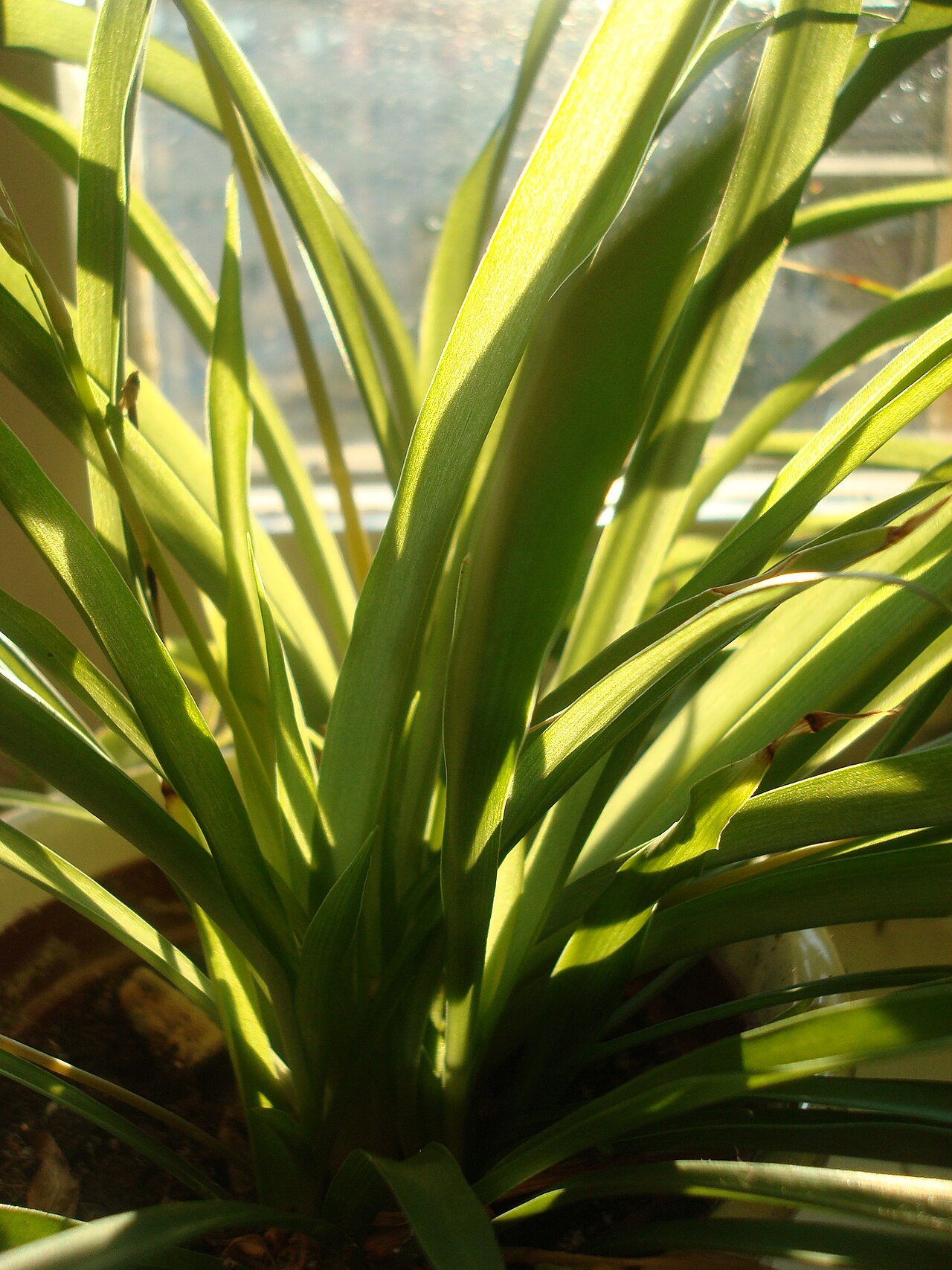
Spider plant foliage, where fluoride damage typically appears at the leaf tips. Photograph: Wikimedia Commons
Image Credits: Wikimedia Commons (CC BY-SA 3.0)
How to diagnose your plant
Start with the water, then work outward. If you grow a dracaena, spider plant, or prayer plant and you water straight from the tap, fluoride is suspect number one.
One grower quoted by EJ Garden Services measured 320 parts per million of total dissolved solids at her kitchen faucet, switched to rainwater, flushed the pot, and saw new leaves emerge clean within a month. Standing water overnight removes chlorine, which escapes as a gas, but it does nothing for fluoride, which stays dissolved no matter how long the water sits, as Plant Care Today's FAQ explains.
Next, check the soil surface and your feeding routine. A white crust means salts.
If you fertilize heavily or the pot has gone years without a flush, buildup is likely. Garden designer Steve Tonks recommends a monthly flush with water equal to twice the pot's volume to wash salts out, and cutting feeding back to a balanced, half-strength dose.
Then assess the air. If the plant sits near a heating vent, radiator, or air conditioner, dry moving air may be scorching the tips on its own.
Grouping plants together, setting pots on pebble trays, or running a humidifier raises the local humidity. Our guide to ideal indoor humidity levels covers the numbers worth aiming for.
Finally, look at the pattern. Tips browned evenly across many leaves point to water or air.
Browning on one sun-facing side suggests light scorch instead, which calls for a sheer curtain or a step back from the window. Mushy brown lower leaves with a sour smell mean overwatering and root trouble, a different problem with a different fix; see our overwatering vs underwatering finger test.
What actually fixes brown tips
Be honest about one thing first: dead tissue does not regenerate. No product or technique will turn a brown tip green again. Everything below protects the new growth.
Switch sensitive plants to better water. Collected rainwater is the top choice; Plant Care Today notes that Griffith calls it probably the best source for fluoride-sensitive cordylines.
Distilled water and reverse-osmosis filtered water also remove fluoride. If you must use tap water, flush the pot monthly so salts never accumulate.
Fix the humidity around tropical foliage. Bathrooms with windows, plant groupings, and humidifiers all help more than misting, which raises humidity for minutes at best.
Feed with restraint. Most houseplants need far less fertilizer than the label's maximum rate. Half-strength, only during active growth, and a periodic flush will keep salts from ever reaching burn levels.
Trim for looks, not for health. You can snip the dead tip off with clean scissors, following the leaf's natural shape, but the plant gains nothing from it. The real work is upstream: water, air, and salts.
The bottom line
Brown leaf tips are the plant's early-warning system, the first cells to die when water quality, humidity, or salts go wrong. Match the pattern to the cause, and remember that fluoride-sensitive species like spider plants and dracaenas may need nothing more exotic than rainwater.
It is a good idea to pick one suspect, change one variable, and watch the new leaves for a month before changing anything else. New growth comes in clean when you have found it. For the related puzzle of leaves that yellow instead of browning, read why houseplant leaves turn yellow and drop one by one.
Frequently asked questions
Should I cut off the brown tips?
You can, for appearance. Use clean scissors and follow the leaf's natural taper.
It will not heal the leaf or help the plant, though. New growth is the real report card, so focus on fixing the cause.
Does letting tap water sit overnight remove fluoride?
No. Sitting removes chlorine, which escapes as a gas within about a day.
Fluoride is a dissolved mineral and stays put. Use distilled water, rainwater, or reverse-osmosis filtered water for fluoride-sensitive plants.
Which houseplants are most sensitive to fluoride?
Spider plants, dracaenas, ti plants (cordylines), prayer plants, and calatheas top the lists from extension sources. If you grow any of these, tap water is the first thing to suspect when tips brown.
Can over-fertilizing cause brown tips?
Yes. Excess fertilizer leaves soluble salts in the soil, which draw water away from roots by osmosis and burn leaf edges.
A white crust on the soil surface is the telltale sign. Flush the pot and cut feeding back.
---
Rive News is the research desk behind these explainers. We read the primary sources, check the numbers, and write what we can verify.
Latest in Gardening
- Why Do Houseplant Leaves Turn Yellow and Drop One by One?
- Overwatering vs Underwatering: The Finger Test
- Ideal Indoor Humidity Level
- Why Lawns Get Brown Patches in Summer
Subscribe for one verified gardening explainer in your inbox every morning.
Corrections: spotted an error? We fix verified mistakes promptly and note the update. Standards: every claim traced to a named source; no invented quotes, statistics, or experts.
Related stories

What Is Companion Planting and Does It Work?
Marigolds work as a nematode cover crop, but the basil flavor claim failed repeated tests. An honest evidence review of what companion plant

Determinate vs. indeterminate tomatoes: growth, pruning, and harvest differences
Determinate tomatoes grow to a set size and ripen all at once, while indeterminate types vine all season. That one difference shapes pruning

How to improve clay soil for gardening
Gypsum will not fix ordinary clay soil, say extension experts. What actually works: 2 to 3 inches of compost, mulch, better drainage, and a