
Why Houseplant Leaves Turn Yellow and Drop One by One
By Rive News
Research desk | Rive News
Key takeaways
- One old lower leaf yellowing at a time is usually natural aging, not a crisis.
- Leaves yellowing in groups, especially with wet soil, point to overwatering, the leading cause of houseplant decline.
- Check the soil before the watering can: wet soil plus yellow leaves means water less, not more.
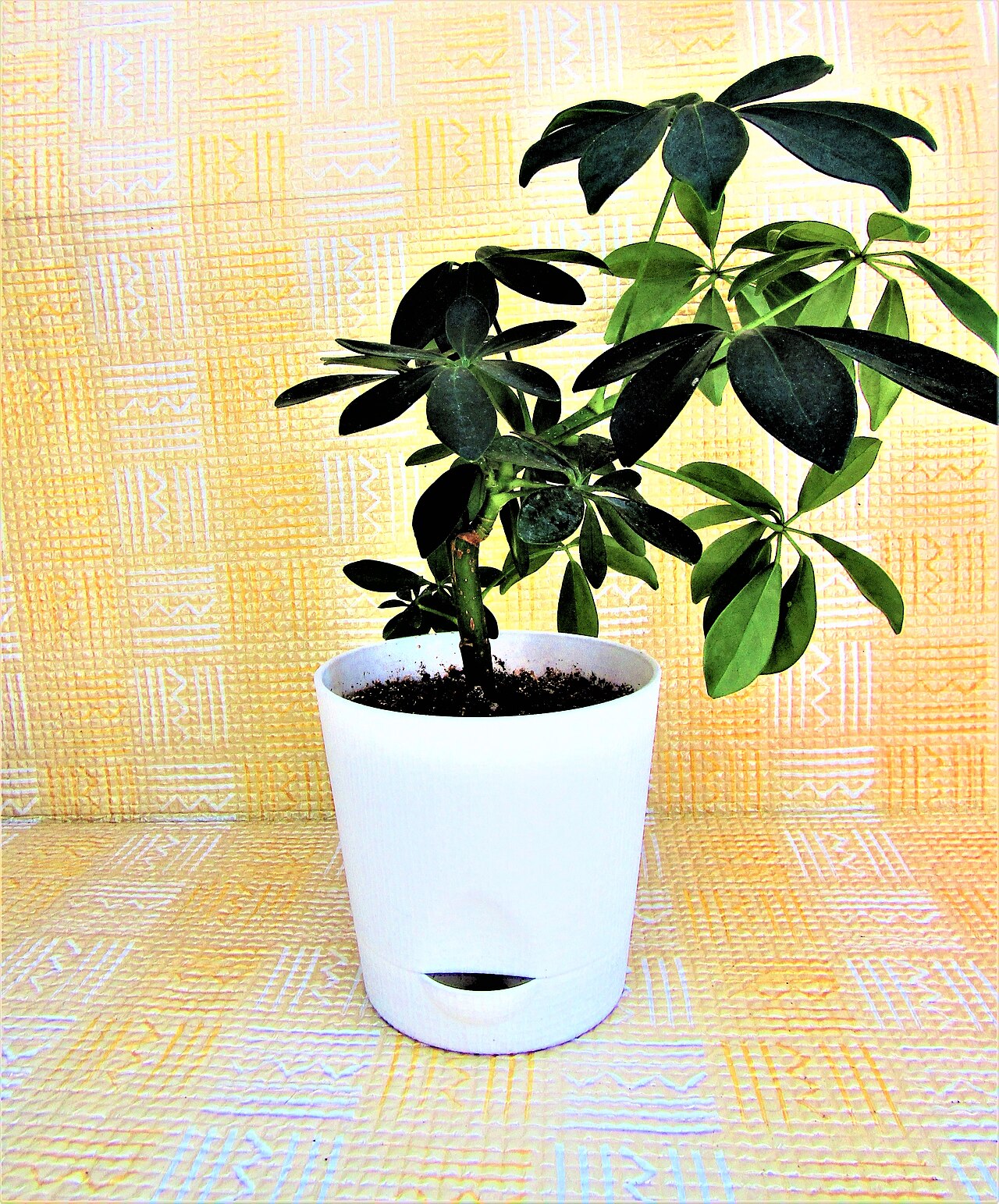
A dwarf umbrella tree, a common houseplant that sheds its oldest leaves naturally. Photograph: Wikimedia Commons
Image Credits: Wikimedia Commons (CC BY-SA 4.0)
A leaf turns yellow. Then another. Then a third lets go and lands on the sill, and suddenly you are convinced the plant is dying.
Sometimes it is in trouble. But the one-by-one pattern, oldest leaves first, is also exactly what healthy aging looks like, and rushing to "fix" it with extra water is the fastest way to turn a non-problem into a real one.
This article explains the difference between natural leaf shedding and warning-sign yellowing, why overwatering tops the list of real causes, and the simple checks that tell you which one you are looking at.
What does the one-by-one pattern mean?
Plants are economical. As they grow, they constantly redirect energy from their oldest, least productive leaves to new growth at the top.
The oldest leaves, usually the lowest on the stem, yellow, weaken at the stem joint, and drop. Korea Times' gardening coverage describes the rule of thumb: if one or two of the older lower leaves yellow and drop while new leaves emerge normally, it may simply be a natural aging process.
The key detail is the rest of the plant. In natural shedding, the remaining foliage looks healthy, new leaves keep unfurling, and the pace is slow, a leaf every few weeks, not several in a week. DIY Garden's troubleshooting guide makes the same point as its eighth and final item: "One Yellow Lower Leaf May Be Completely Normal," advising growers to let the old leaf finish, remove it, and carry on with normal care.
Plants also shed strategically. Patch Plants notes that some houseplants drop leaves when light drops, shedding foliage they can no longer afford to maintain, and that a plant moved to a new spot may drop a few leaves while it adjusts. A couple of yellow leaves after a move, with the rest of the plant healthy, is settling in, not sickness.
So the first question is never "what is wrong" but "is anything wrong." Count the leaves, note their position, and look at the new growth before you touch the watering can.
Why overwatering is the number one real cause
When yellowing is not aging, the most common culprit is too much water. Rooted Treasures Farms, citing the University of Minnesota Extension, states it flatly: overwatering is the leading cause of houseplant decline. The mechanism is straightforward.
Roots need oxygen as well as water. In waterlogged soil, air pockets fill, roots suffocate, and the damaged root system cannot deliver water or nutrients upward. The leaves yellow as a result, starting from the bottom, and eventually drop.
Patch Plants describes the visible sequence: too much water floods the leaves because it has nowhere else to go, and starting from the bottom of the plant, leaves yellow and go mushy. As they lose structure, they can no longer support their own weight, and they fall. Mushy yellow leaves with wet soil are the signature of overwatering.
Crispy yellow-brown leaves with dry soil are the signature of underwatering. The two look similar from across the room and demand opposite fixes, which is why the soil check comes first.
Signals AZ's houseplant guide adds the other half of moisture stress: plants short on water drop leaves to cut water loss through the leaves (transpiration), and those leaves typically yellow before falling. Underwatering is less common as a killer, but the symptom overlaps enough to fool anyone who diagnoses from the leaf alone.
The classic mistake is treating yellow leaves as a thirst signal. DIY Garden's guide is built around resisting exactly that reflex, and its closing advice has become a mantra worth repeating: "Diagnose first. Water second." Wet soil with soft yellow leaves means you have already watered too much. Adding more only deepens the rot.
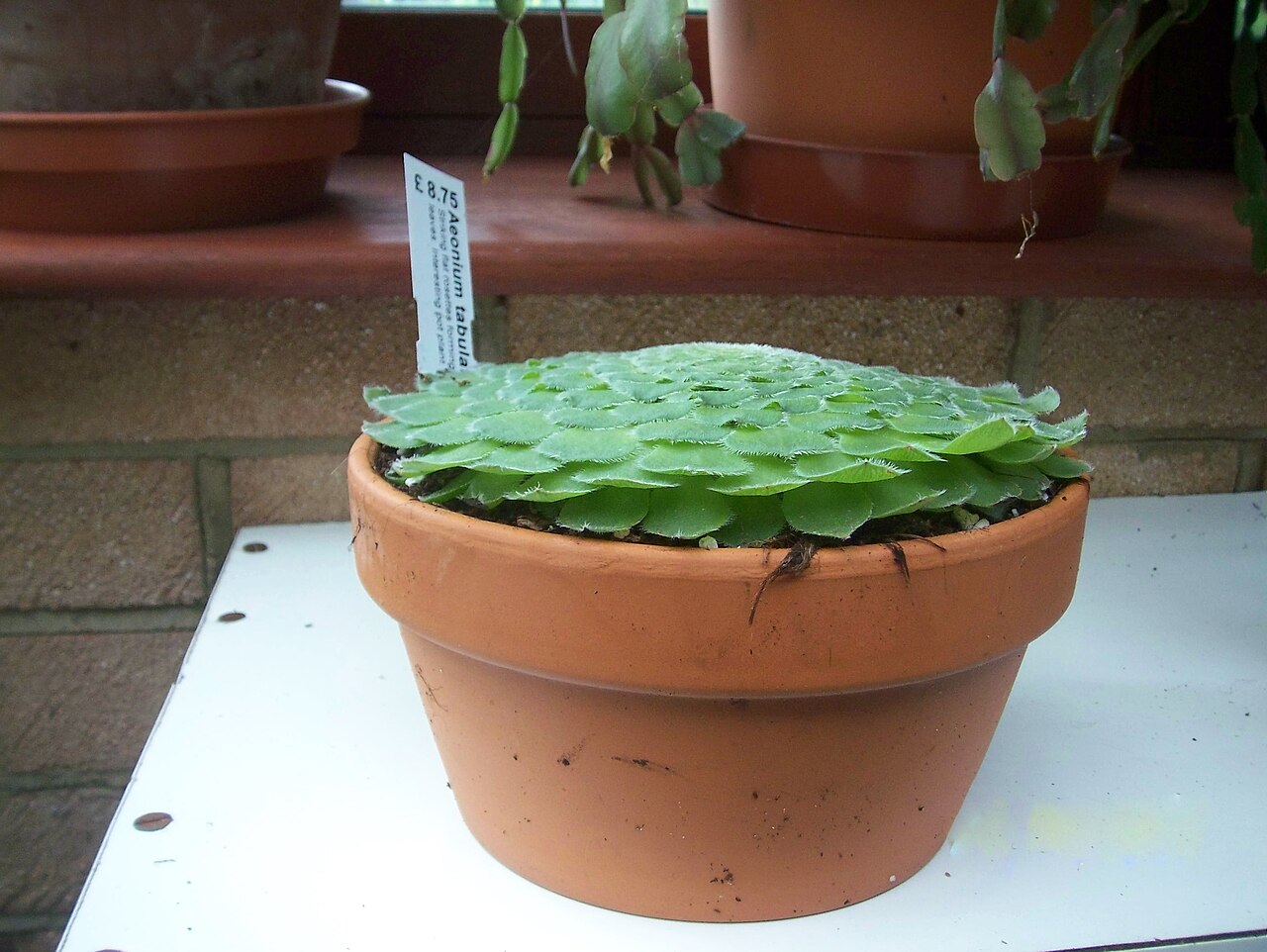
A potted succulent; in containers, limited soil makes moisture balance critical. Photograph: Wikimedia Commons
Image Credits: Wikimedia Commons (CC BY-SA 2.0)
The other causes worth checking
If the soil moisture checks out, work through the rest of the list. Light comes next. Plants starved of light yellow on their lower leaves first, and the yellowing often appears on the side away from the window, where leaves are shaded out, as Signals AZ notes.
Short winter days trigger this in plants that were fine all summer. Moving the plant closer to the light, or adding a full-spectrum bulb through the dark months, usually stops it.
Cold drafts are a seasonal ambush. Tropical houseplants dislike sudden chills, and a draft from a winter window or a summer air-conditioner vent can yellow leaves and drop them. Signals AZ advises moving affected plants away from vents and drafty windows and watching whether the yellowing spreads.
Nutrients and salts follow. Container plants live in a closed system with limited nutrients, and Gardening Know How notes that both deficiency and excess fertilizer salt can yellow leaves.
A white crust on the soil surface points to overfeeding; pale, uniformly yellow older leaves with no other symptoms can point to nitrogen shortage. Either way, the fix is measured: flush the soil with a thorough watering or feed lightly during active growth, not both at once.
Pests and disease are rarer indoors but worth a look. Webbing under leaves suggests spider mites; cottony clusters suggest mealybugs.
Isolate the plant and treat before the problem spreads to its neighbors. And do not overlook transplant shock: Gardening Know How warns that repotting itself can trigger yellowing and leaf drop, so a plant that yellowed right after a repot may just need time.
How to diagnose before you act
Run this sequence and change only one thing at a time. First, feel the soil an inch or two down.
This is the finger test: water only when it feels dry at that depth. If the soil is soggy days after watering, hold off, improve drainage, and let the roots breathe.
Second, map the pattern. One or two lowest leaves, rest of plant healthy, new growth continuing: natural aging, do nothing. Many leaves at once, or yellowing spread through the plant: investigate water, light, and roots.
Yellow on the dark side of the plant: light. Yellow after a move or repot: stress and shock, give it time.
Third, check the roots if the pattern points downward. Roots massed at the top or bottom of the pot, or poking from the drainage holes, mean the plant is pot-bound and cannot sustain its canopy; repotting into a slightly larger container with fresh mix helps. Brown, soft roots that slip off their stringy centers mean rot, and the damaged roots should be trimmed before repotting into dry mix.
Fourth, review the recent history. New fertilizer regimen, a move across the room, heating season starting, all of these precede yellowing by days or weeks. The cause is usually the last thing that changed.
The bottom line
Leaves that yellow and drop one by one, oldest first, on an otherwise healthy plant are usually just aging. Widespread, rapid yellowing is the plant asking for help, and overwatering is the likeliest reason. The soil tells you which one it is faster than the leaves do.
It is a good idea to make the finger test a habit before every watering, and to let the plant's pattern, not your anxiety, decide the response. When brown tips appear instead of yellowing, the suspects shift to humidity and water quality, and that guide covers the difference.
Frequently asked questions
Is it normal for houseplants to drop leaves?
Yes, within limits. Shedding the oldest lower leaves one at a time is natural as plants redirect resources to new growth. Worry when many leaves yellow at once, when new growth stalls, or when stems go soft.
How do I know if I am overwatering or underwatering?
Check the soil. Wet or soggy soil days after watering, plus soft yellow leaves, means overwatering.
Bone-dry soil plus crispy, dry yellow leaves means underwatering. The finger test, feeling moisture an inch or two down, settles it in seconds.
Should I remove yellow leaves?
Once a leaf has fully yellowed, the plant has already withdrawn its useful nutrients, so removing it is safe and tidies the plant. Do not tear partially green leaves off; let the plant finish with them first.
Can a plant recover after losing many yellow leaves?
Often yes, if the cause is fixed and the stems and roots are still firm. Cut back on water, correct light and drainage, and wait. New growth, not the old leaves, is the sign of recovery.
---
Rive News is the research desk behind these explainers. We read the primary sources, check the numbers, and write what we can verify.
Latest in Gardening
- Why Do Indoor Plants Get Brown Leaf Tips?
- Overwatering vs Underwatering: The Finger Test
- Why Are Tomato Leaves Turning Yellow at the Bottom?
- Why Do Seedlings Get Leggy? Fix It With Light
Subscribe for one verified gardening explainer in your inbox every morning.
Corrections: spotted an error? We fix verified mistakes promptly and note the update. Standards: every claim traced to a named source; no invented quotes, statistics, or experts.
Related stories

What Is Companion Planting and Does It Work?
Marigolds work as a nematode cover crop, but the basil flavor claim failed repeated tests. An honest evidence review of what companion plant

Determinate vs. indeterminate tomatoes: growth, pruning, and harvest differences
Determinate tomatoes grow to a set size and ripen all at once, while indeterminate types vine all season. That one difference shapes pruning

How to improve clay soil for gardening
Gypsum will not fix ordinary clay soil, say extension experts. What actually works: 2 to 3 inches of compost, mulch, better drainage, and a