
Why Do Your Orchid's Roots Grow Out of the Pot?
Key takeaways
- The roots crawling over the rim are aerial roots, a normal feature of epiphytic orchids like Phalaenopsis.
- Each root is wrapped in velamen, a spongy layer that absorbs moisture from humid air and turns green when wet.
- Healthy aerial roots should be left alone; the Royal Horticultural Society advises never cutting or burying them.
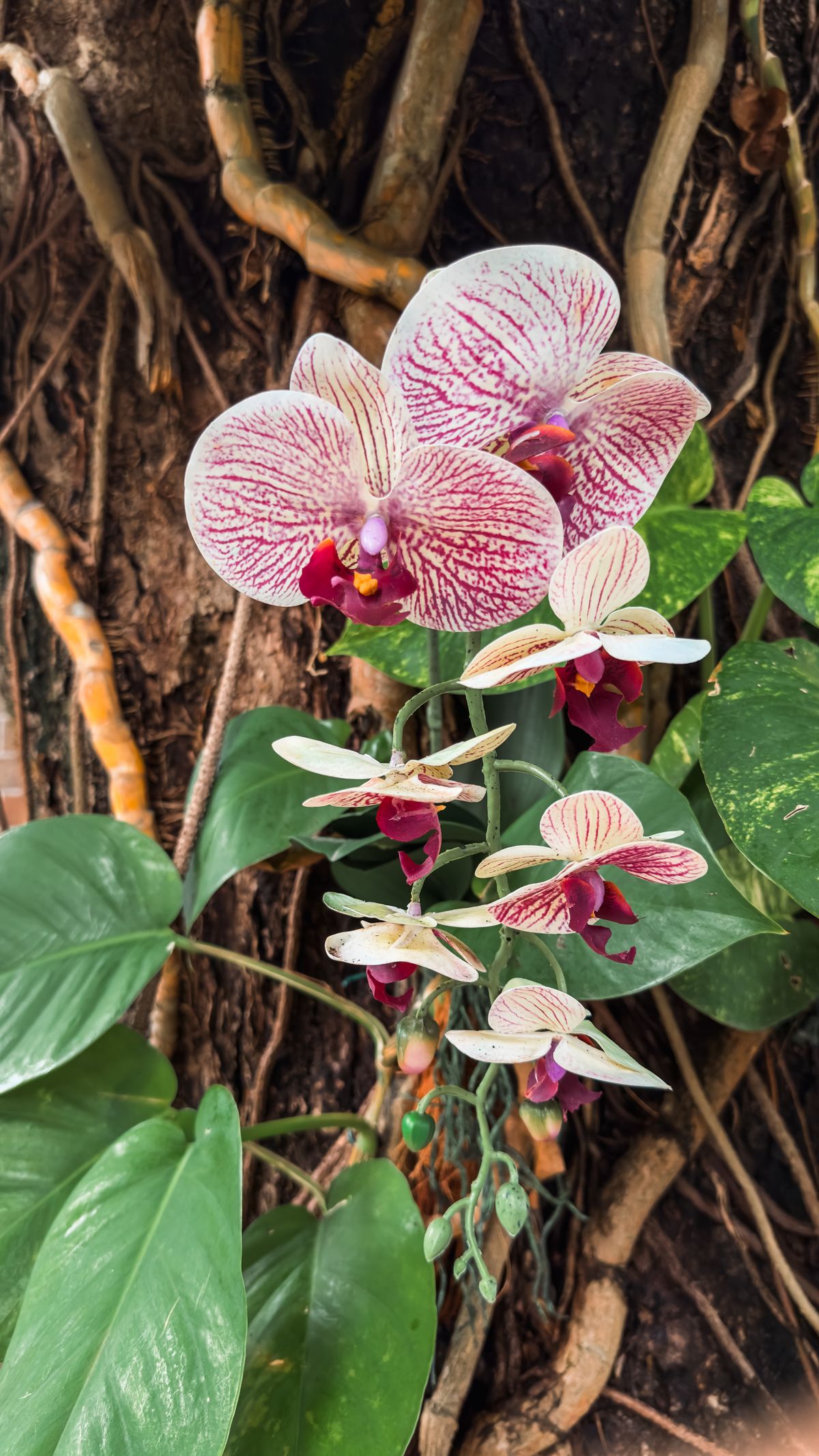
Few sights worry new orchid owners more than thick, pale roots snaking out of the pot and heading for the shelf. They look like escape attempts. They look like the plant has outgrown its home and is trying to tell you something urgent.
In almost every case, neither is true.
This article explains why your orchid's roots grow out of the pot, what the silvery coating on them does, and when those wandering roots actually signal a problem.
Your orchid is not a soil plant
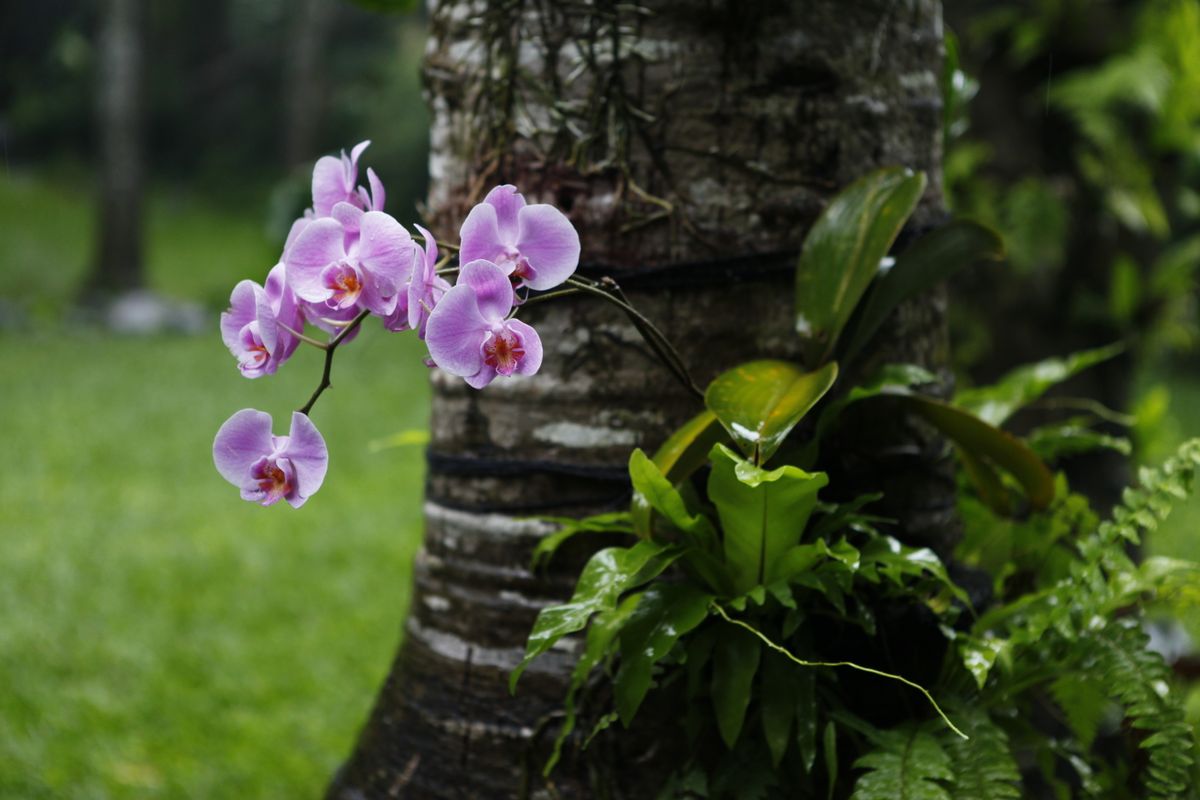
Most orchids sold as houseplants, above all the moth orchid or Phalaenopsis, are epiphytes. In the wild they grow attached to tree branches high above the jungle floor, not rooted in ground soil. Their roots are built to cling to bark, breathe open air, and catch brief bursts of rain and morning dew.
That heritage does not switch off when the plant lands in a flowerpot. A root heading over the rim is not automatically escaping bad conditions. It may simply be growing into available space, following the same programming that would send it along a branch in a tropical forest.
In fact, for epiphytic orchids the label "aerial root" is slightly misleading, since all of their roots are aerial in nature whether they sit inside the potting mix or outside it.
AskGardening's orchid care guide lists several natural reasons for the wandering habit. A plant leaning to one side may send roots out to grab nearby support and stop itself tipping. High humidity in the room encourages roots to explore the air.
And contact with solid surfaces matters: a 1957 study by Dycus and Knudson found that when aerial roots touch a porous surface like a pot or a piece of wood, they attach firmly to it. The roots are doing what roots evolved to do.
The silvery coating is a sponge
Orchid roots are wrapped in a spongy outer layer called velamen. When it is dry, velamen looks silvery white or pale gray. When water hits it, the layer turns green because you are seeing the living tissue underneath.
That color shift is one of the easiest ways to read your orchid's hydration: silver means thirsty, green means recently watered.
Velamen works like a sponge, soaking up moisture within seconds of contact. It also retains water, protects the root's inner tissues, and helps the root grip bark. The Dycus and Knudson study showed that roots exposed to drier air grow a thicker velamen with bigger cells than roots sitting in humid potting mix, a visible adaptation to their environment.
LeafyZen's orchid guide adds a bonus fact: roots exposed to light can photosynthesize a little, which is one reason clear plastic pots and bright positions suit Phalaenopsis so well. The roots are not just anchors and straws. They are partially working leaves.
Healthy velamen is firm and plump. Healthy roots feel solid when you press them gently. Wrinkled roots suggest low humidity, while black, mushy, or foul-smelling roots signal rot and need removal with sterile tools.
Leave healthy aerial roots alone
The single most common mistake is cutting aerial roots off for looks. Do not do it. The Royal Horticultural Society specifically advises leaving moth-orchid aerial roots uncut and unburied, and multiple orchid guides echo the rule.
Healthy aerial roots are functioning parts of the plant, contributing to water and nutrient absorption, and cutting them removes tissue the plant needs while opening a wound.
Aerial roots alone are not a reason to repot. The American Orchid Society identifies two real repot triggers: deteriorating potting medium and a plant genuinely outgrowing its container. A root over the rim establishes neither.
Check the actual signals instead: bark medium that has broken down into mush, a plant that rocks loosely because the mix has collapsed, or roots densely circling inside the pot. Phalaenopsis typically need repotting only every year or two.
If a root is truly in the way, misting helps. Soak the root or the whole plant for 10 to 15 minutes to soften the velamen, then gently redirect the flexible root back toward the pot. Never force a stiff, set root; cracking the velamen damages the root's function.
And never bury aerial roots in mix during repotting. Forcing them underground cracks the coating and invites rot.
Care for aerial roots the same way you care for the rest of the plant. Mist them on dry days, keep room humidity reasonable, and let them turn silver between waterings. They are doing their job.
Frequently asked questions
Are orchid roots growing out of the pot a sign of root rot?
Not by themselves. Aerial roots are normal for epiphytic orchids. Worry only if roots are black, mushy, or foul-smelling, which signals rot, or if the leaves are limp and the medium stays soggy.
Should I cut off my orchid's aerial roots?
No. Cutting healthy aerial roots damages the plant and removes tissue that absorbs water and nutrients. The Royal Horticultural Society advises leaving them uncut and unburied.
Why do aerial roots turn green after watering?
The spongy outer layer, velamen, turns green when wet because you are seeing the living tissue underneath. Silvery white means dry, green means hydrated. The color change is a useful watering cue.
Does an orchid with aerial roots need repotting?
Not necessarily. Repot when the potting medium has broken down or the plant has genuinely outgrown the container, not because roots wander over the rim. Phalaenopsis usually need repotting every one to two years.
The bottom line
Orchid roots grow out of the pot because orchids are epiphytes built for tree branches, not soil. Their silvery velamen-coated roots breathe air, catch moisture, and even photosynthesize a little. Leave healthy ones alone, and save the repotting for when the medium itself fails.
Latest in Gardening
- Why do carrots grow forked sometimes?
- Why do herbs lose flavour when dried?
- Why do plants grow towards light?
Subscribe to the Rive News newsletter for one practical gardening explainer every morning.
Image Credits: Pexels / thiago japyassu, Vikki
Related stories
What Is Companion Planting and Does It Work?
Marigolds work as a nematode cover crop, but the basil flavor claim failed repeated tests. An honest evidence review of what companion
Determinate vs. indeterminate tomatoes: growth, pruning, and harvest differences
Determinate tomatoes grow to a set size and ripen all at once, while indeterminate types vine all season. That one difference shapes

How to improve clay soil for gardening
Gypsum will not fix ordinary clay soil, say extension experts. What actually works: 2 to 3 inches of compost, mulch, better drainage,