
Why plants grow towards light: the science explained
By Rive News / Research desk | Rive News / Published October 29, 2026 at 9:00 AM PKT
Key takeaways
- Plants bend towards light through phototropism, a growth response, not a movement of the whole plant.
- The hormone auxin builds up on the shaded side, where it makes cells elongate faster and curve the stem.
- Charles Darwin and his son traced the signal to the shoot tip in 1880; Frits Went isolated auxin in 1926.
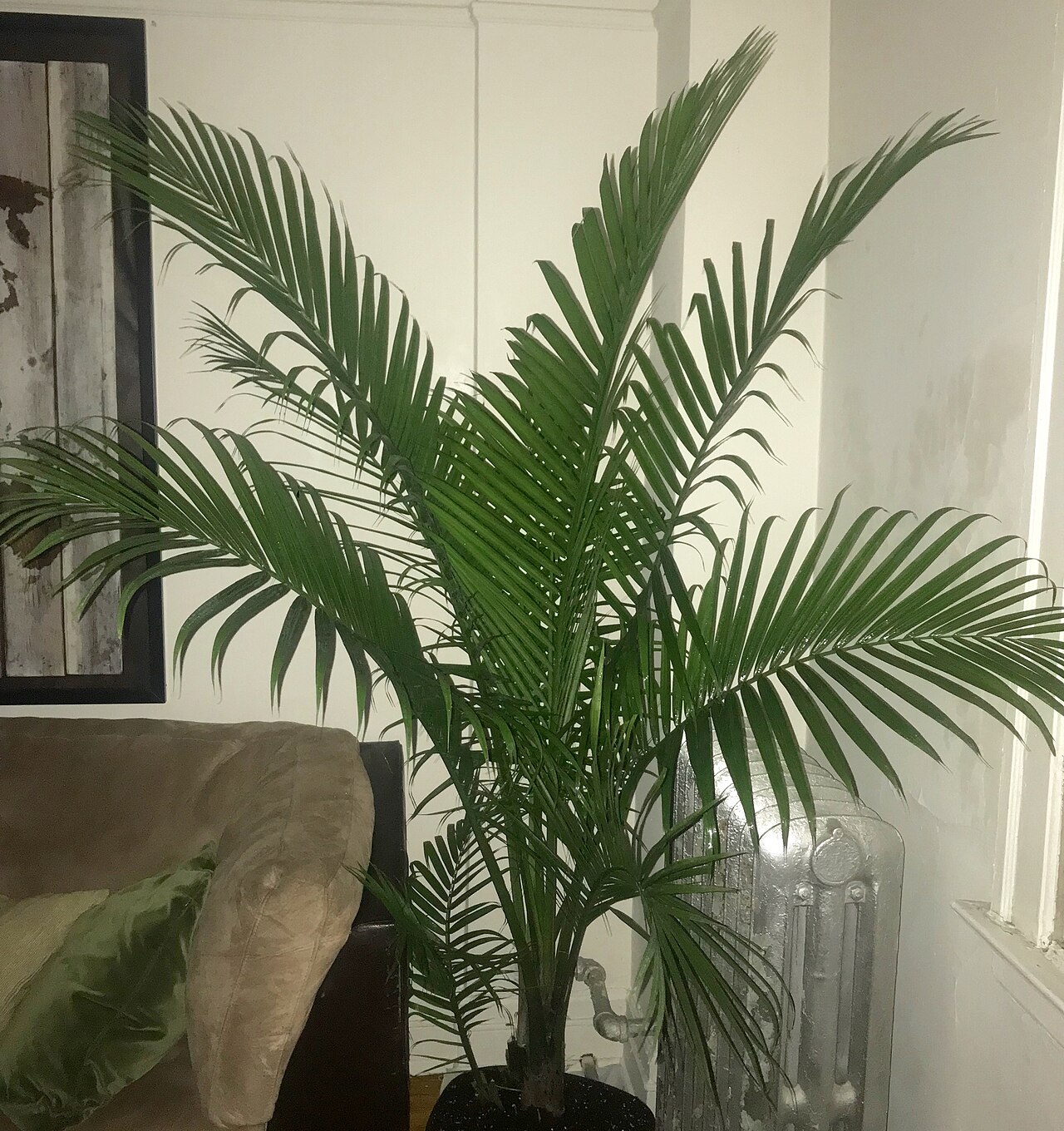
[A houseplant growing indoors.] Photograph: the houseplant
Image Credits: Wikimedia Commons
A houseplant on a windowsill leans towards the glass. Turn the pot around, and within days it leans the other way.
The plant is not walking towards the light. It is growing towards it, one side faster than the other, in a response called phototropism.
This article explains how plants sense light, including the shoot tip, the hormone auxin, and the cell growth that bends the stem, and what the classic experiments proved.
What phototropism is
Phototropism is growth in response to a light stimulus. Growth towards a light source is called positive phototropism, and growth away from light is negative phototropism. Most plant shoots show positive phototropism, while roots generally grow away from light and towards gravity.
The key point is that the plant bends by growing unevenly. It does not flex a muscle.
Cells on one side of the stem elongate more than cells on the other side, and the stem curves as a result. The bend is permanent growth, not a temporary pose.
Why bother? Plants make their food through photosynthesis, which needs light. A shoot that points its leaves at the brightest available light captures more energy.
A plant stuck in shade grows slowly, while a plant that bends towards a gap in the canopy can thrive. Phototropism is how a plant that cannot move still chases the light.
Darwin and the shoot tip
The first clear experiments came from Charles Darwin and his son Francis, published in their 1880 book The Power of Movement in Plants. They worked with the coleoptiles of grass seedlings, the protective sheaths around young shoots.
They found that the tips of the seedlings curved first, and the curve extended gradually down the stem. When they covered the tips with foil, the plants did not curve at all. When they covered the lower stem but left the tip exposed, the plants bent normally.
The Darwins concluded that some factor, which they could not identify, was transmitted from the tip to the lower regions and caused the bending. They had separated the part of the plant that senses light from the part that responds to it.
The sensor was in the tip. The response happened below it.
The Darwin Project at the University of Cambridge describes a classroom version of the same result. Seedlings with clipped tips failed to bend towards the light after two hours, while intact seedlings bent notably. The mechanism responsible for the response sits in the tip.
Went isolates auxin
The unknown factor stayed unknown until 1926, when Dutch plant physiologist Frits Went isolated it. Went collected the substance by placing agar blocks under coleoptile tips, then transferred those blocks to seedlings with their tips removed. The seedlings bent, and the direction of bending depended on where the block was placed.
That proved the signal was a chemical, not an electrical impulse or a physical effect. The chemical was the plant hormone auxin. Auxin is produced in the young, growing parts of plants, especially the shoot tips, and transported through the plant.
The DoDEA biology course summarises the mechanism in one line: higher concentrations of auxin on the darker side of the plant cause uneven elongation of cells, resulting in the curving of the stem towards light. Light does not push the plant. It redistributes a hormone, and the hormone does the growing.
How auxin bends a stem
The modern picture adds detail to the Darwins' factor. When light falls on a shoot from one side, blue-light photoreceptors called phototropins, known as PHOT1 and PHOT2, detect it. They trigger changes in transporter proteins, especially PIN3, which shift auxin towards the shaded side of the shoot.
On the shaded side, auxin activates proton pumps in the cell membrane. These pumps move hydrogen ions into the cell wall, lowering its pH.
The acidic environment activates enzymes called expansins, which loosen the cellulose fibres in the wall. With the wall loosened, water flows into the cells, they swell, and the shaded side elongates faster than the lit side.
The result is a curve. The shaded side grows longer, the lit side stays shorter, and the shoot tip swings towards the light. The process is described by the Cholodny-Went hypothesis, developed in the early 20th century, which predicts exactly this: auxin moves to the shaded side and promotes elongation there.
Researchers at VIB and Ghent University added another link in 2012, published in the journal Nature. They identified PILS proteins, which regulate how auxin is stored inside cells. That storage step helps the plant fine-tune where auxin acts, so the bend matches changing light conditions rather than overshooting.
Why the tip matters so much
The tip is both the sensor and the hormone factory. Phototropins are highly expressed in the upper region of coleoptiles, which is why covering the tip stops the whole response. Remove the tip, and there is no auxin source and no light sensor in the right place.
This also explains why seedlings are so sensitive. A young shoot has a small tip doing a big job: sensing direction, making auxin, and setting the growth pattern for the stem below. Damage to the tip, or a tip kept in darkness while the stem is lit, breaks the chain.
Gardeners see the same principle in leggy seedlings. A seedling on a dim windowsill stretches towards the glass because its tip senses weak, one-sided light and keeps pushing growth towards it. Stronger, more even light from above reduces the lean, because auxin stays evenly distributed and the stem grows straight.
Sunflowers, roots, and the exceptions
Not every plant part bends towards light. Roots show negative phototropism, growing away from light and into the soil, where they anchor the plant and absorb water and minerals. That is the matching half of the same system: shoots up and towards light, roots down and away from it.
Sunflowers add a famous complication. Young sunflower buds track the sun from east to west during the day, a movement called heliotropism. That motion uses motor cells in a flexible segment below the bud, not growth, and it stops once the flower opens.
Mature sunflower heads typically face east and stay there.
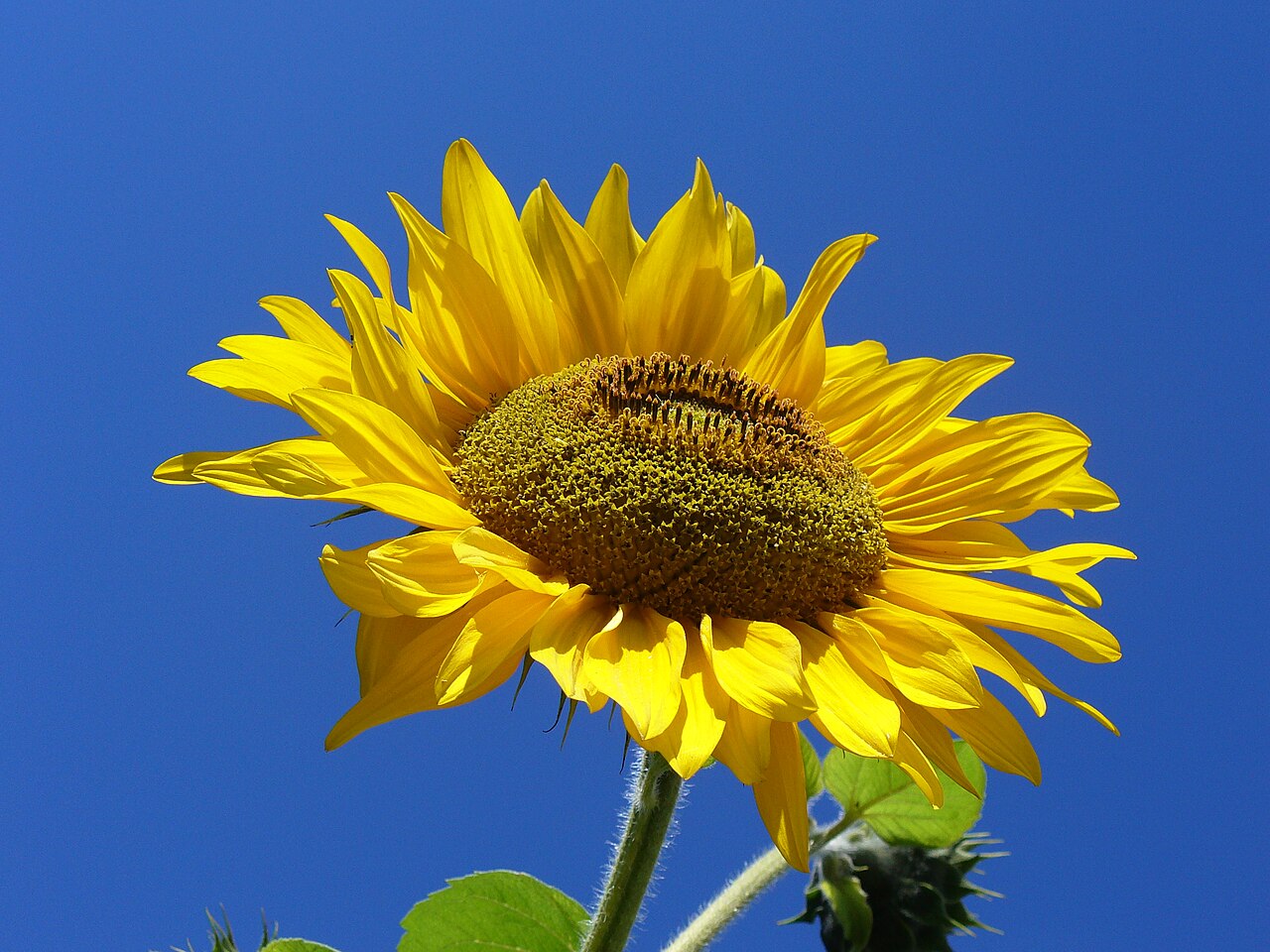
[A sunflower in bloom.] Photograph: Pudelek
Image Credits: Wikimedia Commons The tracking is real, but it is not the same mechanism as a seedling bending by growth.
Some vine shoot tips show negative phototropism, growing towards dark, solid objects so they can climb them. The rule is not "all green parts chase light." It is "each part grows in the direction that serves its job," and auxin gradients are the tool that makes it happen.
Frequently asked questions
Should I rotate my houseplants?
Yes. Rotating a pot a quarter turn every week or two gives all sides even light and encourages balanced growth. Without rotation, a plant leans hard towards the window, grows lopsided, and may weaken on the shaded side.
Rotation does not stop phototropism. It spreads it evenly.
Why do my seedlings go leggy on a windowsill?
Seedlings stretch towards weak, one-sided window light because their tips sense the direction and push growth that way. The stems grow long and thin, with few leaves, because the plant is spending energy reaching light instead of building sturdy tissue. Brighter light from above, or a grow light kept close, produces stockier seedlings.
Do plants grow towards artificial light too?
Yes, if the light includes the blue wavelengths that phototropins detect. Grow lights work because they provide blue light in the right range. A dim household bulb may be too weak or too warm in colour to trigger a strong response, which is why plants near a lamp lean only slightly.
Can a plant bend away from light?
Yes. Roots grow away from light, and some vine tips grow towards darkness to find supports.
Negative phototropism is a normal response, not a defect. It shows the same auxin system working in reverse for parts whose job is not photosynthesis.
The bottom line
Plants grow towards light because their shoot tips sense blue light, shift the hormone auxin to the shaded side, and let those cells elongate faster. The shaded side outgrows the lit side, and the stem curves towards the light. Darwin traced the signal to the tip in 1880, Went isolated auxin in 1926, and modern research has mapped the transport proteins that move it.
For gardeners, the lesson is practical. Give seedlings strong, even light from above, rotate houseplants regularly, and expect any plant near a window to lean.
The lean is not a flaw. It is the plant doing exactly what more than a century of experiments say it should: growing towards the light it needs to live.
Tags: gardening, plant science, phototropism
The Rive News research desk writes plain-language explainers from published research and institutional sources.
Related
- Why Do Plants Lean Toward the Window? Phototropism Explained
- Leggy Seedlings: Why They Stretch, How Light Fixes Them, and When to Start Over
- How to Grow Herbs on a Kitchen Windowsill
Subscribe for one plain-language gardening explainer each morning.
Rive News standards: every factual claim in this article traces to a named public source listed above; corrections are published, never silently edited.
Related stories
What Is Companion Planting and Does It Work?
Marigolds work as a nematode cover crop, but the basil flavor claim failed repeated tests. An honest evidence review of what companion
Determinate vs. indeterminate tomatoes: growth, pruning, and harvest differences
Determinate tomatoes grow to a set size and ripen all at once, while indeterminate types vine all season. That one difference shapes
How to improve clay soil for gardening
Gypsum will not fix ordinary clay soil, say extension experts. What actually works: 2 to 3 inches of compost, mulch, better drainage,