
Why plants wilt in heat even when soil is moist
By Rive News / Research desk | Rive News / Published October 25, 2026 at 9:00 AM PKT
Key takeaways
- Wilting in heat is usually a rate problem: leaves lose water through transpiration faster than roots can replace it, even when the soil holds water.
- The plant's response, closing its stomata and losing turgor, is protective, and midday wilting often reverses by evening.
- Wilting that persists into cool hours points elsewhere: waterlogged roots, root damage, or a disease blocking the xylem.
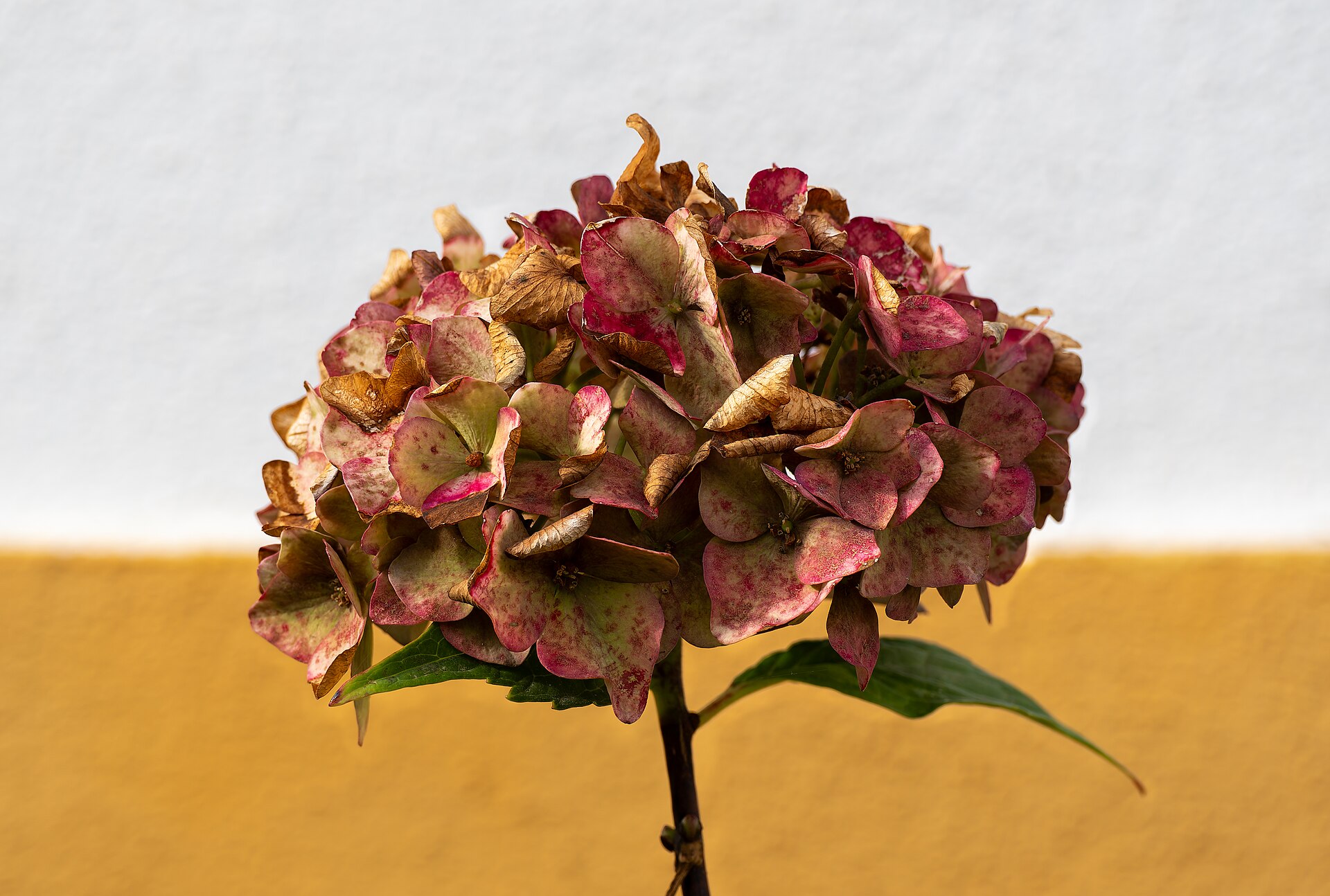
A wilting bigleaf hydrangea in Portugal. Photograph: Jules Verne Times Two
Image Credits: Wikimedia Commons
You watered yesterday. You check the soil and it feels damp. Yet by midafternoon the plant droops as if it were dying of thirst.
The instinct is to water again, but more water often changes nothing. The soil was never the problem.
This article explains why plants wilt in heat even when soil is moist, including the transpiration race the roots lose, the protective role of stomata, and the three persistent causes that extra watering cannot fix.
Wilting is a plumbing problem, not just a water problem
A plant holds its leaves up with turgor pressure, the pressure of water inside its cells pushing against the cell walls. When cells are full of water, they are rigid and the leaf stands firm. When cells lose water, they go slack and the leaf droops.
Wilting is the visible sign of lost turgor, not a direct measure of soil moisture.
Water moves through a plant in a continuous stream. Roots absorb it from the soil, it travels up through hollow tissues called xylem to the stems and leaves, and it leaves the plant as water vapor through tiny pores on the leaves called stomata. That release of vapor is transpiration.
As long as uptake matches loss, turgor holds. The moment loss outruns uptake, the leaf starts to droop, whatever the soil meter says.
Under normal conditions, plants absorb water through their roots because moisture naturally moves from soil into root cells along a water concentration gradient, as Bruce Spangenberg, Horticulture Outreach Specialist with the UW-Madison Division of Extension, explains in the Wisconsin Ag Connection. The water then travels to the leaves, replacing moisture lost through transpiration and carrying nutrients with it. Heat breaks that balance from the leaf end, not the root end.
How heat wins the race
Three factors raise transpiration demand in heat: high temperature, low humidity, and wind. Hot, dry air has a high vapor pressure deficit, which is the gap between how much moisture the air holds and how much it could hold. A large deficit pulls water from leaves faster, the way a dry sponge pulls water from a wet cloth.
Wind strips away the thin layer of humid air clinging to the leaf surface, steepening the gradient further.
The sequence on a hot afternoon runs like this. Solar radiation raises leaf temperature, sometimes above air temperature. The vapor pressure deficit spikes, and transpiration accelerates.
Leaf water potential falls as water leaves faster than it arrives. Cells lose turgor, and the leaf droops. The plant's immediate response is to close its stomata, which conserves water but also cuts carbon dioxide intake and photosynthesis.
That tradeoff is deliberate. A plant that keeps its stomata open in extreme heat would desiccate. A plant that closes them survives the afternoon at the cost of a few hours of growth.
Roots, meanwhile, have a maximum uptake rate. That rate depends on root depth, root health, soil structure, and soil temperature. Shallow-rooted plants, seedlings, and container plants hit their ceiling first, because a small root system can only pull so fast.
Hot soil adds a further drag: as soil warms, oxygen availability to roots falls, which slows uptake and limits hydraulic flow. The plant is therefore squeezed from both ends, with demand rising and supply capped.
This is why the timing of wilting tells you so much. Plants that droop in the afternoon and recover by evening are almost certainly showing this rate mismatch. The Wisconsin Ag Connection notes that plants may droop during a hot afternoon even when the soil contains enough moisture, and in many cases they recover naturally once temperatures cool and wind speeds decrease later in the day.
Evening recovery is the signature of temporary heat wilting.
When more water makes it worse
Waterlogged soil is the most counterintuitive cause of wilting in moist conditions. Roots need oxygen to function, and saturated soil holds little of it. A plant sitting in waterlogged soil can wilt while drowning, because its oxygen-starved roots cannot absorb and distribute water despite the abundance around them.
Small Farm Canada makes the same point: without healthy roots, plants struggle to absorb water even when moisture is plentiful.
Before reaching for the hose, check the soil properly. Push a finger a few centimeters down, or lift the pot to judge its weight. Surface dampness can mislead in both directions.
A dry crust can hide moist soil below, and a wet surface can hide a dry root ball inside a peat-based mix that has become water-repellent. Water only when the root zone actually needs it, and water deeply so the whole root system benefits rather than just the surface.
Mulch and shade attack the real problem, which is demand rather than supply. A layer of organic mulch keeps soil cooler and slows surface evaporation. Afternoon shade, even temporary shade cloth during a heatwave, lowers leaf temperature and cuts the vapor pressure deficit at the leaf.
Watering during the coolest part of the day lets the plant start the hot hours fully charged. Moving container plants into shade during extreme heat is often more effective than any amount of extra watering.
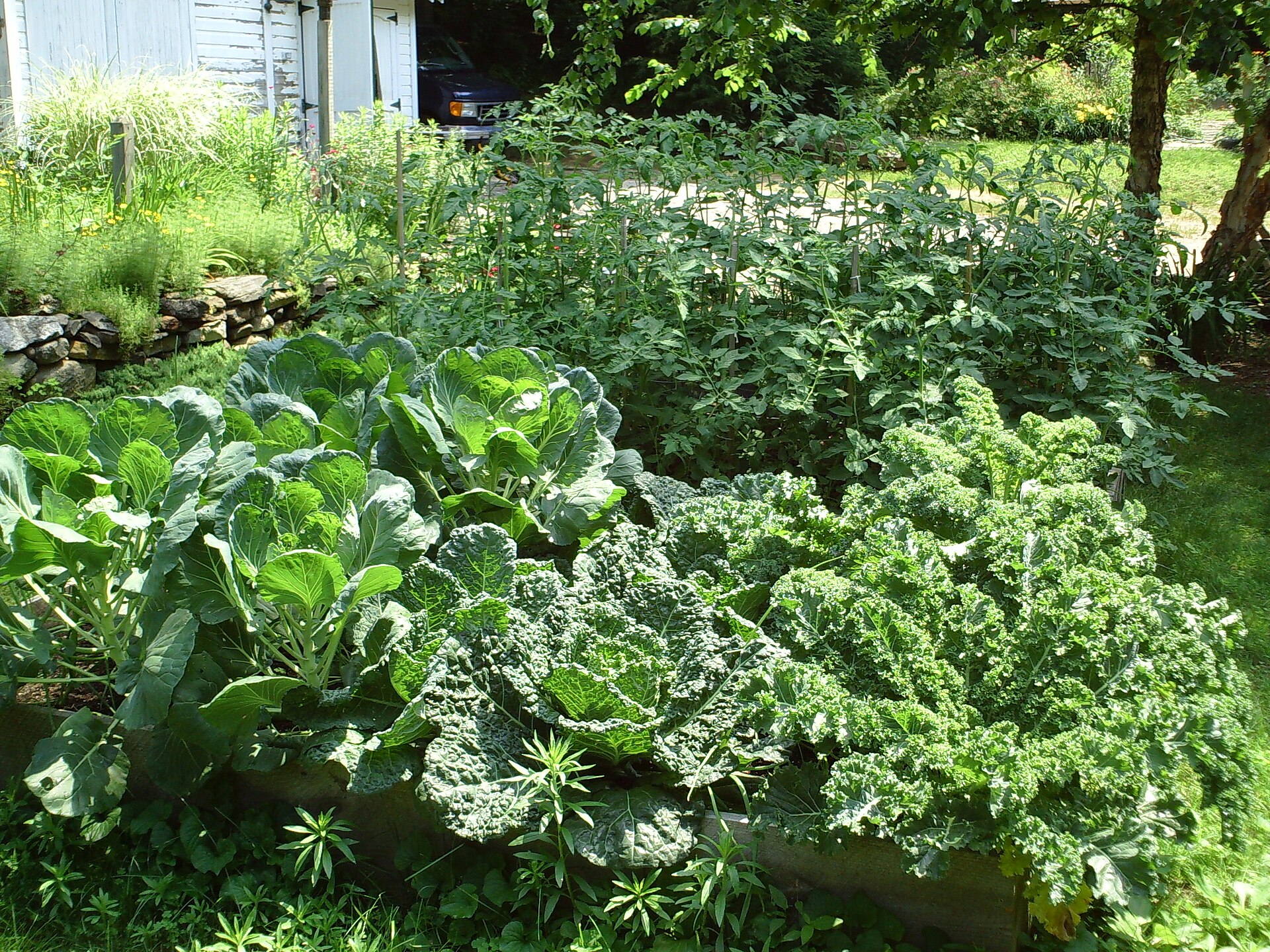
Garden plants in summer sun, when transpiration demand peaks. Photograph: gunthercox
Image Credits: Wikimedia Commons
When wilting is not about weather at all
Wilting that persists into the cool of evening, or that affects one branch or one plant while neighbors recover, points to a broken pipe rather than a hot day. The xylem network carries water upward, and anything that blocks or damages it starves the leaves no matter how wet the soil is.
Several fungal diseases invade the xylem and restrict water movement. Fusarium wilt, verticillium wilt, oak wilt, and Dutch elm disease all block the vessels, often causing severe damage or plant death, according to the Wisconsin Ag Connection. These diseases usually show a pattern: wilting on one side first, yellowing leaves, or brown streaks inside cut stems.
They do not respond to watering, shade, or mulch, and infected material should not be composted.
Physical damage does the same job mechanically. Insects that bore beneath bark, root-feeding grubs, rabbits stripping bark, or a careless strimmer nicking a stem can all interrupt water transport. Root damage from digging, transplanting, or waterlogging has the same effect from below ground.
If a plant wilts persistently after root disturbance, the cause is usually the damaged root system, and recovery depends on new root growth rather than on more water.
The diagnostic rule is simple. Afternoon droop with evening recovery means heat and transpiration. Persistent droop through cool hours means something is broken, blocked, or drowned.
Sorting those two cases before watering saves plants from the most common heatwave mistake: drowning a heat-stressed plant in the belief that it is thirsty.
Should I water a wilting plant in the afternoon?
Check the soil first. If the root zone is genuinely dry, water deeply. If it is already moist, watering again will not help and may waterlog the roots.
Shade, mulch, and patience until evening usually do more for a heat-wilted plant than a second soaking.
Why do container plants wilt first?
Containers hold a small soil volume that warms fast and dries fast, and their roots cannot reach deeper, cooler soil. A container plant also has a small root system relative to its leaf area. Shade and larger pots both help, because they cut demand and raise the water reserve.
Can heat wilting damage a plant permanently?
Brief midday wilting with evening recovery rarely causes lasting harm. Repeated or prolonged wilting, especially combined with leaf scorch at the edges, can damage tissues and set growth back. Persistent wilting past the permanent wilting point, the soil moisture level at which a plant cannot regain turgor even after watering, is usually fatal.
How do I tell overwatering wilt from heat wilt?
Overwatering wilt comes with wet, heavy soil, often with yellowing lower leaves and a sour smell from the root zone. Heat wilt comes with moist but not sodden soil, drooping worst in the afternoon, and recovery by evening. Lift the pot: heavy and wet points to overwatering, while light and dry points to genuine thirst.
The bottom line
Plants wilt in heat even when soil is moist because wilting measures the balance between water lost and water gained, not the water in the ground. Hot, dry, windy air drives transpiration past what the roots can supply, stomata close to limit the damage, and turgor falls until the evening cool lets the plant catch up. Check the soil before watering, use shade and mulch to cut demand, and treat wilting that survives the cool hours as a different problem: waterlogged roots, physical damage, or a xylem disease that no amount of watering will fix.
Tags: plant wilting, heat stress, watering
Rive News's research desk covers practical explainers across cars, work, study, fitness, and home, drawing on public sources and industry guidance.
Related
- How to tell overwatering from underwatering with the finger test
- Why tomato leaves curl and how to fix it fast
- Why lawns get brown patches in summer
- Why indoor plants get brown leaf tips
Subscribe for one practical explainer each week, drawn from real sources and written in plain language.
Rive News publishes explainers based on public sources. Corrections are noted on the article when verified.
Related stories
What Is Companion Planting and Does It Work?
Marigolds work as a nematode cover crop, but the basil flavor claim failed repeated tests. An honest evidence review of what companion
Determinate vs. indeterminate tomatoes: growth, pruning, and harvest differences
Determinate tomatoes grow to a set size and ripen all at once, while indeterminate types vine all season. That one difference shapes
How to improve clay soil for gardening
Gypsum will not fix ordinary clay soil, say extension experts. What actually works: 2 to 3 inches of compost, mulch, better drainage,